
Update May 2013
I am delighted to be able to add to this page some black and white photos of Paradise, taken by Brigadier Frank Henn in 1936 and 1938.
This has come about through the kindness of Seán Matthews, who made the arrangements. In a Comment (see the bottom of this page) Seán said:
My grandmother Hester Mahon and my father Michael Matthews, and his sister Geraldine, were visitors to this house in 1936. Hester’s sister Geraldine Mahon married William Henn — and they were some of last occupants of the house.
Brigadier Frank Henn is the son of Geraldine Henn (née Mahon). The photo below shows the following people (L–R):
- Geraldine Matthews
- Geraldine Henn (née Mahon)
- Frank Henn
- Margaret Henn
- Michael Matthews
- Hester Matthews (née Mahon).
Seán says that Geraldine Henn and Hester Matthews were sisters; they were photographed on the steps of Paradise in the summer of 1936.
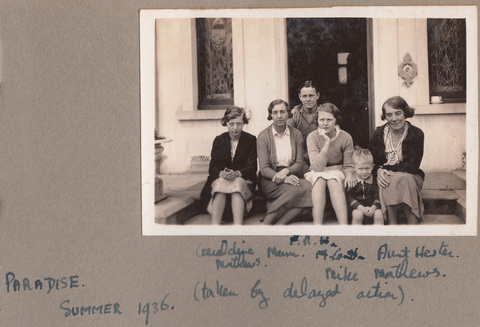
Family at Paradise
The copyright in the black and white photographs on this page belongs to Brigadier Frank Henn; I am extremely grateful both to him and to Seán Matthews for making it possible for me to use them on this page. The black and white photos show, better than my colour pics do, why this place was called Paradise.
Paradise in 1837
In his Topographical Dictionary of 1837, Samuel Lewis wrote this of County Clare:
But the best soil is that of the rich low grounds called corcasses, which extend along the rivers Shannon and Fergus, from a place called Paradise to Limerick, a distance of more than 20 miles, and are computed to contain upwards of 30,000 acres.
That may have been based on Hely Dutton’s Statistical Survey of the County of Clare of 1808:
The low grounds on the rivers Shannon and Fergus, called corcasses, are equal to the fattening of the largest sized oxen; these fine grounds extend from Paradise to Limerick, an extent of upwards of twenty miles, following the course of the Shannon and Fergus, and are computed to contain upwards of 20,000 acres, some say only about 10,000; they consist of a deep dark-coloured earth, generally over a blueish or black clay, or moory substratum, producing, from the greatest neglect, amongst the most luxuriant herbage, a great quantity of rushes and other pernicious weeds.
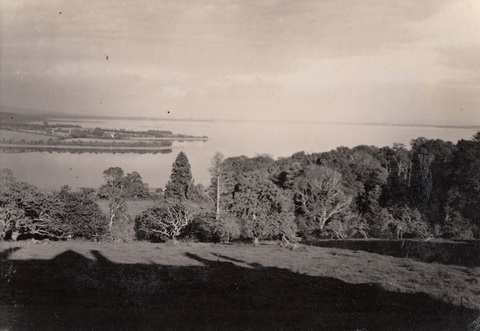
Looking over the estuaries in 1938
The Parliamentary Gazetteer of 1846, writing about the parish of Kilchrist, says that:
The villas of Fort Fergus, Cornfield, Cloonakilla, and Paradise, the last the seat of Thomas Arthur, Esq., occupy beautiful sites on the east border of the parish, and command charming views of the aqueous expanse and the large fertile islands of the Fergus.
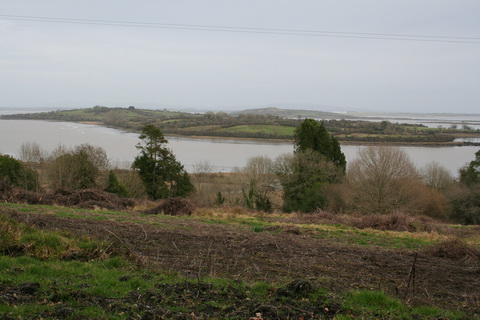
Aqueous expanse and large fertile island
oo-oo
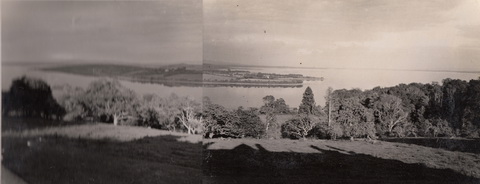
The view in 1938
Paradise is marked on the Google map.
Paradise House is not named on the modern Ordnance Survey map, but if you switch to the Historic 6″ you can see the outline of the original house, with the later outline on the Historic 25″.
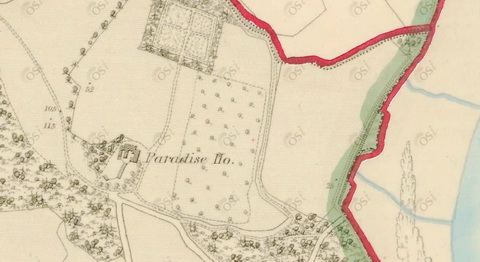
Paradise on OSI Historic 6″ (~1840)
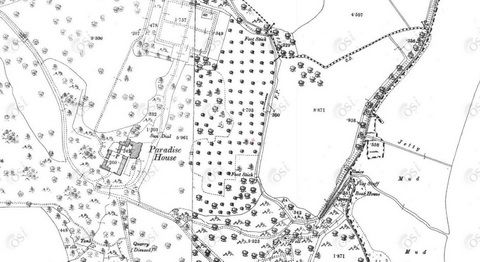
Paradise on OSI Historic 25″ (~1900)

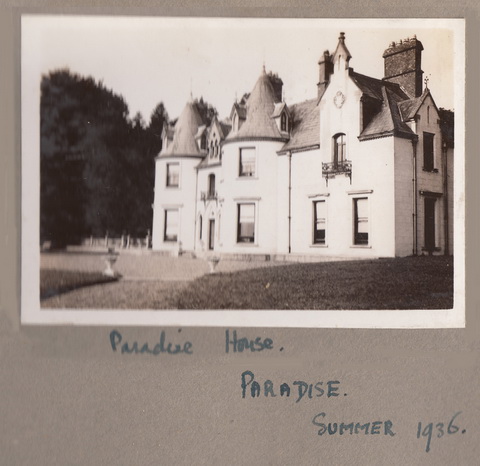
The house in 1936
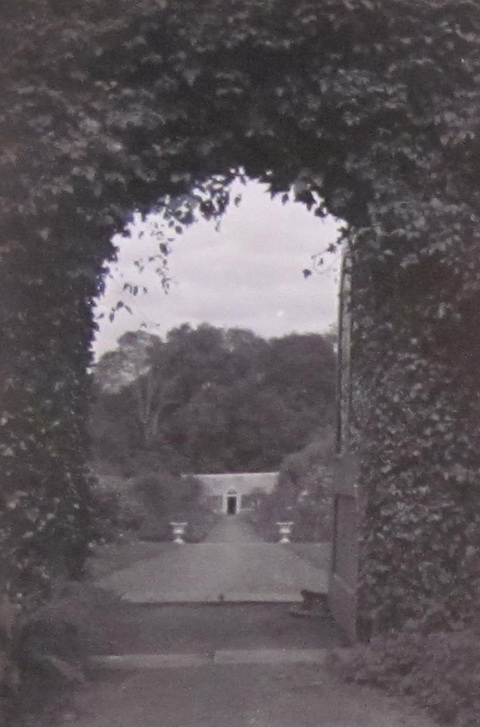
Gardens in 1936
According to the Irish Times of 18 January 1960, one Richard Henn bought the lands from the Earl of Thomond in 1685. According to a genealogical website, a later Richard Henn died, at some unspecified date, without issue, and the house passed to his wife’s brother, Thomas Arthur. Samuel Lewis, in his Topographical Dictionary of 1837, listed:
… Paradise, the residence of Thos. Arthur, Esq., beautifully situated on the Fergus, of which and the surrounding scenery it commands a most extensive view […].
He also said:
On an eminence in the demesne of Paradise is an ornamental building, called the Temple, which forms a conspicuous landmark in the navigation of the river.
Arthur’s family sold the property, in the mid 19th century, to a Henn who was a distant cousin of the original owners. The house seems to have been rebuilt in 1863. The two significant dates are shown on the front of the house.

1685

1863
In 1886 Lt William Henn RN was the sixth British challenger for the America’s Cup in his steel yacht Galatea; his exploits are outlined on a plaque on this memorial at Knocksaggart.
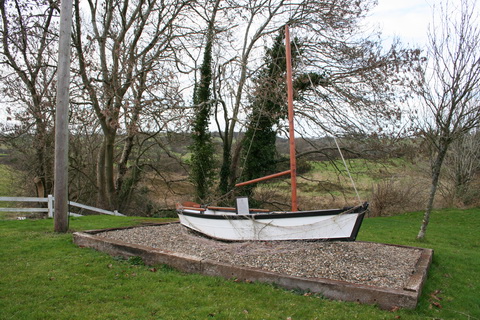
William Henn memorial at Knocksaggart
Paradise was not burnt out in the War of Independence or the Irish Civil War. After the death of Mrs Frances Henn, the house lay unoccupied for 24 years until her son, Col William Henn, late Chief Constable of Gloucestershire, sold it in 1960 to Herr Kurt Linnebach, a German millionaire commercial film maker (Irish Times op cit). It was destroyed around 1970.
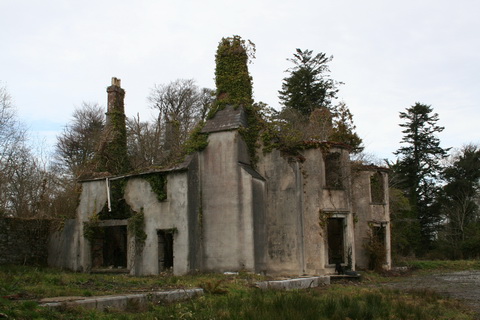
Paradise House from the south-east
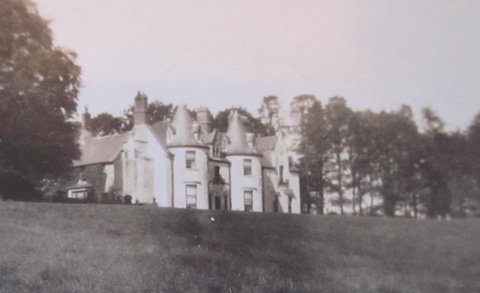
The house from the south-east in 1936

The door of paradise
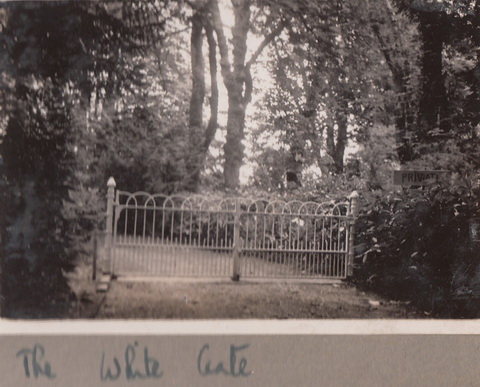
The white gate in 1936
The Yeats scholar Thomas Rice Henn was the younger brother of Col William Henn; he write about the house in FIVE ARCHES: A Sketch for an Autobiography and Philoctetes, and Other Poems, which was reviewed by Benedict Kiely in the Irish Times [whose punctuation of the title I reproduce] on 25 October 1980. The title probably refers to Ballycorick Bridge, over the creek of the same name, rather than to the nearby pub.

The five arches of Ballycorick Bridge
There is an older photo of the bridge in John Bickerdyke’s Wild Sports in Ireland, whose preface is dated 1897, most of which was written at Paradise.

Front view
Kiely quotes Henn:
Whatever the wrongs of past history on either side, this civilisation that I had known as a boy was founded on something approaching serfdom. […] There might be, and was, friendship, great loyalty, an age-old concern with blood and race; but inescapably the Big House was built on wealth, privilege and the large revolutions of politics and religion. But it seemed to me as I write, that the Anglo-Irish race to which I belonged had been sliding down for a very long time.
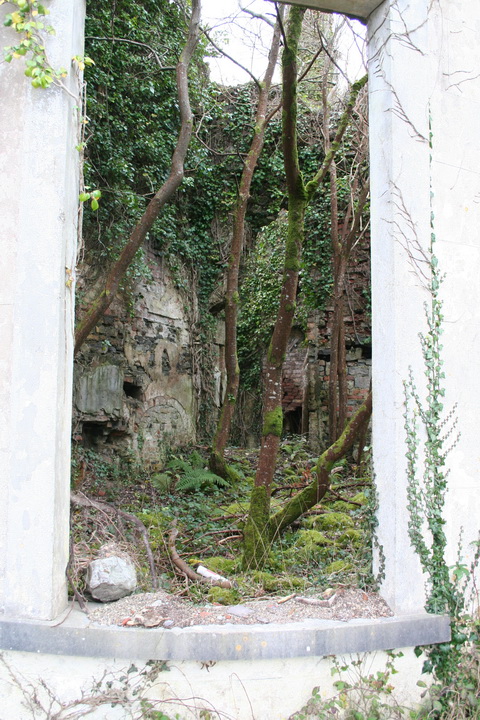
Inside the house
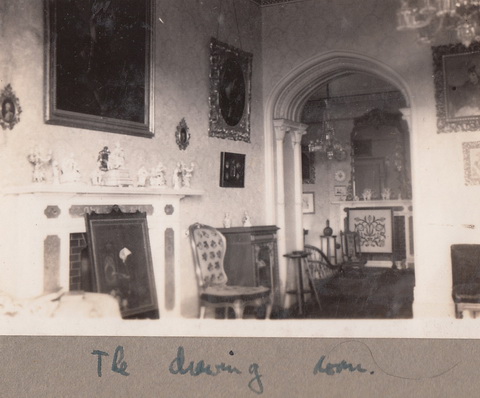
The drawing room in 1936
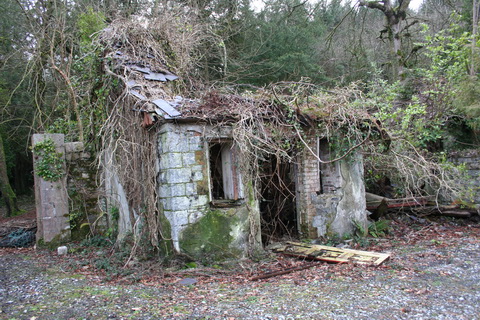
The courtyard

The gates of Paradise (or at least of the courtyard)

And Paradise were wilderness enow
But that original Richard Henn had an eye for a view; his name for his new home was well chosen.
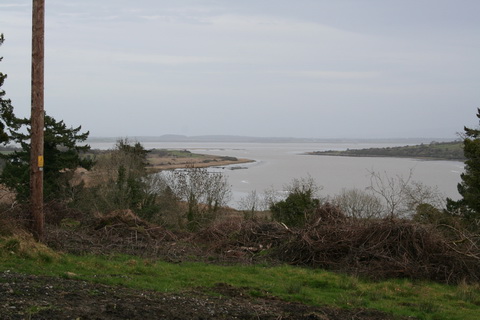
From Paradise

From Paradise 1938

 Irish waterways history
Amazing pictures – and a great history! My grandmother Hester Mahon and my father Michael Matthews, and his sister Geraldine were visitors to this house in 1936. Hester’s sister Geraldine Mahon married William Henn – and they were some of last occupants of the house. Geraldine’s son, Brigadier Frank Henn recently allowed me to scan in pictures from his collection of various images of Paradise House. Its very sad to see the state that it is in today. I hope to visit one day.
Sean Matthews
Thanks, Seán. The location is stunning: you can see why they called it Paradise. bjg
I love the place!!!
Do you know who is the owner now?
Zoë
I don’t, I’m afraid. There is a notice on a couple of trees with a London phone number on it, but I didn’t take a note of it. I mean, I wouldn’t have if I’d been there, which of course I couldn’t have been because that would be trespassing. bjg
i was visiting kildysart where we had the best time in all the pubs, the locals are very friendly and have a great sense of humour , there is something special about this village which makes it different to others. We enquired as to why it was called paradise and were told it was because of the view, , so we decided to check it out on our way back, we were speechless when we drove down to the old house it is truly breathtaking, , The house and stables and court yard , gardens must have been awesome in its day . There is a picture of it before it was burnt , in kings pub ballycorick.
Thanks, Declan. I must visit that pub. bjg
Bjg.. My wife’s grandmother maud henn lived there certainly in the 1930 – 40’s. She wcs the daughter of Francis blackbourne henn. Clare my wife, named I believe after co. Clare, has never been there but her dad visited as a boy and was there in 1939 when war was declared. We have photos of paradise house looking magnificent. do you know who we should talk to to find out the details of the current owners?
I’ll email you direct …. bjg
I’ve been fascinated by this house and its history since I was a child. Always wondered who owns it now, useful to know if my numbers ever come in!
Sean is there any way of seeing the photos you scanned? And or where would one find out more on the Henn family history?
I have passed on your query to Sean and, if he wants to correspond with you (and it’s OK with you), I’ll give him your email address.
The book “Five Arches” is well worth reading. It’s half memoir and half poetry but gives a fascinating insight into the latter days of a way of life.
bjg
Pingback: Henn, cheese, pickles and Guinness | Irish waterways history
Thanks
Bjg
Pingback: This day thou shouldst be with me | Irish waterways history
HAVE YOU EVER SEEN A PLACE SO GREEN OR SUCH A LOVELY VIEW,
HAVE YOU EVER SEEN THE SUN DANCING ON THE RIVER SHANNON BLUE,
WHERE THE BLACKBIRD AND THRUSHES SING AND CROWS HAVE NEVER FLOWN, IN THIS LOVELY PLACE IN THE CO CLARE NEAR PARADISE MY HOME.
OH IT’S TALL TREES HIGH THEY REACH THE SKY KEEP A WATCH ON OUR VILLAGE NEAR,
OH THE ISLANDS AND SHANNON AIRPORT TOO CAN ALL BE SEEN FROM HERE, THERE’S GLEN AND FOYNES AND ASKEATON TOWN, SURE THEY ALL COME IN TO VIEW,
FROM THIS LOVELY PLACE IN THE COUNTY CLARE OH PARADISE MY HOME .
SO IF YOU WALK WITH ME I’LLSHOW TO YOU THE BEAUTY OF THIS PLACE, BALLYCORICK BRIDGE WITH ITS FIVE ARCHES AND THE SLOBLAND WILD TO VIEW,
THE CASCADING OF THE WATER FALL AND CLONDEGAD BIG HOUSE,
IT IS HERE THEY SAY THAT CLERGY STAYED MANY YEARS AGO.
AND HERE ARE THE GRAVES WHERE OUR FRIENDS ARE LAID OH MAY THEY REST IN PEACE,
AND MY MEMORY SURE IT BRINGS ME BACK TO THIS OLD CREAMERY,
IT WAS HERE I CAME WITH MY HORSE AND CART AND MY TANKARDS FULL OF MILK AND CREAM,
IN THIS LOVELY PLACE IN THE COUNTY CLARE NEAR PARADISE MY HOME.
AND THIS IS OUR CHURCH WITH ITS LOVELY STONE WORK SURE IT’S HERE WE COME TO PRAY,
AND THE BELL ABOVE RINGS OUT FOR US THE ANGELUS DAY BY DAY,
AND FR. DONA AND FR. TOM WILL HELP YOU TRUE THE GOOD TIMES AND THE SAD,
IN THIS LOVELY PLACE IN THE COUNTY CLARE NEAR PARADISE MY HOME.
OH DANGAN CASTLE IF YOUR WALLS COULD TALK WHAT HISTORY IT WOULD TELL,
FOR IT WAS HERE THE DESCENDANTS OF BRIAN BORU AND THE KING OF THOMAND DWELLED,
AND MAURA RUA SHE STAYED HERE TOO IN THOSE DAYS OF LONG AGO,
IN THIS LOVELY PLACE IN THE COUNTY CLARE NEAR PARADISE MY HOME.
IN BALLYNACALLY I WENT TO SCHOOL IT WAS THERE I LEARNT MY AON, DO, TRI, AND IN FAMINE TIMES THE SCHOOL WAS IN USE TO FEED THE HUNGRY AND THE POOR,
BUT IT’S NOW PART OF OUR COMMUNITY HALL AND IT’S USED BY YOUNG AND OLD,
IN THIS LOVELY PLACE IN COUNTY CLARE NEAR PARADISE MY HOME.
OH THE LAUGHTER OF CHILDREN CAN BE HEARD FROM OUR NEW SCHOOL DOWN THE STORE ROAD,
THERE’S NO CHALK NOR SLATE THERE’S NO STRAP NOR CANE, THANK GOD THOSE DAYS ARE ORE,
BUT COMPUTERS NOW AND THE INTERNET AND THERE’S LOTS OF MOBILE PHONES, IN THIS LOVELY PLACE IN THE COUNTY CLARE NEAR PARADISE MY HOME.
Copyright Kitty O’Donoghue
Thank you. bjg
My grandmother Lilian Henn was a sister of Maud Henn. Lilian married Philip Stanhope Williams . They lived in Malaya for several years where Lilian gave birth to twins ‘Kitchie’ and Frances. I have an album with some photos of the family’s visit toParadise whilst on leave in UK.
I can remember being visited by my granny’s brother Uncle Tom. (Thomas Henn)
Thank you very much for that, Tessa. If you have any photos of Paradise that you would permit me to reproduce here, I would be very grateful. bjg
Hi, my late grandfather sold Paradise back in 1960. My father was the oldest of his 3 children. I live in Canada and had the very fortunate opportunity to see Paradise many years ago. My uncle, Brig Frank Henn, had provided me with a lot of information about my family history. It is truly a pity that Paradise House has been destroyed. And “yes”, my great uncle’s book “Five Arches” was based on the bridge, and each “arch” was about a particular stage in his life.
Thank you very much for commenting and for providing that confirmation. It would be nice if something were done with Paradise but I don’t know what the current owner’s intentions are. bjg
I am a structural engineer who specialises in conservation and have put buildings like paradise back together again. Is it fantasy to think we could pull together to restore paradise? I know who owns it now. It’s on the record of protected structures so the current owner can’t flatten it. I once approached the local conservation officer in Limmerick and felt he would be very supportive of a good conservation approach.
‘ the paradise trust’ ?
Jeff Stott.
It would be nice, although in these hard times I don’t know where the money would come from. It’s such a stunnning location that some millionaire, in search of a haven, might like to fund a restoration. bjg
Not sure of the legal side of things under Irish law, but trusts are charitable and attract grants and lottery funding. Paradise is steeped in history in one of the most beautiful parts of Ireland. It’s a shame to leave it to ruin, it could be used as an educational retreat of some sort, especially for writers. I can see so many people interested on the web I thought there may be enough force to generate something.
Hello, I happened upon the house today (honestly). There has been some damage since your photos were taken. I used drive up and down that road so many times and always thought something special must be behind those rhododendron trees. Many thanks for the great article and what a great great view from the house from door. Oh if I had shmegga bucks with nothing else to do.
Thanks, John. Sorry to hear there has been more damage. We’ll all have to buy lottery tickets …. bjg
Hopefully you can see the few photos I put up on instagram, I must go back there in spring.
http://instagram.com/jdrysdale1/
Thanks: hope you enjoyed your lunch! bjg
Great to see those pictures John. Very sad to hear of the continued decay of this special place. More sad news: My Aunt Geraldine Binning, nee Matthews, who features in the pictures above died on 1st April in Rosscarbery, Co. Cork (where her daughter and family lived). A sad loss. She was the last person in my family who had been to Paradise when the Henn’s were there and we will miss her greatly.
Hello
Brig Frank Henn’s notes on the Henn’s of Paradise House are now on the Clare Library website full marks to the staff for doing that as they existed only in hard copy form.
http://www.clarelibrary.ie/eolas/coclare/genealogy/don_tran/fam_his/henns/henn_paradise.htm
Regards
Tom Henn
Great news! Thanks, Tom. bjg
I was fascinated to find this page, as my uncle Senan (Siney) Loughnane, who lived close to Paradise House, was employed in the late 1990s to care for the Henn family graveyard at Paradise. I have a couple of letters from Frank Henn in Somerset with which was enclosed a cheque for £25.00. Many years earlier, about the late 1960s, I had been given a tour of the inside of Paradise House by a local resident, John McAuley, who was employed by the then German owners as a caretaker in their absence. I particulary remember being shown a room which was for the owner’s personal pilot.
what a shame beautiful place like that gone for ever
The Hennessy sisters were related in some way to my mother (Molly Ellis) of Spanish Point and were known in the family as the Birds of Paraise…..
Hi,
Im an artist working on a film project in the Shannon estuary.
Your blog has been a great help and I was wondering if you would be happy to have a brief phone conversation with me to help out with my research?
Thanks
Laurie
I will reply by direct email. bjg
Hi there,
Do you know who the current owner is?
Many thanks,
BOD
My dad John Loughnane came from paradise. I have nice memories of going there as a child. My uncles siney and micko were the last of the Loughnane’s in paradise. However my brother Joe Loughnane farms my mothers place in Cooga close to padradise. My mom and dad met going to the creamery with their milk. I live in Tulla. Am the youngest of ten. All still alive thank god.👍