I don’t know if you remember, but a few months ago we had sunshine, and it was warm outside. Back then, at the end of May in fact, I went on the Industrial Heritage Association of Ireland‘s tour of Carrick-on-Suir, Clonmel and areas in between.
In Carrick, Ralph O’Callaghan showed us some of the sights and addressed the group in the Heritage Centre. Here are some of the things he showed us.
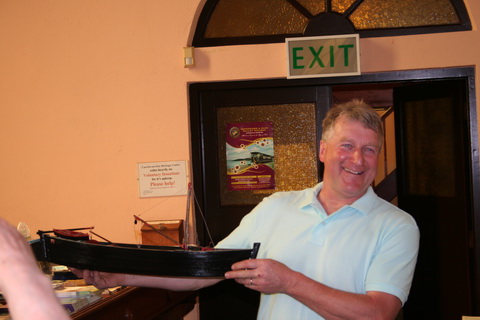
Ralph O'Callaghan shows a model of a yawl (a horse-drawn boat used to carry goods between Carrick and Clonmel)
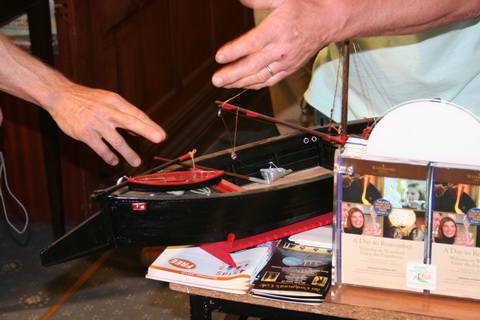
This yawl is equipped for sand-dredging
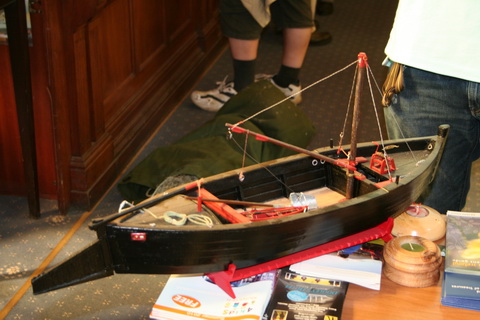
Note the large rudder
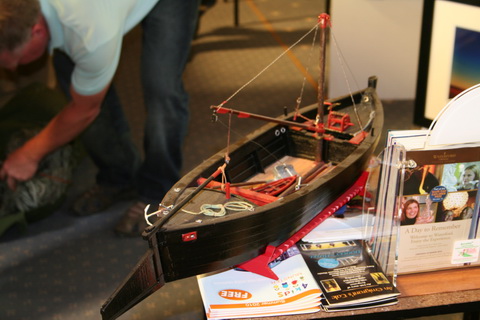
The yawl
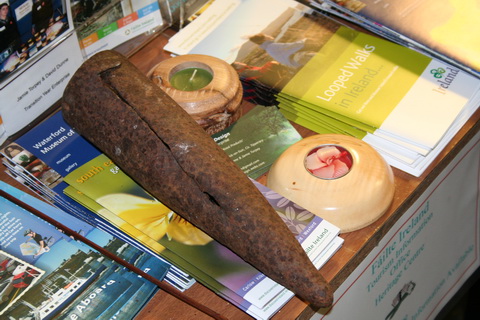
A steel shoe for one of the 30' poles used by Suir and Barrow boatmen
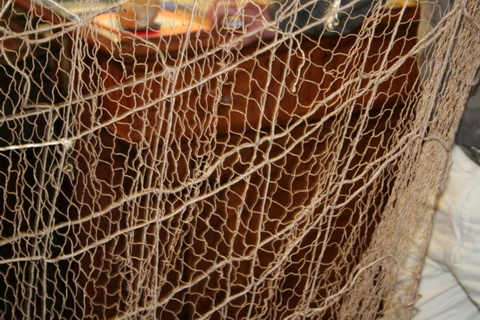
A hand-made net for snap-net fishing
After lunch, I was fortunate to be one of two people who got a trip in Ralph O’Callaghan’s canoe, from Kilsheelan upstream to the Anner bridge just downstream of Sir Thomas’s Bridge, which is itself downstream of Clonmel.
I have set up a small (approx 120-photo) slide show to give an idea of the conditions on the Suir at the time. The water level was low after several dry weeks, but the previous winter’s floods may have left more silt than usual. At any event, a successful passage required Ralph’s skills and his intimate knowledge of the river and its weirs. You can see some of the weirs, and the gorgeous scenery, in the show.
I am very grateful to both Ralph O’Callaghan and Fred Hamond for facilitating the boat trip and for sharing their immense knowledge of the Suir.
If you like interesting boats, you’ll like Ralph’s canoe.
Posted in Ashore, Economic activities, Extant waterways, Forgotten navigations, Industrial heritage, Irish inland waterways vessels, Irish waterways general, Non-waterway, Operations, Scenery, The fishing trade, Weather
Tagged Anner, apple, Black Weir, boats, bridge, Bulmers, canal, canoe, Carrick-on-Suir, Clonmel, fishing hut, floods, flow, Gurteen, Gurteen Le Poer, IHAI< Ferd Hamond, Ireland, Killaloan, Kilsheelan, lost, Magners, Neal's Weir, Operations, orchard, Power's Weir, quay, Ralph O'Callaghan, Rodrigo Flash, Sir Thomas's bridge, Slievenamon, Suir, Tikincor, vessels, water level, waterways, weir


 Irish waterways history