Tag Archives: Ulster Canal

Canal parties

I wondered recently whether the proposed canal to Clones was really a Sinn Féin canal. And I have also wondered whether the proposed restoration of the Lagan Navigation was a Unionist riposte, to be undertaken without the involvement of cross-border implementation bodies. With Michael McGimpsey having supported it, I thought of it as an Ulster Unionist project: although there seems to have been some DUP interest in at least some aspects, I’d have thought the Upper Bann was more DUP territory, with at least part of the Lower Bann staunchly supporting Ulster Scots heritage.

Now (h/t Industrial Heritage Ireland) comes news that the SDLP has got itself a canal: it wants the Newry Canal to be handed over to Waterways Ireland by the four local authorities that currently own it. This would extend the influence of the cross-border body into another area of Northern Ireland and bring it even into Portadown.

The Newry and Portadown Branch of the IWAI wants the thing restored and no doubt the local authorities (who have maintained it as a popular walking and cycling route) would be glad to get it off their budgets. Waterways Ireland, alas, remains deaf to my blandishments and is determined to have the Ulster Canal made navigable instead of setting up a walking and cycling route, and no doubt it would welcome having the good folk of Newry and Portadown lobby for it to get United Kingdom taxpayers’ money (if there ever  is any to spare) to restore the Newry Canal.

But the major question that nobody has answered is this: what is the Alliance Party doing? What canal does it want restored?


Amazing news from the BBC …

… about funding for the Ulster Canal.

The DAHG view of waterways

The Department of Public Expenditure and Reform (whom god preserve) has published the capital expenditure submissions made to it recently by other government departments, all of them pleading to be spared the axe. That made by the Department of Arts, Heritage and the Gaeltacht can be downloaded here (PDF). Note the various blacked-out sections ….

The department did not want any cut in the capital allocation to Waterways Ireland:

Expenditure reduced by 45% in recent years and no scope for further reductions, given existing commitments and ongoing capital maintenance requirements.

However, departments were required to show how they would cope with a 30% cut. DAHG said that one of its priorities was

… the contribution that programmes make to North-South Co-operation

which would mean

Maintaining sufficient support for Waterways Ireland, the largest of the North/South Implementation Bodies, to deliver on the shared objective of improving the attractiveness of the waterways for recreational tourism, North and South.

If it had to cut by 30%, DAHG would cut WI’s capital allocation to €5 million; in the event it was cut to €4.5 million.

There is a very interesting descriptive section later in the document. It shows, first, that WI’s capital allocation was €11.25 million in 2008, €8.675 million in 2009, €7.8 million in 2010 and €6 million in 2011. At €4.5 million for 2012, it is 60% down on 2008. Waterways are not flavour of the month any more.

Objective conflict

The document then gives a “High Level Objective” …

To maintain, develop and foster North/South co-operation and to support Waterways Ireland, the North/South Waterways Body.

… followed by a section headed “Consistency with Programme for Government”:

Apart from its unique contribution to North/South Co-operation, Waterways Ireland contributes significantly to tourism development across the island and its operations are very much in line with commitments in the Programme for Government:

“We will target available resources at developing and co-coordinating niche tourism products and activity packages that are attractive to international visitors focusing on food, sports, culture, ecotourism, activity breaks, water-based recreation and festivals. Event tourism will be prioritised to continue to bring major fairs and events to Ireland.”

The next heading after that (I presume these headings are standard for all departments) is “Contribution to Economic Recovery” (of which more below).

The interesting thing here is that there is no connection whatsoever between the high-level objective and either the programme for government or the contribution to economic recovery. The two sets of points exist in completely different universes; even DAHG itself makes no attempt to show that northsouthery can help the economy or vice versa.

So why is DAHG sticking to a high-level objective that is completely irrelevant to the policies and concerns of the current government? Will waterways northsouthery join the Restoration of One of the National Languages and the Draining of the Shannon, not to mention the Takeover of the Fourth Green Field, as one of those nationalist objectives held dear by small numbers of devotees but ignored by all rightminded citizens?

Uneconomic activities

The disconnect between the high-level objective and the other desiderata is in itself a weakness, but it also suggests that DAHG is not keeping up with the programme. Northsouthery may have been good for waterways in the recent past, but nowadays your Unique Selling Proposition has to be economic. Stimulating growth, jobs or tourism good; pretty well anything else is irrelevant.

DAHG might have realised that if it had considered the rest of the headings; adopting a non-economic high-level objective, and failing to link that objective to economic matters, gives a bad impression (to DPER) from the start.

DAHG might have recovered some ground if it had shown how the waterways benefit the economy, but it made a very weak case under the heading “Contribution to Economic Recovery”:

The development and restoration of inland waterways is an important catalyst for the development of tourism and leisure opportunities, rural development and the protection of our heritage infrastructure. The Tourism and Recreation Sectors are one of the largest and important indigenous industries in Ireland and Northern Ireland. These sectors provide and generate significant levels of employment and earnings and have brought economic activity to areas on the island where little or no other economic activity exists. The tourism and recreational development and investment along the waterways bring activity to the very heart of the island and the communities along the waterway corridors.

From 2000-2010 there have been 10,115 metres of new moorings built, 8,020 metres in the South and 2,095 metres in the North. There are approximately 13,000 boats on the Waterways – 8,000 in the South and 5,000 in the North. There is approximately €20m from hire boats and €60m – €80m from private boats generated each year. In 2010 over €9 million in tourism revenue was generated.

Oh dear. The first para is waffle. The second has four sentences, the first of which inserts a statistic that seems to have been chosen at random and that is, at best, an input measure. The second sentence gives numbers whose significance is not shown. The third and fourth give output measures (without sources) but don’t relate them to the inputs.

What is really needed is something to show whether spending on waterways is good value: something comparing inputs and outputs or, if you prefer, costs and benefits. The only comparison the reader can make here is that, in 2010, €7.8 million of capital spending produced €9 million in “tourism revenue”, whatever that is; the gimlet-eyed scrutineers of DPER will no doubt have added WI’s current spending allocation to the capital and decided that waterways were not the most productive use of scarce capital resources.

They haven’t gone away, you know

The next section, “Savings Options”, is even more depressing. The first three paras are background information that belongs elsewhere, but they seem to be intended to provide a lead-in for the fourth:

In 2007, the North South Ministerial Council (NSMC) gave Waterways Ireland an additional responsibility for the reconstruction of the Ulster Canal from Upper Lough Erne to Clones and, following restoration, for its management, maintenance and development principally for recreational purposes. The then Government committed to funding the project in full, at an estimated cost of €35m. This position remains unchanged and was noted in papers presented at the recent NSMC Plenary meeting in Dublin.

That para seems to be intended to warn us that, as soon as the garlic of economic pressure is removed, the undead canal will arise from its grave and seize state funding. Note, by the way, that the “estimated cost” figure given is far too low; why is DAHG using a figure that is €10 million lower than Waterways Ireland gives?

Come to Ireland for a pump-out

The final paragraph of the section suggests that DAHG has lost touch with reality:

The Waterways Ireland Capital Programme 2012-2016 focuses on improving the attractiveness of the waterways for tourism. The primary actions relate to the provision of visitor services, such as pump-outs, service blocks and other facilities designed to provide an attraction for tourists, including car parking and play areas.

Much as I admire WI’s pump-outs and shower blocks, I can’t believe that they will be sufficient in themselves to attract many high-spending tourists from abroad. After all, several other countries have such facilities. I have been critical of some aspects of WI’s marketing strategy, but it’s considerably more sophisticated than relying on pump-outs and car parks to attract well-to-do tourists. Haven’t the DAHG bods read the strategy?

The return of the son of the ghost of the Clones canal

There is a final section: three paragraphs about the Ulster Canal.

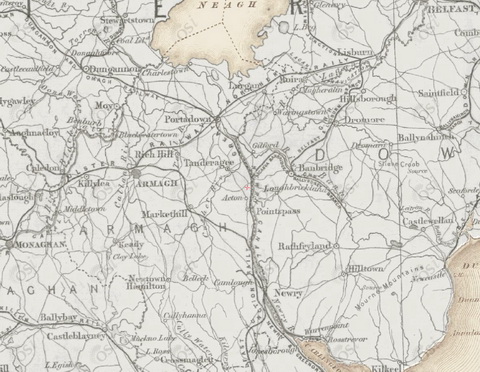
The Ulster canal project initial phase is a major cross border initiative for the state. The Ulster Canal in total is 93 km long and extends from Lough Neagh to Upper Lough Erne. It runs through counties Armagh, Monaghan and Fermanagh. It was originally opened in 1841 to link the northern navigation systems to the western and southern systems via Lough Erne and the Ballinamore and Ballyconnell Canal. [No it wasn’t. bjg] Due to operational and financial difficulties the canal struggled to be viable and was finally abandoned in 1931.

As canal reopening progressed in the 1980s and 90’s, and following the success of the reopening of the Shannon Erne Canal, a number of studies were carried out into the reopening of the Ulster Canal. The outcome of these studies was that at the North/South Ministerial Council (NSMC) Plenary meeting in July 2007, the Council agreed, in the light of the Irish Government’s offer to cover the full capital costs of the project, to proceed with the restoration of the section of the Ulster Canal between Clones and Upper Lough Erne a distance of some 13km.

This flagship north south co-operation project will focus on attracting boating traffic from the Erne system in Northern Ireland and the Shannon System, via the Shannon – Erne, to a new destination at Clones. It is anticipated that this will lead to regeneration of the economy of Clones and its hinterland. This project will provide employment during its construction and will lead to fuller employment in the Clones area once completed. The full capital cost is estimated to be €35m. Waterways Ireland is currently taking the project through the preliminary design and planning stages and then letting the contract as a design and build project. It is expected that the project will take 6 years.

[New readers can find the antidote to this rubbish here.]

Happily, DPER didn’t fall for this, and even if the Clones Canal got all of WI’s capital allocation for six years it wouldn’t cover the cost. But it seems to me that at this stage DAHG, with its obsession with northsouthery and in particular with the Clones Canal, is a threat to the future of the waterways. At a time when the waterways need a strong economic justification (assuming one exists) for capital and current spending, DAHG’s submission suggests that it is away with the fairies: completely out of touch with both the economic realities and the government’s priorities. Its submission to DPER can only have damaged its credibility, and the outcome was an even greater cut in the capital allocation to Waterways Ireland.

 

Ulster Canal cost update, updated

Updated 1500 hrs 16 December 2011

Waterways Ireland tells me today that the latest estimate of the costs of building a canal to Clones is €38 million plus VAT. I asked for more details:

Can you give me a breakdown please? How much is land acquisition, how much the channel itself, how much building locks, how much on bridges or whatever?

And what VAT rate applies?

WI responded:

This information is commercial-in-confidence. For competition reasons prior to tendering we are unable to provide a breakdown.

As “prior to tendering” covers the period between now and the end of the world, I said:

Tendering? You mean WI can afford to hire contractors? I would be grateful if you could tell me the source of your finding and the expected dates of its arrival.

WI was unable to comment ….


What is missing?

Jimmy Deenihan TD, Minister for Arts, Heritage and the Gaeltacht, in the Dáil debate on Financial Resolution No. 13: General on 7 December 2011:

Turning to North-South co-operation, I am committed to developing such co-operation within the broader arts, heritage and commemorative activities of my Department, as well as through the funding of the North-South bodies that come under the aegis of my Department. Provision of €42.718 million has been made in 2012 to support the two North-South implementation bodies, An Foras Teanga, comprising Foras na Gaeilge and the Ulster Scots Agency, and Waterways Ireland. These budgets will be subject to the approval of the North-South Ministerial Council in due course. It is envisaged savings will be achieved through efficiencies and increased focus on front-line services. The Minister of State will speak about An Foras Teanga but for Waterways Ireland the proposed breakdown for the 2012 allocation for this area is a provision of €22.59 million in current funding and capital funding of €4.5 million. This allocation will facilitate the ongoing maintenance and restoration of Ireland’s inland waterways, thereby increasing recreational access along routes and waterways. This expenditure will also assist in attracting increased numbers of overseas visitors and in stimulating business and regeneration in these areas.

I wonder what “commemorative” means in this context.

Unionist pressure on Waterways Ireland …

… increased today as leading academic and commentator Professor Billy McWilliams called for an Olympic event to be held at Portglenone. Professor McWilliams, widely regarded as a leadership figure within the Ulster Scots cultural movement, said that the synchronised swimming could be held in the Lower Bann (where navigation is managed by Waterways Ireland, a North-South Body). Professor McWilliams said:

Now it will nat hiv passed yer notice thit the Inglish hiv the Olympics nixt year, fur they hivnae stapped bangin’ oan aboot it in their papers an’ oan the Television. Ah hiv noted thit events an’ the like arenae entirely based in London, wi’ sailin’ at Cows, Fitba in Cardiff an’ Glasgow fur example. Howiver try as Ah might Ah cannae fine a single event in oor ain wee country. Ye wud think that they might at laist hiv threw us the shootin’ at things oor the hittin’ eacho’er, buy it wud appear we dinnae even warrent thon.

He pointed to the excellent facilities available:

An area of the Bann will be roped off for the competition preventing intrusion by anglers and/or perverts. Folk will be able to watch it from the marina, or up on the bridge, or the car park beside the Wild Duck.

There are two changing rooms in the community centre, wan for men and wan for women, and the hall could be turned into a media centre (no wi-fi, but folk could bring their dongle yokes). There is also a small, but clean, kitchen which provides tea making facilities. We have a right mobile phone signal, several well stocked shops and a rake of B&Bs.

Given that WI’s budgetary allocation from the Free State has been cut, and that the ratio between contributions from the two jurisdictions is fixed, the extra cost of staging an Olympic event might cause difficulty for Waterways Ireland. However, Professor McWilliams is known to be a doughty campaigner ….


Equal rights for Ulster Scots

I wrote about the government’s expenditure plans for the Department of Arts, Heritage and the Gaeltacht here. At the time, the allocation of current expenditure was not given in detail and I guessed that Waterways Ireland might (subject to the approval of the North-South Ministerial Council) be facing a cut of 5.4% in the 85% of its current budget that comes from the RoI.

A breakdown of the Budget Estimate Allocations for 2012 is now available for download (three .xlsx files). The cut in WI’s current expenditure allocation is about €1.7 million, which is 7% of the figure now given for the 2011 allocation. It is confirmed that the capital allocation is down by 25%, from €6 million to €4.5 million.

The capital allocation to Irish Language Support Schemes stands out: it is being doubled, a rise of 100%, although admittedly from only €100,000 to only €200,000. There is no allocation to Ulster Scots, alas: this absence of parity of esteem may distress Tha Lord Laird o Artigarvan.


Devolution, Sinn Féin and the Clones canal

Sinn Féin takes more interest in the Ulster Canal than does any other political party. It may not be coincidental that the government seems to be trying to get two local authorities, on both of which Sinn Féin is the largest party, to solve the canal’s funding problem.

RoI budget part 1: expenditure on waterways

When Waterways Ireland spends on capital investment in either RoI or NI, the total cost is paid by the jurisdiction in which the expenditure occurs (apart from the decision by the RoI government to pay the total cost of a canal from Lough Erne to Clones, where about half of the route lies in NI).

For current spending, Waterways Ireland gets 85% of its grant income (which is itself accounts for the vast bulk of its total income) from the RoI Department of Arts, Heritage and the Gaeltacht and the balance from the NI Department of Culture, Arts and Leisure.

The RoI government expenditure plans were announced on Monday 5 December 2011. The Comprehensive Expenditure Report 2012–2014 section on the Department of Arts, Heritage and the Gaeltacht mentions waterways, or matters affecting them, in several places.

Key Outcomes of the Comprehensive Review of Expenditure

As I noted here, waterways are the lowesst priority within the department. It intends to focus on eight activities, and Waterways Ireland and An Foras Teanga are covered in the final point:

  • supporting Waterways Ireland and An Foras Teanga within the context of the implementation of the Good Friday/ St Andrew’s Agreements.

An Foras Teanga covers Foras na Gaeilge and Tha Boord o Ulster-Scotch/The Ulster Scots Agency.

Expenditure and Numbers Ceilings

No mention of waterways, but the department says that steps to be taken in 2012 will save €6 million in each year of 2012, 2013 and 2014, with further savings of €10 million to be made in 2013 and €22 million in 2014. The department’s “total allocations for gross current expenditure” are to be reduced from €232 million in 2012 to €218 million in 2013 and €205 million in 2014. I can’t quite make the numbers match, but never mind.

Estimates 2012: summary of measures

The measures are summarised under five headings, one of which — North-South Co-operation — covers Waterways Ireland and An Foras Teanga. The department expects to save €2.2 million here, but says:

Any savings, in excess of the agreed 3% per annum efficiency savings, for the North/South Implementation Bodies will require the approval of the North/South Ministerial Council. It is envisaged that savings will be achieved through efficiencies and a focus on front-line services.

The 2011 estimate for current expenditure for WI and AFT was €40 982 000; a cut of €2.2 million is about 5.4% of that amount.

Indicative savings areas 2013–2014 to remain within Expenditure Ceilings

This section shows €1 million more saved in each of 2013 and 2014 but says:

Savings, in excess of the agreed 3% per annum efficiency savings,  for the North/South Implementation Bodies will require the approval of the North/South Ministerial Council.

It is not clear whether, in the figures for 2012 and in those for 2013 and 2014, the amounts of €2.2 million, €1 million and €1 million are to be in addition to the “3% per annum efficiency savings” or whether the amounts shown include the 3%.

The introduction to the section on Indicative Savings Areas says:

Reducing overall expenditure in 2013-2014, as required by the expenditure ceilings, will be a significant challenge and require ongoing critical analysis by the Department. The Department’s funding is largely focused on supports to sustain the arts and our cultural institutions, to protect our natural and built heritage and to promote our native language. However, much of this current expenditure is also of strategic importance in sustaining and growing cultural tourism and is making a significant contribution to economic recovery and enhancing our national reputation. All areas of spending will be subject to continued evaluation to ensure that scarce resources are directed towards areas of greatest impact and value-for-money.

This is standard civil service please-spare-our-budget stuff.

2012 Estimates for Supply Services

This section no longer provides a breakdown between An Foras Teanga and Waterways Ireland. In the 2011 Estimates, AFT got roughly 40% and WI roughly 60% of the money for current expenditure; AFT required no capital funding so WI got the whole lot under that heading. I will assume that the same ratios apply for 2012 but, if anyone knows better, I will be happy to amend this.

Current spending (WI)

2010 Estimates: €25 585 000

2011 Estimates: € 24 335 000

2012 Estimates: €22 929 600 (60% of €38 216 000)

Capital spending (WI)

2008 Estimates: €11 000 000

2009 Estimates: €10 300 000

2010 Estimates: €8 000 000

2011 Estimates: €6 000 000 (or €6 002 000)

2012 Estimates: €4 500 000 (or €4 502 000) (100%)

A footnote says that the allocations to northsouthery are subject to the approval of the North–South Ministerial Council.


The Ulster Canal: the departmental view

I have received from the Department of Arts, Heritage and the Gaeltacht a statement on the funding of the Ulster Canal; I reproduce it here.

This statement seems to me to be more forthright than statements from DAHG’s predecessor department, which is something I welcome, and so I reproduce it without comment. I will, in a few days, offer some thoughts on the canal’s prospects.
