It is necessary to draw public attention to a lamentable case of discrimination in Irish public policy and to announce the formation of a group to combat that discrimination and to ensure equal treatment for all.
Suppose you like travelling around Ireland in a white plastic whatsit. You need places to park, preferably free, with something nice to look at. You need services like toilets, showers, water and rubbish bins. You like to park close to fellow travellers and to meet them, perhaps for a barbie and some beer.
Your whatsit is well equipped with television and other entertainment; indeed the general standard of furnishing and equipment is very high. You can even carry toys — perhaps a dinghy and some bicycles — around with you, for some fresh air and exercise when you’ve reached a suitable place.
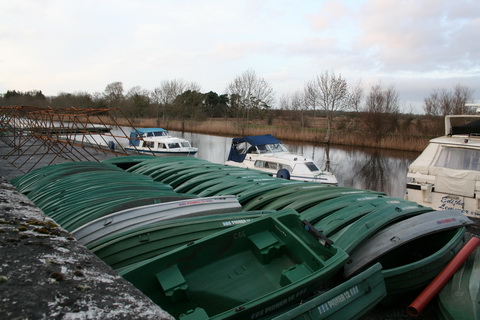
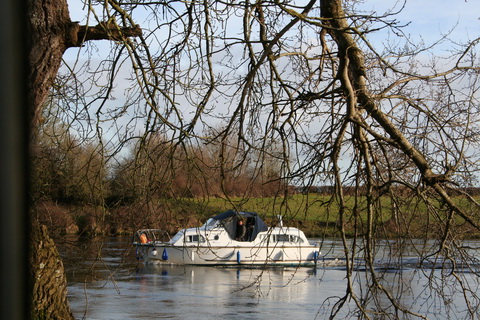
If your white plastic whatsit floats in water, you have the services of a cross-border implementation body, Waterways Ireland, spending millions (and charging practically nothing) on your leisure activities. You have government departments north and south looking after you, with the southern department keen to spend money borrowed from Germany on providing you with more places to go. And you have all sorts of other free services, like Coastguard and lifeboats, to help you out.
White plastic whatsits at Portumna Castle Harbour
If your white plastic whatsit has wheels, though, you are a pariah. You have no cross-border boy, no government departments, no free services, although your needs are the same as those of your boating brethren.
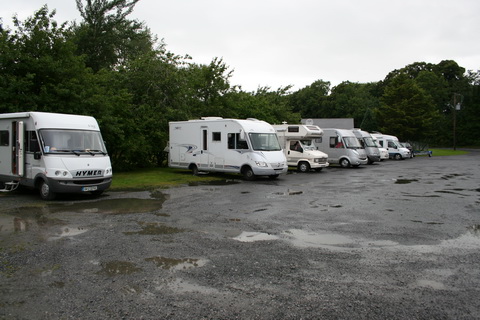
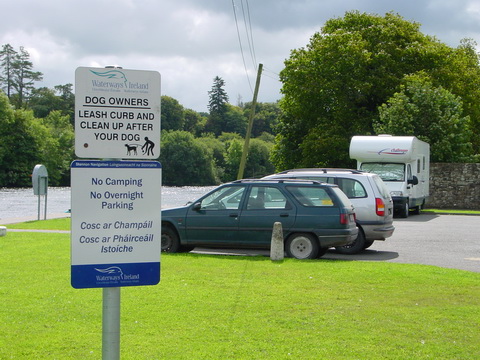
So owners of RVs (recreational vehicles, camper-vans, what you will) are forced to sneak in to Waterways Ireland harbours and to park inconspicuously along the edges. The best place to park is usually indicated by a sign.

Sign showing where to park at Killaloe

Parked beside Killaloe market
RVRC, the Recreational Vehicle Rights Campaign, seeks an end to this discrimination. We seek the provision of free facilities for camper-vans. We want a cross-border body of our own, RVways Ireland.
We have adopted Dana Lyons’s song RV as our anthem; you can listen to it free here (and while you’re at it see the animations of his best-known song here).
The Clones Canal
And this brings us, by a commodius vicus of recirculation, to Clones and the Craggy Island Canal. Boaters may like to see themselves as hardy mariners, sons of the sea who happen to be confined to inland waters, but economically they’re very similar to RVers. Many of them are older couples but some travel with children. They like going for weekends away; they need certain facilities; they don’t use hotels, B&Bs or other accommodation. They have enough equipment and supplies to prepare their own meals, but they do some shopping and may go to the pub or have a meal out.
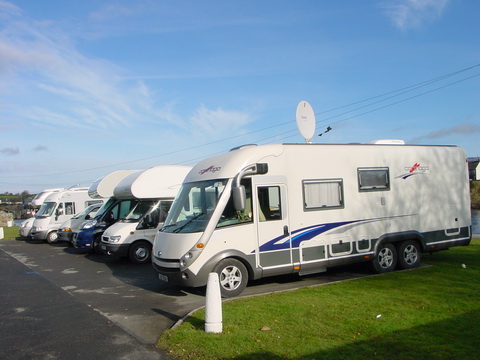
As potential bringers of wealth, RVers have some advantages over boaters. You don’t have to spend €35 million to get them to your town; they are more mobile, so they’re not confined to a single site in the town; they can even park some distance outside and still get to the shops, pubs and restaurants. And RVers are hardy souls: in late February 2011 there was not a single boat in Portumna Castle Harbour but there were four RVs.
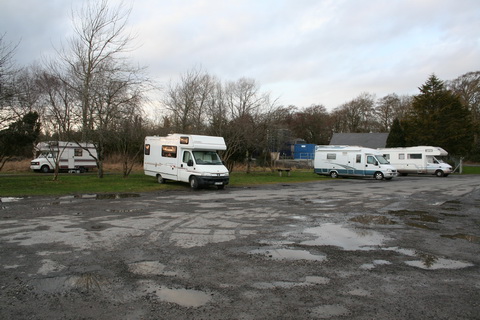
RVs in Portumna in February
So, given that Clones is an attractive destination, why is the Regeneration Partnership not now trying to attract camper-vans (and indeed campers and caravanners)? According to Discover Ireland, there is no caravan or camping site in Co Monaghan (although there could be sites whereof Discover Ireland is ignorant).
There are two points to this query. The first is that Clones could be doing something now to attract visitors, without waiting for Craggy Island to come up with €35 million. The second is that (assuming the blasted thing is ever built), after the excitement of having a canal dies down, Clones will have to do things to attract visitors. So why not start now?




 Irish waterways history