
So what lock is this then?
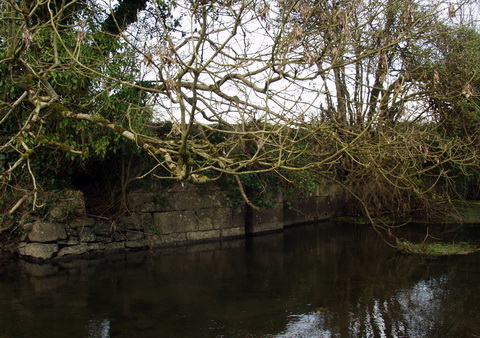
Yes, it’s abandoned. Yes, it’s in Ireland.
The answer is here.
Posted in Ashore, Built heritage, Drainage, Economic activities, Engineering and construction, Forgotten navigations, Industrial heritage, Ireland, Operations, People, Politics, Sources, The turf trade, waterways, Waterways management
Tagged boats, bridge, canal, harbour, Ireland, Lough Key, Rockingham, Shannon, vessels, waterways, workboat
On 17 April 2012 the Northern Ireland Assembly held an enlightening debate about Lough Neagh and its future and ended by resolving
That this Assembly calls on the Minister of Culture, Arts and Leisure and the Minister of Agriculture and Rural Development to convene a working group to explore and pursue actively the potential for a cross-departmental approach to bring Lough Neagh back into public ownership.
The report is here. It is well worth reading by anyone wanting an understanding of the management of the largest lake in These Islands.
Posted in Ashore, Built heritage, Drainage, Economic activities, Engineering and construction, Extant waterways, Foreign parts, Industrial heritage, Ireland, Natural heritage, Operations, People, Politics, Scenery, Tourism, Ulster Canal, waterways, Waterways management
Tagged Assembly, DUP, eels, Ireland, Lough Neagh, Northern Ireland, sand, SDLP, Shaftesbury, Sinn Fein, UUP
I showed here that very few boat-owners paid the Mineral Oil Tax for 2009 (38) and 2010 (41). I now have the figures for 2011 (MOT paid by 1 March 2012) and I can report that there has been a very significant change, of 46%, in the numbers paying the tax.
Unfortunately the change was downwards, from 41 to 22. The Revenue Commissioners tell me that
[…] there were 22 returns received by 1 March 2012 for 2011, amounting to €53,398.58 MOT [Mineral Oil Tax] on 141,503.29 litres oil.
That’s an average of 6432.1 litres each, which is a lot; I suspect that much of the total came from the hire fleet, with less than twenty private owners making returns.
This ridiculous tax should be scrapped; those operating private pleasure craft should be required to use non-rebated diesel.
Here are some thoughts on risk management for waterways authorities, marine insurers and boat-owners.
The Railway Safety Commission, which god preserve, is seeking consultants to
undertake a review of the self contained Heritage Railways in Ireland with respect to the management of safety associated with their railway activities.
The bumpf says:
The purpose of this competition is to engage an expert or experts to undertake a review of the self contained Heritage Railways in Ireland with respect to the management of safety associated with their railway activities. It should be noted that this excludes the Railway Preservation Society of Ireland (RPSI).
The 8 heritage railways concerned are
Difflin Lake Railway, Raphoe, Co. Donegal
Fintown Railway, Fintown, Co. Donegal
Cavan & Leitrim Railway, Dromod, Co. Leitrim
Irish Steam Preservation Society, Stradbally, Co. Laois
Waterford & Suir Valley Railway, Kilmeadan, Co. Waterford
Tralee & Dingle Railway, Tralee, Co. Kerry
Lartigue Monorailway, Listowel, Co. Kerry
West Clare Railway, Moyasta, Co. Clare.
These heritage railways all operate on their own self contained infrastructure. They are operated by a mix of paid and volunteer staff. They include steam and diesel traction and a number of passenger carrying vehicles.
Safety certification was granted to these railways on the basis of their accepted safety cases in accordance with the Railway Safety Act 2005 (the Act). As the majority of these safety certificates were issued in 2007 they now fall due for review.
Hasn’t it got cold recently? There is definitely a chill in the air.

 Irish waterways history