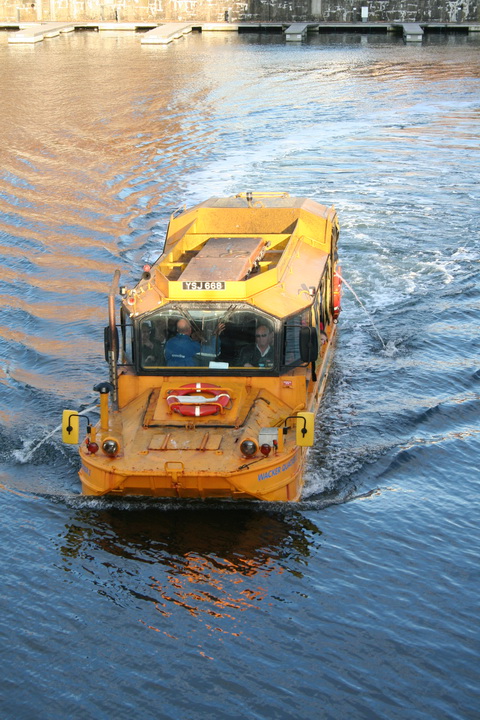
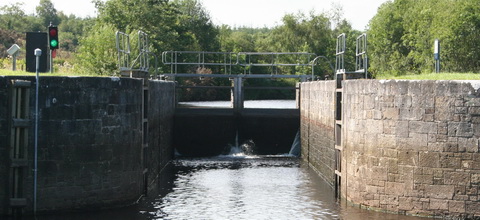
Request submitted to Waterways Ireland:
I would be grateful if you could tell me how many bids you received for these moorings, how many you accepted and what the lowest and highest accepted bids were.
Request submitted to Waterways Ireland:
I would be grateful if you could tell me how many bids you received for these moorings, how many you accepted and what the lowest and highest accepted bids were.
Posted in Ashore, Economic activities, Engineering and construction, Extant waterways, Ireland, Irish inland waterways vessels, Irish waterways general, Operations, waterways, Waterways management
Tagged boats, canal, Grand Canal, houseboat, IRBOA, Ireland, moorings, residential, Shannon, Shannon Harbour, waterways, Waterways Ireland
There has been such interest in my posting on Stakhanovite homoeroticism that I thought I would post a few close-ups of the mural. The light fittings get in the way a bit, but you can pretend that they represent the fires of passion.
The chap at the bottom of that last one may represent Diogenes addressing a meeting of the directors of the Royal Canal Company.
Posted in Ashore, Built heritage, Economic activities, Engineering and construction, Extant waterways, Industrial heritage, Ireland, People, waterways
Tagged Blanchardstown, canal, Castleknock. art, construction, Diogenes, engineer, homoeroticism, Ireland, lock, mural, Royal Canal, Stakhanov, Twelfth Lock, waterways
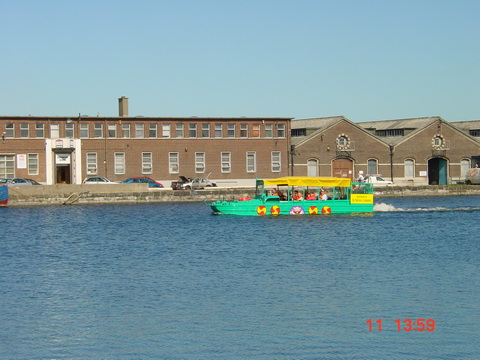
Maybe they‘ll give me loads of money for this ….
Posted in Ashore, Economic activities, Engineering and construction, Extant waterways, Foreign parts, Industrial heritage, Ireland, Irish inland waterways vessels, Operations, Scenery, Tourism, waterways
Tagged boats, canal, Dublin, duckduckgo, DUKW, Grand Canal, Ireland, Liverpool, lock, Salthouse, Shannon-Erne Waterway, Skelan
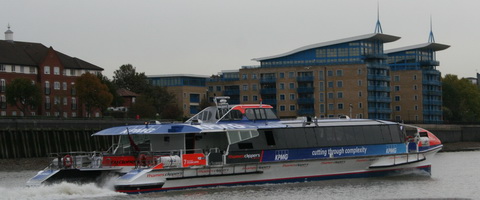
Posted in Economic activities, Extant waterways, Foreign parts, Operations, Tourism
Tagged boats, clipper, ferry, London, Thames, vessels, waterways, workboat
From The Northern Ireland Peace Monitoring Report: Number One by Paul Nolan, published by the Community Relations Council, 6 Murray Street, Belfast BT1 6DN, on 29 February 2012, and downloadable here:
The North–South Ministerial Council sits at the apex of six cross-border bodies, the remit of which is to ‘develop consultation, co-operation and action within the island of Ireland’ on matters of mutual interest. In practical terms this means the management of overlapping concerns on areas such as trade, tourism, waterways, fisheries and transport. Very little political controversy attends the operations of these bodies, and for the most part their activities are conducted in a brisk and business-like way.
The general conclusions of the report are more depressing. The Council lists these ten key points:
1. The political institutions are secure
2. The level of violence is down
3. Paramilitarism still remains a threat
4. The policing deal is not secure
5. The recession is impacting upon the equality agenda
6. Youth unemployment is potentially destabilising
7. A new confident and neutral urban culture has emerged
8. Northern Ireland is still a very divided society
9. There is no strategy for reconciliation
10. No solution has been found for dealing with the past.
But then the southern state hasn’t managed 10 either.
All is explained here.
Posted in Ashore, Economic activities, Extant waterways, Forgotten navigations, Ireland, Irish inland waterways vessels, Natural heritage, Operations, People, Scenery, Sources, Tourism, Water sports activities, waterways, Waterways management, Weather
Tagged boats, F E Prothero, German butcher, Ireland, Killarney, lake, National Parks and Wildlife Service, Prothero, vessels, waterways
The redoubtable F E Prothero, Rear-Commodore of the Cruising Club, wrote just over three pages about the Blackwater, from Kanturk down to the sea, in A New Oarsman’s Guide to the Rivers and Canals of Great Britain and Ireland edited by F E Prothero and W A Clark and published by George Philip and Son, London, in 1896, as a Cruising Club Manual.
Here is a PDF of the relevant pages. I have also put a link to the PDF on my page about the Blackwater, Bride and Lismore Canal.
Posted in Ashore, Built heritage, Economic activities, Engineering and construction, Extant waterways, Forgotten navigations, Industrial heritage, Ireland, Irish inland waterways vessels, Irish waterways general, Natural heritage, People, Scenery, Sources, Steamers, Tourism, Water sports activities, waterways, Waterways management, Weather
Tagged Blackwater, boats, Bride, bridge, canal, Cappoquin, F E Prothero, Ireland, Lismore, lost, M V Maeve, Tony Galagher, vessels, waterways, Youghal
Posted in Economic activities, Extant waterways, Foreign parts, Operations, waterways
Tagged Liverpool, Peel Holdings, pusher tug
The Minister of Culture, Arts and Leisure, Carál Ní Chuilín [Sinn Féin], reported to the NI Assembly yesterday on the North/South Ministerial Council (NSMC) inland waterways meeting held in Enniskillen on 14 February 2012, which I reported on here. The minister’s statement didn’t add anything to what the NSMC minutes [PDF] said, but some interesting points came up in the discussion afterwards.
[Karen] McKevitt [SDLP, South Down]: One of the four specific recommendations considered at the meeting was a change to the legislation for the disposal of a waterway or part of a waterway by Waterways Ireland. Why does Waterways Ireland need that power? Does it have any plans to make such disposals?
Ms Ní Chuilín: We want to give Waterways Ireland the authority to dispose of small areas of land without needing approval from both Departments. That provision will be de minimis and will cover the disposal of land that is worth less than £25,000. It will also allow for good practice and good governance, and will ensure that there is a clear understanding of what Waterways Ireland can and cannot do. The creation of such a provision has been raised before and we said that we would bring it forward. Therefore, this is progress and, through it, we are providing clarity.
This is sensible: WI shouldn’t have to bother ministers about such minor disposals.
Perhaps the penny is beginning to drop. Mr McCarthy [Kieran McCarthy, Alliance Party, Strangford] said:
I thank the Minister for her statement. The Minister said that the next NSMC waterways meeting will set out “options for advancing the Ulster Canal project.” Is there any hint that that project may be curtailed or that less will be done than was formerly envisaged?
The minister’s answer:
[…] Some time ago, the Irish Government made a statement that their budget for developing some of the capital works that they had committed to was under threat. The Ulster canal was mentioned in that statement.
At previous NSMC waterways meetings, we agreed to progress that project as much as possible. One of the first stages of the programme of work was to seek leave for planning permission, and that has happened. The project will be kept under constant review at each stage, and the Ulster canal project is firmly at the top of the agenda of NSMC waterways meetings and other meetings that I have with Minister Deenihan. Any progress on that project will be reported at the next NSMC waterways meeting in June.
The minister has shifted the focus to the planning application as the mark of progress. She did not tell Mr McCarthy that there is no money in Waterways Ireland’s budget for any substantive construction work before 2014.
Tom Elliott [Ulster Unionist Party, Fermanagh and South Tyrone] asked about costings for the whole of the Ulster Canal:
[…] She mentioned the Ulster canal and, in particular, the Clones to upper Lough Erne portion of that canal. Will she give us details of the costings of the entire Ulster canal project and, in particular, the Clones to upper Lough Erne portion, for which planning permission has now been sought? Have those costings been reviewed recently?
The minister confirmed the figure of €45 million, reported here on 16 December 2011, for the Clones Canal, but note her inclusion of the word “currently”: there might be more increases before construction could begin in 2014. She provided no information about updated figures for any canal from Clones to Lough Neagh:
The 2006 business case indicated a capital cost of £171·5 million for the restoration of the entire canal. That included site navigation, an environmental impact assessment and project management and construction costs. The estimated costs to restore the Clones to upper Lough Erne section is currently €45 million. The construction costs for that section will be entirely funded by the Irish Government, and, when it is built, my Department will contribute ongoing operational costs that are estimated at £37,000 per annum.
If the same 29% increase were applied to the rest of the canal, the total cost would be £220.5 million, just under €350 million.
The other discussion of interest was about the proposal to have a board for Waterways Ireland. Robin Swann [Ulster Unionist Party, North Antrim] asked:
Can the Minister provide clarification on the option to set up a board that comprises fewer than 12 members to present proposals for consideration at a future NSMC meeting on inland waterways? Would that not be the establishment of a further North/South quango to advise the North/South Ministerial Council? If that board is established, what would it discuss, who would decide its remit, and who would be on it?
The minister replied:
[…] In my statement, I said that proposals are being brought forward on the board. Waterways Ireland is the largest of the North/South bodies, yet it does not have a board. Bringing forward proposals for a board does not suggest that there are any issues. However, for the largest body not to have a board is not in keeping with good practice in governance. To that end, it will have a board. Proposals for it will be brought forward at the next NSMC meeting. I am happy to share the outcome of that meeting with Mr Swann, other members of the Committee for Culture, Arts and Leisure and, indeed, other Members.
And Jim Allister [Traditional Unionist Voice, North Antrim] asked:
[…] Is that for an advisory board or a management board? Given that Waterways Ireland has been running for many years without a board, why is it now thought necessary, or is it just jobs for the boys that will add to the expense of Waterways Ireland?
The minister replied:
I am sure that the Member heard the answer that I gave to Robin Swann about setting up a board. One of the recommendations of the St Andrews review report was that a 12-person executive management board be appointed to direct Waterways Ireland’s affairs. Waterways Ireland is the biggest of the North/South bodies with no board; therefore, it is in keeping with good policy, practice and governance that options and proposals to establish a board will be brought to the next NSMC meeting.
The minister is quite right: there should be a board.
Posted in Built heritage, Economic activities, Engineering and construction, Extant waterways, Foreign parts, Forgotten navigations, Industrial heritage, Ireland, Operations, People, Politics, Restoration and rebuilding, Tourism, Ulster Canal, waterways, Waterways management
Tagged Alliance, board, canal, Clones, disposals, Erne, Ireland, John Martin, Lough Neagh, Northern Ireland Assembly, property, SDLP, Sinn Fein, TUV, Ulster Canal, UUP, Waterways Ireland
I’m sure this is good news, but I have no idea what it is about. Has it to do with GPS or other newfangled gadgetry? And does it apply only to WI’s data about its estate within Her Majesty’s realm?