Tag Archives: flow

Ephemera 10: the pontoons at Ballina

Do my eyes deceive me?

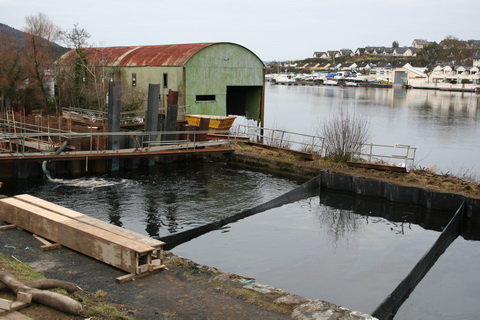
The still-unopened mooring pontoons below the bridge at Ballina (bottom of Lough Derg) seem to have sprouted an extension.

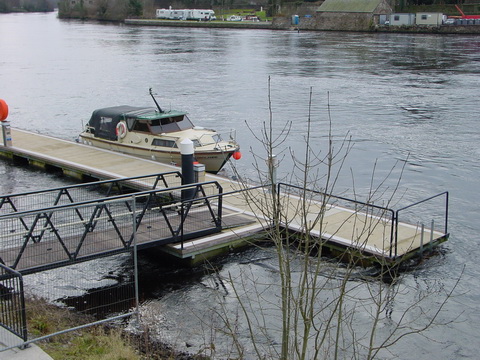
Here is what they looked like in 2009.

The upstream end of the Ballina pontoons in February 2009

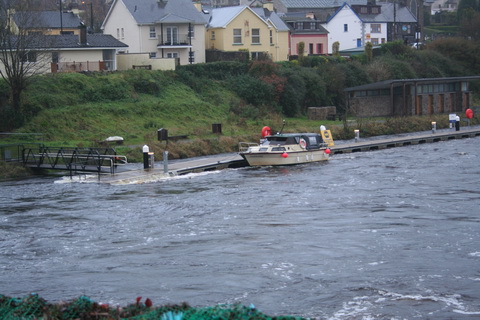
Here they are in the floods of November 2009.

The upstream end of the Ballina pontoons in the floods of November 2009

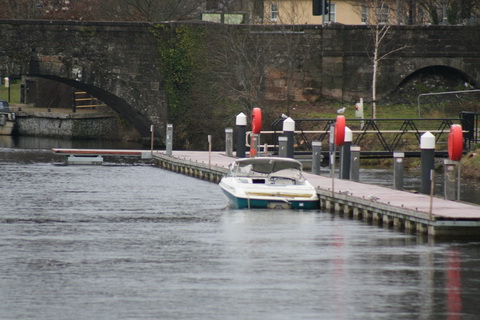
And here they are in January 2011, seen from downriver.

The upstream end of the Ballina pontoons in January 2011

Well I never.


Ephemera 9: the flash lock at Killaloe

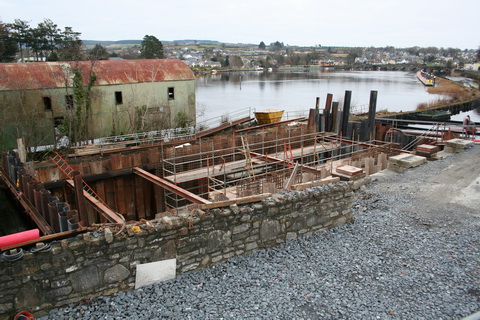
As part of its new mooring scheme at Killaloe, Waterways Ireland has commissioned contractors (L&M Keating Ltd) to carry out various works including the installation of a lock at the upper end of the canal, beside the Phoenix boathouse and just downstream from the Pierhead. The lock is to control access to the canal; presumably the stop planks in the existing lock chamber will be removed, allowing boats to pass down under the bridge.

The lock under construction

As I understand it, this lock is to have a single pair of gates. Boats wishing to pass through will tie up temporarily and use a squawk-box (or similar technological marvel) to communicate with the bridge-keeper at Portumna, who will cause the gates to be opened and then, presumably, closed after the boat has passed through. This system will prevent the use of the canal by cads and bounders using jetskis, speedboats and other excrescences.

Stanked off and pumped out

However, the water through Killaloe Bridge has a gradient or slope, especially in flood and when Ardnacrusha power station is running. The canal above the lock will be at the higher level; the canal below the lock will be fed from the bottom end, where it rejoins the river. So is there not likely to be a difference in height at the lock? Is this the equivalent of a flash lock?

I’m sure there is an engineering answer to this; I would welcome enlightenment.


Ephemera 8: Tarbert

Tarbert Island

The Irish Times reports that:

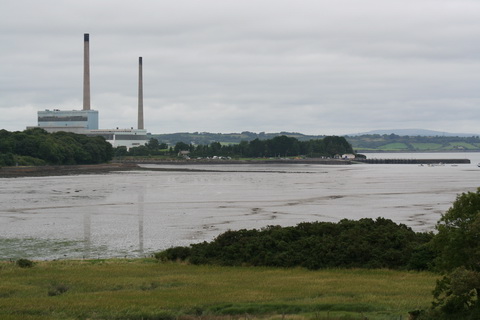
AN BORD Pleanála has approved the application by Endesa Ireland, part of the Spanish energy company, to build a combined-cycle gas turbine power plant on the former ESB station at Tarbert, Co Kerry.

I presume that, when it says that “A submarine cable is to supply Moneypoint.” it means that a submarine pipe will do so: I imagine that the power station at Moneypoint is more likely to want gas than electricity from its rival across the estuary.

Tarbert is now the southern station for the ferries that cross the Shannon Estuary, but it has had a long history as an estuary port. Even before the first of the piers was built, Tarbert Roads provided a sheltered anchorage, and the estuary steamers adopted ingenious methods to get passengers and cargo from shore to steamer and vice versa.

Tarbert was also an important administrative centre and Tarbert Island (as was), which now houses piers and power station, had a Coast Guard station, a lighthouse, a signal mast and the largest of the six forts that guarded the Shannon Estuary. The ESB power station is built on the Ordnance Ground, right on top of the seven-gun battery, as you can see if you play with the Overlay feature on the Historic 6″ Ordnance Survey map.

Moneypoint had a large quarry; it may have been from there that Charles Wye Williams got the “marble” that he polished in the marble mill at Killaloe.

Saleen Pier at Ballylongford is covered here.

Up the Suir

I don’t know if you remember, but a few months ago we had sunshine, and it was warm outside. Back then, at the end of May in fact, I went on the Industrial Heritage Association of Ireland‘s tour of Carrick-on-Suir, Clonmel and areas in between.

In Carrick, Ralph O’Callaghan showed us some of the sights and addressed the group in the Heritage Centre. Here are some of the things he showed us.
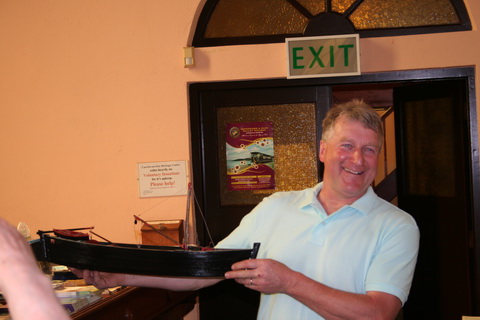
Ralph O'Callaghan shows a model of a yawl (a horse-drawn boat used to carry goods between Carrick and Clonmel)
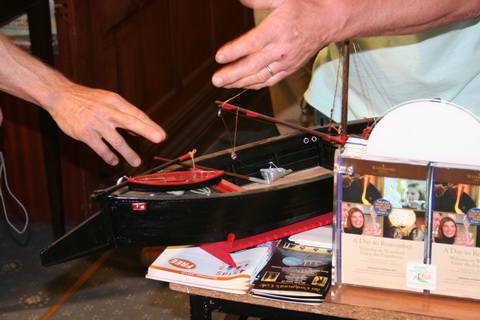
This yawl is equipped for sand-dredging
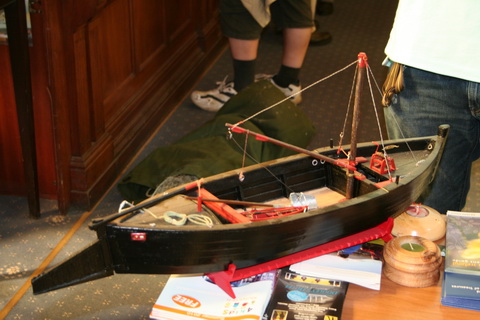
Note the large rudder
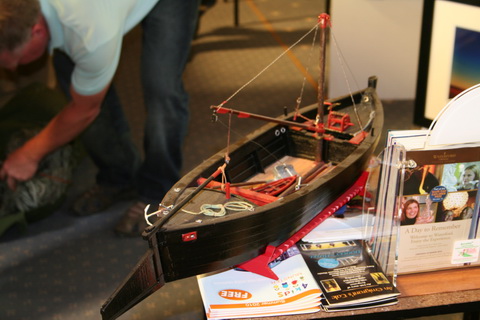
The yawl
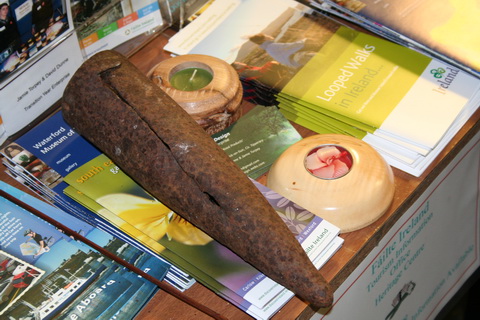
A steel shoe for one of the 30' poles used by Suir and Barrow boatmen
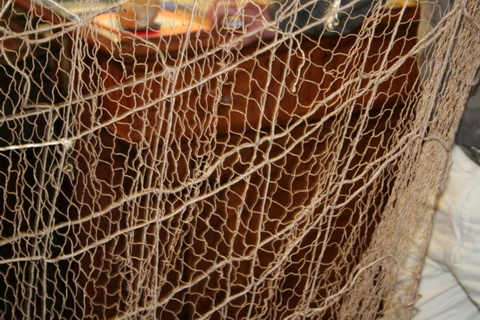
A hand-made net for snap-net fishing

After lunch, I was fortunate to be one of two people who got a trip in Ralph O’Callaghan’s canoe, from Kilsheelan upstream to the Anner bridge just downstream of Sir Thomas’s Bridge, which is itself downstream of Clonmel.

I have set up a small (approx 120-photo) slide show to give an idea of the conditions on the Suir at the time. The water level was low after several dry weeks, but the previous winter’s floods may have left more silt than usual. At any event, a successful passage required Ralph’s skills and his intimate knowledge of the river and its weirs. You can see some of the weirs, and the gorgeous scenery, in the show.

I am very grateful to both Ralph O’Callaghan and Fred Hamond for facilitating the boat trip and for sharing their immense knowledge of the Suir.

If you like interesting boats, you’ll like Ralph’s canoe.

An update on the Suir

I have updated my page about the River Suir above Carrick. I have added photos on some locations above Clonmel (Cahir, Athassel, Golden); I have also added a new section about the infrastructure of the navigation between Carrick and Clonmel. That section has benefited greatly from the information provided by Fred Hamond on the tour he organised for the Industrial Heritage Association of Ireland earlier this year. Several of the photos taken on the tour show warm, sunny weather. They will also, I hope, help to draw attention to the delights of the Suir.

Killaloe to Limerick Docks via Ardnacrusha

Join the ex-Grand Canal Company motor-barge 68M on its trip from Killaloe to Limerick Docks, carrying barrels of stout for Dolan’s Pub. The trip marked two occasions: Arthur’s Day, the annual Guinness marketing opportunity, and the fiftieth anniversary of the last commercial cargo on the Grand Canal and the Shannon, which was a shipment of stout to Limerick.

This page provides a slide-show of 300 photos taken from 68M on its journey. If you can’t make the trip in person, do it this way.

Note that the page takes some time to load. And, even clicking through pretty fast, the show is likely to take at least ten minutes.

Click on the first photo to bring up the controls. If you have any problems with it, leave a Comment to let me know. I haven’t done this before. I may not be able to fix any problems, but I can at least look into them.

Down the Rockville

Some time ago I wrote three pages about the Rockville Navigation, which is linked to Grange on the Carnadoe Waters in Co Roscommon.

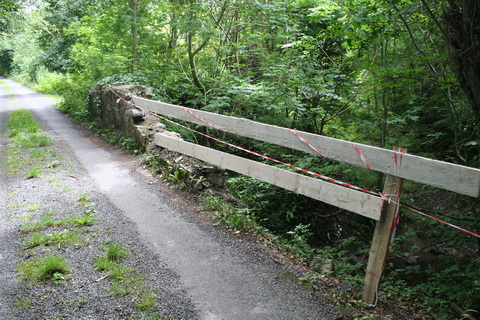
I recently revisited the area. I was horrified, first, to find that the bridge — built in June 1765 — has been severely damaged, with large chunks of masonry in the cut beneath and with a crude wooden repair. How many bridges of that age are there in Co Roscommon? How many that are associated with one of the oldest navigations in the country? Please, someone, restore the bridge!

Damage to the bridge

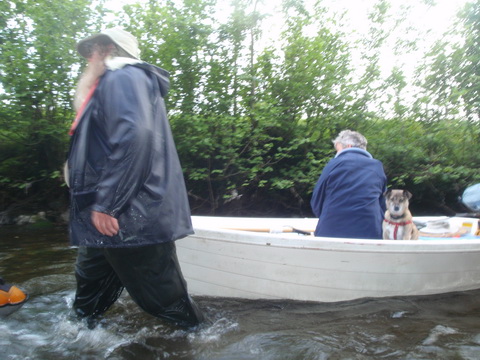
Anyway, the more pleasant part of the day was the four hours that we spend descending, by dinghy and kayak, from the bridge to Grange. The route took us through artificial cuts, small lakes and sections of river, with very clear water and an extraordinary abundance of vegetation. This route would have been easily navigated by large wooden cots or similar boats, and it should be developed today as a canoe-and-small-boat trail. Even with very low water levels, we had no real problems, although someone has to end up with wet feet …. Here is an account of the trip.

Wading in the water

Anguilla anguilla: the ESB eel fishery

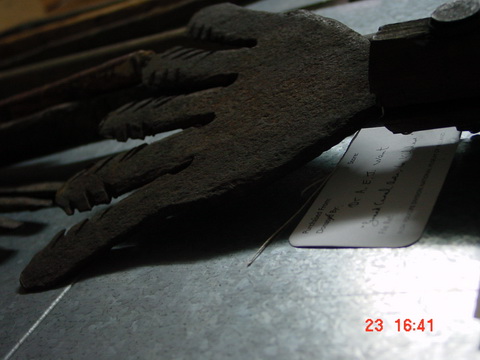
This photo shows an eel spear from the National Folklife Collection‘s overflow material, stored in the former “reformatory” at Daingean, on the Grand Canal in Co Offaly. There were many spears there, with different designs from different rivers. This one, to judge from the label underneath it, came from the extraordinarily prolific and observant Dr A E J Went.

If you look at pretty well any Irish river on the 1840s Ordnance Survey map (here’s the Shannon at Killaloe; switch to Historic 6″ if necessary), or indeed on the 1900s map (same URL but switch to Historic 25″), you’ll find evidence of eel weirs. Ireland’s shortest canal was built to allow the eel-boats of Anthony Mackey’s fleet to reach the trains at Banagher.

But the European eel is a “critically endangered species” and all eel fishing has been banned in Ireland. As far as I know, though, the Lough Neagh fishery, in Northern Ireland, continues.

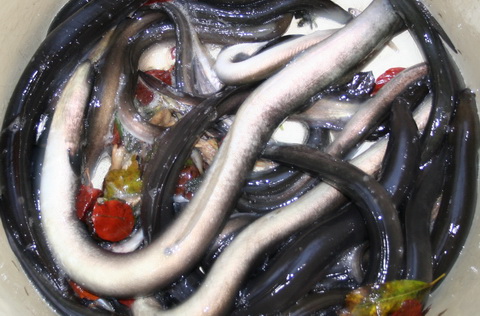
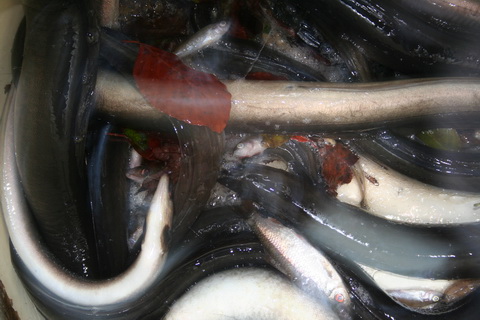
The Electricity Supply Board (ESB) is in charge of the eel fishery on the River Shannon. It has nets and a storage unit (packing station) at Killaloe and, until recently, it also had nets at Clonlara on the headrace supplying the power station at Ardnacrusha; the Clonlara nets have just been removed. This page is about the Clonlara and Killaloe operations, but includes a look at an eel survey conducted for the ESB in 2008, before eel fishing was banned in Ireland. The aim now is to make it easy for eels to reach the sea to reproduce, and that sometimes involves “trap and transport”: catching the eels and moving them past obstacles, whether on their way to the sea or, for the young glass eels, on their way upriver.

The photos on this page are a tribute to what was an important activity on the Shannon. I hope that the European eel stocks can recover.