Category Archives: Restoration and rebuilding

The K&A in slow time

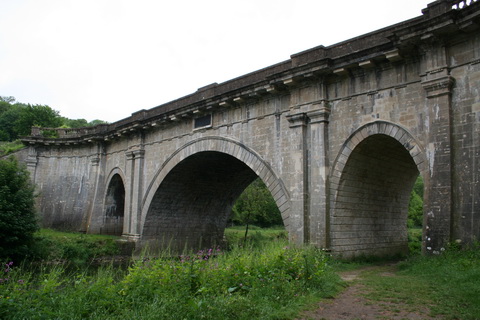
The Dundas aqueduct

The Dundas aqueduct

There is a television station or channel called BBC 4. On Tuesday next, 5 May 2015, it will broadcast

A two-hour, real-time canal boat journey down one of Britain’s most historic waterways, the Kennet and Avon Canal, from Top Lock in Bath to the Dundas Aqueduct. Using an uninterrupted single shot, the film is a rich and absorbing antidote to the frenetic pace and white noise of modern life.

More info here. I do not know whether folk outwith HM Realm can watch the programme on television or on tinterweb.

The Boyne’s turf-sided lock

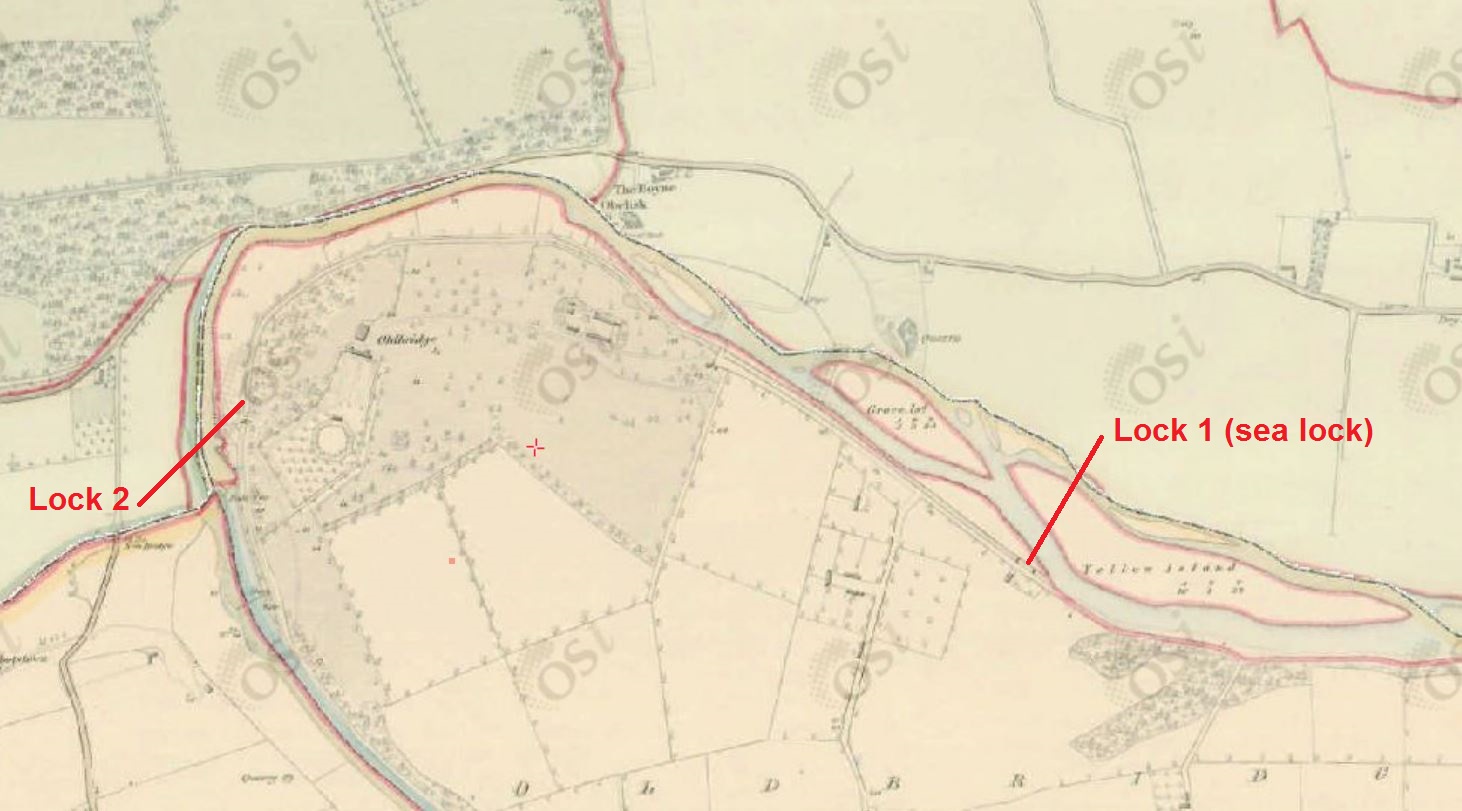
I have a vague recollection of being told that there was no evidence that the turf-sided Lock 2, Oldbridge Guard Lock, on the Boyne Navigation was ever fitted with gates. Or perhaps it was that only a single pair was fitted and that the lock did not operate as a lock.
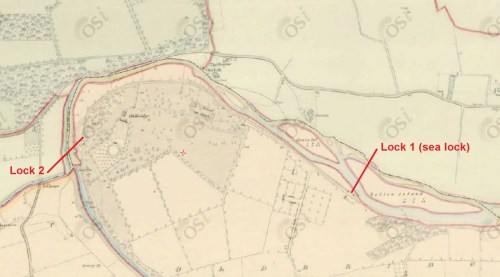
Boyne Locks 1 & 2 (OSI ~1840)

Boyne Locks 1 & 2 (OSI ~1840)

I’m not clear about what I was told but I recall feeling somewhat surprised, given that the lock has stone buttresses at both ends that could have been fitted with gates.
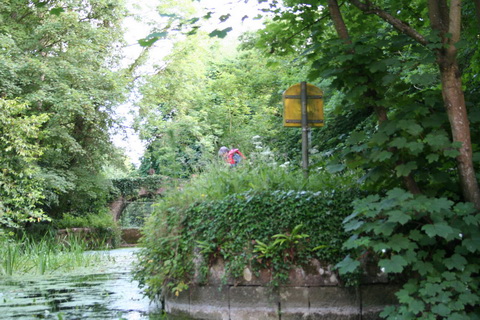
Gate buttresses of turf lock 01_resize_resize

Looking up into the lock past the lower stone buttresses

I should point out that my photos were taken in 2008; much more work has been done since then.
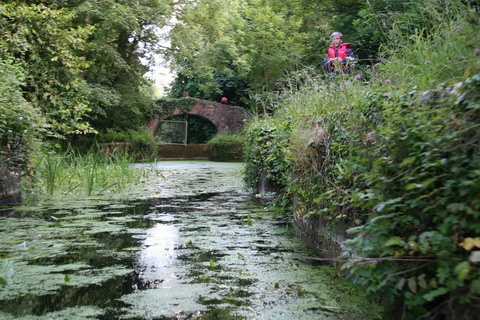
Gate buttresses of turf lock 02_resize_resize

Both sets of buttresses and the bridge
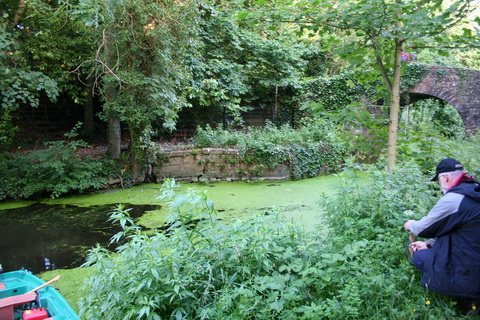
Gate buttresses of turf lock 03_resize_resize

The upper buttresses

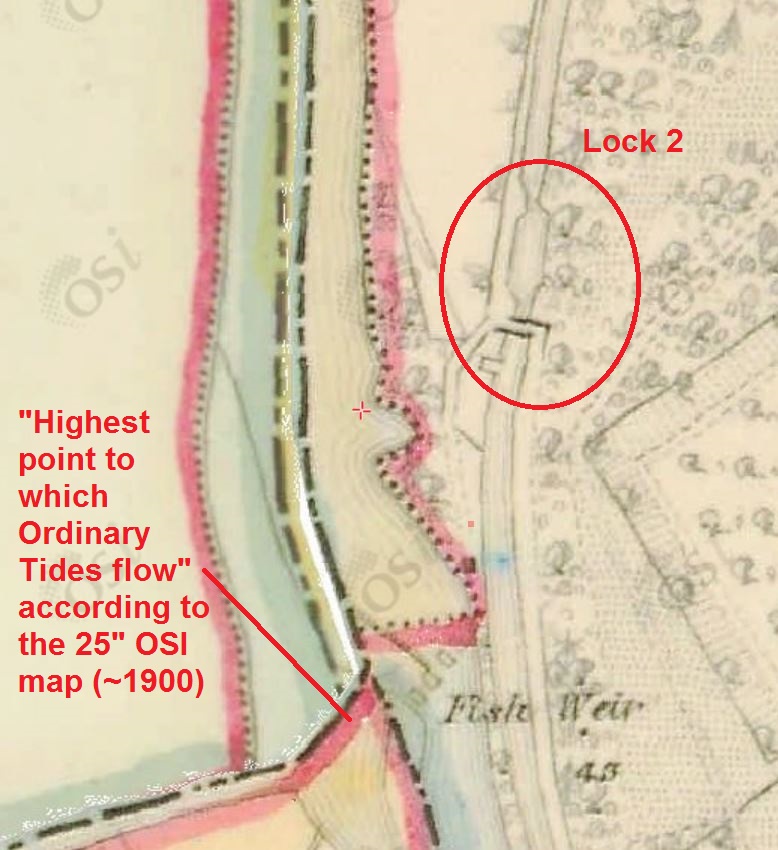
Yet it is true that the 6″ Ordnance Survey map, from around 1840, does not show gates on the lock.
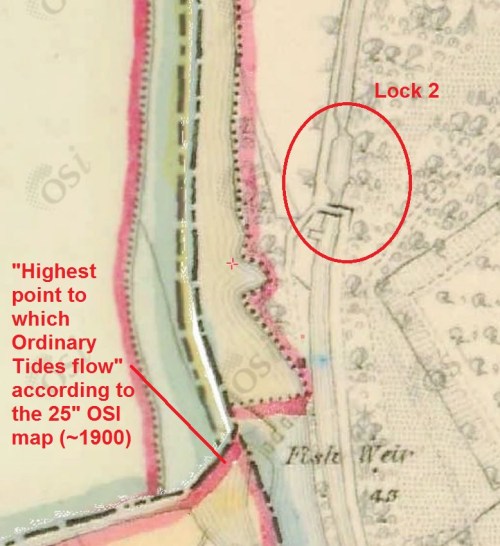
Oldbridge Guard Lock (Lock 2) (OSI ~1840)

Oldbridge Guard Lock (Lock 2) (OSI ~1840)

Unfortunately the relevant section of the 25″ OSI map, from around 1900, is blank at time of writing so I can’t check what it shows.
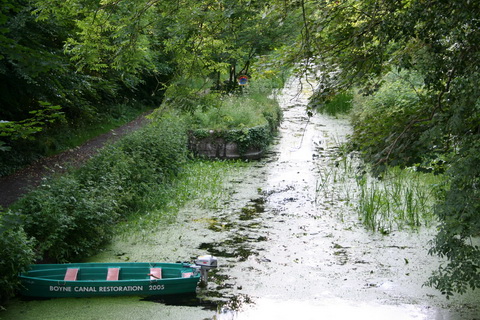
The turf-sided lock on the Boyne

The turf-sided lock on the Boyne

The IWAI Boyne Navigation Branch is currently (March 2015) working towards the installation of gates at the lock but I don’t know whether they’re installing one pair or two pairs.

From reading the reports of the Superintendent for the Boyne Navigation, it is clear that, for at least some part of the period while the navigation was controlled by the Board of [Public] Works, the lock had both top and bottom (breast and tail) gates. Here are some relevant extracts from the reports; I’ve given only enough to make the point.

In January 1869 James Bellew, Superintendent, reported on the works carried out on the Boyne Navigation in 1868. His report, published in the Thirty-seventh Report from the Board of Public Works, Ireland: with the Appendices, for the year 1868 [Alexander Thom for HMSO, Dublin 1869], included this:

Oldbridge Station.

The lock-gates at this station are in excellend working order. The chimney of the lock-keeper’s house has been rebuilt, and some alterations made in the house to render it more comfortable. The guard lock-gates are old, but as they are used only in time of flood, I am of opinion they will last some time longer.

In March 1871, his successor, P J Dodd, wrote in the Thirty-ninth Report:

Oldbridge Guard-lock gates.

The Oldbridge Guard-lock gates are in a very bad state of repair, but new breast gates have been ordered, the contractors have same in hands, and they will be erected during the coming fine season.

And in March 1873 Dodd wrote in the Forty-first Report:

Oldbridge Guard-lock Gates.

The new breast gates of guard-lock [sic] have acted well during the year and heavy flood season, and are in a first class state at present; the tail gates, although old and shaken, are in fair working order, and did very well during the year.

In March 1877 he wrote in the Forty-fifth Report:

Oldbridge Guard Lock-gates.

The breast gates are in very good order; but the tail gates are somewhat shaken, being old.

The gates were tarred in 1878 (Forty-seventh Report); the tail gates had “a slight repair” in 1878 (Forty-eighth Report) and, in April 1881 (Forty-ninth Report), Dodd reported that

These [guard lock] gates require some repairs to sluices and also to the sheeting.

In March 1882 (Fiftieth Report) Dodd wrote:

Oldbridge Guard Locks.

The breast gates are in good repair, tail gates require two new cross rails, sheeting for both folds, and one new balance beam and handrails for both gates.

I do not, of course, know whether there were two pairs of gates at other times.

My OSI logo and permit number for website

Interesting information about the Ulster Canal …

… as distinct from ministerial reelection photo opportunities.

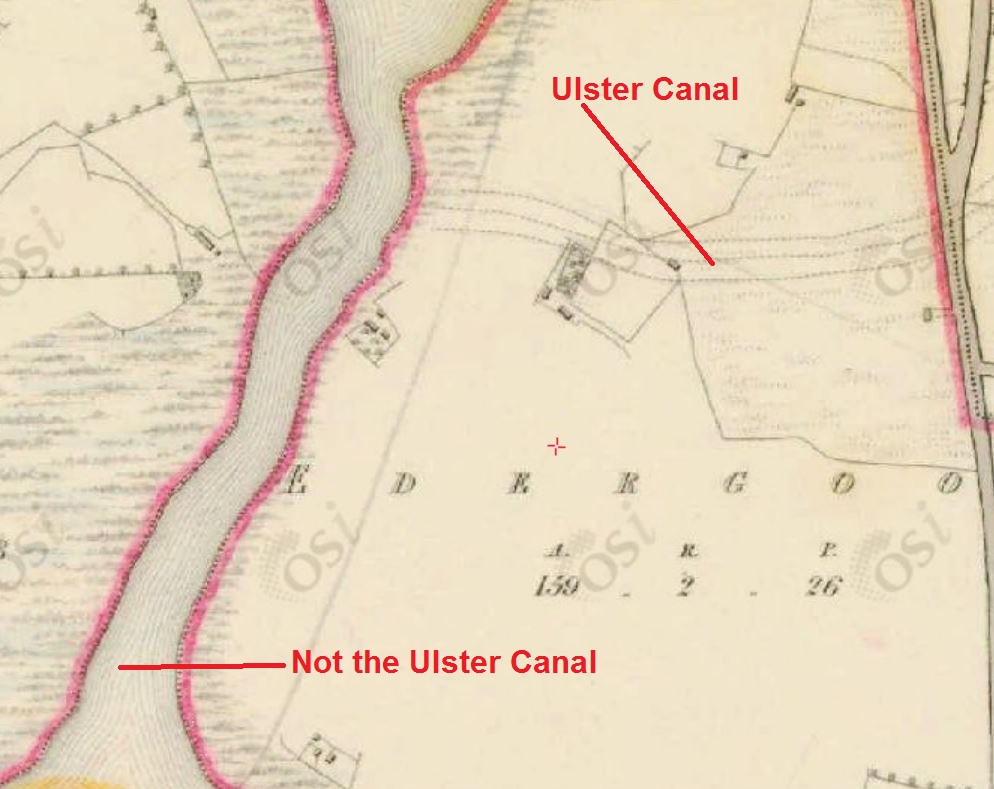
By the way, some folk get confused about the location of the Ulster Canal; this map may help:

Saunderson's Sheugh -v- the Ulster Canal (OSI ~1840)

Saunderson’s Sheugh -v- the Ulster Canal (OSI ~1840)

Anyway, for folk who are interested in weightier matters than ministers talking through portions of their anatomies that they can’t distinguish from their elbows, here is some speculation about opening bridges on the Ulster Canal.

That’s the Ulster Canal Ulster Canal, not the Saunderson’s Sheugh “Ulster Canal”, by the way.

My OSI logo and permit number for website


The industrial heritage of Mullingar …

in song.

Mick the Coach

A familiar face in unfamiliar surroundings ….

Waterside Belturbet

Here is a small amount of information about Belturbet and some of its industrial heritage. The photos were taken on a brief visit in July 2011.

Grand Canal Greenway

Ewan Duffy reports on damage here.

The importance of Saunderson’s Sheugh

Back in the days when nitwitted Irish governments believed the state had found the secret to permanent wealth, Sinn Féin was promised the Clones Sheugh, a rebuilding of part of the line of the Ulster Canal. For reasons that are not clear to me, the reason for the project was concealed by a lot of nonsense about economic regeneration.

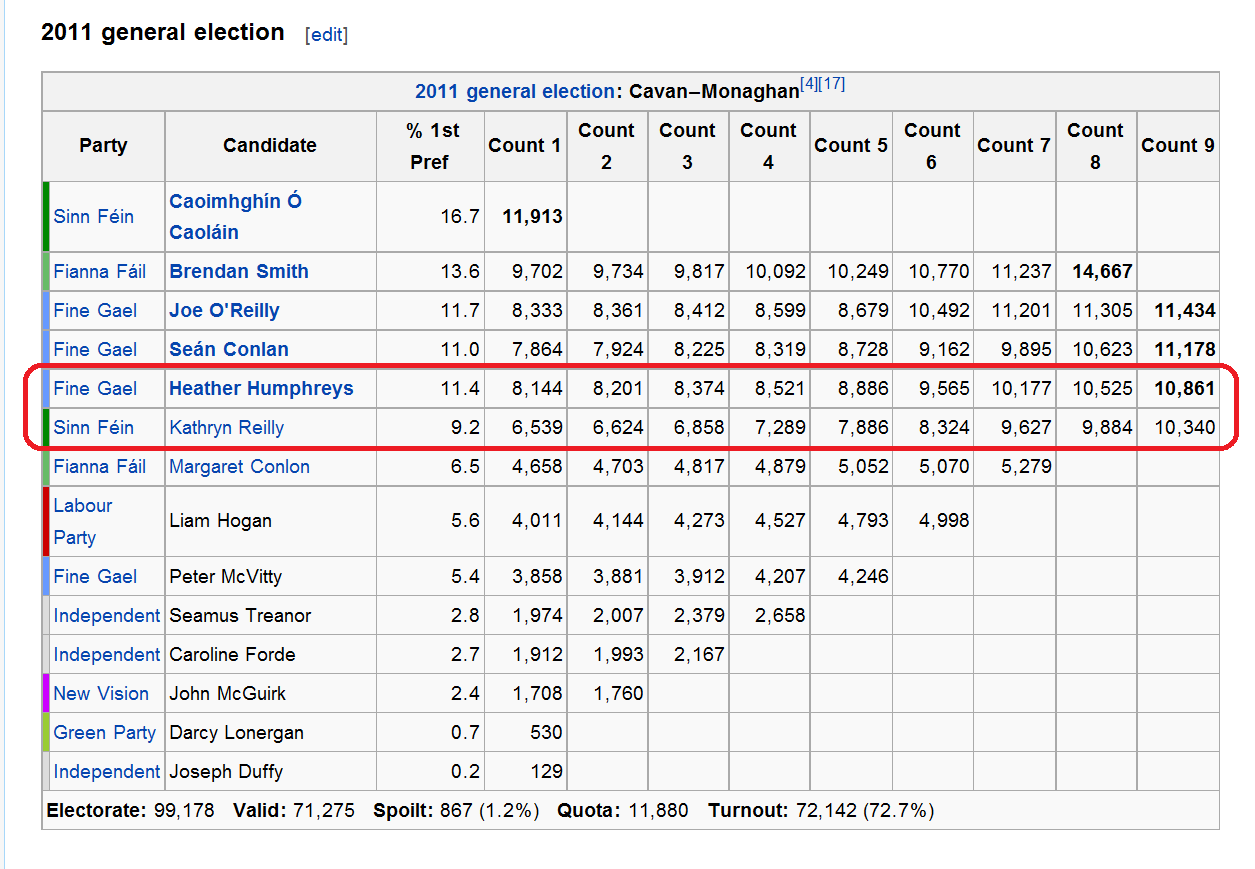
Sinn Féin still want their sheugh, and have continually asked questions about it. They own the Northern Ireland department currently responsible for waterways. And they have, I believe, forced its southern counterpart to pretend it will deliver the sheugh. Admittedly it’s really just going to dredge the River Finn — Saunderson’s Sheugh — and call it the Ulster Canal, which is better and cheaper than doing anything about the real Ulster Canal, but we might wonder why the current southern minister, Heather Humphreys, a TD for the Cavan-Monaghan constituency wherein Clones lies, is quite so keen on sheughery.

Perhaps Wikipedia can help.

Cavan-Monaghan constituency, general election 2011

Cavan-Monaghan constituency, general election 2011

Unmodified text released under the Creative Commons Attribution-ShareAlike 3.0 Unported License (CC BY-SA); no endorsement by the licensor is expressed or implied.

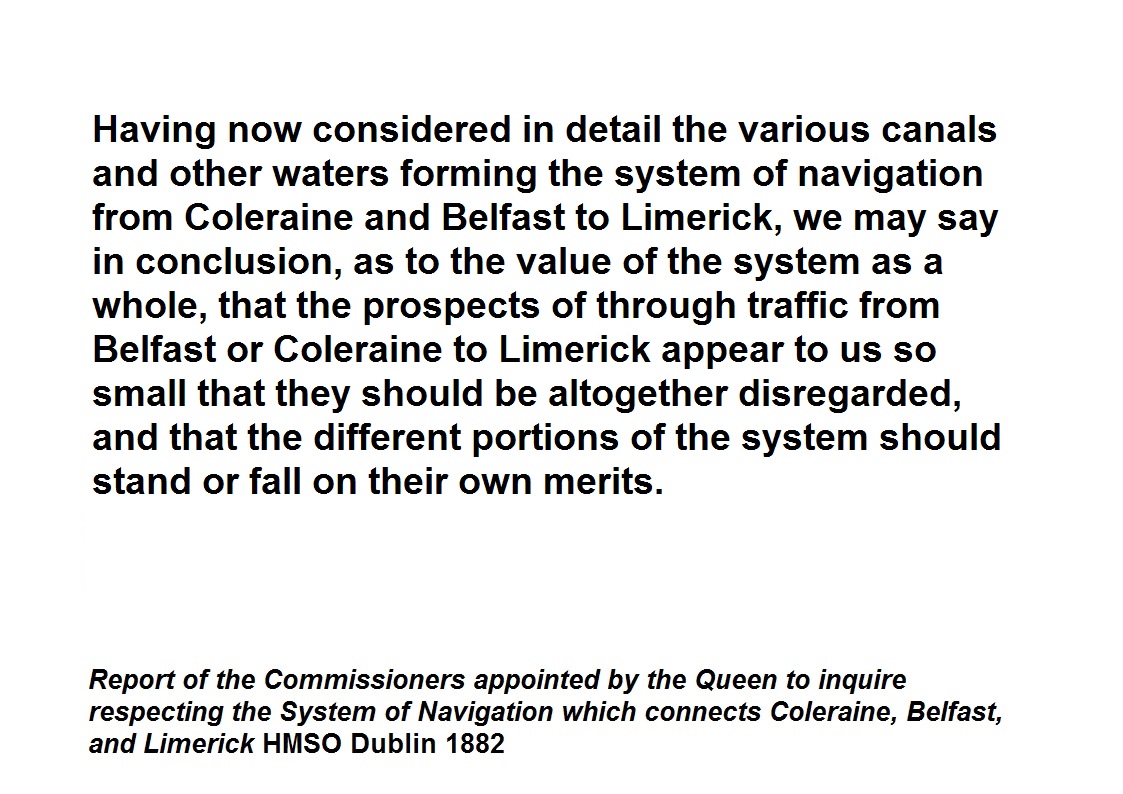
How true these words are …

… even today.

Connected system

Blueways

Longford Tourism and Waterways Ireland are holding an information meeting about Blueways in Longford tomorrow. It’s in the Backstage Theatre on Tuesday 24 March 2015 at 7.00pm. The blurb reads:

Are you an activity provider, accommodation provider, walker, boater, canoeist, outdoor enthusiasts?

Longford Tourism, in conjunction with Waterways Ireland is delighted to invite you to a Public Information Meeting regarding exciting new recreation and tourism products called Blueways.

Blueways are a series of innovative, safe and easy to use water and land-based trails. These provide for guided and unguided paddling, walking and cycling. Visitors can opt to paddle along the Shannon Blueway, on a 10km looped trail along the Camlin and Shannon Rivers, while the Royal Blueway provides 16km of off road walking and cycling from Cloondara to Longford Town.

To celebrate this exciting trails development, Longford Tourism will host the inaugural Longford Blueways Festival in April. So, come along and hear how you can get involved. All are welcome to attend.

I wish them well and I hope this initiative works. I think that the Blueways are more likely to be successful than any attempted revival of the cruiser-hire business (although I’d like that to work too). However, I would like to learn more about the Blueways business model (if that’s the right term). Who has to invest how much and who gets what returns? Clearly, Waterways Ireland spends money up front, but far less (I presume) than (say) canal restoration would require. But are there viable businesses, or at least viable supplementary income-generating activities, for small local service providers? How do they reach overseas markets? Or is the focus on domestic markets?

One point that strikes me is that Blueways allow for more interaction between tourists and locals: something that used to be a strength of the Irish tourism offering (I’m trying to keep up with modern marketing jargon here) until we decided we were too busy being rich and successful to waste time chatting to tourists (or, if you prefer, providing unpaid support services to the tourism industry). Indeed we felt that even paid employment in tourist enterprises was beneath us: we could get nice people from overseas to do that work instead. Did we, I wonder, hollow out Ireland, removing the Irishness, the distinctiveness (whatever it was) from the tourist experience?

If so, the Blueways’ opportunities for interaction with small-scale and local enterprises might put them back again. There are difficulties in making a living from small-scale operations, but there are benefits too. And the Blueways might tap into other local, small-scale developments: for instance, the recent startling growth in the number of craft breweries. The Lough Allen and Longford Blueways each have a local brewery — St Mel’s in Longford and Carrig in Drumshanbo — and the products of at least one other brewery, Co Roscommon’s Black Donkey, are available on the North Shannon. Maybe, now that KMcG is back, “Places to find good beer” might be added to places to stay, eat and go on the Blueways website.

A Blueway is defined there as

a recreational water activity trail that is developed for use by non-motorised water activity enthusiasts. It is defined by trail heads, put in and take out points and readily available trail information. Blueways can be developed on canals, rivers, lakes or along the coast and can incorporate other associated land base​d trails adjacent to the water trail.

So what about a Blueway for Lough Oughter, with sailing, canoeing and camping?

[h/t Carthach O’Maonaigh]