
… but you can’t hide. Harbour hoggers, and folk not meeting the new canals requirements, should watch out.
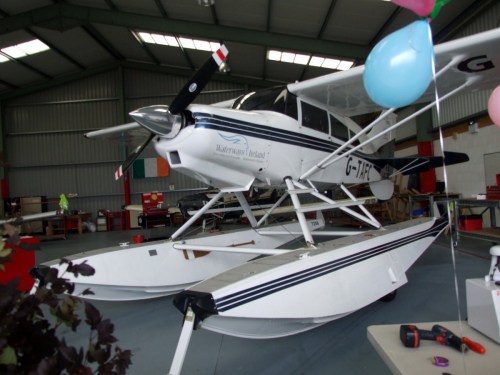
WI’s eye in the sky
[h/t & © JC]
[yes, I know]
… but you can’t hide. Harbour hoggers, and folk not meeting the new canals requirements, should watch out.
WI’s eye in the sky
[h/t & © JC]
[yes, I know]
Posted in Economic activities, Engineering and construction, Extant waterways, Ireland, Irish inland waterways vessels, Non-waterway, Operations, People, Shannon, Ulster Canal, waterways, Waterways management
Tagged Barrow, Erne, floatplane, Grand Canal, Royal Canal, seaplane, Shannon, Shannon-Erne Waterway, Sligo, Ulster Canal, vessels, waterways, Waterways Ireland, workboat
In the Foreword to his latest book, Portraits of Mountshannon (East Clare Heritage, Tuamgraney 2012), Ger Madden writes of the changes to Mountshannon since 1993:
The Aistear, the children’s playground, the pre-school building, the floating jetties at the harbour, additional restaurants and shops have been hugely positive and successful. The same cannot be said for housing. Ten years of reasonable prosperity for some, has resulted in new private holiday homes built on the fringes of the village and others planned. They are not associated with the needs of the community. The majority of the owners have not the slightest interest in the history, culture or welfare of the community they have chosen to display their wealth.
Any such owners wishing to develop an interest in the history of Mountshannon could not do better than to start with Ger’s book. It’s A4 landscape, with an aerial colour photo of Mountshannon on the front and a map on the back. Inside, the foreword gives a brief overview of Mountshannon’s history. Then follow 52 pages, each with a black and white photo and each covering a building, a tree or a place of interest in and around Mountshannon. Their locations are shown on the map on the back cover.
But, although architectural information is provided, the book is not about the buildings per se. Each page is a window into Mountshannon’s history and, together, they provide a rich account of the place and its people over the centuries. Part of the interest is in the fact that buildings you might pass by without noticing turn out to have interesting stories attached to them. Nor are they all about the distant past: I was glad to see that Mountshannon’s more recent claim to fame, as the last telephone exchange in the country to be automated, was recognised here (although I suppose that too may seem like the distant past to younger readers).
I highly recommend the book. If you’re in the area, you’ll probably know better than I where to get copies; if you’re not, you might ask East Clare Heritage.
Ger runs boat trips to Holy Island during the summer.
Posted in Ashore, Built heritage, Charles Wye Williams, Economic activities, Engineering and construction, Extant waterways, Industrial heritage, Ireland, Irish inland waterways vessels, Irish waterways general, Natural heritage, Operations, People, Scenery, Shannon, Sources, Steamers, The cattle trade, Tourism, waterways
Tagged boats, Clare, East Clare, Ger Madden, Holy Island, Ireland, Lough Derg, Mountshannon, Shannon, Tuamgraney
Ger Reid, the Ardnacrusha lockkeeper, retired at the end of December 2012. Ger has guided many boats through the locks over the years and has always been cheerful and reassuring as well as informative, helpful, reliable and competent. He will be sadly missed but I wish him well in his retirement.
Meanwhile, I have heard that Limerick City Council has decided not to renew Pat Lysaght’s contract for work on the river and has suggested that Waterways Ireland should retain him. Pat’s most important role, though, in assisting boats passing through Limerick (220 in 2012), has always been voluntary. Were Pat to cease to provide that service, I think the number of boats visiting Limerick would be greatly reduced.
Posted in Economic activities, Engineering and construction, Extant waterways, Ireland, Irish inland waterways vessels, Irish waterways general, Natural heritage, Operations, People, Shannon, shannon estuary, Tourism, waterways, Weather
Tagged Ardnacrusha, boats, bridge, canal, Clare, ESB, estuary, Ger Reid, Hunt Museum, Ireland, Killaloe, Limerick, Limerick City Council, lock, Lough Derg, Operations, Pat Lysaght, pilot, Shannon, vessels, water level, waterways, Waterways Ireland, workboat
Last Wednesday we were witness to a most melancholy spectacle. We saw three bodies floating on that part of the river Shannon which lies opposite to Castle Lough, in this county. Having rowed in to shore, we gave notice to some persons there, who, without hesitation, prepared themselves, and joined in the sad task of snatching from the watery element the livid bodies of three unfortunate fellow creatures. When we stretched them on the bank they were recognised by one of the Steam Packet Company to be the bodies of Thomas Minshoe, George Halbert, and Robert Williams, three of the unfortunate five that were drowned some few days ago, while on a party of pleasure. The bodies were far advanced in a state of putrefaction and were a revolting spectacle to look on.
A messenger being despatched to Nenagh for the coroner, James Carroll, Esq, that officer, with his usual promptness, reached here in a short time; and having empanelled a jury, “Accidentally drowned during a squall” was the verdict.
It appeared from evidence that the deceased, with others, left Killaloe on Sunday, the 20th ult, for the purpose of having a day’s amusement on the Upper Shannon. They put in at Castle Lough to take refreshment; during the time they were on shore, the wind freshened and blew a gale, upon which they determined to leave the boat at anchor, and proceed home by land, which they accordingly did. On the following morning they returned and found that the ropes, which were for the purpose of lowering the sails, had been stolen. The day being fine and the weather not likely to change, they made light of the inconvenience, and ventured homeward.
After hoisting sails and reaching the centre of the river (which, at this point, is not two miles broad), a squall came on. Having endeavoured in vain to lower sails, which was completely impracticable, on account of the loss of the ropes, the boat suddenly ducked beneath the weight of canvass, and consigned the poor fellows to an early grave. Thomas Minshoe and George Halbert are natives of Liverpool, and Williams from Wales.
No coffins being convenient, three fishermen were appointed to watch the bodies on the shore until the next day. When we saw them coffined, we observed that the ear had been eaten off Williams by, we suppose, a dog, and a part of Minshoe’s left leg. They were interred at Killaloe on the afternoon of Thursday.
1 September 1837
Posted in Ashore, Charles Wye Williams, Economic activities, Extant waterways, Industrial heritage, Ireland, Irish inland waterways vessels, Operations, People, Scenery, Shannon, Sources, Steamers, The cattle trade, Tourism, Water sports activities, waterways, Weather
Tagged boats, Castle Lough, Clare, drown, Halbert, Ireland, Killaloe, Liverpool, Minshoe, Operations, Shannon, Steam Packet, steamer, vessels, Wales, waterways, Williams
Pat Sweeney, in Liffey Ships & Shipbuilding [Mercier Press, Cork 2010], tells us that in December 1960 Cork Harbour Commissioners got permission to raise a loan of £250,000 to build two diesel-powered tenders to carry passengers to and from transatlantic liners moored in Cobh. The tenders were built by the Liffey Dockyard in Dublin; the MV Blarna was launched in May 1961 and her sister MV Cill Airne in February 1962.
After a varied career, the MV Cill Airne is now back on the Liffey as a floating restaurant. Her website says that she and her sister were the last rivetted ships built in Europe; they were the third-last and second-last ships to be built at the Alexandra Basin, the last being the Shannon Navigation’s Coill-an-Eo.
MV Blarna spent much of her life in Bermuda as a party boat named Canimabut then spent ten years in Canada waiting vainly for restoration or conversion and coming to be regarded as an eyesore. That period is now over: the “Millbank eyesore“, the Canima, sank in December 2012 and “salvage may not be an option“.
h/t Niall Galway
Posted in Ashore, Built heritage, Economic activities, Engineering and construction, Extant waterways, Foreign parts, Industrial heritage, Ireland, Irish inland waterways vessels, Non-waterway, Operations, Politics, Restoration and rebuilding, Shannon, Tourism
Tagged Bermuda, Blarna, boats, Canada, Canima, Cill Airne, Cobh, Coill-an-Eo, Cork, dockyard, Dublin, Ireland, Liffey, New Brunswick, vessels, Waterways Ireland, workboat
What with all those nasty chaps [PDF] doing whatever it is they do to diesel, thereby cheating the citizenry and polluting the countryside, it seems that the Revenue Commissioners, whom god bless and preserve, came up with a new scheme last year that might be made to look like a solution. (The real solution, of course, is to abolish green diesel, charge everyone full whack, and — if you really must, although personally I think they get too much subsidy as it is — give farmers back some money to shut them up … for a while.)
The new scheme is outlined here. As far as I can make out (but IANAL), anyone selling marked fuel oil (which I guess would include marinas selling it for private pleasure navigation, the category I’m interested in) has to pay €250 to get a Marked Fuel Trader’s Licence.
Actually, I may be simplifying it unduly: first they have to apply to be allowed to apply.
If this Application is approved the National Excise Licence Office will issue you with an Application Notice to apply for the Licence.
If the marina counts as a “forecourt retailer”, it also has to make a monthly electronic return of “oil movements”.
These requirements came into effect on 1 October 2012 and the Revenue website provides a 147-page PDF list of licence-holders as at 31 December 2012. I’ve had a quick look for a few Shannon marinas; I found none of them, although I confess I haven’t read the whole thing.
I haven’t been to any of the seminars (although I’ve looked at some of the PDFs available on that page) and I haven’t contacted the official sources of information (although I have emailed the Revenue press office). I have read the FAQ, though. There is no reference to boats or marinas or private pleasure navigation, so I assume that the scheme does apply to marinas. As far as I can see (again, IANAL), all traders in marked fuel must have licences, even if they sell only small quantities. However, for those selling under 2000 litres per customer per month, there is a simpler monthly return:
However, if you supply less than 2,000 litres per month per customer, you only need to notify Revenue of the number of customers you supplied during the month as well as the aggregate quantity of fuel supplied.
That would cover most marinas, I imagine, although the ROM1 procedure still has to be used.
The first return, in respect of oil movements during January 2013, must be submitted by 25 February 2013.
So does this apply to marinas? I’ve asked Revenue but I don’t expect to hear for a few days. If it does apply, what will the effect be? Is the increased cost (time to compile the application and meet any Revenue demands; €250; whatever the ROM1 system costs) likely to be significant? How are the marinas (and other waterways fuel retailers) responding?
Posted in Economic activities, Extant waterways, Ireland, Irish inland waterways vessels, Non-waterway, Operations, Politics, Shannon, Sources, waterways, Waterways management
Tagged boats, fuel, green diesel, Ireland, marina, marked fuel trader's licence, Operations, pump, Revenue, Shannon, tank, waterways

 Irish waterways history