Category Archives: Non-waterway

Old sod

I have long maintained that the histories of Irish waterways and of Irish bogs are inseparable. Here is an interesting piece from the invaluable Kildare Online Electronic History Journal [o si sic omnes] about turf-cutting competitions at Allenwood in 1934. A lanky old sod was present, but so too were relics of old dacency [and see here for the origin of the phrase with interesting links between hats and sashes], perhaps anxious to accommodate themselves to the new regime. [Major de Courcy Wheeler, whose command of the First Official Language was undoubtedly enviable, is mentioned here.]

Waterways, industrial heritage, economic history, social and political history … they are not to be separated.


Nothing to do with waterways …

… but I note that An Bord Pleanála has granted permission for two bedrooms to be added to a house in Co Wicklow called Nessun Dorma.

I wonder what the bedrooms are to be used for.

Speaking of names, I’ve always felt that calling a Belturbet nursing home the Omega was rather tactless.

Towpath: legal case about access

The Irish Times has a report here.

Limerick Dock Yard

On 9 May 2012 the Irish Times carried a large ad offering for sale a “landmark site situated in a prestigious location on the North Circular Road/O’Callaghan’s Strand” in Limerick. The site is being sold by DTZ Sherry Fitzgerald but I can’t find it listed on their website; nor can I find, on the Irish Times website, the article “Toffee factory to test sticky Limerick market” that, coincidentally, appeared on the page after the ad.

However, the Limerick Post has a brief history of the site, which is shown on the OSI map of ~1900.

The Condensed Milk Manufactory ~1900

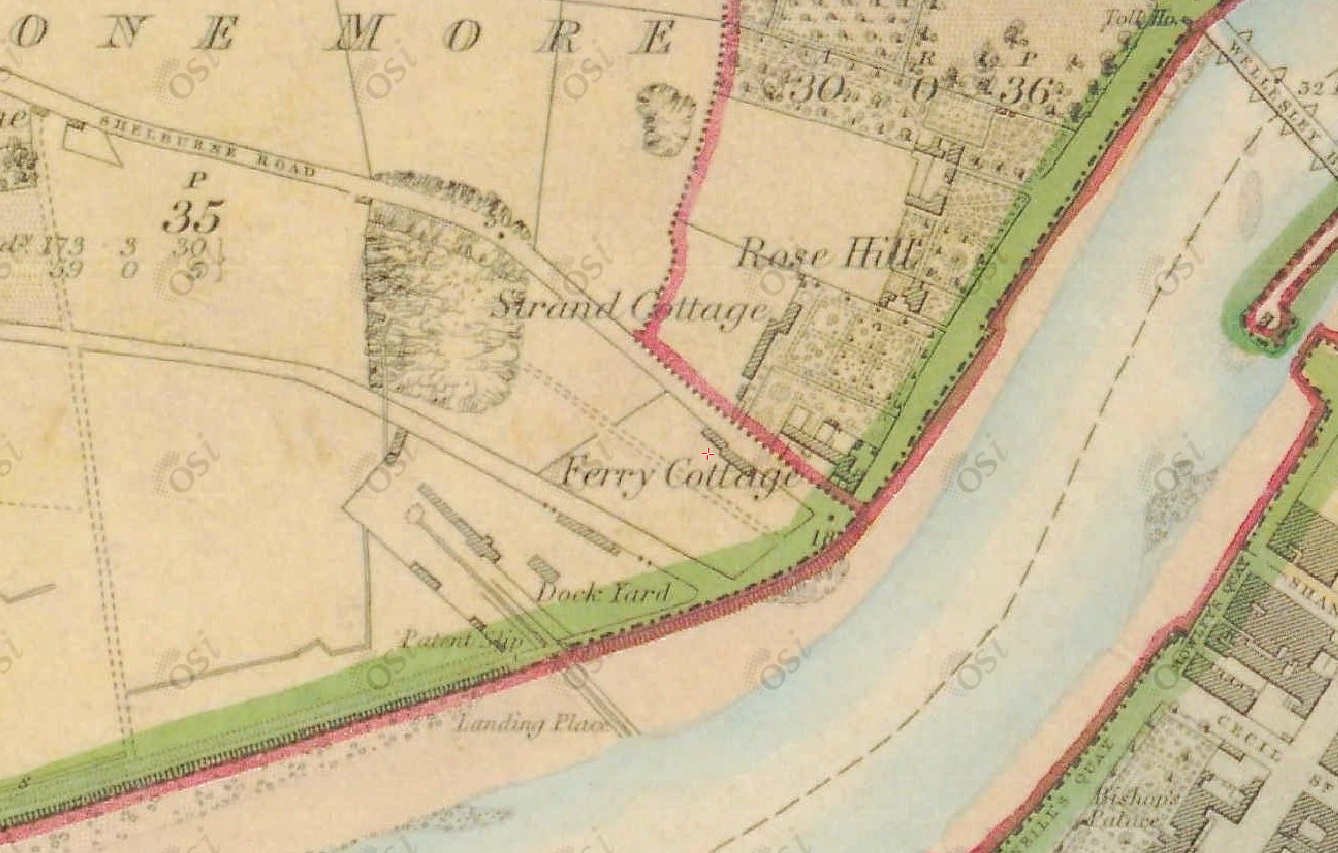
The waterways interest is actually in the dockyard, with its dock and slip, on the river just south of the manufactory. The yard also appears on the ~1840 map.

The dockyard ~1840

You can see the site on this Google photo …

… but the dockyard is gone.


Canal harbour, Limerick

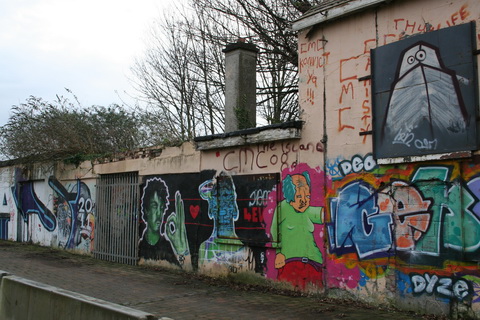
Went out without the camera today, alas, and found Waterways Ireland crews at work at the canal harbour in Limerick. One crew had launched a Pioner Multi (I didn’t see them do it, alas, but it may have come on the back of a truck with a HIAB or suchlike) and were hauling rubbish out of the water. Another were welding new railings to prevent access to the old hotel/canal manager’s house and installing a steel plate in a window aperture on one of the Shannon Navigation buildings.

I presume the new plate will soon be decorated. I rather like the artwork, I must say, and I think it a pity that Young Folk should not have somewhere to go to do the things that Young Folk like to do.

Sluices and streams

The heading shows I’m trying hard to find a waterways link for this ….

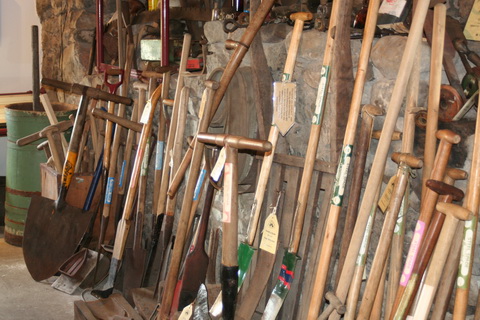
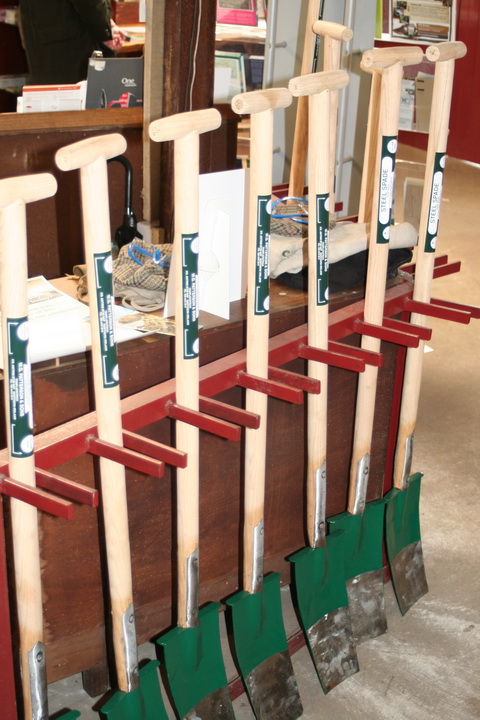
If you’re anywhere near Belfast, visit Patterson’s Spade Mill near Templepatrick on the Antrim Road. The IHAI visited it after the April 2012 AGM and it was quite fascinating. Did you know that there were once 171 different types of spades in use in Ireland, catering for different uses and different types of soils?

Some of the many types of old spades on display

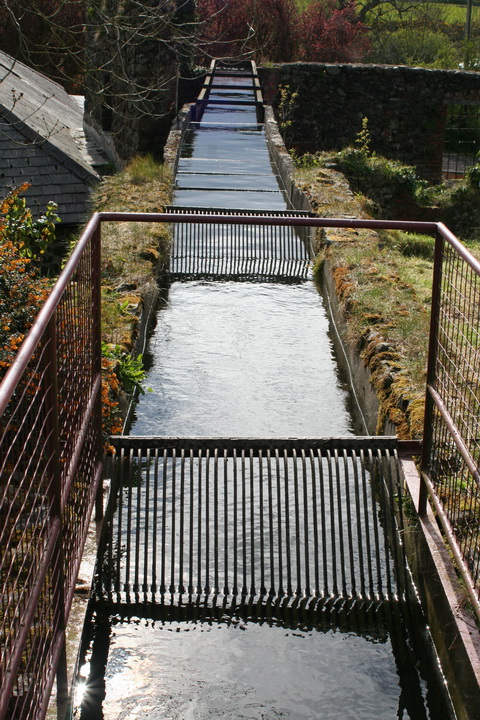
The mill is powered by water, using a turbine, and it’s the last water-driven spade mill in These Islands:

The channel taking water from the stream to the turbine. Part of the channel runs in a trough made by Portadown Foundry

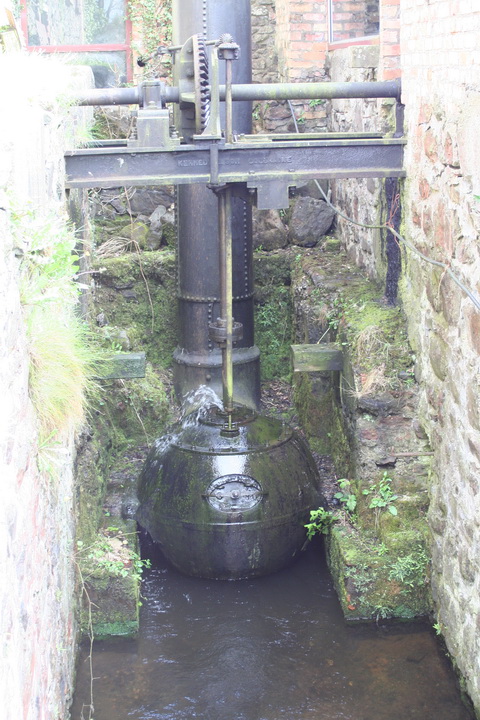
The turbine

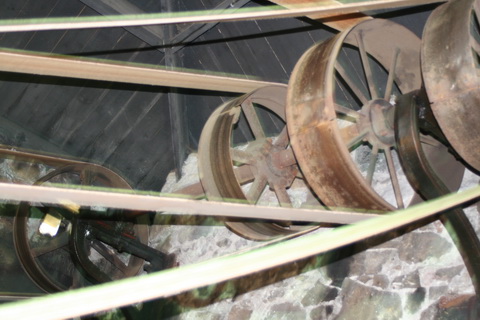
The turbine turns a shaft, which turns these wheels, and the belts power many of the machines in the mill

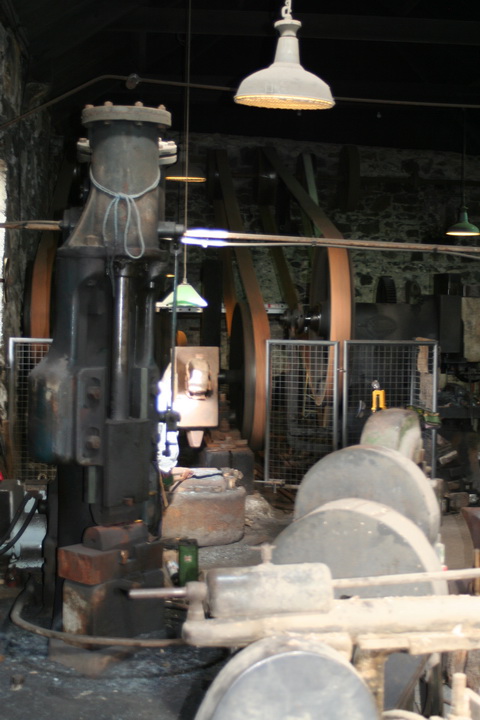
The water-powered trip-hammer towards the back

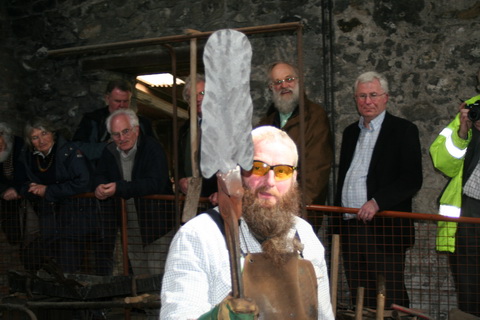
A spade after being hammered (just one of the many stages in its production)

The mill (which is original, not a reconstruction) is absolutely packed with machines and must have been a hellish place to work when in full production, with the heat from the furnace, the noise from the trip-hammer and several workers producing spades at the same time. The spade-maker above is one of the last six in Europe and really knows what he’s talking about: not just the process but the uses to which spades were put. The other guide, who took us around the other parts of the site, was also knowledgeable and helpful.

Some new spades

Highly recommended.


Great Island and Tarbert

The waterway power stations are back in the news again.

Kildare canal history

John W Freeman of Donadea, near Naas, Co Kildare, has very kindly sent me a copy of his third book, Reflections through a Parish Window, which he published in November 2010, and tells me that he is at work on his fourth book. As usual, his third has several items of waterways interest from the land between the canals: Donadea is south of the Royal and north of the Grand.

John gives special thanks to Essie Conroy of Lowtown (19th Lock), who died in September 2010. There is an article (p111 et seq) about her grandparents, Murt and Mary Murphy; Murt, originally from Ballycowan near Tullamore, died in 1922 aged 73. The Lowtown section also includes photos of a model flyboat, the wooden canal boat 104B (Maid of Erin, owned by Roches of Tullamore) and Essie Conroy with one of Ted Barrett’s boats at Lock 19. Her husband John Conroy is pictured on p123.

There is a photo of another wooden canal boat at Lowtown. It has the name Ocean Star written across its stern and what look like horizontal wooden slots on both sides of the rudder. The crew are named as William Connolly and his son Patrick, with Thomas Murphy (Essie Conroy’s father) standing on the bow holding a rope.

Other Grand Canal items include a photograph of 31M at Landenstown (p56)  and two photos of Robertstown, one undated (p120) and the other taken in 1895 (p116). There is a photo of the Royal at Kilcock (p64), perhaps taken in the 1980s, and a short article about the Royal with a photo of Lock 1 (pp137–8). There is even a photo of Guinness Liffey barges of, I think, the first fleet (p68).

Perhaps the most surprising item is a photograph from the Irish Press of 23 October 1947 with this caption:

Propeller-driven “water-bike”, built by motor and cycle mechanic Patrick Kennedy, of Corduff, Co Kildare, to contact his clients in their village homes along the Grand Canal. Comfortably seated on the kitchen chair “tandem seat” is Christie Brereton, Patrick’s assistant, enlivening the pair’s progress with his accordion. These mechanics say that they will perfect this style of transport for river and lake travel.

The photograph is a little blurred, but the two men can be seen clearly, with Patrick in front clasping the handlebars. The structure of the craft seems to include at least two 40-gallon drums but the steering and propulsion methods are not specified. If anyone has any more information about this craft, do please leave a Comment below.

All in all, a lot of very interesting material once again, and I am looking forward to John’s fourth book.


River and canal keepers

No, not Waterways Ireland, the soi-disant “guardian of Ireland’s inland navigations” (it says here), which is actually responsible for only seven of them on the island, whereof only six are actually navigable, what with nobody’s having noticed that it wasn’t raining, but the Irish Wildlife Trust, which is providing training for river and canal keepers, although I can’t find any mention of it on IWT’s own website.


Elfin safety

The Railway Safety Commission, which god preserve, is seeking consultants to

 undertake a review of the self contained Heritage Railways in Ireland with respect to the management of safety associated with their railway activities.

The bumpf says:

The purpose of this competition is to engage an expert or experts to undertake a review of the self contained Heritage Railways in Ireland with respect to the management of safety associated with their railway activities. It should be noted that this excludes the Railway Preservation Society of Ireland (RPSI).

The 8 heritage railways concerned are

Difflin Lake Railway, Raphoe, Co. Donegal

Fintown Railway, Fintown, Co. Donegal

Cavan & Leitrim Railway, Dromod, Co. Leitrim

Irish Steam Preservation Society, Stradbally, Co. Laois

Waterford & Suir Valley Railway, Kilmeadan, Co. Waterford

Tralee & Dingle Railway, Tralee, Co. Kerry

Lartigue Monorailway, Listowel, Co. Kerry

West Clare Railway, Moyasta, Co. Clare.

These heritage railways all operate on their own self contained infrastructure. They are operated by a mix of paid and volunteer staff. They include steam and diesel traction and a number of passenger carrying vehicles.

Safety certification was granted to these railways on the basis of their accepted safety cases in accordance with the Railway Safety Act 2005 (the Act). As the majority of these safety certificates were issued in 2007 they now fall due for review.

Hasn’t it got cold recently? There is definitely a chill in the air.