Category Archives: Rail

Spencer Dock

The Royal Canal meets the River Liffey at Spencer Dock (more or less: older OSI maps suggest that the section between Sheriff Street and the Liffey is Royal Canal Docks, with Spender Docks north of Sheriff Street). Much development has been proposed, and perhaps undertaken, in the area, where CIE (the public transport authority) owned much land.

Now, the Sunday Business Post tells us [perhaps behind a paywall], CIE’s subsidiary Irish Rail, which runs railways, is to sell land at Spencer Dock to a “private sector buyer”. The proceeds will enable Irish Rail to get rid of another 120 workers: it planned to lay off 300 workers this year but only 89 left because Irish Rail could not afford the terms of a voluntary redundancy scheme. The departures will reduce its wage bill.

I don’t really understand why CIE doesn’t simply shut down Irish Rail altogether, with the possible exception of the Dublin commuter services. Even its main-line trains are surely unnecessary now that most major conurbations are linked by motorways, on many (if not all) of which Bus Éireann, another subsidiary of CIE, runs express services. Lunatic ideas like the Western Rail Corridor don’t help, of course, but when, as the SBP reports,

[…] a train was recently left stranded in Galway after a local supplier refused to provide further credit […]

and when the company (again according to the SBP) cannot afford toilet rolls or receipt rolls for credit card machines, it may be that the market is trying to give the owners of the business a message: “close down now”.
 

The Park Canal

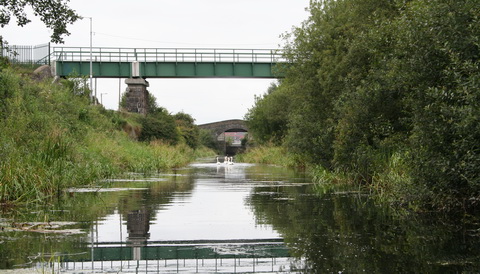
I wrote here about the Park Canal and why it should not be restored. I did not include, because I had not then seen it, a link to this report in the Limerick Post. It shows why the gates on the second lock were not replaced. The core problem is that the banks in the upper section of the canal slope too steeply to be stable.

The slope of the banks above the railway bridge (from a boat)

Happily, this deficiency in the original construction has saved us from another foolish restoration.


Northern Ireland seeks cutting-edge technology … of the 18th century

IndustrialHeritageIreland reports on two recent outbreaks of cargo cultism in Norn Iron. Folk in Tyrone want the whole of the Ulster Canal to be restored to its, er, former glory, which presumably means without any water west of Monaghan, while a Sinn Féin MLA wants to lumber Waterways Ireland with responsibility for the useless Strabane Canal on which £1.3 million has already been wasted.

What is it with Sinn Féin and canals? I realise that Irish republicanism is by definition a backward-looking creed, with little contact with reality, but why not look to (say) early nineteenth century technology, like the steam railway, rather than that of the eighteenth century?

Part of the problem, I suspect, is that Sinn Féin folk, especially those who are subjects of Her current Majesty, adopt a British conception of inland waterways. In Britain, canals dominate and boats must travel slowly, no faster than the horse-drawn vessels of the eighteenth and nineteenth centuries. But Irish waterways are dominated by lakes, whereon modern folk like to zoom around in fast boats: jetskis, speedboats and skiboats, fast cruisers. Such boats are entirely unsuitable for canals: they damage the banks and the pace bores their owners.

As it happens, we have lots of lakes where owners can zoom. [I’d prefer if they didn’t, but that’s the way it is.] And with reductions in the amount of boating activity, we don’t need any additional waterways. Sinn Féin, though, doesn’t seem to have grasped this. Stuck in the eighteenth century, it wants canals. I suppose we should be grateful it isn’t proposing to have the taxpayer stump up for coal-mines as well.

For the record

The Limerick Leader article about a proposed Limerick river bus has some statements that do not accord with my understanding.

The venture will see the river bus depart Guinness Pier – across from Athlunkard Boat Club at O’Dwyer Bridge – every two hours, bound for the power station […].

As far as I know, the pier in question was the Ranks jetty and was not used by Messrs Guinness. The Eclipse Flower, and other vessels owned by Ranks and their predecessors, sailed up the Shannon from there rather than attempt the stretch from Baal’s Bridge to Custom House Quay.

The boat will follow the route taken by barges of old – both passenger and commercial – some of which historically transported Guinness to the city up until the mid-1960s.

“It is a tried and tested route,” said Mr Flynn, stressing the viability and safety of the route, which passes Long Pavement – the edges of which have been repaired and grassed over – and finishes at the hydro-electric plant.

“Every passenger and commercial barge that came to Limerick for 50 years used that stretch of water. It is very safe. It was navigated by all the barges,” he said.

The route to Limerick through Ardnacrusha came into use only after the construction of the power station in the 1920s and was used for a little over thirty years. To the best of my knowledge, there were no passenger services in those years: passenger carrying stopped in the first half of the nineteenth century, when traffic was still using the old Limerick Navigation. There have been some trip-boats in recent years, but they did not (and do not) use “barges of old”. Some old barges, now converted and with more powerful engines, have safely navigated that stretch, but they do it when conditions are right.

During the final phases of Ardnacrusha’s construction, both old and new navigations were closed; the Grand Canal Company (GCC), the main commercial carrying company, ran to Killaloe and had its cargoes carried onward by rail to Limerick. When the new route through Ardnacrusha was opened, the GCC thought it was so dangerous that it refused to use it for about a year. It resumed operations only when a boom was put across the river above Baal’s Bridge and posts were provided upstream of O’Dwyer Bridge to which barges could tie while waiting for suitable states of the tide.

I accept that the proposed river bus will not be going downstream as far as Baal’s Bridge, but it will still be navigating on a stretch of water where Waterways Ireland advises that boats should not navigate when more than one turbine is running at Ardnacrusha. The ESB can run up to four turbines, each of which is said to add a knot to the current, and it can switch them on immediately, with no warning to any boat using the river.

Other pages on this site make it clear that I share the promoters’ enthusiasm for Ardnacrusha and the canal and river thence to Limerick. I do not say that the difficulties of that stretch cannot be overcome, but I do not think that they should be dismissed.


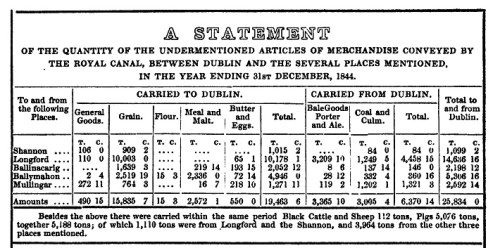
Royal Canal traffic in 1844

Royal Canal traffic in 1844 (Salt)

That table is extracted from Samuel Salt’s Statistics and Calculations essentially necessary to persons connected with railways or canals; containing a variety of information not to be found elsewhere 2nd ed Effingham Wilson and Bradshaw & Blacklock, London 1846, available from Messrs Google here.

The interesting point is how little of the Royal’s traffic travelled the whole way from the Shannon to Dublin or vice versa: only about 5% of the Dublin-bound traffic and less than 3% of the traffic westward.

Another point of interest is that traffic to Dublin was three times the traffic from Dublin.

Amongst the livestock, pigs were the dominant animals: they lost too much condition if they were walked long distances, which was the only alternative to canal transport before the railways came. Even there, I suspect that much of the tonnage described as “from Longford and the Shannon” was actually from west of the river, in Counties Mayo and Roscommon.

Grand trumps Royal

A victory today for St James’s Hospital, close to the former harbour of the Grand Canal, over the Mater Hospital, close to the former harbour of the Royal Canal at the Broadstone.

Perhaps, if St James’s needs space to expand, it could take over the former canal harbour; work on its latest development seems to have ceased.

Kilgarvan Quay

On 3 October 1906 Mr Hugh Delaney of Borrisokane, Co Tipperary, gave evidence to the Royal Commission appointed to enquire into and to report on the canals and inland navigations of the United Kingdom. Tipperary (North Riding) County Council had asked him “to give evidence on behalf of the quay at Kilgarvan.”

His evidence became rather confused, as he and his interlocutors misunderstood each other. The source of the problem seems to have been his using the term “the canal” to refer both to the Grand Canal Company and to the canal itself. The main points of his evidence were these:

  • Kilgarvan Quay was “only of recent date: it was only opened in [October] 1891 and it has had an extraordinary effect on the traffic of the district and brought down the railway rates [from Cloughjordan] very considerably”
  • there had been no quay at Kilgarvan before that; there was deep water at the quay
  • the grand jury of the North Riding of Tipperary gave £230 towards the cost and the Grand Canal Company paid the rest, about £579
  • although it was only 104 miles from Kilgarvan Quay to James Street harbour, it took five or six days for barley to reach Dublin
  • he felt that the trip should be done in two days, using steam launches
  • he thought that transhipment at Shannon Harbour caused undue delay
  • people at Terryglass had built a quay and it made a port of call for the Grand Canal Company.

The present quay at Kilgarvan is not on the ~1840 OSI map (though there is a smaller quay near the bend in the road) but it is on the ~1900. I have a photo of the crane on my page about Shannon cranes; I’m no expert, but I wonder whether the crane might be older than the quay.

Moyasta

Good news for the West Clare Railway.

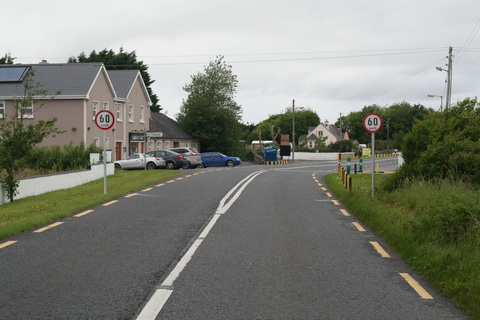
New speed limit on the N67 at Moyasta

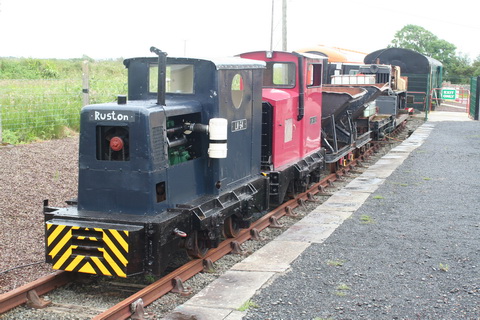
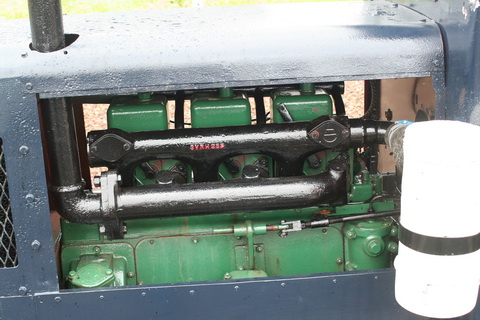
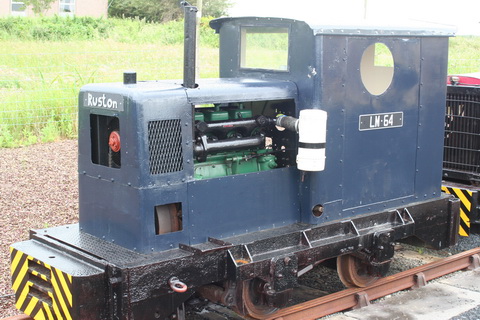
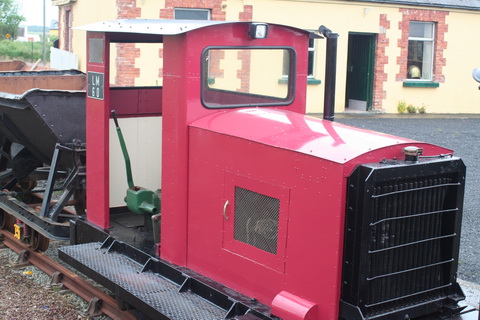
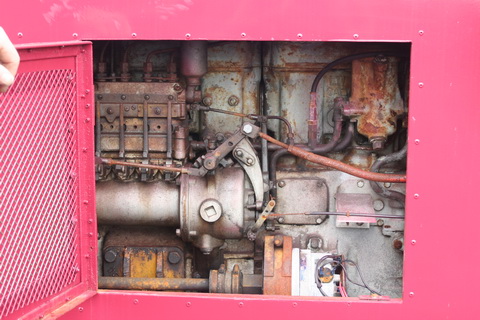
And there are more engines.


The surprising importance of the Shannon steamers in the 1830s

A short, lavishly illustrated talk in Killaloe Cathedral, Co Clare, at 6.00pm on Sunday 29 April 2012, as part of the Waterways Ireland Discover Killaloe and Ballina thingie.


Dublin or bust

If you’re not already a reader of Barge Hawthorn’s blog, may I suggest that you start now? The account of the descent into Dublin along the Royal Canal, over three days, features mounting tension, a really superb photo of the M50 aqueduct and a happy ending when Effin Bridge lifted when required.

You can work your way backwards through earlier posts to find the how and the why.