
-

Waterways and Means by Brian J Goggin available now -
Join 587 other subscribers
RSS links
Pages
- Waterways & past uses
- Saving the nation
- Turf and bog navigations
- The Bog of Allen from the Grand Canal in 1835
- John’s Canal, Castleconnell
- The Canal at the World’s End
- The Finnery River navigation
- The Lough Boora Feeder
- The Little Brosna
- The Lullymore canal as wasn’t
- The Roscrea canals
- The Monivea navigations
- Lacy’s Canal
- The Rockville Navigation page 1
- The Rockville Navigation page 2
- The Rockville Navigation page 3
- Rockingham
- The Colthurst canals
- The Inny navigation
- The lower Shannon
- The piers, quays and harbours of the Shannon Estuary
- Nimmo’s non-existent harbour
- The Doonbeg Ship Canal
- Querrin
- Kilrush and its sector lock
- The Killimer to Tarbert ferry
- The Colleen Bawn at Killimer
- Knock knock. Who’s there?
- Cahircon: not at all boring
- Ringmoylan
- The hidden quay of Latoon
- The stones of Kilteery
- The Maigue
- Sitting on the dock of the Beagh
- Massy’s Quay, Askeaton and the River Deel
- Saleen Pier
- The Lord Lieutenant’s Visit to Limerick — trip down the Shannon [1856]
- The Fergus
- The Limerick Navigation
- The boundaries of the Shannon
- The power of the Shannon
- The locks on the Limerick Navigation
- Plassey
- Worldsend, Castleconnell, Co Limerick
- The bridge at O’Briensbridge
- The Limerick Navigation and the Monmouthshire Canal
- The Limerick Navigation (upper end) in flood November 2009
- The Limerick Navigation (lower end) in flood November 2009
- The Limerick Navigation (tidal section) in flood November 2009
- Floods in Limerick (1850)
- Limerick to Athlone
- The piers, quays and harbours of the Shannon Estuary
- The middle and upper Shannon
- The Grand Canal
- Monasterevan, the Venice of the west
- The Grand Canal lottery
- Grand Canal carrying: some notes
- The dry dock at Sallins
- The Naas Branch
- The Mountmellick Line of the Grand Canal
- Dublin to Ballinasloe by canal
- The Ballinasloe Line
- A Grand Canal lock: Belmont
- South of Moscow, north of Geneva
- Water supply to the Grand Canal
- The Grand Canal Company strike of 1890
- The Royal Canal
- Water supply to the Royal Canal: the feeders
- The Lough Owel feeder
- The proposed Lough Ennell water supply to the Royal Canal
- From Clonsilla to Clew Bay
- Kinnegad and the Royal Canal
- The sinking of the Longford in 1845
- Steamers on the Royal Canal
- Leech of Killucan: horse-drawn boats on the Royal
- Horses on board
- Royal eggs
- Prothero on the Royal
- The whore who held the mortgage on the Royal Canal
- Waterways in Dublin
- The Naller
- Visit Dublin. Walk canals. Drink beer.
- The Broadstone Line of the Royal Canal
- Effin Bridge: its predecessors
- Between the waters
- The abandoned Main Line of the Grand Canal 1
- The abandoned Main Line of the Grand Canal 2
- The abandoned Main Line of the Grand Canal 3
- The abandoned Main Line of the Grand Canal 4
- Waterways of the south-east
- Waterways of Cork and Kerry
- Waterways of the west
- Waterways of Ulster and thereabouts
- People
- Systems & artefacts
- Irish waterways furniture
- Irish waterways operations
- Miscellaneous articles
- Irish inland waterways vessels
- Cots -v- barges: defining Irish waterways
- Waterways Ireland workboats
- Wooden boats on Irish inland waterways
- Traditional boats and replicas
- Non-WI workboats
- Older Irish working boats
- The barge at Plassey
- Dublin, Athlone and Limerick
- Waterford to New Ross by steam
- The steamer Cupid
- Liffey barges 1832
- Steam on the Grand Canal
- The Mystery of the Sunken Barge
- Steam on the Newry Canal
- Guinness Liffey barges 1902
- Up and under: PS Garryowen in 1840
- Watson’s Double Canal Boat
- The Cammoge ferry-boat
- The ’98 barge
- Late C19 Grand Canal Company trade boats
- Chain haulage
- Ballymurtagh
- The Aaron Manby and the Shannon
- A sunken boat in the Shannon
- Sailing boats on Irish inland waterways
- Some boats that are … different
- Square sail
- 4B mooring
- Irish waterways scenery
- Engineering and construction
- Irish navigation authorities
- Opinion
- The folly of restoration
- The Ulster Canal now
- The Ulster Canal 00: overview
- The Ulster Canal 01: background
- The Ulster Canal 02: the southern strategic priority
- The Ulster Canal 03: implementation
- The Ulster Canal 04: Ulster says no
- The Ulster Canal 05: studies and appraisals
- The Ulster Canal 06: the costs
- The Ulster Canal 07: the supposed benefits
- The Ulster Canal 08: the funding
- The Ulster Canal 09: affordability
- The Ulster Canal 10: kill it now
- The Ulster Canal 11: some information from Waterways Ireland (and the budget)
- The Ulster Canal 12: departmental bullshit
- The Ulster Canal 13: an investment opportunity?
- The Ulster Canal 14: my search for truth
- The Ulster Canal 15: spinning in the grave
- The Ulster Canal 16: looking for a stake
- The Ulster Canal 17: the official position in November 2011
- The Ulster Canal 18: Sinn Féin’s canal?
- The Ulster Canal 19: update to February 2012
- The Ulster Canal 20: update to April 2013
- The Ulster Canal 21: update to August 2018
- The Barrow
- A bonfire at Collins Barracks
- Living on the canals
- Waterways tourism
- Guano
- The Park Canal: why it should not be restored
- The Park Canal 01: it says in the papers
- The Park Canal 02: local government
- The Park Canal 03: sinking the waterbus
- The Park Canal 04: the Limerick weir
- The Park Canal 05: cruisers from the Royal Canal
- The Park Canal 06: What is to be done? (V I Lenin)
- The Park Canal 07: another, er, exciting proposal
- Accounting for risk
- Tax-dodging boat-owners
- Rail
- Waterways & past uses
Blogroll
boats
- Canal steamers [UK]
- Chris Deuchar's boating page
- Douglas Self retrotech and steam
- Grace's Guide: British Industrial History
- Heritage Boat Association
- Historic Inland Working Boats
- Irish maritime history
- irish shipwrecks database
- Kilrush & District Historical Society
- Lough Corrib charts and scans
- Railway and Canal Historical Society
Book sales
Industrial heritage
Inland waterways
Ireland
Overseas
Seafaring
Sources
Category Archives: Restoration and rebuilding
Royal water (current status)
I have updated my page about Royal Canal feeders with some information provided by Nigel Russell of WI to the An Bord Pleanála oral hearing on the Royal water supply scheme.
Incidentally, the Department of Arts, Heritage and the Gaeltacht, WI’s parent department in RoI, was among the (few) objectors to the proposed abstraction of water from Lough Ennell, although it was in favour of ceasing to abstract water from Lough Owel [Inspector’s report pp11–12]. Indeed it seemed to have some reservations about the reopening of the Royal Canal, not on economic grounds but because “some important nature consideration issues need to be fully addressed”.
Posted in Ashore, Built heritage, Drainage, Economic activities, Engineering and construction, Extant waterways, Industrial heritage, Ireland, Natural heritage, Operations, People, Restoration and rebuilding, waterways, Waterways management, Weather
Tagged boats, canal, department of arts heritage and the gaeltacht, feeder, Ireland, lock, Loiugh Owel, Lough Ennell, Nigel Russell, Operations, Royal Canal, Shannon, vessels, water level, waterways, Waterways Ireland
Royal water
The Royal Canal water supply applications have been approved by An Bord Pleanala. There were two separate applications [see here and here] but they were in effect treated as one. There are five PDFs available on each page and I haven’t read all of them yet. However, on a first glance, I note that:
2. The proposed development shall be operated as follows:
(a) Rates of abstraction from Lough Ennell to the Royal Canal shall be as specified in the public notices and, in particular, shall not exceed 43,636 cubic metres of water in any 24 hour continuous period and subject to a total maximum abstraction of 6,586,363 cubic metres per annum.
(b) Abstraction from Lough Ennell to supply the Royal Canal shall cease when the lake level reaches 79.325 mOD Malin Datum, being the crest level of Clonsingle weir, measured at Clonsingle weir by continuous monitoring.
(c) The fish pass at Clonsingle weir shall incorporate a minimum flow of 0.29m3/second.
(d) A minimum flow of 682 m3/day (0.5MGD), taken directly from Lough Owel, and excluding water from the fish farm, shall be retained in the original canal feeder.
Reason: In the interest of protecting the integrity of the Lough Ennell Special Area of Conservation and the ecological interest of the River Brosna and the canal feeder, and in the interest of protecting material assets at Lough Ennell and the River Brosna.
If I remember correctly, the amount of water available from Lough Ennell will not always provide enough (eg in a dry season) to keep the canal full. Still, this is a significant advance for Waterways Ireland and for Royal Canal enthusiasts.
Posted in Built heritage, Charles Wye Williams, Economic activities, Engineering and construction, Extant waterways, Industrial heritage, Ireland, Natural heritage, Operations, Restoration and rebuilding, Scenery, Sources, Water sports activities, waterways, Waterways management
Tagged boats, canal, floods, flow, Ireland, Lough Ennell, Lough Owel, Operations, Royal Canal, water level, waterways, Waterways Ireland
Preparing for winter
WI at work in Killaloe Novemebr 2012.
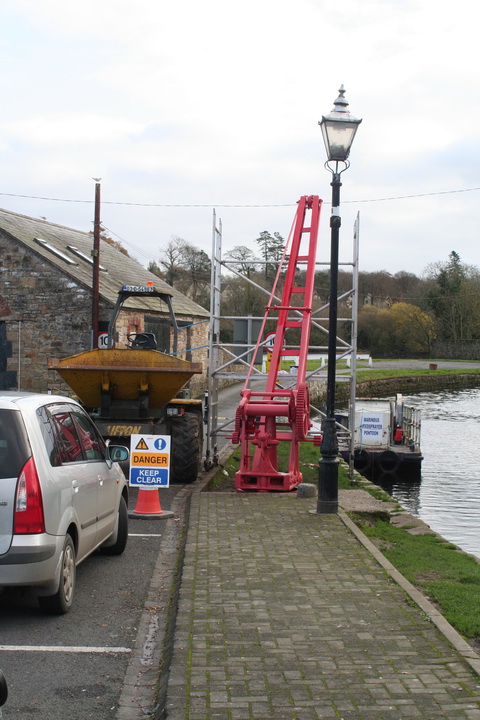
Old crane being painted
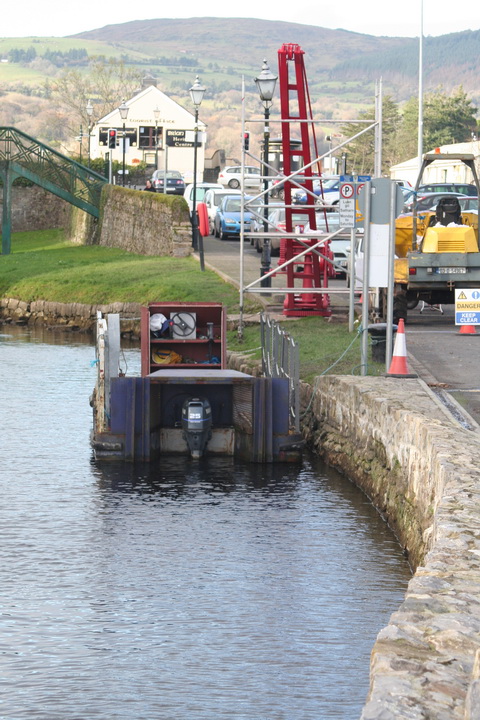
The Marindus weedspraying pontoon. This Marindus may be Marindus Engineering Ltd of Kilmore Quay, Co Wexford
Posted in Ashore, Built heritage, Charles Wye Williams, Economic activities, Engineering and construction, Extant waterways, Forgotten navigations, Industrial heritage, Ireland, Irish inland waterways vessels, Irish waterways general, Operations, Restoration and rebuilding, Shannon, waterways, Waterways management, Weather
Tagged boats, bridge, canal, Clare, crane, ESB, flow, Ireland, Killaloe, lock, Lough Derg, Marindus, Operations, paint, Shannon, vessels, waterways, Waterways Ireland, weed, workboat
Errina
Waterways Ireland has parked a canteen trailer and some pontoons at Errina Bridge.
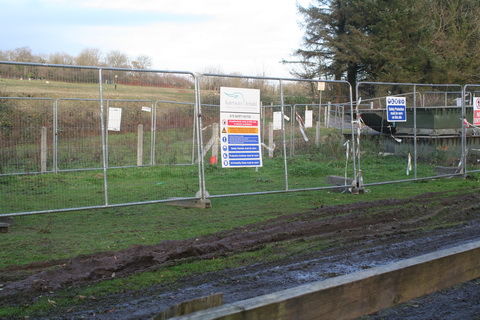
The compound, with Official Notices signed Rabbit
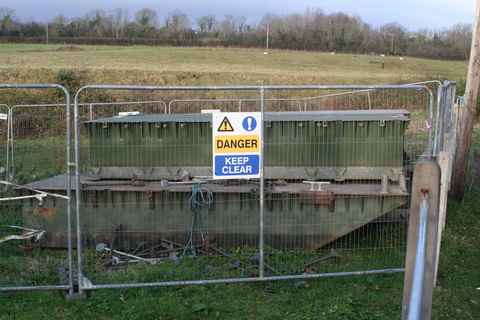
Pontoons
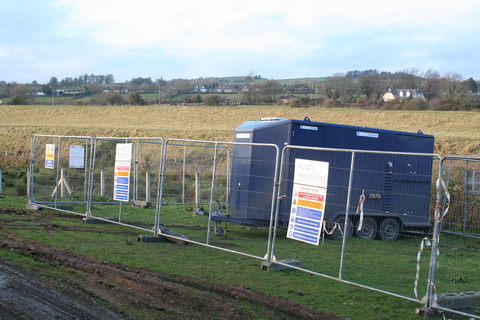
The canteen trailer
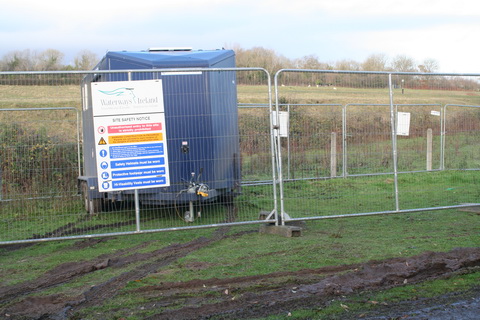
Another view of the canteen trailer
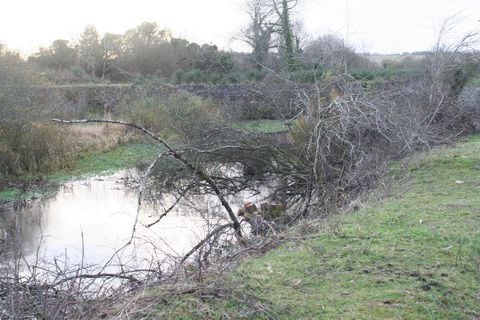
Evidence of tree cutting above Errina Lock, but that may not have anything to do with Waterways Ireland
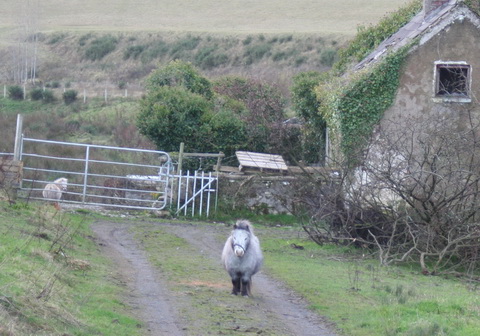
The guardians of the lock
Posted in Ashore, Built heritage, Charles Wye Williams, Drainage, Economic activities, Engineering and construction, Forgotten navigations, Industrial heritage, Ireland, Irish inland waterways vessels, Natural heritage, Operations, Restoration and rebuilding, Shannon, The cattle trade, The turf trade, waterways, Waterways management
Tagged boats, bridge, canal, Clare, Errina, floods, Ireland, Killaloe, Limerick, lock, lost, Lough Derg, O'Briensbridge, Operations, Plassey-Errina Canal, pony, Shannon, Tipperary, water level, waterways, Waterways Ireland, workboat
Spencer Dock
The Royal Canal meets the River Liffey at Spencer Dock (more or less: older OSI maps suggest that the section between Sheriff Street and the Liffey is Royal Canal Docks, with Spender Docks north of Sheriff Street). Much development has been proposed, and perhaps undertaken, in the area, where CIE (the public transport authority) owned much land.
Now, the Sunday Business Post tells us [perhaps behind a paywall], CIE’s subsidiary Irish Rail, which runs railways, is to sell land at Spencer Dock to a “private sector buyer”. The proceeds will enable Irish Rail to get rid of another 120 workers: it planned to lay off 300 workers this year but only 89 left because Irish Rail could not afford the terms of a voluntary redundancy scheme. The departures will reduce its wage bill.
I don’t really understand why CIE doesn’t simply shut down Irish Rail altogether, with the possible exception of the Dublin commuter services. Even its main-line trains are surely unnecessary now that most major conurbations are linked by motorways, on many (if not all) of which Bus Éireann, another subsidiary of CIE, runs express services. Lunatic ideas like the Western Rail Corridor don’t help, of course, but when, as the SBP reports,
[…] a train was recently left stranded in Galway after a local supplier refused to provide further credit […]
and when the company (again according to the SBP) cannot afford toilet rolls or receipt rolls for credit card machines, it may be that the market is trying to give the owners of the business a message: “close down now”.
Posted in Ashore, Built heritage, Economic activities, Engineering and construction, Extant waterways, Industrial heritage, Ireland, Non-waterway, Operations, Politics, Rail, Restoration and rebuilding, waterways
Tagged Bus Eireann, canal, CIE, Dublin, Ireland, Irish Rai, motorway, railways, Royal Canal, Spencer Dock, Sunday Business Post
The Park Canal
I wrote here about the Park Canal and why it should not be restored. I did not include, because I had not then seen it, a link to this report in the Limerick Post. It shows why the gates on the second lock were not replaced. The core problem is that the banks in the upper section of the canal slope too steeply to be stable.
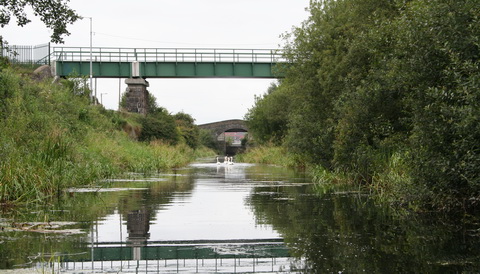
The slope of the banks above the railway bridge (from a boat)
Happily, this deficiency in the original construction has saved us from another foolish restoration.
Posted in Ashore, Built heritage, Charles Wye Williams, Drainage, Economic activities, Engineering and construction, Extant waterways, Forgotten navigations, Industrial heritage, Ireland, Operations, People, Politics, Rail, Restoration and rebuilding, Scenery, Shannon, Sources, The cattle trade, waterways, Waterways management
Tagged boats, bridge, canal, Clare, Guinness, Ireland, Limerick, Limerick City Council, lock, Operations, Park Canal, Shannon, slope, turf, vessels, water level, waterways, Waterways Ireland
Nonsense on floats
IndustrialHeritageIreland has found a local newspaper that thinks that river buses on the Grand Canal could provide commuters from west Dublin with fast transport to Google HQ at Grand Canal docks. IHI points out that the journey from Hazelhatch can take eight hours; even Dublin traffic moves faster than that.
Posted in Built heritage, Economic activities, Engineering and construction, Extant waterways, Industrial heritage, Ireland, Irish inland waterways vessels, Operations, Restoration and rebuilding, Sources, waterways, Waterways management
Tagged boats, bridge, canal, commuting, Dublin, google, Grand Canal, Ireland, vessels, water bus, waterways, Waterways Ireland, workboat
Royal water
In April 2012 I wrote about the proposed supply of water from Lough Ennell to the Royal Canal. I said that
[…] the Lough Ennell proposal had to go to An Bord Pleanála. At any rate, two applications had to be made, one for the water abstraction and the other for the physical works. In practice, the two are being handled as one.
An Bord Pleanála asked Westmeath County Council for some more information; that has now been supplied and a decision is expected by 11 June 2012.
I have just checked An Bord Pleanála’s website for the two applications PW3005 (lodged 9 December 2011) and JA0030 (lodged 7 October 2011); both say:
Proposed decision date not available at this time.
I do not know why decisions are taking so long.
Posted in Drainage, Economic activities, Engineering and construction, Extant waterways, Ireland, Irish waterways general, Natural heritage, Non-waterway, Operations, Politics, Restoration and rebuilding, Sources, Tourism, waterways, Waterways management, Weather
Tagged An Bord Pleanála, boats, bridge, canal, Ireland, Lough Ennell, Lough Owel, Operations, Royal Canal, water level, water supply, waterways, Waterways Ireland, Westmeath County Council
 Irish waterways history