

Proper order
Proper order
Posted in Extant waterways, Ireland, People, Shannon, Tourism, waterways, Weather
Tagged boats, Ireland, Killaloe, Lough Derg, Operations, Shannon, waterways
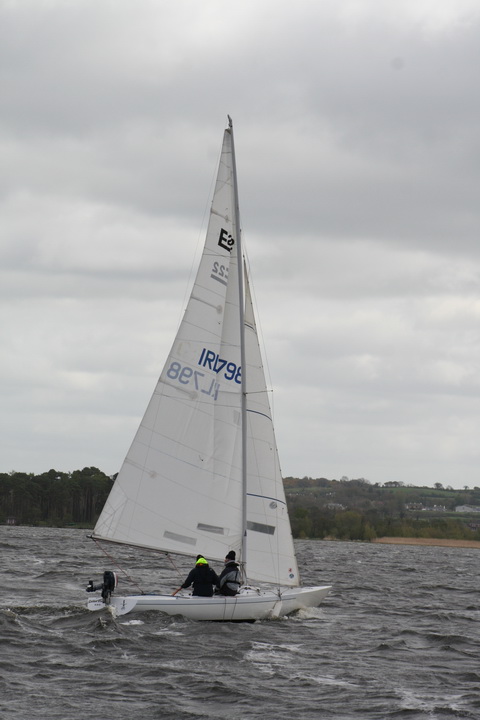
Heading towards Dromineer
Posted in Extant waterways, Ireland, Irish inland waterways vessels, People, Shannon, Water sports activities, waterways, Weather
Tagged boats, Ireland, Lough Derg, Shannon, vessels
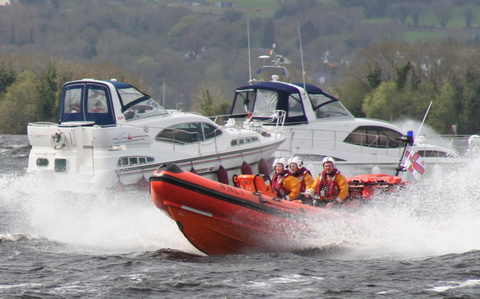
May spray
Posted in Extant waterways, Ireland, Irish inland waterways vessels, Operations, Shannon, Tourism, waterways
Tagged boats, Ireland, Lough Derg, Operations, waterways
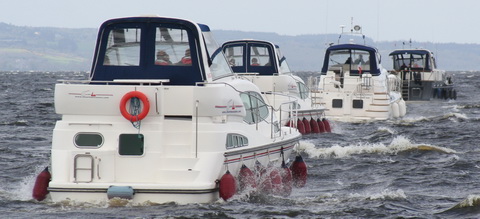
Convoy on Lough Derg
Posted in Extant waterways, Irish inland waterways vessels, Operations, Shannon, Tourism, Water sports activities, waterways, Weather
Tagged boats, Ireland, Lough Derg, Shannon
Boaters on Lough Derg were shocked today to realise that a key part of the lake’s infrastructure, the corner bollard at Dromaan, had gone missing.
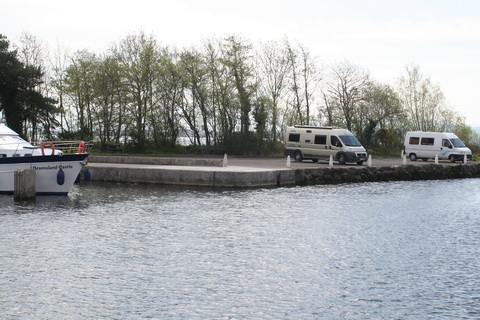
The vanished bollard
“We didn’t know it was there until it was gone,” said a weeping cruiser-owner. “Without that bollard, the outer berth on the right-hand side is useless: you can’t tie a boat there. And the middle berth is useless too. Two whole berths gone. With so many other spaces taken by harbour-hoggers and abandoned vessels, we’ll end up tying off barges or something.”
Sergeant Pluck of Whitegate said: “Is it about a bicycle?” Later, Superintendent Clohessy, from Tipp, admitted that he was baffled. The theft of a bollard had not previously been recorded. It was, he said, a quare conundrum and a right pancake.
Waterways Ireland has not commented on the matter.
… said Brian Lenihan of his 2009 Budget, which did not greatly impress Michael Hennigan of FinFacts, who had a highly entertaining, if sadly prescient, article here.
[…] political self-interest, incompetence, negligence and laziness […] litany of failure, smugness, hubris and neglect […] the incompetence of the toxic cocktail of former school teachers, small town solicitors, social workers and bookkeepers […]
How true those words are, even today. (The “toxic cocktail” was the membership of the government.)
Anyway, on 24 April I heard Josephine Feehily of the Revenue Commissioners saying on the wireless that the minimum rate of compliance for self-assessed taxes was 80%. I fear that she may not have taken account of the Mineral Oil Tax, which has been largely ignored by the citizenry.
Just to recap, this idiotic tax is the result of governmental cowardice and unwillingness to tell even a small, insignificant interest group to get stuffed. For historical reasons, owners of diesel-powered boats, in some countries, were allowed to use rebated (“red” or “green” low-tax) diesel, AKA marked gas oil. The EU said, many years ago, that this subsidy should no longer be given to owners of private pleasure craft. The governments concerned accepted that, but asked for time to introduce the change. When that period ran out, without their having done anything about it, they asked for a further deferral, and then yet another. The EU finally got fed up and told them to get on with it.
The Irish government, with that low cunning and contempt for the law that has so endeared us to other EU states, decided to reject the obvious method of implementing the new rule, which would have been to charge owners of private pleasure craft the full (non-rebated) price at the pump. Instead, it came up with a scheme that had no chance of working properly: it allowed owners of private pleasure craft to continue to buy diesel at the low price provided that they made returns, once a year, showing the amount of diesel they had bought and paying the difference between the rebated price and the full price. This difference is called the Mineral Oil Tax [PDF].
Such a scheme might have had a chance of working in Switzerland or Germany, places where citizens often obey the law even when nobody is looking, but it had no chance at all in Ireland. And so indeed it proved to be.
In 2010, 38 boat-owners paid the tax for 2009.
In 2011, 41 boat-owners paid the tax for 2010.
In 2012, 22 boat-owners paid the tax for 2011. The total amount received was €53,398.58 on 141,503.29 litres of diesel. That’s an average of 6432.1 litres per return, which is very high; I think that a lot of that is accounted for by the hire fleets.
I now have the latest figures.
In 2013, 23 boat-owners paid the tax for 2012. The total amount received was €113,841.45 on 301,674 litres of diesel.
It is gratifying to note that the number of returns has increased, even if it is still a tiny proportion of the total number of owners of diesel-powered private pleasure craft. But the increase in the amount received and in the number of litres returned is staggering: both figures have more than doubled. I am unable to explain the increase.
As I said last year, this ridiculous tax should be scrapped; those operating private pleasure craft should be required to use non-rebated diesel. Taxes that cannot be collected bring the whole system into disrepute and strengthen citizen contempt for the state and for society. In taxation, you’ve got to grab them by the balls; then their hearts and minds will follow. That’s why VAT and PAYE are so effective.
Posted in Economic activities, Extant waterways, Ireland, Irish inland waterways vessels, Irish waterways general, Operations, People, Politics, Sources, Tourism, Water sports activities, waterways, Waterways management
Tagged 2RN, boats, green diesel, Ireland, marked gas oil, mineral oil tax, private pleasure craft, revenue commissioners, tax, vessels, waterways
… that there were more things in heaven and earth than were dreamt of in his philosophy.
They did not, however, include any more holders of marked fuel traders’ licences [xls] along the Shannon.
Posted in Ashore, Economic activities, Extant waterways, Ireland, Irish inland waterways vessels, Operations, People, Politics, Shannon, Tourism, Water sports activities, waterways, Waterways management
Tagged boats, bridge, canal, Dublin, green diesel, Ireland, marked fuel trader's licence, Shannon, vessels, waterways
From Canals of Dublin.
Posted in Ashore, Built heritage, Economic activities, Engineering and construction, Extant waterways, Industrial heritage, Ireland, Irish waterways general, Operations, Restoration and rebuilding, Sources, waterways, Waterways management
Tagged bridge, Broombridge, canal, Dublin, Ireland, Royal Canal

 Irish waterways history