Tag Archives: ESB

Errina Bridge

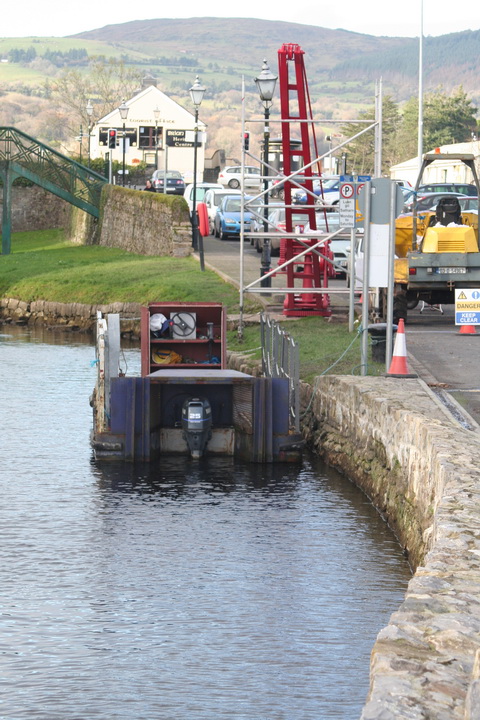
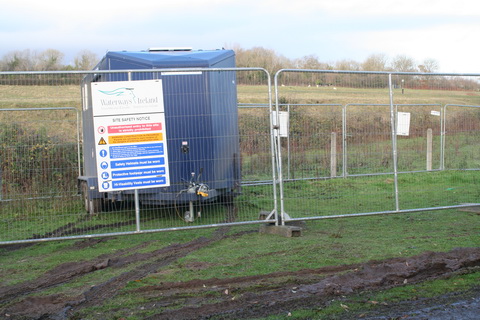
I remarked in November 2012 that Waterways Ireland had parked a canteen trailer and some pontoons at Errina Bridge, the uppermost bridge on the Plassey–Errina Canal, which is part of the old Limerick Navigation.
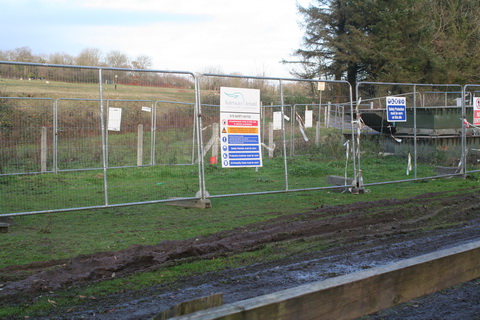
WI pontoons
WI pontoons

WI canteen

WI canteen

I wondered what was to be done; I noted that a stone at the top of one of the stop-plank grooves under the bridge had been removed (the stone on the far side was removed some time ago).

So I asked Waterways Ireland what was happening. They said:

The works in Clonlara are Flood relief works to protect Errina Lock from catastrophic failure. After the flooding in 2009, during which the dam in Errina Lock was overtopped by approximately 0.5 metres, it was decided to protect it from this happening again.

It has happened before too: in February 1809 the lock was destroyed by floods when heavy snows melted.
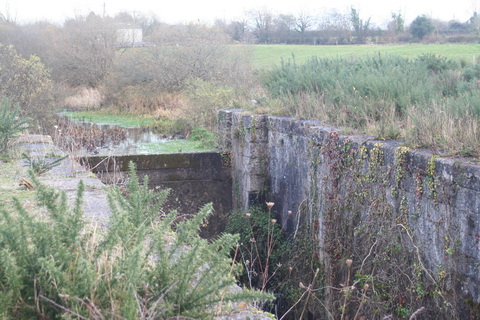
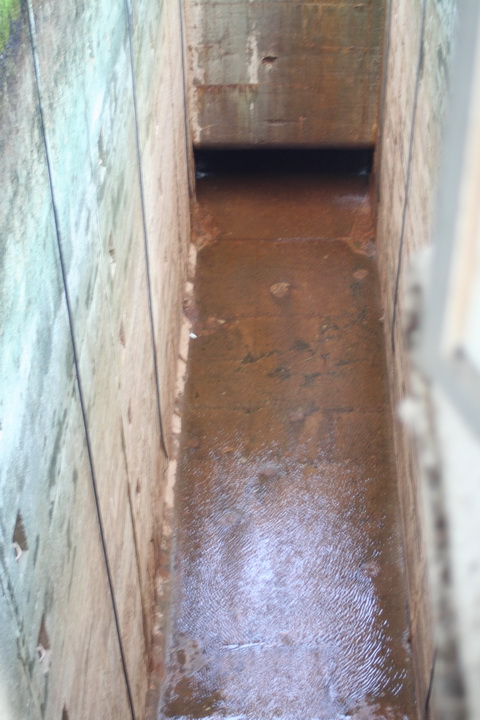
Errina Lock (looking upstream)

Errina Lock (looking upstream)

I asked WI about the nature of the works. They said:

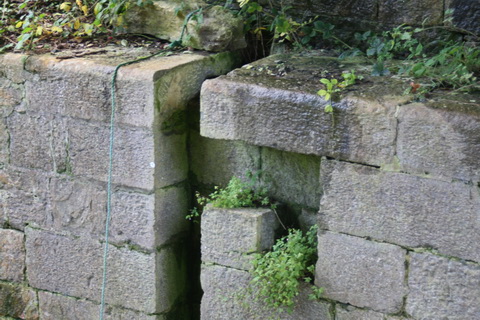
Stop logs are to be put into the grooves under the bridge forming a dam with the same size opening as that in the concrete dam in Errina Lock. As for the stone which is removed to facilitate the installation of the timbers, this will be replaced once the timbers are in place.

That is good to know.
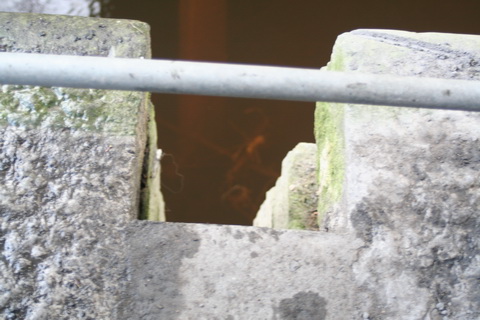
Errina Bridge stop-plank grooves (towing-path side, with uppermost stone removed)
Errina Bridge stop-plank grooves (towing-path side, with uppermost stone removed)

Errina Bridge stop-plank grooves (off side)

Errina Bridge stop-plank grooves (off side)

An authority on waterways has suggested that the curious shape of the grooves was designed to allow planks to be inserted from boats rather than from land.
 

Disband Clare County Council

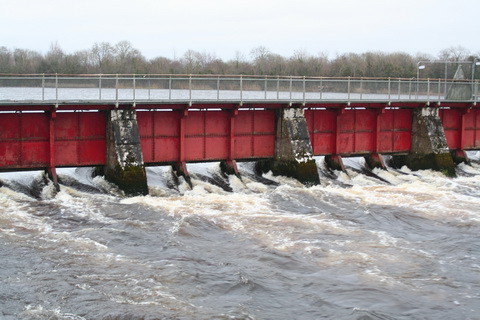
In order to save some money, it might be a good idea to disband Clare County Council. Then we wouldn’t have county councillors proposing idiotic projects (joined in this instance by some TDs) requiring vast capital expenditure (which we can’t afford) to produce zero jobs.

More about Ardnacrusha here.

Water levels

Meelick Weir today

Meelick Weir today

Almost level.

Ireland’s most popular waterways artefact?

The search term most often used to find this site is Ardnacrusha, which scores 1655, almost twice as many as the next term, the generic Waterways (875). But other variants occur too: Ardnacrusha Lock is at position 3 (768), Ardnacrusha power station 18 (274), ESB Ardnacrusha 21 (225), Ardnacrusha ESB 33 (169), Ard na Crusha 43 (140), Ardnacrusha hydroelectric power station 58 (120), Ardnacrusha dam 86 (89); Parteen Weir is at 14 (369).

Thus I deduce that Ardnacrusha is by far the most popular artefact on Irish inland waterways.

Here is the full top twenty.

1 Ardnacrusha 1,655
2 Waterways 875
3 Ardnacrusha lock 768
4 Wooden boat 728
5 Skies 613
6 Athlone 573
7 Strancally castle 483
8 Lough Erne 480
9 Homemade boat 460
10 Wooden boats 453
11 Irish waterways history 451
12 Boats 448
13 Irish waterways 393
14 Parteen Weir 369
15 Flying Fifteen 344
16 Homemade boats 333
17 Pioner Multi 301
18 Ardnacrusha power station 274
19 Johnstown Co Kilkenny 247
20 Ormond Castle 237

Most hits on this site come from searches rather than links.


Preparing for winter

WI at work in Killaloe Novemebr 2012.

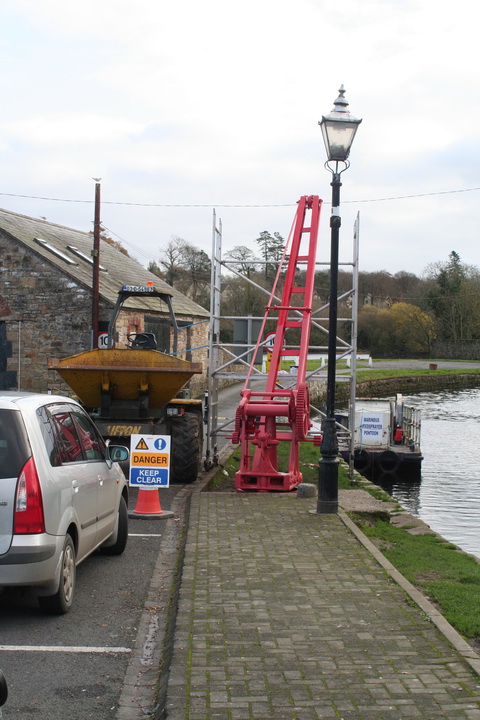
Old crane being painted


The Marindus weedspraying pontoon. This Marindus may be Marindus Engineering Ltd of Kilmore Quay, Co Wexford

Keeping a clean bottom

The upper chamber at Ardnacrusha lock

For the record

The Limerick Leader article about a proposed Limerick river bus has some statements that do not accord with my understanding.

The venture will see the river bus depart Guinness Pier – across from Athlunkard Boat Club at O’Dwyer Bridge – every two hours, bound for the power station […].

As far as I know, the pier in question was the Ranks jetty and was not used by Messrs Guinness. The Eclipse Flower, and other vessels owned by Ranks and their predecessors, sailed up the Shannon from there rather than attempt the stretch from Baal’s Bridge to Custom House Quay.

The boat will follow the route taken by barges of old – both passenger and commercial – some of which historically transported Guinness to the city up until the mid-1960s.

“It is a tried and tested route,” said Mr Flynn, stressing the viability and safety of the route, which passes Long Pavement – the edges of which have been repaired and grassed over – and finishes at the hydro-electric plant.

“Every passenger and commercial barge that came to Limerick for 50 years used that stretch of water. It is very safe. It was navigated by all the barges,” he said.

The route to Limerick through Ardnacrusha came into use only after the construction of the power station in the 1920s and was used for a little over thirty years. To the best of my knowledge, there were no passenger services in those years: passenger carrying stopped in the first half of the nineteenth century, when traffic was still using the old Limerick Navigation. There have been some trip-boats in recent years, but they did not (and do not) use “barges of old”. Some old barges, now converted and with more powerful engines, have safely navigated that stretch, but they do it when conditions are right.

During the final phases of Ardnacrusha’s construction, both old and new navigations were closed; the Grand Canal Company (GCC), the main commercial carrying company, ran to Killaloe and had its cargoes carried onward by rail to Limerick. When the new route through Ardnacrusha was opened, the GCC thought it was so dangerous that it refused to use it for about a year. It resumed operations only when a boom was put across the river above Baal’s Bridge and posts were provided upstream of O’Dwyer Bridge to which barges could tie while waiting for suitable states of the tide.

I accept that the proposed river bus will not be going downstream as far as Baal’s Bridge, but it will still be navigating on a stretch of water where Waterways Ireland advises that boats should not navigate when more than one turbine is running at Ardnacrusha. The ESB can run up to four turbines, each of which is said to add a knot to the current, and it can switch them on immediately, with no warning to any boat using the river.

Other pages on this site make it clear that I share the promoters’ enthusiasm for Ardnacrusha and the canal and river thence to Limerick. I do not say that the difficulties of that stretch cannot be overcome, but I do not think that they should be dismissed.


That Limerick “river bus” …

… from the (presumably artificially created) photograph in the Limerick Leader seems to be the Cailín Turána, formerly part of the Aran Islands Fast Ferries fleet at Doolin and seen here out of the water at Cork Dockyard in 2004. The vessel has not been on the Dept of Transport’s List of Certified Passenger Ships since 2007 (and may have come off the list before that: I have not kept copies of the lists earlier than 2007). It could of course have been used in Ireland for purposes other than carrying fare-paying passengers, or outside Ireland for any purpose, after 2004.

And it may be that the vessel shown in the photo is not that which is to be used in Limerick.

Ardnacrusha

Killaloe Coast Guard report here.

The flash lock at Killaloe

An account of a passage here.

I have been told that the gates will not open (or will not be opened) if the upstream level is higher than the lower by some unspecified amount.