… a completely calm Lough Derg.
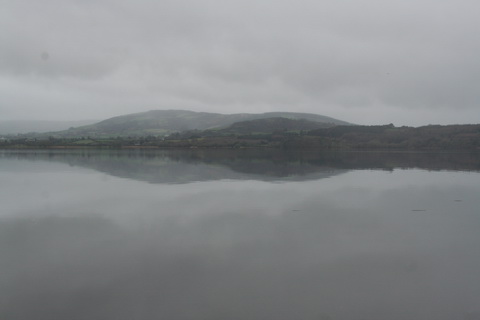
From Castlelough
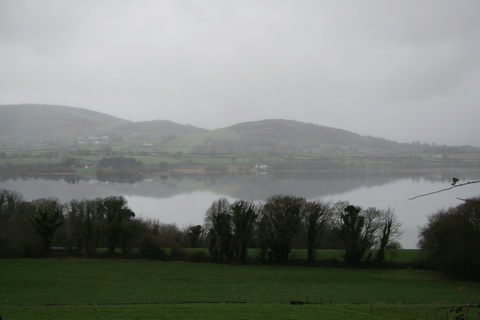
From The Lookout 1
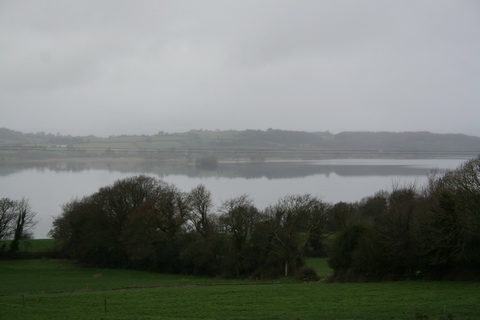
From The Lookout 2

… a completely calm Lough Derg.
From Castlelough
From The Lookout 1
From The Lookout 2
Posted in Ashore, Extant waterways, Ireland, Natural heritage, Scenery, waterways, Weather
Tagged calm, Castlelough, Clare, Ireland, Lookout, Lough Derg, Shannon, waterways, weather


Flat calm on Lough Derg.
Posted in Ashore, Extant waterways, Ireland, Natural heritage, Scenery, Shannon, waterways, Weather
Tagged calm, Castlelough, Lough Derg, Shannon, trees, waterways
He did not mean to deny the fitness of the [Shannon] Commissioners to execute the task which had devolved upon them, but he considered that five engineers of such eminence as those named in the Commission were too many to appoint for such a purpose, and the only result to be looked for would be that some plan of great magnificence and grandeur would be suggested, which the House of Commons would never feel itself authorised to grant money to execute, and then the projected improvement of the river would be altogether dropped and lost sight of.
Lord Clements, House of Commons 17 February 1836
Posted in Built heritage, Charles Wye Williams, Economic activities, Engineering and construction, Extant waterways, Industrial heritage, Ireland, Irish waterways general, Operations, People, Politics, Restoration and rebuilding, Shannon, Sources, Steamers, The cattle trade, waterways, Waterways management
Tagged engineers, House of Commons, Ireland, Lord Clements, Shannon, waterways
At night, a lumber-boat belonging to Messrs. Daley and Carney was maliciously sunk in the Grand Canal, near Sallen’s, by some person or persons, who bored holes in the keel and sides.
From Chief Constables’ Reports for January 1833, cited in the House of Commons on 27 February 1833
More on the new bridge here with the full public notice here [PDF]. Interesting to see how many of the names of landowners are known to me.
I see on page 6 of the notice that the ESB owns two rivers, which are occupied by the ESB, Waterways Ireland, the Inland Waterways Association of Ireland and other unknown persons. There is a canal, whose owners are unknown, which is occupied by WI, IWAI and the persons unknown, as is an island. I do hope that the council will return the canal, rivers and island when they’ve built the bridge.
Posted in Ashore, Built heritage, Charles Wye Williams, Economic activities, Engineering and construction, Extant waterways, Forgotten navigations, Industrial heritage, Ireland, Natural heritage, Non-waterway, Operations, Politics, Restoration and rebuilding, Shannon, Steamers, The cattle trade, The turf trade, Tourism, waterways, Waterways management
Tagged Ballina, boats, bridge, canal, Clare, ESB, Fort Henry, Ireland, island, Killaloe, Limerick, lock, Moys, quay, road, Shannon, Shantraud, Tipperary, vessels, waterways, Waterways Ireland
Councillor Pat Treanor is a Sinn Féin member of Monaghan County Council. According to the Clones Regeneration Partnership’s website,
Cllr Treanor referred to the recent economic appraisals carried out by Fitzpatrick Associates on behalf of the Government and made reference to the large job creation and physical regeneration that would flow from the [Clones] canal proposal.
As far as I know, the most recent Fitzpatrick study was published in 2007. It said (Ch 10):
In terms of formal quantified economic appraisal, all restoration options involve significant net costs over benefits.
In other words, the Clones canal is a waste of money.
Clones folk might like to have a large wodge of public money spent in their area; Waterways Ireland might like to be able to keep engineers in employment. But neither of those wishes should weigh with those charged with the care of the state’s finances. If proposals like this are seriously considered by Irish government departments, then the sooner Angela Merkel appoints an official to run the place, the better.
Perhaps, though, a household tax in Monaghan could be used to pay for this, er, investment?
Posted in Ashore, Built heritage, Economic activities, Engineering and construction, Foreign parts, Forgotten navigations, Industrial heritage, Ireland, Irish waterways general, People, Politics, Restoration and rebuilding, Tourism, Ulster Canal, waterways, Waterways management
Tagged boats, bridge, canal, Clones, department of arts heritage and the gaeltacht, Erne, household tax, Ireland, Lough Neagh, Monaghan, Sinn Fein, Ulster Canal, waterways, Waterways Ireland

It has not been shown that sobriety increased in Co Leitrim after the canal to Lough Allen was built.

The waterway, completed in 1859, closed in the 1860s. It is not clear that any Killaloe slates ever reached Ulster by the waterway.

The Clones canal today, a united Ireland tomorrow?
Posted in Ashore, Built heritage, Economic activities, Engineering and construction, Extant waterways, Foreign parts, Forgotten navigations, Industrial heritage, Ireland, Irish waterways general, People, Politics, Restoration and rebuilding, Sources, Tourism, Ulster Canal, waterways, Waterways management
Tagged Ballinamore, Ballyconnell, boats, bridge, canal, Clones, department of arts heritage and the gaeltacht, Erne, Ireland, Junction Canal, Lough Allen, Lough Neagh, Shannon-Erne Waterway, Ulster Canal, waterways, Waterways Ireland
The Clones dudes have got Jimmy Deenihan to say that the canal to Clones is a great idea.
They haven’t got him to fund it. Or to say where money is to be found (perhaps the Monaghan gold mines?)
Is it kind to keep these chaps hanging on in this way? I blame the department. I begin to suspect that its northsouthery section fears that it will never gain fame and fortune from Tha Boord o Ulster-Scotch (whatever about its companion, Foras na Gaeilge) and is reluctant to kill off its chance of getting its photo in the papers at the ceremonial turning of a sod. Brendan Howlin might usefully direct his department‘s attention to the matter.
Posted in Ashore, Built heritage, Economic activities, Engineering and construction, Foreign parts, Forgotten navigations, Industrial heritage, Ireland, Irish waterways general, People, Politics, Restoration and rebuilding, Sources, Tourism, Ulster Canal, waterways, Waterways management
Tagged boats, canal, Clones, department of arts heritage and the gaeltacht, Erne, Ireland, Lough Neagh, Ulster Canal, waterways, Waterways Ireland
Troll along (h/t Co Kildare Online Electronic Historu Journal) to the National Archives new online section showing the papers of the Chief Secretary of Ireland. So far they’ve put up a catalogue for the first five years, 1818 to 1822 inclusive, with images of some pages, including 17 maps and drawings.
The second map shows the Ballyteigue Canal in Co Wexford, the third is John Killaly’s map of Lough Derg in 1820 and the fourth (which is as far as I’ve got in looking through them) shows Cappa Pier at Kilrush. They’re a bit small when seen online, but you can select (and save a copy of) a PDF version.
Big it up for the National Archives and for Professor Francis J Crowley, whose bequest made this possible.
Posted in Ashore, Built heritage, Economic activities, Engineering and construction, Extant waterways, Forgotten navigations, Industrial heritage, Ireland, Irish inland waterways vessels, Irish waterways general, Natural heritage, Non-waterway, Operations, People, Scenery, Shannon, shannon estuary, Sources, waterways, Waterways management
Tagged canal, Clare, Dublin, Ireland, national archives, Shannon, vessels, waterways
The Maritime Journal covers it.
Posted in Economic activities, Engineering and construction, Extant waterways, Foreign parts, Irish inland waterways vessels, Irish waterways general, Operations, waterways, Waterways management
Tagged boats, Inish Fendra, Operations, Shannon-Erne Waterway, tug, vessels, waterways, Waterways Ireland, workboat


 Irish waterways history