A quay on a tributary of the Shannon, with reeds in the foreground.
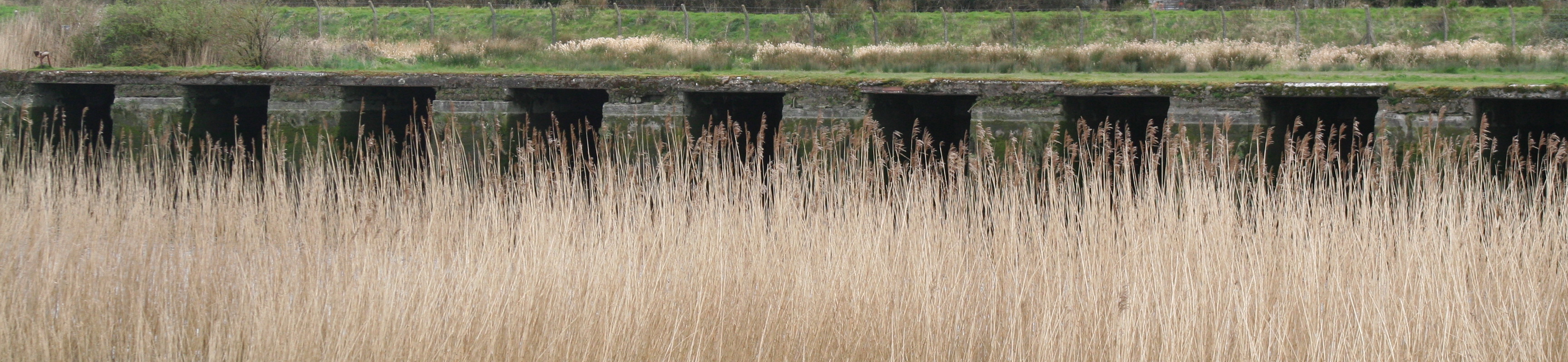

A quay on a tributary of the Shannon, with reeds in the foreground.
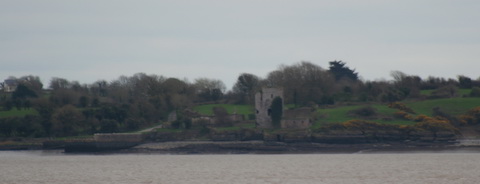
… (that is, of course, Her Late Victorian Majesty), F E Prothero suspended his explorations of Irish waterways after he had descended the Nore, from Abbeyleix to New Ross, in May 1897. Here is his account of that trip.
Posted in Ashore, Built heritage, Extant waterways, Foreign parts, Forgotten navigations, Industrial heritage, Ireland, Irish inland waterways vessels, Natural heritage, Operations, People, Politics, Scenery, Sources, Tourism, Water sports activities, waterways, Weather
Tagged Abbeyleix, Ballyragget, Barrow, Bennettsbridge, boats, canal, canoe, de Vesci, diamond jubilee, Dunmore, Inistiogue, Ireland, Jerpoint, Kilkenny, Mount Juliet, New Ross, Nore, Ormond, Prothero, Queen Victoria, Red House, Thomastown, vessels, waterways, weir
This site includes several extracts from F E Prothero’s 1896 and 1898 accounts of small-boat trips on Irish waterways. This short page shows what I know about Mr Prothero; I would welcome further information.
Posted in Built heritage, Economic activities, Extant waterways, Foreign parts, Forgotten navigations, Industrial heritage, Ireland, Irish inland waterways vessels, Natural heritage, People, Scenery, Shannon, shannon estuary, Sources, Tourism, Ulster Canal, Water sports activities, waterways, Weather
Tagged Barrow, boats, Clones, Dublin, Erne, estuary, Fergus, Grand Canal, Ireland, Killaloe, Limerick, Lough Derg, Lough Neagh, Prothero, Royal Canal, Shannon, Ulster Canal, waterways
Here is a new page showing the route of the old canal in Athlone, which was used before the Shannon Commissioners built the new lock, weir and bridge in the 1840s. The canal is easily accessible along most of its route, although some explanatory signs might be useful to call attention to notable features.
Posted in Built heritage, Charles Wye Williams, Economic activities, Engineering and construction, Forgotten navigations, Industrial heritage, Ireland, People, Rail, Shannon, Sources, Steamers, The cattle trade, Tourism, waterways, Waterways management
Tagged Athlone, boats, bridge, canal, Ireland, lock, lost, quay, Shannon, Thomas Omer, vessels, waterways, weir
It was suggested to me today that, because some boating organisations want the Clones Canal, the project must be worthy of support. I find that argument less than convincing. If I offer someone the benefit of a sum of money, without charge, I will not be surprised if that person likes the idea — but that won’t show that it’s a good deal for whoever bears the cost.
In this case, owners of boats are being offered the benefit of €45 million, so it’s not surprising that they like the idea. But I think they should be offered a practical method of demonstrating the depth of their support.
Accordingly, I propose that owners of registered boats on the Shannon and the Erne be offered the opportunity to pay half the €45 million cost (the other half could be raised from a levy on the publicans of Clones, the other main beneficiaries). If there are 10,000 boats, the charge per owner, spread over three years, would be no more than €750 a year. Willingness to pay would provide more convincing evidence of support and would also make the project better value for the taxpayer.
Posted in Ashore, Built heritage, Economic activities, Engineering and construction, Foreign parts, Forgotten navigations, Industrial heritage, Ireland, Operations, Politics, Restoration and rebuilding, Tourism, Ulster Canal, Uncategorized, waterways, Waterways management
Tagged boat-owners, boats, bridge, canal, Clones, department of arts heritage and the gaeltacht, Erne, Ireland, Lough Neagh, money, Operations, vessels, waterways, Waterways Ireland
The oarsman F E Prothero did not reach the west of Ireland, so his account of the lakes of Galway and Mayo is based on guidebooks. Here it is.
Posted in Extant waterways, Forgotten navigations, Ireland, Natural heritage, People, Scenery, Tourism, Water sports activities, waterways, Weather
Tagged boats, Conn, Corrib, Galway, Ireland, Mask, Mayo, Prothero, vessels, waterways
I was interested to see that DCAL has its own research programme [DOC file], but also makes use of other research services including the NI Continuous Household Survey:
To monitor engagement in culture and sport in Northern Ireland
The Continuous Household Survey (CHS) and the Young People Behaviour and Attitudes Survey (YPBAS) will continue to monitor engagement in sport, arts, museums and libraries in Northern Irelandfor adults and children. The CHS will also capture engagement by people in Northern Irelandat fisheries and waterways under DCAL’s control as well as engagement in Irish and Ulster-Scots languages and events. The barriers and benefits to engagement will also be explored.
I don’t know whether “waterways under DCAL’s control” are deemed to include those managed by Waterways Ireland as well as those directly controlled by DCAL:
The Department also has ownership of, and custodial responsibility for, those remaining sections of the Lagan and Coalisland Canals that remain in Government ownership following abandonment of navigation in the 1950s. An ongoing programme is in place for each of these highly popular towpaths to upgrade access for pedestrians, cyclists and disabled access.
I don’t suppose it would make much sense to ask questions about just two derelict waterways while ignoring those that are navigable, but the results are not shown on the CHS web pages: interested folk must ask DCAL direct.
I note that the DCAL Resource Accounts for the year ended 31 March 2011 [PDF] show that DCAL “Estimates provided for expenditure on […] certain inland waterways (including payments to the Rivers Agency), Waterways Ireland, […].” Later, we read:
Inland Waterways
DCAL manages and maintains 11 miles of the Lagan Towpath from Stranmillis to Sprucefield; 3.5 miles of towpath at Soldierstown, Aghalee; 4.5 miles of towpath on the Coalisland Canal; 22 water recreation sites; and shooting rights over the foreshore of Lough Erne. Work on the development of a policy on the re-opening of abandoned canals is in the preliminary stages.
Given that DCAL can own and run waterways, I wonder why the supporters of the Newry Canal did not seek to have it taken over by DCAL rather than by Waterways Ireland.
The non-navigable waterways are the second of DCAL’s three main activities. The first is this:
We are committed to developing the recreational potential of inland waterways through our Province-wide Water Recreation Programme.
Applicants, such as Local Authorities, are encouraged to work in partnership with the Department in providing and promoting water recreation facilities such as riverside paths and boat moorings for public use. Wherever practicable, works will incorporate disabled access facilities.
Again, the DCAL Resource Accounts for the year ended 31 March 2011 [PDF] provide more details:
Inland Waterways
[…] The Department continued to administer an annual Water Recreation Programme, amounting to £430k in 2010-11, aimed at developing the recreation and navigational potential of Northern Ireland’s Inland Waterways. Applicant organisations, primarily local authorities, were encouraged to work in partnership with the Department in the provision of water recreation facilities, such as riverside paths and canoe trails, complementing the Department’s continued commitment to upgrading the Lagan and Coalisland Canal towpaths for shared pedestrian and cyclist use. 9 new projects were completed during 2010-11. Funded projects were required to have an identifiable strategic value and where possible, contribute to the Department’s commitment to provide at least 5 kilometres of new or improved access for disabled persons each year.
This too would cover cooperation with the four local authorities who control the Newry Canal.
Oddly enough, inland waterways and fisheries are grouped together on DCAL’s website but they are in two separate divisions: waterways, for some reason, are in Culture whereas inland fisheries come under Sport, Museums and Recreation. DCAL does not, however, put waterways under southnorthery.
There is a useful contrast here with DAHG, which thinks that waterways exist purely to serve northsouthery: despite what WI thinks it is for …
Waterways Ireland has responsibility for the management, maintenance, development and restoration of inland navigable waterways principally for recreational purposes.
… DAHG does not appear to have adopted the view that waterways are for recreation. Perhaps if it gained responsibility for some waterways outside WI’s scope, it would develop a policy on recreational use of waterways. That would mean that, like DCAL …
The Department is also the sponsor department in Northern Ireland for Waterways Ireland which is the Cross-Border Body responsible for the management, maintenance, development and restoration of operational waterways throughout the island of Ireland.
… DAHG would be the department responsible for recreation on waterways, one (large) set of which are managed by WI, which in turn is controlled by the two departments.
The difficulty with DAHG’s current arrangements is that there is a division between theory and reality, but DAHG has organised its functions on the basis of theory. In reality, waterways are for recreation (or, if you prefer, leisure), but DAHG insists that they’re for northsouthery. Because that’s now been successfully routinised, waterways receive relatively little attention and are not, as far as I can see, considered as part of state provision for leisure or recreation. There can be no proper policy-making for the sector unless it’s grounded in reality.
Posted in Economic activities, Engineering and construction, Extant waterways, Foreign parts, Forgotten navigations, Ireland, Irish waterways general, Operations, Politics, Uncategorized, waterways, Waterways management
Tagged dahg, dcal, department of arts heritage and the gaeltacht, department of culture arts and leisure, Ireland, policy, waterways, Waterways Ireland
My attention has been drawn to this Dáil written question by Joan Burton TD (Dublin West, Labour) and the answer by Éamon Ó Cuív TD (Minister, Department of Community, Rural and Gaeltacht Affairs; Galway West, Fianna Fail).
The layout on the kildarestreet site is not perfect, so I reproduce some of the list here:
The following are the details requested by the Deputy in respect of non-navigable stretches of canals that are within the control of Waterways Ireland and are being or could be restored:
Grand Canal
- Kilbeggan Branch (8.2 miles long) in Co. Offaly and Co. Westmeath
- Part of Naas & Corbally Branch (Corbally Extension) (4.4 miles long) in Co. Kildare
- Barrow Line Part of Mountmellick Branch (0.25 miles long) in Co. Kildare (remaining 11 miles filled in).
Royal Canal
- Part of Royal Canal (11 miles long) in Co. Longford, currently under restoration
- Longford Branch (3 miles long) in Co. Longford.
The Royal Canal main line is currently under restoration and the remaining work necessary to return it to full navigation between Dublin and the Shannon is due for completion in 2010.
Ulster Canal
- 46 miles long in Co. Cavan, Co. Monaghan, Co. Fermanagh and Co. Armagh.
Approval has been given to Waterways Ireland to restore the stretch between Lough Erne and Clones. Present indications are that this stretch could be re-opened by 2013.
And (perhaps because the economy was so successful) we could have waterways everywhere:
It is intended, subject to availability of resources, to carry out feasibility studies and preliminary designs in relation to the Longford Branch, the Kilbeggan Branch and the Corbally Extension, along with extensions to Annagh Upper near Dowra on the Shannon Navigation and to Lough Oughter on the Erne System with a view to possible re-opening. Consideration will also be given to the carrying out of preliminary analysis and assessment of the Mountmellick Branch, as well as the Boyne Navigation (which is primarily a river navigation) and the extension towards Mohill on the Rinn River, as future possibilities for restoration.
“The Irish economy entered severe recession in 2008,” according to Wikipedia’s useful summary of the financial crisis, but Craggy Island (nach maireann, comme on dit) still hoped to drag Ireland into the Canal Age.
Posted in Built heritage, Economic activities, Engineering and construction, Extant waterways, Forgotten navigations, Industrial heritage, Ireland, Operations, People, Politics, Restoration and rebuilding, Tourism, Ulster Canal, waterways, Waterways management
Tagged Annagh Upper, Boyne, canal, Clones, Corbally, Department of Community Equality and Gaeltacht Affairs, Dowra, Dublin, Erne, Grand Canal, Ireland, Kilbeggan, Longford, Lough Oughter, Mohuill, Mountmellick, Rinn River, Royal Canal, Shannon, Ulster Canal, waterways
… is wasted in asking and answering questions over and over again? I’d have thought that Caoimhghín Ó Caoláin TD (Cavan-Monaghan, Sinn Fein) would have realised that the government has discovered neither oil nor a crock of gold and that there is no money for a canal to Clones. The task of finding some is to be delegated to an “inter-agency group”, poor dears. I’d have thought it might be better to give the job to people with experience of unconventional fund-raising; there must be some such people around.
Posted in Built heritage, Economic activities, Engineering and construction, Foreign parts, Forgotten navigations, Industrial heritage, Ireland, Irish waterways general, People, Politics, Restoration and rebuilding, Tourism, Ulster Canal, waterways, Waterways management
Tagged bridge, canal, Clones, department of arts heritage and the gaeltacht, Erne, Ireland, lock, lost, Lough Neagh, Ulster Canal, waterways, Waterways Ireland


 Irish waterways history