Category Archives: Weather

Mark Twain and the Cammoge drownings of 1849

Mark Twain wrote:

There is something fascinating about science. One gets such wholesale returns of conjecture out of such a trifling investment of fact.

I have indulged in just such conjecture about the design of the ferry boat in use at Cammoge in 1849, crossing the outlet from Poulnasherry Bay, west of Kilrush on the Shannon estuary. The news reports of the time give very little information about the design of the boat, and the reliability of that information is questionable, which makes my speculation even more dangerous. Nonetheless, I thought it might be useful to set out some thoughts on the subject in the hope that other folk, who know more about the background, the location or naval architecture than I do, might be able to help to clarify the design.

The corncrake and the decline of religion

On 13 February 2013 the Irish Times reported that a farmers’ representative had told politicians that

Farmers in the Shannon callows are facing extinction along with the corncrake and wading birds […].

He wanted taxpayers’ money to be spent on stopping the river flooding its flood plain.

Back in the days when people believed in gods, they would have known what a flood meant: it was a message from a deity, telling them to stop whatever they were doing. On the Shannon, either people have stopped believing in gods or they are having some difficulty in interpreting the message, despite its having been delivered over and over again for hundreds of years. If it were interpreted properly, or even if landowners had a modicum of common sense, they would realise that they should either cease trying to earn a living along the banks of a river that floods regularly or adapt their expectations or their activities to take account of the floods (one thinks of rice paddies …).

In the years 2009–2011 net subsidies to agriculture in the Midland region were 114.4% of the operating surplus. For the Border, Midland and Western region as a whole, the figure was 110.4%. In other words, agriculture in those regions is, on balance, a form of outdoor therapy for landowners: it is not an economic activity, and there is no point in taxpayers’ spending any more money on it.


The glory that was Greese

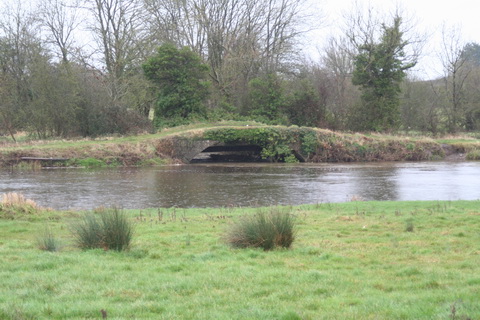
The River Greese is a tributary of the River Barrow, joining it below Maganey Lock. The photo is taken from the road on the west bank of the Barrow.

River Greese joins the Barrow 01_resize

The Greese joins the Barrow: the trackway passes over it on a bridge

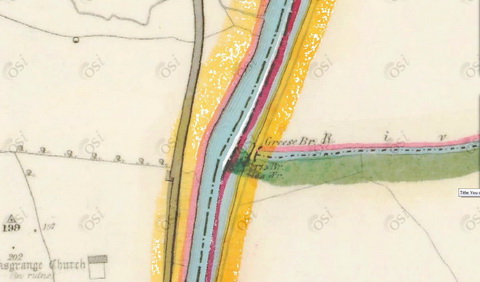
You can locate it on the OSI map by zooming out from here; the extract below shows the confluence.

Greese_resize

The confluence

My OSI logo and permit number for website

What are they?

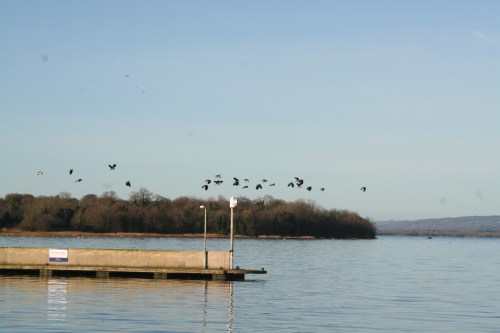
Dromineer February 2013.

Unidentified birds (click for much larger image)

Unidentified birds (click for much larger image)

Yes, I know they’re birds, but what class or type or breed or model?

One for the Phizzers

Quite a few visitors to this site come to read about the Broadstone. Here is a piece about the pontoon bridge used at the Broadstone between (AFAIK) 1847 and 1877. It was designed by Robert Mallet and it is interesting to see how an inventive engineer solved the peculiar problems of the Broadstone site.

The Fergus estuary

I have a page about the Fergus estuary here with links from that page to others about places on the estuary (including Paradise).

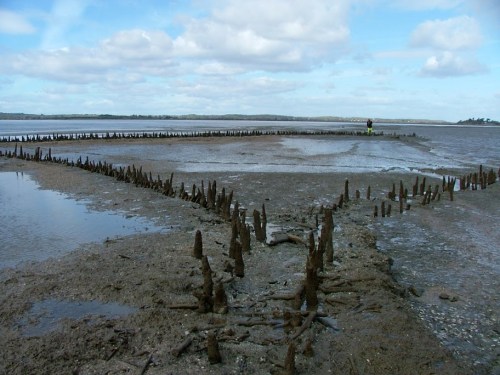
Mediaeval fishweir at the Boarland Rock in the Fergus Estuary © Dr Aidan O’Sullivan, UCD 2008

Mediaeval fishweir at the Boarland Rock in the Fergus Estuary © Dr Aidan O’Sullivan, UCD 2008

The UCD School of Archaeology has, for many years, been investigating the Fergus estuary and has found remarkable evidence of settlement and activities on the estuary stretching back to the Iron Age (about 100 BCE) and the Bronze Age (almost 800 BCE). Read about the project here and see more photos of mediaeval fishweirs and earlier artefacts here.

The photo above is used in accordance with the terms set out here.

Northsouthery 121212

The North/South Ministerial Council reports here [PDF] on the most recent inland waterways meeting, which was held on 121212. Not much happened (or at least not much that is being revealed to the citizens and subjects). Sponsor departments are to think about having a board; there is still no money for the Clones Sheugh but an interagency groups is to find some [hint: look under the end of a rainbow] and it was John Martin’s last appearance as he will be retiring in March and the search for a new CEO has a process (which is important).

The interesting bit is that WI is to transfer some property at Harvey’s Quay, Limerick, to Limerick City Council, which is making a boardwalk. And something similar is happening in Tullamore. You’re nobody nowadays unless you have a boardwalk; their usefulness in Irish weather is not proven.

Finally, I noted a certain modesty in WI’s aims for 2013, no doubt in keeping with the tenor of the times:

Ministers discussed the main priorities for Waterways Ireland in 2013 and noted progress on the 2013 Business Plan and Budget. The priorities for 2013 include:

• ensure the navigations are open and all existing facilities operational during the main boating season from April to October
• to actively promote the waterways to extend and expand recreational use of the waterways in all its forms.


The end of an era

Ger Reid, the Ardnacrusha lockkeeper, retired at the end of December 2012. Ger has guided many boats through the locks over the years and has always been cheerful and reassuring as well as informative, helpful, reliable and competent. He will be sadly missed but I wish him well in his retirement.

Meanwhile, I have heard that Limerick City Council has decided not to renew Pat Lysaght’s contract for work on the river and has suggested that Waterways Ireland should retain him. Pat’s most important role, though, in assisting boats passing through Limerick (220 in 2012), has always been voluntary. Were Pat to cease to provide that service, I think the number of boats visiting Limerick would be greatly reduced.

Blue-sky thinking

It’s always nice to see new ideas being proposed. Here’s one from The Mechanics’ Magazine, Museum, Register, Journal, and Gazette, No 948, Saturday, October 9, 1841.

Ballooning and steaming in conjunction

Sir

Will some one of your learned correspondents have the goodness, through the medium of your instructive publication, to inform the writer, wherein consists the impossibility of the following suggestion being reduced to profitable practice? viz

To transport merchandize across the sea, or from one part of the Continent to another, by means of a balloon towed by a steam lighter, or a steam carriage.

The balloon will relieve the lighter of the weight of the load and be itself guided in the required direction by the steam vessel. A fair and moderate wind, or no wind at all, is the desideratum. The suspended load to be lowered from the balloon by the aeronaut at the place of delivery, and with as little loss of gas as possible; and to be the first passenger is claimed by the projector.

Sir, I remain, yours, &c
THP
Jersey, September 13, 1841

Melancholy loss of life on the River Shannon

Last Wednesday we were witness to a most melancholy spectacle. We saw three bodies floating on that part of the river Shannon which lies opposite to Castle Lough, in this county. Having rowed in to shore, we gave notice to some persons there, who, without hesitation, prepared themselves, and joined in the sad task of snatching from the watery element the livid bodies of three unfortunate fellow creatures. When we stretched them on the bank they were recognised by one of the Steam Packet Company to be the bodies of Thomas Minshoe, George Halbert, and Robert Williams, three of the unfortunate five that were drowned some few days ago, while on a party of pleasure. The bodies were far advanced in a state of putrefaction and were a revolting spectacle to look on.

A messenger being despatched to Nenagh for the coroner, James Carroll, Esq, that officer, with his usual promptness, reached here in a short time; and having empanelled a jury, “Accidentally drowned during a squall” was the verdict.

It appeared from evidence that the deceased, with others, left Killaloe on Sunday, the 20th ult, for the purpose of having a day’s amusement on the Upper Shannon. They put in at Castle Lough to take refreshment; during the time they were on shore, the wind freshened and blew a gale, upon which they determined to leave the boat at anchor, and proceed home by land, which they accordingly did. On the following morning they returned and found that the ropes, which were for the purpose of lowering the sails, had been stolen. The day being fine and the weather not likely to change, they made light of the inconvenience, and ventured homeward.

After hoisting sails and reaching the centre of the river (which, at this point, is not two miles broad), a squall came on. Having endeavoured in vain to lower sails, which was completely impracticable, on account of the loss of the ropes, the boat suddenly ducked beneath the weight of canvass, and consigned the poor fellows to an early grave. Thomas Minshoe and George Halbert are natives of Liverpool, and Williams from Wales.

No coffins being convenient, three fishermen were appointed to watch the bodies on the shore until the next day. When we saw them coffined, we observed that the ear had been eaten off Williams by, we suppose, a dog, and a part of Minshoe’s left leg. They were interred at Killaloe on the afternoon of Thursday.

1 September 1837