Tag Archives: canal

The Black Bridge at Plassey

I am repeating here a point I made in response to a comment on this page. I do so because the point is, I think, an important one: some readers don’t check the comments and might miss this.

I have an imperfect copy [with some lines missing] of an indenture made on 8 July 1949 between the Minister for Finance and Limerick County Council under which the Council leased from the Minister

… all that those parts of the lands of Garraun and Sreelane on which Plassey Bridge abuts on both banks of the River Shannon and the site and piles of said Plassey Bridge together with said Plassey Bridge […].

I am not a lawyer, so my interpretation may be misleading, but I think that there are two points of interest.

The first is that, under the indenture, the Council is obliged to “well and sufficiently repair cleanse maintain amend and keep the hereby demised premises”, which includes the bridge. The Council is also required to “use the said demised premises as a public highway”.

The second is that, if the Council fails to do so, the Minister, and his agents the Commissioners of Public Works in Ireland, are entitled (after giving due notice) “to enter upon the hereby demised premises and to execute and to do the necessary repairs and works and the Lessees [ie Limerick Councy Council] shall repay the expenses of such repairs to the Lessor on demand […]“.

As far as I can see, Limerick County Council is in breach of its agreement with the Minister for Finance, and that Minister is entitled to repair the bridge and charge the Council for the cost.

If only there were a Minister for Finance who had an interest in Limerick (or in bridges) ….
Recent developments in boat design

Mr Busk’s elastic paddle

A small Steam Boat (apparently about fifty feet long, and six or seven feet wide), belonging to Mr Wm Busk, of Pall-mall, was exhibited on Friday on the Thames. The boat was propelled easily and rapidly through the water, both with and against the tide, by a very small steam power, without the use of any paddle-wheel, by means of an elastic paddle, or fin, recently invented by Mr Busk, which was subject to a reciprocating motion wholly under water, and acting equally both ways.

When the action is not brought too near the surface, no motion seems to be occasioned in the water which could at all prejudice canal banks; and as the range of the fins, by their being placed in the narrow after-part of a boat, admits of being confined completely within the depth and breadth of the boat, no impediment need be presented to the passing of locks or bridges. The invention appears to be extremely simple and efficacious, and of very ready application to vessels of all classes and dimensions.

Bath Chronicle and Weekly Gazette 5 May 1825

Canal steam navigation

Experiments of rather a novel character have for some weeks been in progress on the Forth and Clyde Canal, to ascertain the merits of an invention for propelling boats on canals at greater velocities than have hitherto been attained either by steam or horses. The principle on which the experiments are founded may be thus described.

A light chain is laid in the canal, from one extremity to the other, and firmly fixed at each end. To effect motion by this means, a twin boat is used, in the trough of which a grooved wheel (receiving the chain) is made to revolve by a steam engine placed in the boat. From this description it will be evident that, as the wheel revolves, the boat is drawn forward at a speed equivalent to the power, or at precisely the same velocity as the periphery of the grooved wheel.

At first sight there appear to be several objections to the plan, not the least of which are turning the bends, and meeting and passing general craft on the canal. The experiments made on Friday the 29th ult, however, fully prove the facility with which the vessel can be steered from side to side of the canal; describing, at the same time, quicker curves than any to be met with on the Forth and Clyde navigation.

On the whole the experiments, though conducted under great disadvantages, were highly satisfactory, and such as to induce further trials. A speed of 8¼ miles per hour was attained, and there was little doubt in the minds of those who witnessed the trials, that, with a lighter engine, and a boat drawing less water, a higher velocity might be acquired at a cheaper rate than is now produced by horses.

It will be proper here to observe that it is not intended to carry passengers in the same boat that contains the engine and propelling apparatus.

Chester Chronicle 12 September 1834

India Rubber Boat

An American journal says that a Mr Caleb Williams, of New York, has just constructed a boat of this material, and that he has applied for a patent for his invention.

Huntingdon, Bedford & Peterborough Gazette 4 July 1835


Airholes on the Kennet & Avon Canal

John Ditchfield very kindly photographed some airholes on the Kennet & Avon Canal and sent on the photos. The captions are his comments.

Bath05_resize

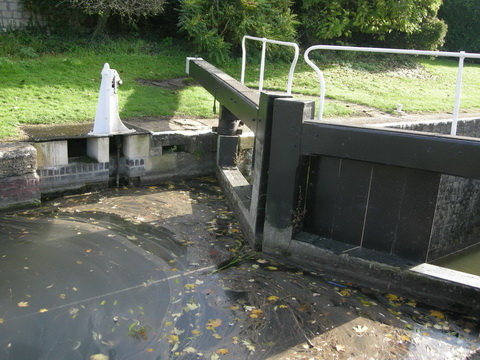
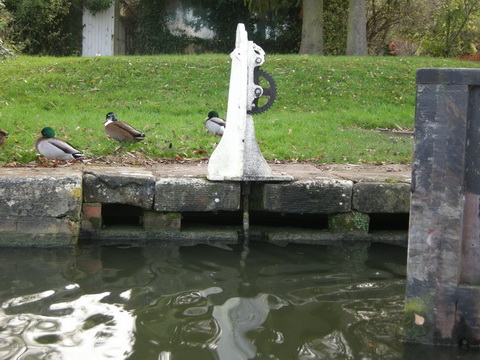
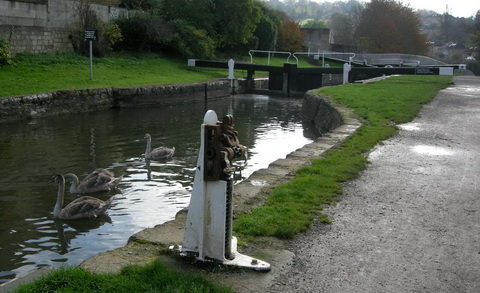
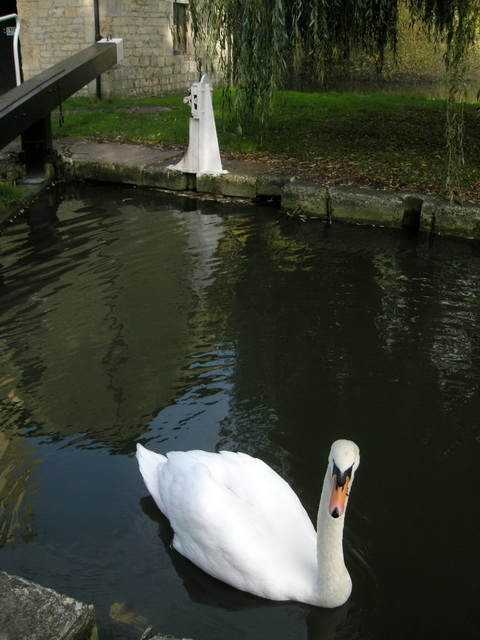
Good length of overflow. Water flowing.

Bath07_resize

No overflow.

Bath06_resize

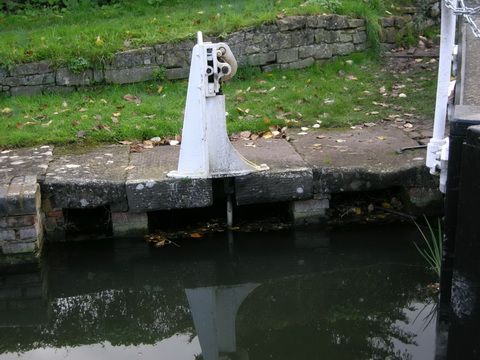
(Rebuilt) small openings are above the level of the top of the adjacent lock gate. However, just upstream there is another paddle or sluice gate on the canal side (next photo), so perhaps that is used to control the level.

Bath08_resize

The upstream paddle or sluice gate.

Bath09_resize

Overflow in action, preventing water overflowing gates.

Note: this lock connects the canal with the River Avon, and the building in the background was a steam pumping station, presumably for topping up the canal from the river.

Many thanks to John for taking the trouble.

Willie Penrose notices the cuts

It is nice to know that at least one politician has spotted the most important issue affecting Waterways Ireland. Here’s what the minister told him about the 85% of WI’s current budget that comes from her department:

Funding allocated to Waterways Ireland 2011-2014
Year €m
2011 €30.300m
2012 €27.099m
2013 €25.463m
2014 €24.183m

Now, Willie, ask her how much of each year’s allocation is gobbled up by pensions.


Royal Canal water supply

On 26 November 2012 I noted that

The Royal Canal water supply applications have been approved by An Bord Pleanala. There were two separate applications […] but they were in effect treated as one.

There were conditions attached, but I concluded that

If I remember correctly, the amount of water available from Lough Ennell will not always provide enough (eg in a dry season) to keep the canal full. Still, this is a significant advance for Waterways Ireland and for Royal Canal enthusiasts.

So here we are, almost two years later, and the work of providing a supply from Lough Ennell to the Royal Canal, reckoned to be about a five-month job, has doubtless been long completed, no?

No.

The work has not yet started and Waterways Ireland will be lucky if it gets done within the next year.

As I understand it — and if, Gentle Reader, you have more information, do please leave a Comment below (your name can be kept out of public view if you like) — there are three sources of delay:

  • first, I understand that there is a technical issue about one of the conditions attached to the approval; it is felt that the condition is unworkable, but that getting it changed might take some time. I presume it’s one of the conditions 2(a) to 2(d) that I quoted two years ago and, looking at the proposed orders published in the press [PDF], I suspect it might be the requirement to maintain the lake level at or above 79.325 mOD Malin Datum. However, I don’t really know
  • second, Waterways Ireland took over Clonsingle Weir, at the outlet from Lough Ennell, by Compulsory Purchase. Owners of mills, who generate electricity from the Brosna, have submitted claims for compensation. I understand that an arbitration hearing, lasting four days, is scheduled to be help in May 2015
  • third, responsibility for the scheme has moved from Westmeath County Council to Irish Water. Which may have other things on its mind.

Irish Water has published its proposed Capital Investment Programme [PDF] but Appendix 1, the Investment Plan Project Summary, is in a separate file [PDF]. Category B is headed Review Scope and Commence Construction and it includes

Mullingar Regional Water Supply Scheme (G) … Lough Ennell Abstraction.

I can’t work out what “(G)” means. A few items are so marked; a few others are marked “(H)”; most items have neither.

The Capital Investment Programme [CIP] document says:

 The CIP is dominated by contractual commitments entered into previously by Local Authorities, and which have now transitioned to Irish Water. In the 2014-2016 period, Irish Water will fund these contracts to completion and bring forward programmes and prioritised projects to commence. At the same time, it will progress a large portfolio of projects that are at the planning and design stage, reviewing their scope, budgets and, where appropriate, timing to favour maximising the performance of the existing assets through intensified capital maintenance that might allow deferral of major capital investment.

Emphasis mine. So that raises the possibility that Irish Water will decide not to fund the abstraction scheme but will rather opt to pay for continued pumping.

It is, of course, quite possible that I have misunderstood these difficult matters, so I will be glad to hear from anyone with better information.

Incidentally, reviewing Irish Water’s documents suggests to me that there are people there who know what they are doing and who have the expertise to manage large and complex operations. That differentiates them from the politicians in government and opposition, few of whom (as far as I can see) have any experience of running anything more complex than a parish social.


Canal gets government go-ahead

In Egypt.


Heather Humphreys on waterways

From the Financial Resolutions speeches:

I am committed to developing North-South co-operation within the broader arts, heritage and commemorative activities of my Department as well as through the funding of North-South bodies. A provision of more than €38 million is made available to support the two North-South implementation bodies — An Foras Teanga and Waterways Ireland. These budgets will be subject to the approval of the North South Ministerial Council in due course. The provision will enable Waterways Ireland to keep the waterways open for navigation during the main boating season and promote increased use for recreational purposes while developing and promoting our waterways to attract increased numbers of overseas visitors.

Nothing new there, I think, but note the repetition of a point I highlighted last year:

The provision will enable Waterways Ireland to keep the waterways open for navigation during the main boating season […].


Broadstone

You can visit the building on the weekend of 18 & 19 October 2014 as part of Open House Dublin. And there are other sites of industrial heritage and transport interest that will be open between 17 and 19 October.

Uninformative press release aboot thon sheugh

Plans to restore the Upper Lough Erne to Clones section of the Ulster Canal are being pursued by the Department of Culture, Arts and Leisure and the Department of Arts, Heritage and the Gaeltacht

it says here. The official NSMC version is here. No mention of the inter-agency treasure-seekers; perhaps the swag is in here:

Progress on the development of the new INTERREG V and PEACE IV Programmes for the period 2014 – 2020 was discussed. The Council noted that the draft Programmes had been submitted to the EU commission by the deadline of 22 September 2014.

I see that WI employee payments for pensions are going up:

16. Ministers also acknowledged the ongoing work in relation to reform of the North South Bodies Pension Scheme, including recently approved amendments to ensure the Scheme complies with employment legislation and best practice in both jurisdictions and to increase employee contributions.

Someone with a tin ear (perhaps someone who doesn’t do crosswords) wrote this:

driving a shift to public and more sustainable modes of transport and the potential for shared cross border public transport services in border areas.

Driving would be right, especially in Donegal. But what about parity of esteem?

development of cross border Greenways

Why no Orangeways?


Murder on a Grand Canal Company boat

At the inquest on the body of Myles Crofton, who was, as alleged, murdered on board one of the Grand Canal Company’s boats on the Limerick Canal, the jury returned the following verdict:— “That the deceased, Myles Crofton, aged 45 years, dies at Killaloe on Sunday, the 29th November, 1891, from certain wounds inflicted on him in boat No 17, plying on the canal, but we find there is not sufficient evidence before us to enable us to say who the guilty person or persons are that inflicted said wounds. We unanimously wish to put before the Grand Canal Company the unhappy position of the wife and large family of the deceased, and to pray the merciful consideration of the company on their behalf.”

Freeman’s Journal 5 December 1891

From the issue of 1 December 1891 we learnt hat, on 30 November 1891, two Grand Canal Company boatmen, and a third man, were charged with the murder. The boat had left Limerick for Killaloe on Saturday 28 November with Crofton, two other crewmen and a fourth person, not a boatman, on board. When it reached Killaloe, Crofton was found to be unconscious “with seven wounds about the head and over both eyes”. The police were called and the dispensary doctor attended but Crofton died next morning “in great agony”. The other three were remanded to Limerick Jail for a week. Crofton left eight children.

On Tuesday 29 December [FJ 30 December 1891] the three men were brought before the magistrates. They were defended by P S Connolly, solicitor. District Inspector M’Donald said that one of the accused had made an important statement but, as he had not yet received instructions from Dublin Castle, he requested an adjournment which, despite Mr Connolly’s opposition, was granted. On the following day [reported in FJ 31 December 1891] the DI said that one of the men, George Farrell, had been released from prison and was prepared to give evidence against Frank Egan.

On being sworn, Farrell deposed he had heard a row in the cabin of the boat between Frank Egan and the deceased, Myles Crofton, and afterwards saw them fighting with their fists. Subsequently he saw Egan strike the deceased with his boot.

Dr John Keogh, who had attended Crofton before he died [was he the dispensary doctor?], said that the wounds were caused by violence, not by accident.

The Belfast News-Letter [1 January 1892] had a slightly different account:

[…] one of the men turned Queen’s Evidence, and confessed that while going down [sic] the Shannon a comrade named Miles [sic] Crofton was repeatedly assaulted while all the party were drinking.

Egan was committed for trial; Farrell had already been released and now the third, Nutterfield [Yorkshire Post and Leeds Intelligencer 1 January 1892] or Netherfield [Hampshire Telegraph and Oxford Journal, both 2 January 1892], was also released.

I have not been able to find anything about Egan’s trial, if there was one, or subsequent fate.