Tag Archives: Clare

Shannon traffic

This chart shows the numbers of Shannon lock and bridge passages for the first ten months of the year for ten years from 2003 through 2012.

Figures courtesy of Waterways Ireland

These figures take no account of boats that do not use locks and bridges, eg those that remain on lakes.

The decline continues.

Preparing for winter

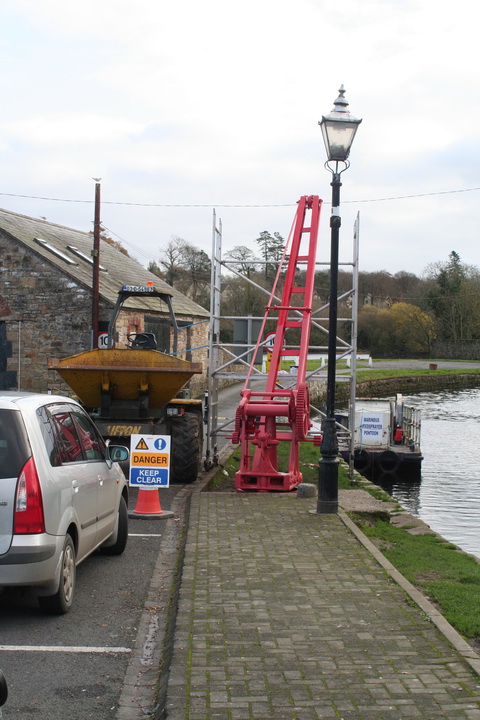
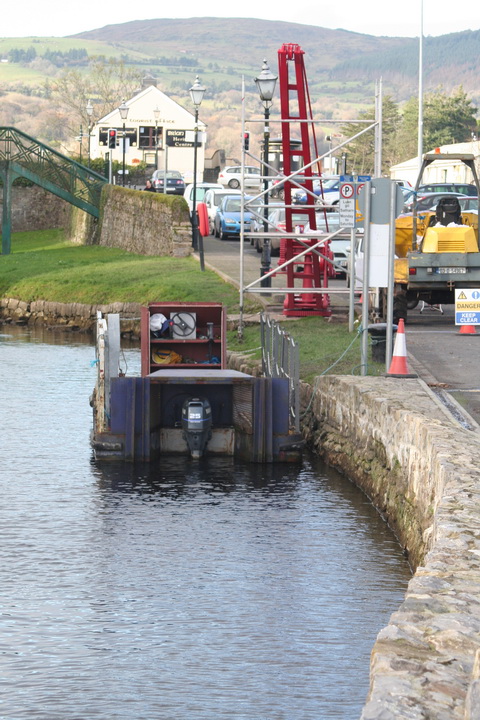
WI at work in Killaloe Novemebr 2012.

Old crane being painted


The Marindus weedspraying pontoon. This Marindus may be Marindus Engineering Ltd of Kilmore Quay, Co Wexford

Errina

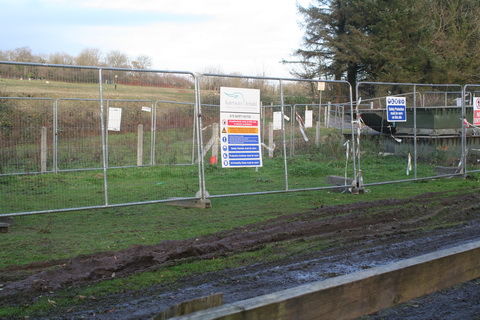
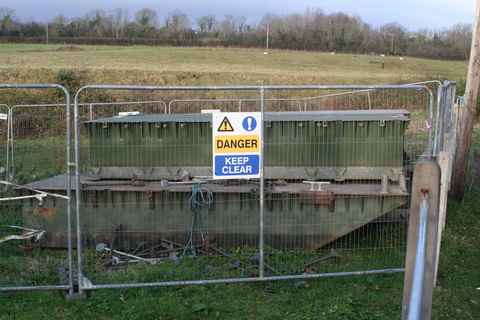
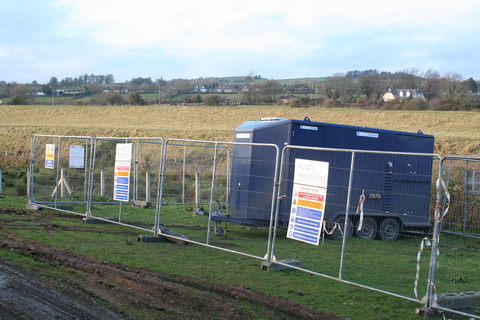
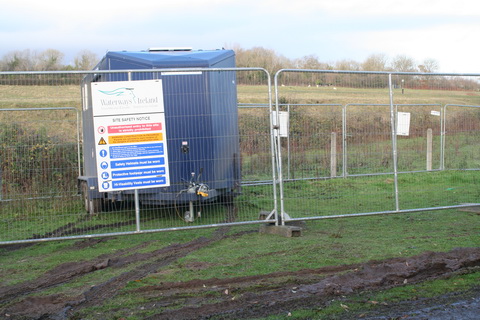
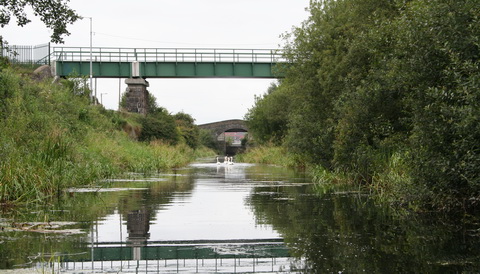
Waterways Ireland has parked a canteen trailer and some pontoons at Errina Bridge.

The compound, with Official Notices signed Rabbit

Pontoons

The canteen trailer


Another view of the canteen trailer

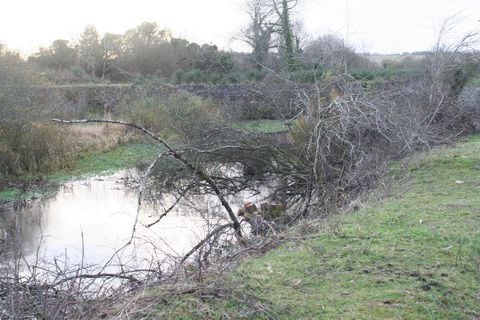
Evidence of tree cutting above Errina Lock, but that may not have anything to do with Waterways Ireland

The guardians of the lock


Keeping a clean bottom

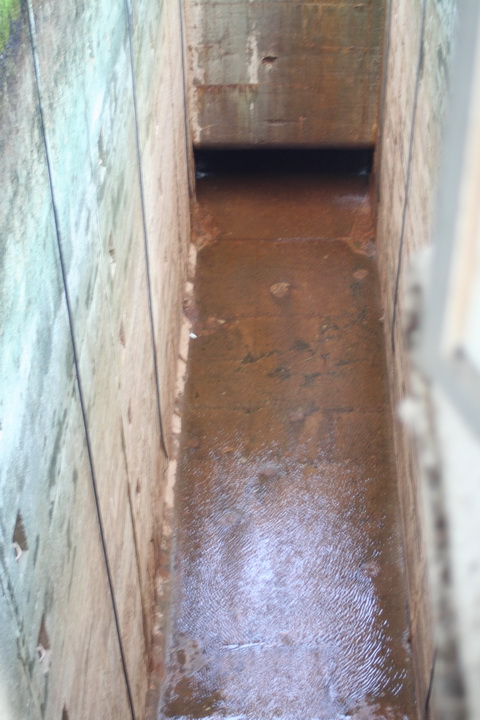
The upper chamber at Ardnacrusha lock

A Limerick/Shannon website

A new-ish site and project here.

The Park Canal

I wrote here about the Park Canal and why it should not be restored. I did not include, because I had not then seen it, a link to this report in the Limerick Post. It shows why the gates on the second lock were not replaced. The core problem is that the banks in the upper section of the canal slope too steeply to be stable.

The slope of the banks above the railway bridge (from a boat)

Happily, this deficiency in the original construction has saved us from another foolish restoration.


Commercial operations

An example I hadn’t come across before.

For the record

The Limerick Leader article about a proposed Limerick river bus has some statements that do not accord with my understanding.

The venture will see the river bus depart Guinness Pier – across from Athlunkard Boat Club at O’Dwyer Bridge – every two hours, bound for the power station […].

As far as I know, the pier in question was the Ranks jetty and was not used by Messrs Guinness. The Eclipse Flower, and other vessels owned by Ranks and their predecessors, sailed up the Shannon from there rather than attempt the stretch from Baal’s Bridge to Custom House Quay.

The boat will follow the route taken by barges of old – both passenger and commercial – some of which historically transported Guinness to the city up until the mid-1960s.

“It is a tried and tested route,” said Mr Flynn, stressing the viability and safety of the route, which passes Long Pavement – the edges of which have been repaired and grassed over – and finishes at the hydro-electric plant.

“Every passenger and commercial barge that came to Limerick for 50 years used that stretch of water. It is very safe. It was navigated by all the barges,” he said.

The route to Limerick through Ardnacrusha came into use only after the construction of the power station in the 1920s and was used for a little over thirty years. To the best of my knowledge, there were no passenger services in those years: passenger carrying stopped in the first half of the nineteenth century, when traffic was still using the old Limerick Navigation. There have been some trip-boats in recent years, but they did not (and do not) use “barges of old”. Some old barges, now converted and with more powerful engines, have safely navigated that stretch, but they do it when conditions are right.

During the final phases of Ardnacrusha’s construction, both old and new navigations were closed; the Grand Canal Company (GCC), the main commercial carrying company, ran to Killaloe and had its cargoes carried onward by rail to Limerick. When the new route through Ardnacrusha was opened, the GCC thought it was so dangerous that it refused to use it for about a year. It resumed operations only when a boom was put across the river above Baal’s Bridge and posts were provided upstream of O’Dwyer Bridge to which barges could tie while waiting for suitable states of the tide.

I accept that the proposed river bus will not be going downstream as far as Baal’s Bridge, but it will still be navigating on a stretch of water where Waterways Ireland advises that boats should not navigate when more than one turbine is running at Ardnacrusha. The ESB can run up to four turbines, each of which is said to add a knot to the current, and it can switch them on immediately, with no warning to any boat using the river.

Other pages on this site make it clear that I share the promoters’ enthusiasm for Ardnacrusha and the canal and river thence to Limerick. I do not say that the difficulties of that stretch cannot be overcome, but I do not think that they should be dismissed.


That Limerick “river bus” …

… from the (presumably artificially created) photograph in the Limerick Leader seems to be the Cailín Turána, formerly part of the Aran Islands Fast Ferries fleet at Doolin and seen here out of the water at Cork Dockyard in 2004. The vessel has not been on the Dept of Transport’s List of Certified Passenger Ships since 2007 (and may have come off the list before that: I have not kept copies of the lists earlier than 2007). It could of course have been used in Ireland for purposes other than carrying fare-paying passengers, or outside Ireland for any purpose, after 2004.

And it may be that the vessel shown in the photo is not that which is to be used in Limerick.

The end of a ghost

In the UK, the Statute Law Repeals Bill is working its way through the House of Lords. You can download a PDF list of the bills being repealed. In amongst the turnpikes, Indian railways, benevolent institutions and lotteries, we find Part 4: Ireland (Dublin City). Within that, Group 1 sees the repeal of these statutes:

  • 3 & 4 Will.4 c.cxv (1833) (City of Dublin Steam Packet Company Act)
  • 6 & 7 Will.4 c.c (1836) (Dublin Steam Packet Act)
  • City of Dublin Steam Packet Company’s Act 1860 (23 & 24 Vict. c.xcviii)
  • City of Dublin Steam Packet Company’s (Consolidation of Shares) Act 1861 (24 & 25 Vict. c.iii)
  • City of Dublin Steam Packet Company’s Act 1868 (31 & 32 Vict. c.xxx)
  • City of Dublin Steam Packet Company’s Act 1876 (39 & 40 Vict. c.xi)
  • City of Dublin Steam Packet Company’s Act 1884 (47 & 48 Vict. c.cxxx)
  • City of Dublin Steam Packet Company’s Act 1895 (58 & 59 Vict. c.cxxiii)
  • City of Dublin Steam Packet Company’s Act 1910 (10 Edw.7 & 1 Geo.5 c.vii)
  • City of Dublin Steam Packet Company’s Act 1916 (6 & 7 Geo.5 c.viii)
  • City of Dublin Steam Packet Company’s Act 1920 (10 & 11 Geo.5 c.i).

In a Consultation Paper published in 2008, the Law Commission explained:

The City of Dublin Steam Packet Company was founded by Charles Wye Williams in 1822. From 24 January 1839, the Post Office contracted the company to run the mail service from Dublin to Holyhead. This service was later extended such that the company ran both the day and night service.

During the First World War the company suffered heavy losses, including the sinking of its ship the R.M.S. Leinster by a German submarine on 10 October 1918, resulting in a loss of over 500 lives. A further two ships were sunk during this period. The company never fully recovered from its wartime losses and, in 1924, an order for the winding-up of the City of Dublin Steam Packet Company
was petitioned for and granted by the High Court at Dublin Castle.

In Ireland, the Statute Law Revision Act 2009 repealed the 1833 and 1836 Acts and the Statute Law Revision Act 2012 repealed all the rest — except the 1895 Act. I don’t know where to get a copy of that Act, so I don’t know why it was specifically retained. But, with that exception, it seems that the ghost of the CoDSPCo has been laid to rest.