
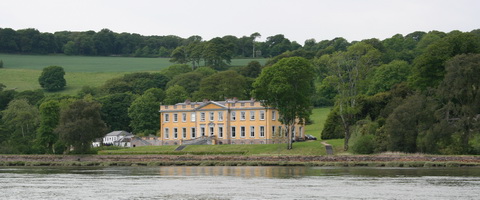
Ballynatray House ...
The waterway page that has received most visits since this website was set up is that covering the Bride, the Munster Blackwater and the Lismore Canal.
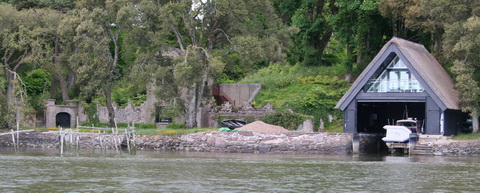
... and boathouse on the Blackwater
Ballynatray House ...
The waterway page that has received most visits since this website was set up is that covering the Bride, the Munster Blackwater and the Lismore Canal.
... and boathouse on the Blackwater
Posted in Ashore, Built heritage, Extant waterways, Forgotten navigations, Industrial heritage, Ireland, Scenery, Tourism, waterways
Tagged Ballynatray, Blackwater, boats, Bride, Cappoquin, Ireland, Lismore, Munster, waterways, Youghal
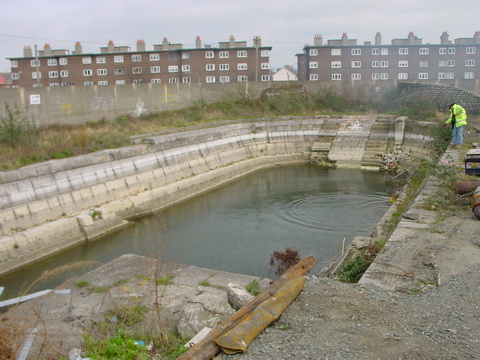
One of the graving docks
Interesting contextual material from Nama Wine Lake here. IWAI Dublin Branch page on the graving docks here.
Posted in Ashore, Built heritage, Economic activities, Engineering and construction, Extant waterways, Industrial heritage, Ireland, Irish waterways general, Operations, Politics, Restoration and rebuilding, Sources, waterways, Waterways management
Tagged DDDA, Dublin, Grand Canal, graving dock, Ireland, NAMA, Ringsend, waterways, Waterways Ireland
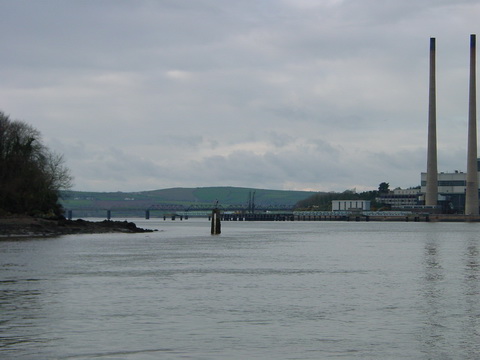
Great Island from downstream
According to the Sunday Business Post [paywall], an American venture capitalist firm and a Singaporean company have considered buying the Tarbert (Shannon Estuary) and Great Island (Suir Estuary) power stations from Endesa, which bought them from the ESB. Endesa had intended to invest in its Irish operations, but it was taken over by an Italian company, Enel, in 2009; Enel wrote down the value of the Irish assets and wants to sell them off.
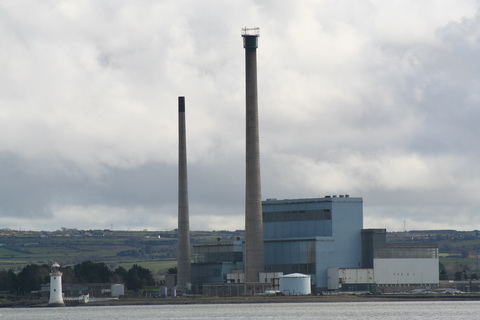
Tarbert from the ferry
The Department of Arts, Heritage and the Gaeltacht, which is ultimately in charge of waterways, has published an organisation chart [one-page PDF]. It shows that the department has a minister and a minister of state and a secretary general.
At the next level down there are five main divisions:
Each of the first three is headed by an assistant secretary; the fourth has a Director of Irish and the fifth a plain director. The department is spread between offices in Galway, Killarney, Wexford and four locations in Dublin.
So where, I hear you ask, are waterways looked after? We have to come down to the next level, the principal officers, to find out. And there, we find that Corporate Affairs has three POs, one of whom is responsible for
HR, Strategic Planning, Corporate Governance, N/S Co-ordination & Waterways Irl.
That’s quite a lot of things for one person to be responsible for.
Request submitted to Waterways Ireland:
I would be grateful if you could tell me how many bids you received for these moorings, how many you accepted and what the lowest and highest accepted bids were.
Posted in Ashore, Economic activities, Engineering and construction, Extant waterways, Ireland, Irish inland waterways vessels, Irish waterways general, Operations, waterways, Waterways management
Tagged boats, canal, Grand Canal, houseboat, IRBOA, Ireland, moorings, residential, Shannon, Shannon Harbour, waterways, Waterways Ireland
There has been such interest in my posting on Stakhanovite homoeroticism that I thought I would post a few close-ups of the mural. The light fittings get in the way a bit, but you can pretend that they represent the fires of passion.


The chap at the bottom of that last one may represent Diogenes addressing a meeting of the directors of the Royal Canal Company.
Posted in Ashore, Built heritage, Economic activities, Engineering and construction, Extant waterways, Industrial heritage, Ireland, People, waterways
Tagged Blanchardstown, canal, Castleknock. art, construction, Diogenes, engineer, homoeroticism, Ireland, lock, mural, Royal Canal, Stakhanov, Twelfth Lock, waterways
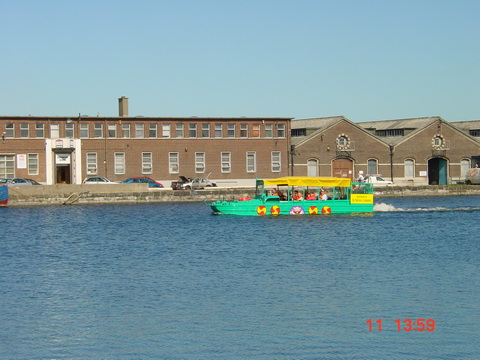
Grand Canal docks, Dublin
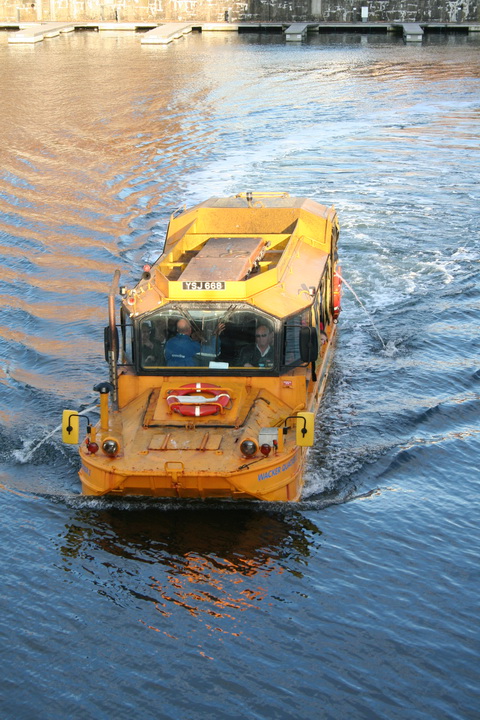
Salthouse Dock, Liverpool
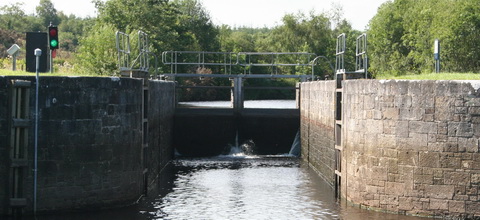
Lock 3 Skelan, Shannon–Erne Waterway
Maybe they‘ll give me loads of money for this ….
Posted in Ashore, Economic activities, Engineering and construction, Extant waterways, Foreign parts, Industrial heritage, Ireland, Irish inland waterways vessels, Operations, Scenery, Tourism, waterways
Tagged boats, canal, Dublin, duckduckgo, DUKW, Grand Canal, Ireland, Liverpool, lock, Salthouse, Shannon-Erne Waterway, Skelan
From The Northern Ireland Peace Monitoring Report: Number One by Paul Nolan, published by the Community Relations Council, 6 Murray Street, Belfast BT1 6DN, on 29 February 2012, and downloadable here:
The North–South Ministerial Council sits at the apex of six cross-border bodies, the remit of which is to ‘develop consultation, co-operation and action within the island of Ireland’ on matters of mutual interest. In practical terms this means the management of overlapping concerns on areas such as trade, tourism, waterways, fisheries and transport. Very little political controversy attends the operations of these bodies, and for the most part their activities are conducted in a brisk and business-like way.
The general conclusions of the report are more depressing. The Council lists these ten key points:
1. The political institutions are secure
2. The level of violence is down
3. Paramilitarism still remains a threat
4. The policing deal is not secure
5. The recession is impacting upon the equality agenda
6. Youth unemployment is potentially destabilising
7. A new confident and neutral urban culture has emerged
8. Northern Ireland is still a very divided society
9. There is no strategy for reconciliation
10. No solution has been found for dealing with the past.
But then the southern state hasn’t managed 10 either.

 Irish waterways history