
… perhaps on a cruise.
h/t Tom Whitwell’s 52 things, which include the truth about Elon Musk’s flamethrower.
I hesitate to criticise the Newry & Portadown Branch of the Inland Waterways Association of Ireland, admirable folk who conduct regular work parties improving the Newry Canal. So perhaps I should say that I disagree with them instead — at least on the proposal for a Southern Relief Road, aka bypass, around Newry, linking “the Warrenpoint Dual Carriageway to the A1 Dublin/ Belfast Road“.
Such a bypass is a very good idea and, of course, far better than the insane Narrow Water handsacrosstheborder project. But the new road must cross the Newry River and the Newry Ship Canal, and I would be vastly surprised if there were any economic justification for the cost of an opening section or for the disruption that each opening would cause to traffic. Certainly six or twelve sailing vessels would no longer be able to reach the Albert Basin in Newry, but the greatest good of the greatest number should surely prevail.
I can’t see that the absence of sailing pleasure craft from Newry would in any way diminish the heritage or historic value of the ship canal or the basin, and they are of course entirely irrelevant to the stillwater canal.
A spokesman from the Inland Waterways Association of Ireland” says that
The IWAI was formed in 1954 to stop the building of low bridges on the River Shannon. Fortunately this campaign was successful otherwise there would be no hire boats on the Shannon today. Think of the loss of revenue. This should be a lesson to the bridge builders in Newry.
This is rubbish, for two reasons. First, sailing vessels on Carlingford Lough are never going to be available for hire on the Newry Canal, so their inability to reach Albert Basin would have little effect.
Second, the IWAI campaign on the Shannon was notably unsuccessful. Instead of swivelling bridges that would allow masted vessels through, the Shannon now has fixed bridges (Banagher, Shannonbridge, Athlone) and lifting bridges (Roosky, Tarmonbarry) that lift enough to allow motor cruisers through, but not enough for sailing vessels.
Ruth Delany [in Ireland’s Inland Waterways: celebrating 300 years Appletree Press, Belfast 2004] says that the IWAI Shannon campaign resulted in there being a minimum clearance of 4.3m on the Shannon, which is a long way from the 35m that the Newry & Portadown folk are seeking. The only Shannon bridge providing that clearance is Portumna, a swivel bridge, which (unlike the others mentioned above) was not — or its ancestor was not — built by the Shannon Commissioners.
By using the Shannon as a model, the N&P folk have actually weakened their case: the 9m clearance suggested for the Newry bypass is more than twice what the Shannon provides.
Posted in Ashore, Built heritage, Canals, Economic activities, Engineering and construction, Extant waterways, Foreign parts, Historical matters, Industrial heritage, Ireland, Irish inland waterways vessels, Modern matters, Roads, waterways, Waterways management
Tagged bridge, clearance, Newry Canal, Newry Ship Canal, Portadown, Shannon
Waterways Ireland is still pumping water from the River Inny into the Royal Canal at the Whitworth Aqueduct near Abbeyshrule, but the level is still well down. I imagine that that makes it impossible, at least for larger boats, to travel the canal at present.
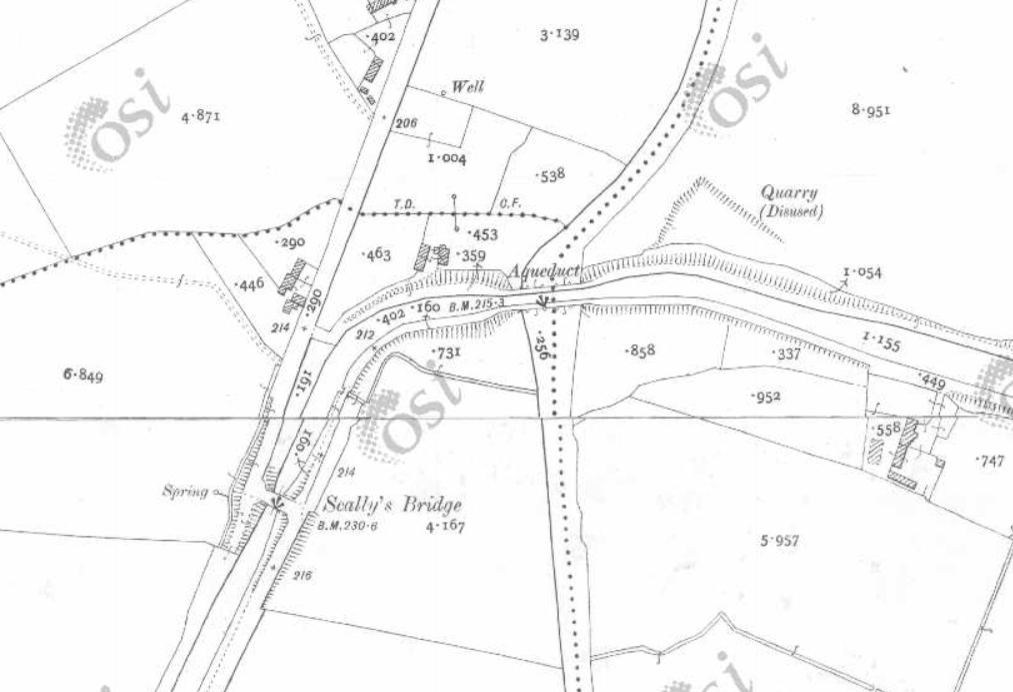
The location

The inflow from the pump
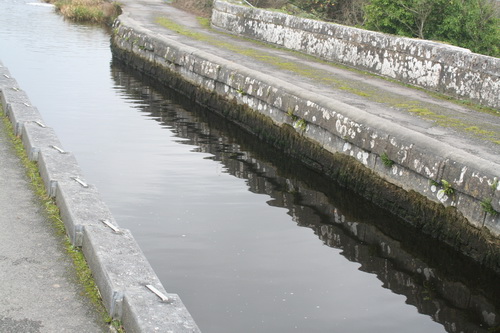
The level on the aqueduct
The Grand Canal Company strike of 1890, starring William Martin Murphy and Barry Fitzgerald.
The Standedge Tunnel, on the Huddersfield Narrow Canal, is the longest (5 km), deepest (under the Pennines) and highest (above sea level) canal tunnel in Britain. There is nothing remotely like it in Ireland, where the only canal tunnel was a miserable effort on the Ulster Canal in Monaghan town.
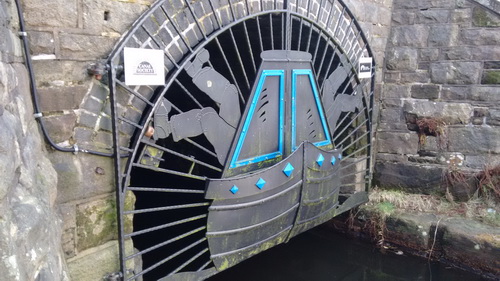
The western entrance to the Standedge Tunnel: the Diggle portal
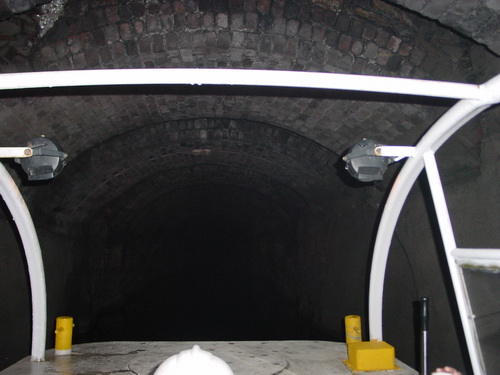
Inside the tunnel (2005)
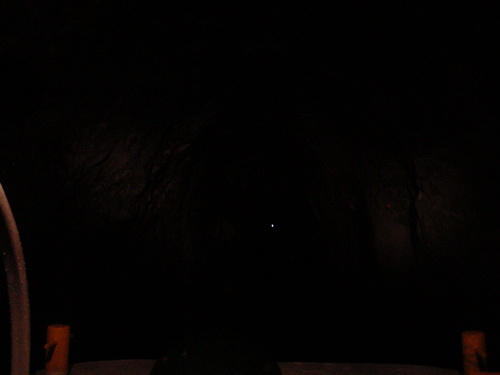
Light at the end of the … (2005)
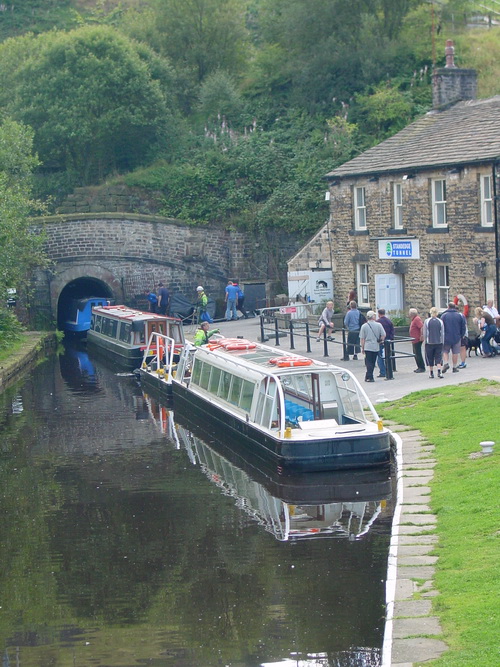
The eastern end at Standedge, a short walk from Marsden
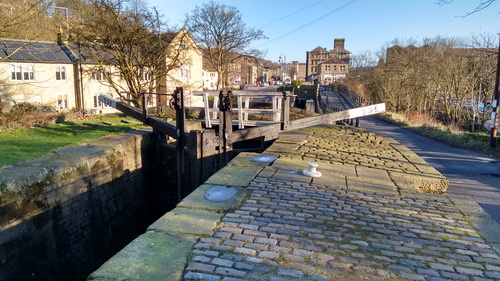
The Huddersfield Narrow Canal in Slaithwaite, downstream from Marsden
The “large village” of Marsden (home to the Riverhead Brewery) is close to the Standedge portal. It runs an annual jazz festival and, in 2017, it had the Norwegian cellist and composer Maya Bugge create, perform and record in the Standedge Tunnel.
The recording, No Exit, is now available on Bandcamp for a mere STG£10 (digital) or £12 (CD). There are five tracks:
Highly recommended.
Posted in Canals, Engineering and construction, Extant waterways, Foreign parts
Tagged cello, Diggle, Huddersfield Narrow Canal, jazz, Marsden, Maya Bugge, Slaithwaite, Standedge, tunnel
The Limerick Advertiser states, that whilst a funeral was lately passing from the shore to a small island [presumably Inis Cealtra, Holy Island] in the great Lough above Killaloe, the friends and relatives of the deceased having thought the ice sufficiently strong to carry the corpse across, it unfortunately broke, and the remains of the deceased were precipitated into the water, and a number of people, who were conveying the corpse, fell in and perished.
Bath Chronicle and Weekly Gazette
3 February 1820

Posted in Extant waterways, Historical matters, Ireland, Safety, Shannon, Weather
Tagged corpse, funeral, Holy Island, ice, Inis Cealtra, Lough Derg
Not that many pubs, surely.
Posted in Economic activities, Engineering and construction, Extant waterways, Ireland, People, Shannon
Tagged Dromineer, Lough Derg, Shannon, stripe

 Irish waterways history