Category Archives: Foreign parts

FF -v- SF on C18 economic development

More from the splendid KildareStreet.com, this time an actual Dáil debate, with real people speaking, on 30 May 2013. The debate was initiated by Micheál Martin [head honcho in FF, Cork South Central], who asked the minister …

… his plans for capital investment in Waterways Ireland in the coming year; and if he will make a statement on the matter.

There are three odd aspects to that question.

The first is that Micheál Martin should already know that the capital expenditure allocation for WI within RoI for 2013 is €4 071 000: I can understand that he wouldn’t have wanted to plough through the vast wodges of budgetary bumpf, but I’m sure he would have read the highlights on this site.

The second oddity is that Micheál Martin must have known that the minister would not himself have any plans for capital expenditure: they would be WI’s plans.

The third oddity is that FF didn’t seem to have any particular reason for asking this question: the rest of the debate (see below) seems rather desultory. Could it be that it’s trying to reclaim the waterways limelight from the Shinners, who’ve been keeping an eye on WI dredging as well as on thon sheugh?

To be honest, it all seems a bit pointless: waterways may be interesting to me, and presumably to readers of this site, but they’re hardly of great national importance. A serious debate, by informed participants, might be useful, but (with all due respect to the contributors) there was little sign of that here.

Jimmy Deenihan did actually give some interesting, albeit minor, details about WI’s plans for this year. I omit the first two paras and the last, which are boring boilerplate bumpf that will be familiar to regular readers.

Jimmy Deenihan [FG, Kerry North/West Limerick]: While the Waterways Ireland 2013 business plan and budget is the subject of ongoing discussions with the co-sponsoring Department of Culture, Arts and Leisure in Northern Ireland and will require formal approval by the North-South Ministerial Council, I have provided an indicative funding allocation of €4.071 million to Waterways Ireland for capital projects in this jurisdiction in the coming year. This will facilitate capital works by Waterways Ireland in developing, restoring and improving infrastructure for water based and activity recreation and tourism, consolidating facilitates and improving access to the waterways across the navigations.

I am advised that the Waterways Ireland draft 2013 business plan has a development schedule providing for 1354 m of additional moorings across the navigations. Works planned within this jurisdiction include a range of major projects such as upgrading Bagenalstown Lock on the Barrow; provision of a slipway and stabilisation of the dock walls at Grand Canal Dock, dredging the Grand Canal; development of houseboat facilities at Lowtown and Sallins; lifting the bridge at Tullamore depot; bridge upgrades, works on weirs and locks on the Shannon; and commencement of work on the Belturbet Service Block on the Shannon Erne and purchase of plant and machinery.

I said that I would welcome information about what “lifting the bridge at Tullamore depot” means. The answer was provided in the Comments below; here is a photo of the bridge in question.
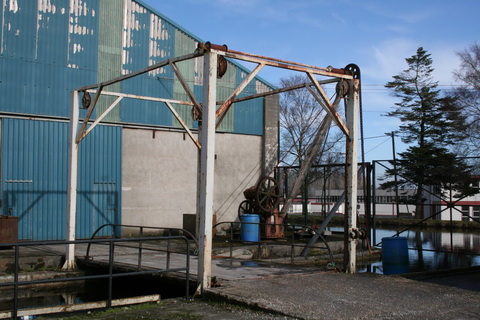
The (currently non-lifting) lifting bridge at Tullamore

The (currently non-lifting) lifting bridge at Tullamore


Most of the rest is unsurprising.

The FF follow-up came from Seán Ó Fearghaíl [FF, Kildare South], who said:

I welcome the many positive developments to which the Minister referred but one of our concerns is that since 2011 the funding available for Waterways Ireland has been cut from €35 million to approximately €32 million.

Studies over the years have shown that waterways tourism is one of the activities that is most likely to generate return visits. As a regular user of places like the Shannon Navigation, one never ceases to be amazed at the number of non-nationals one meets on that waterway who have been coming back to Ireland year in, year out. I wonder to what extent the funding the Minister has available to him should be augmented by the Department of Transport, Tourism and Sport. These waterways are of immense value to the local populations privileged to live in the catchment area of each amenity, along with their huge tourism importance. What sort of interaction does the Minister have with tourism bodies north of the Border and the Department of Transport, Tourism and Sport? Is anything planned for the waterways under the auspices of The Gathering?

What has happened in Kildare this week? We had Bernard Durkan [FG, Kildare North] the other day and Clare Daly [Socialist Party, Dublin North, but originally from Newbridge, Co Kildare] a moment ago; now we have a new chap from Kildare South.

Anyway, it can’t have come as any surprise to Mr Ó Fearghaíl that WI’s budget has been cut: so has everybody else’s, and the budgets were announced last December. I note that he didn’t ask how the Clones Sheugh was to be funded, never mind the Cavan Sheugh to Lough Oughter. But his question is the sort that a journalist might ask: vague, unfocused, couched in generalities, lacking in evidence of research into the subject. I would like to know more about his “Studies over the years”, with particular reference to the balance between and the allocation of the costs and benefits of investment in waterways; generating return visits is not in itself terribly useful (I really do not want Great Aunt Maud here again).

Not that the minister offered many hard facts in his reply:

I have seen for myself the provision of moorings at Killaloe and Ballina. Those have made a major difference to both towns in different counties on either side of the Shannon. The result of that investment is obvious and local people would accept that.

As regards involvement from Fáilte Ireland, Waterways Ireland is augmenting Fáilte Ireland’s promotion of the waterways. Waterways Ireland is providing funding on an annual basis for the promotion of tourism on its waterways. It is a North-South body, which is also very important, because Tourism Ireland promotes the entire island and the waterways network of more than 1,000 navigable kilometres can really be pushed on an all-island basis and we are doing that. I have tried to minimise the reduction in funding for Waterways Ireland because of its North-South significance and its potential and considerable work has been done. We have improved facilities for tourists so we are now ready to proactively promote this great facility.

Any, like, figures? Statistics? References to analyses? How much of WI’s budget is being diverted to the tourism bods and what is the benefit?

Next (and last) up was Peadar Tóibín [SF, Meath West], with “now for something completely different“:

A number of groups are actively trying to create a green way along the Boyne from the estuary to its source. The Boyne is littered with internationally recognised heritage monuments and would be a fantastic tourist attraction that would bring people into the region. People who holiday in the region visit Trim Castle and Newgrange on coach trips and as ar result Meath does not get the full value of their tourism. The Boyne Canal runs from Navan to Drogheda. It is not covered by the Waterways Ireland network. Would the Minister agree that such a canal should be brought within the ambit of Waterways Ireland, along with other canals, and would he consider the funds that might be available to help with the development of such a green way along the River Boyne?

The minister’s reply is interesting:

We have no plans to extend the present 1,000 kilometres of navigable waterways. The focus of our investment in capital development will be from Clones to Lough Erne to the value of €35 million.

What? No Cavan Sheugh? No Kilbeggan, Longford or Mountmellick Branch?

Oh, and note that the figure of €35 million is being quoted for the Clones Sheugh, although the last estimate I had form WI was higher than that.

The minister continued:

As regards the green way, I do not have direct responsibility but any way I can help through Waterways Ireland, I will do so. As a keen cyclist and walker, I am all for encouraging green ways wherever possible. If the Deputy has a proposal I can forward to Waterways Ireland for discussion, I will gladly take it.

Well, well. A Monaghan greenway is being developed; why not a Clones greenway too, instead of an expensive canal?
Nothing to do with waterways …

… but I was struck by George Monbiot‘s

[…] we pay billions to service a national obsession with sheep […].

George lives in Wales.


Red diesel

[European Commission] May infringements package: main decisions

Reference: MEMO/13/470 Event Date: 30/05/2013

In its monthly package of infringement decisions, the European Commission is pursuing legal action against Member States for failing to comply properly with their obligations under EU law. These decisions covering many sectors aim at ensuring proper application of EU law for the benefit of citizens and businesses.

The Commission has taken today 143 decisions, including 15 reasoned opinions and 5 referrals to the European Union’s Court of Justice. Below is a summary of the main decisions. For more information on infringements procedure, see MEMO/12/12. […]

3. Reasoned opinions […]

Taxation: Commission requests United Kingdom to ensure private boats do not use lower taxed fuel

The European Commission has formally requested the United Kingdom to amend its legislation to ensure that private pleasure boats such as luxury yachts can no longer buy lower taxed fuel intended for fishing boats. Under EU rules on fiscal marking for fuels, fuel that can benefit from a reduced tax rate has to be marked by coloured dye. Fishing vessels for example are allowed to benefit from fuel subject to a lower tax rate but private boats must use fuel subject to a standard rate.

Currently the UK law does not impose fuel distributors to have two separate fuel tanks, one with marked fuel subject to a lower tax rate and the other with regular fuel subject to a standard tax rate. As a consequence, private leisure boats can not only use fuel intended for fishing vessels but also risk heavy penalties if they travel to another Member State and the ship is controlled by the local authorities.

The Commission’s request takes the form of a reasoned opinion. In the absence of a satisfactory response within two months, the Commission may refer the United Kingdom to the EU’s Court of Justice.

(for more information: E. Traynor – Tel. +32 229 21548 – Mobile +32 498 98 3871)

h/t Michael Clarke

Limerick slavers

A passing reference in a splendid article [“Ireland and the Black Atlantic in the eighteenth century” in Irish Historical Studies vol xxxii no 126, November 2000, which you may be able to read online] by Nini Rodgers alerted me to a proposed Limerick enterprise of which I was previously unaware. Dr Rodgers’s source was Faulkner’s Dublin Journal of 27–30 November 1784, to which I don’t have access, but it was probably the source for stories in the Derby Mercury of 2 December 1784 and the Chelmsford Chronicle of 10 December 1784, both of which are in the British Newspaper Archive.

The Derby Mercury put it thus:

Extract of a Letter from Dublin, Nov 27

There is at last some Probability that a vigorous Effort will soon be made for the Establishment of a West-India Trade, that may become a national Object in this Kingdom; an African Company is now projecting to be established in Limerick, where six Vessels will sail annually for the Guinea and Slave Coast, and from thence to the West-India Islands, whose Produce they will bring Home. They will at their own Out-Fit in Limerick take on board Linens and Cottons, plain and printed, Tallow, Horns, &c. The Out-Fit of these Vessels will not exceed 3,500 l. There is nothing against this Project but the Explanation of the Act of Navigation, which our Parliament alone has it in its Power to rectify.

Apart from minor points of punctuation and capitalisation, the Chelmsford Chronicle story is the same.

Limerick was, Nini Rodgers says, the first Irish port to promote a slaving enterprise. The African Company would have traded its linens, cottons, tallow and horns for slaves, sold them in the West Indies and bought sugar with the proceeds. I don’t know whether it ever got off the ground.

In general, though, Irish merchants profited from the slave trade not by buying and selling slaves but by supplying provisions to feed the slaves on the islands, allowing the plantation owners to devote their land entirely to growing sugar.


Clare and Mary Rose

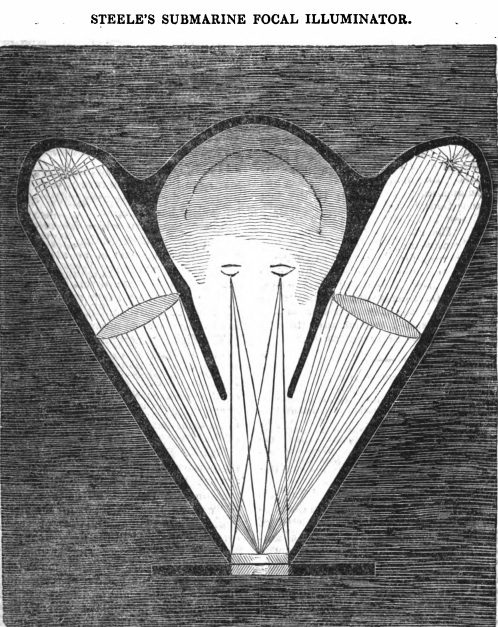
A new museum dedicated to the Tudor warship Mary Rose will be opened in Portsmouth on 31 May 2013. Despite what the UK Independent says, the warship did not lie “undiscovered in the Solent until its exposed timbers were seen by divers in 1971”: the rather longer Guardian story points out that the Deane brothers dived on the wreck in the mid-nineteenth century. Charles Deane also worked on the recovery of the cargo of the Intrinsic, off the coast of Clare; he allowed Thomas Steele to wear his apparatus to descend on the wreck.

In September 1840, in the same issue that reported Mr Brunel’s rash wager of £1,000 that, when his Great Western Railway was finished, he could travel from Bristol to London in two hours[i], the Mechanics’ Magazine also reported that:

Mr Steele, of the County Clare, in the prosecution of his new principle of submarine illumination of objects in dark and muddy water, has been this week down on the wreck in Mr Deane’s water-tight dress and diving helmet, making some observations and experiments[ii].

It may be, therefore, that it was a Clare man who cast the first light on the Mary Rose for almost three hundred years.

Steele's illuminator

From The Mechanics’ Magazine, Museum, Register, Journal, and Gazette No 867 Saturday March 21 1840


[i] italics in the original

[ii] “Submarine Operations” in The Mechanics’ Magazine, Museum, Register, Journal, and Gazette No 893 Saturday September 19 1840

Sinn Féin promotes a certain Sheugh

The Dáil discussed the Good Friday Agreement on Tuesday 14 and Wednesday 15 May 2013. On the Tuesday the minister, Jimmy Deenihan (FG, Kerry North/West Limerick), gave the standard line on the Clones Sheugh:

One of the projects it is currently progressing is the restoration and reopening of the Ulster Canal between Clones and Upper Lough Erne. Planning permission has been granted by Cavan County Council, Monaghan County Council, Clones Town Council and, more recently, the Northern Ireland Department of the Environment planning service. I have established an interagency group to explore funding options for advancing the Ulster Canal project, including existing funding streams and leveraging funding from other sources. The group comprises county managers from Monaghan and Cavan county councils, the director of leisure development and arts from Fermanagh District Council, representatives from the Northern Ireland Tourist Board, Fáilte Ireland, the Strategic Investment Board, Waterways Ireland and senior officials from the Department of Culture, Arts and Leisure and the Department of Arts, Heritage and the Gaeltacht. The next meeting of the interagency group will take place later this week. This interagency approach has been effective elsewhere and I suggest it could be used for similar projects in future.

Nobody else mentioned the Sheugh that day, but on the following day local man Caoimhghín Ó Caoláin (SF, Cavan-Monaghan) gave a rose-tinted account of the benefits of canal restoration:

The second outstanding issue I wish to raise is the Ulster Canal. Far-seeing individuals, not least in the local communities, saw the potential long ago of re-opening the Ulster Canal from Lough Erne in County Fermanagh, through Clones in County Monaghan and on to Lough Neagh. This was a flagship project identified in the Good Friday Agreement and confirmed in subsequent negotiations and agreements. Those far-seeing people saw the potential economic return for entire communities throughout this beautiful part of rural Ireland with the opening up of the Erne-Shannon waterway, linking Lough Erne with the River Shannon. They rightly concluded that similar benefits could be gained from re-opening the Ulster Canal, with the 13 km Erne to Clones section marked out as the first phase of the overall project.

In July 2007, nearly six years ago, the North-South Ministerial Council agreed to proceed with the Ulster Canal project. That was widely welcomed at the time, especially in the Border counties, where the peace dividend had been very slow to materialise. It was widely seen as vindication of the campaign of the local communities and the calls from elected representatives of all parties North and South, including my Sinn Féin colleagues and me, for this very positive project to be advanced. In the intervening period we have seen the economic collapse in this State and a parallel contraction in the North. Despite that, the Ulster Canal project was kept live. Nonetheless, it took until October 2011 for Waterways Ireland to lodge planning applications. Permission was granted last month for the northern section by Minister for the Environment, Alex Attwood, and earlier this month by Clones Town Council and Monaghan County Council for the section in this jurisdiction. The Minister, Deputy Deenihan, has advised that the earliest the contract could be awarded would be late 2014 with a completion date in spring 2017. I urge the Government to do all in its power to expedite this process. I also urge the Minister, Deputy Deenihan, and other colleagues to maximise the possible EU funding for the project from the PEACE IV programme. The Ulster Canal project is hugely important, not only symbolically, but will prove to be powerful in terms of economic development across this island. It is time to get the work on the ground under way.

Nobody else mentioned it.


A trip through the Butterley Tunnel

I have recently been sent links to explorations of the Butterley Tunnel on the Cromford Canal, whose Friends are here with a map here and the first of the explorations here. The second exploration [don’t try this at home, kids] is described rather more extensively in this PDF.

Coincidentally, I found that Joseph Tatlow paid a brief visit to the canal in about 1869:

After about eighteen months of office work I had a long and serious illness and was away from duty for nearly half a year. The latter part of the time I spent in the Erewash Valley, at the house of an uncle who lived near Pye Bridge. I was then under eighteen, growing fast, and when convalescing the country life and country air did me lasting good. Though a colliery district the valley is not devoid of rural beauty; to me it was pelasant and attractive and I wandered about at will.

One day I had a curious experience. In my walk I came across the Cromford Canal where it enters a tunnel that burrows beneath coal mines. At the entrance to the tunnel a canal barge lay. The bargees asked would I like to go through with them? “How long is it?” said I, and “how long will it take?” “Not long,” said bargee, “come on!” “Right!” said I.

The tunnel just fitted the barge, scarcely an inch to spare; the roof was so low that a man lying on his back on a plank placed athwart the vessel, with his feet against the roof, propelled the boat along. This was the only means of transit and our progress was slow and dreary. It was a journey of Cimmerian darkness; along a stream fit for Charon’s boat. About halfway a halt was made for dinner, but I had none. Although I was cold and hungry the bargees’ hospitality did not include a share of their bread and cheese but they gave me a drink of their beer.

The tunnel is two miles long, and was drippingly wet. Several hours passed before we emerged, not into sunshine but into the open, under a clouded sky and heavy rain which had succeeded a bright forenoon. I was nearly five miles from my uncle’s house, lightly clad, hungry and tired. To my friends ever since I have not failed to recommend the passage of the Butterley tunnel as a desirable pleasure excursion.

Joseph Tatlow Fifty Years of Railway Life in England, Scotland and Ireland The Railway Gazette, London 1920

Funding the Sheugh

The Sunday newspaper read by the better class of person tells us today [paywalled]:

Coalition frees up cash for construction

The government has signalled that it intends to spend more money next year on building projects in a bid to use spare cash, including savings from the promissory note deal, to stimulate the economy and promote job creation.

The Department of Public Expenditure has written to other government departments asking them to submit lists of capital projects in addition to what has already been planned.

The projects selected are likely to include housing, retro-fitting of housing stock, schools, local roads, primary care centres and other health facilities and it is hoped to boost job creation, especially in the decimated construction sector. It is likely that preference will be given to “shovel-ready” projects that can be progressed to the tender stage almost immediately.

I suppose it’s a change from piers and seed potatoes and other famine relief works. I wonder what the Department of Arts Heritage and the Gaeltacht will be digging out of its bottom drawer.

53 Percy Place, Dublin

53 Percy Place, Dublin

And I wonder whether 53 Percy Place, which was to be sold, and was expected to raise €1 600 000 for the Clones Sheugh, will still be in WI’s hands in a year or two.


The Shannon River in 1902

Last week I gave the dimensions of the Shannon River:

Length: 770 feet

Breadth: 3 feet 6 inches

Depth: 1 foot 3 inches

Longest straight stretch: 90 feet

Tunnels: 6, totalling 356 feet, the longest 100 feet.

I added that it had a monorail link.

And so it did, in Bombay in 1902, at Lady Northcote’s Fancy Fete and Shannon River Show, with boats, a mono-rail, frocks, shamrocks and Art. Irresistible.

Sinn Féin’s sheughs

I have remarked before that Sinn Féin seems to be devoted to the leading-edge communications technology of the eighteenth century, the canal. I have no idea why it takes such an interest in the subject, but further evidence of its devotion has emerged in the last week.

The Fermanagh Herald reported, on 5 May 2013, that Michelle Gildernew MP [whose Sinn Féin page seems to have disappeared] listed the Clones Sheugh amongst the jobs on which European taxpayers should spend money. She did so at a meeting with Colette Fitzgerald, head of the European Commission’s Belfast office; Ms Fitzgerald made polite noises but did not promise any money.

But Sinn Féin does not confine itself to Clones. Carál Ní Chuilín MLA, whose Sinn Féin web page is live but well out of date, is (as Minister of Culture, Arts and Leisure) the NI minister responsible for Waterways Ireland. We learn from the Londonderry Sentinel that she wanted Waterways Ireland to be landed with responsibility for the Strabane Sheugh.

Happily, the North South Ministerial Council shot that down, but the minister wants to see whether the unfortunate Strategic Investment Board can find any loot for the canal. It might be better if they were asked to find a use for it first: even if it were restored, it would be unlikely ever to see more than a few small boats in a year. It might provide a walking route, for which (pace the Clones dudes) neither locks nor water would be needed, but the Londonderry Sentinel leaves me unclear whether the towpath is usable. It says:

A year ago the Sentinel reported the ‘tow path’ section of the Strabane Canal was to open for the first time in 50 years in June 2012.

It doesn’t say that the towpath did reopen, which seems odd; a Belfast Telegraph article of June 2012 says that it was reopened temporarily but WalkNI says that it is being restored. So is it open or not? I’d like to know, because I favour walking routes along unrestored canals, as does the learned IndustrialHeritageIreland, which also notes encouraging interest from Monaghan County Council.