
Category Archives: Irish waterways general

Praise for Athlone

From William Henry Smith CE A Twelve Months’ Residence in Ireland, during the famine and the public works, 1846 and 1847. With suggestions to meet the coming crisis: practical suggestions to English and Irish landholders, on improved agriculture, reclamation of bogs, mosses and other waste lands; physical and social aspect; the famine and public works; monetary suggestions for Irish property; harbours and fisheries [Longman, Brown, Green, & Longmans, London; Hodges and Smith, Dublin 1848]:

As it is, there are some very fine solid works here; the bridge, the locks, and the weir, do great credit to all parties, both in the skill of design, and care in execution; they are the only great improvements, west of Dublin, possessing a really English character of magnitude, usefulness, and finish.
Dublin’s City Bason in 1776

I have added this description, from Richard Twiss’s A Tour in Ireland in 1775 with a Map, and a View of the Salmon-Leap at Ballyshannon [London 1776] to my second page on the abandoned Main Line of the Grand Canal in Dublin:

The city bason is a reservoir, capable of holding water to supply the city for some weeks, when the springs from whence it is filled are dry; both the springs and the reservoir were dry whilst I was in Dublin. In 1765 a canal was begun to be cut from this place, and intended to be continued to Athlone, which is about seventy English miles off, in order to open a communication with the Shannon; at the rate the work is at present carried on it bids fair for being completed in three or four centuries.

Raising the dead

North Tipperary LEADER Partnership (lead), Clare Local Development Co. and Galway Rural Development Co. intends to contract an individual or company with relevant experience who will work in conjunction with the Lough Derg Marketing Strategy Group to identify tourism projects that would be eligible for funding under the Rural Development Programme. The aim, through animation and capacity building, is to assist the tourism sector in the three regions with the supports they require to develop Lough Derg as a key destination for water based activities combined with a range of very high quality walking, cycling, heritage and culture and food experience.

More info here; not sure whether you need to register to see it.

Bring back the Black

The Black Bridge at Plassey has been closed since the floods of November 2009. Its reopening seems to have a low priority; I suspect that is because the importance of the bridge in Ireland’s technological, economic, entrepreneurial and political history is not widely appreciated. Here is a page explaining some of the background and suggesting a context within which reopening might be justifiable.

Barges, cots and subaltern waterways studies

I am to speak at Jamestown, near Carrick-on-Shannon in Co Leitrim, on Saturday 4 August 2012. Jamestown is having its heritage festival, and large numbers of old (converted) barges will be there. I will be giving one of four talks; mine is entitled

Down with barges: why cots were the really important vessels on Irish inland waterways.

I will be citing His Late Majesty Henry VIII, Fid Def, in support of my contention.

Here is some of the background to my thinking. If you would like to hear more, do come along on the day: the talks are open to all.

Where do …

… (a) correct ideas and (b) camper vans come from?

Correct ideas, as everyone is undoubtedly aware, come from three kinds of social practice: the struggle for production, the class struggle and scientific experiment.

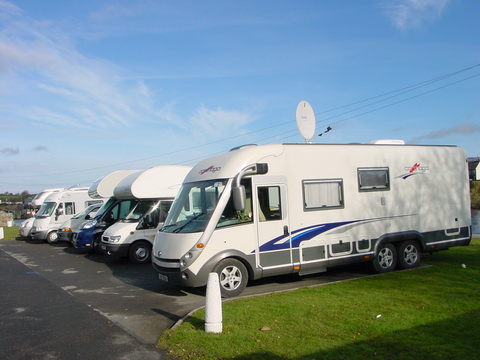
Camper vans (or RVs: song on this page requiring Flash) may come to WI harbours because they’ve studied the Safe Nights Ireland website, which (inter alia) lists all the public toilets in Ireland (many counties have none) and the WI facilities.

Incidentally, I have been told that WI now welcomes camper vans, having persuaded Bord Fáilte that the economy won’t collapse if it recognises the reality that the vans use the harbours. However, I haven’t seen that in writing anywhere; if anyone can point me towards a reliable source, please leave a Comment below.


Working for Waterways Ireland

What is the most important (because first listed) skill for those seeking employment with Waterways Ireland as general operatives (basic)?

Good communication skills.

I am very glad to hear it.

Our deeds determine us …

… and Waterways Ireland wants to digitise its deeds:

Waterways Ireland house, in secure storage, an important collection of deeds / documents, in paper format, that relate to their assets and land interests throughout Ireland. Waterways Ireland wishes to appoint a service provider to digitise these on a rolling basis. […]

The deeds are broadly of two types:

– Multi-page land transfer deeds which are usually A3-A4 in size and stapled or bound. Many are DL folded.

– Large format title deeds, dating from late 18th century onwards. These are generally on velum, folded and A2 or greater in size.

Other maps and documents which may be required to size A0 and larger.

Incidentally, WI should decide whether it is, er, singular or plural.


Waterways walks

Look!

Waterways Ireland and a local authority have cooperated in opening a canalside walking and cycling path!

And an excitable minister opened it, saying

This has huge potential for tourism but it also has a huge knock on effect for communities in the health benefit facilities like this bring and this, in turn has benefits in reducing the press on our health services as well. I want to see more walkways because I want to see more people out walking and seeing the natural beauty that we here in Ireland are blessed to have around us.

And rightly so. But you don’t need an expensive canal in order to provide a walk.


Shannon eels

I have a page about the Shannon eel fishery here.

In April 2012 Frank Feighan TD asked many Dáil questions about the Shannon eel fishery; the answers provide a useful update to (and expansion of) the information on my page.