
… but you can’t hide. Harbour hoggers, and folk not meeting the new canals requirements, should watch out.
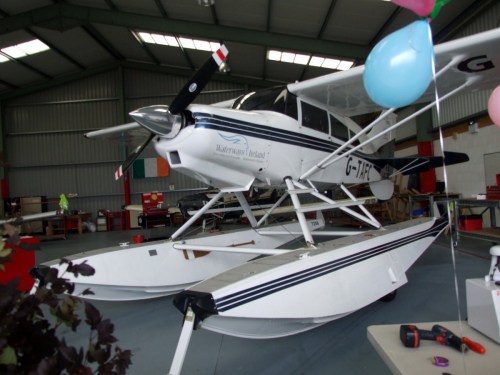
WI’s eye in the sky
[h/t & © JC]
[yes, I know]
… but you can’t hide. Harbour hoggers, and folk not meeting the new canals requirements, should watch out.
WI’s eye in the sky
[h/t & © JC]
[yes, I know]
Posted in Economic activities, Engineering and construction, Extant waterways, Ireland, Irish inland waterways vessels, Non-waterway, Operations, People, Shannon, Ulster Canal, waterways, Waterways management
Tagged Barrow, Erne, floatplane, Grand Canal, Royal Canal, seaplane, Shannon, Shannon-Erne Waterway, Sligo, Ulster Canal, vessels, waterways, Waterways Ireland, workboat
… a new page of pics taken between October 2010 and December 2012.
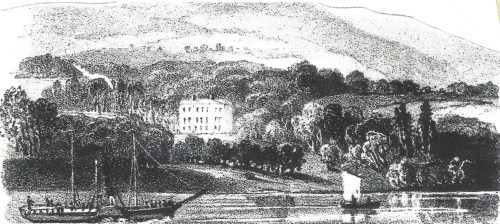
Paul Gauci’s 1831 drawing of a Shannon steamer
This drawing of a steamer is from an 1831 book called Select Views of Lough Derg and the River Shannon by Paul Gauci. I haven’t seen the book myself, but this illustration is used in a couple of places, including Ruth Delany’s book The Shannon Navigation [The Lilliput Press Ltd, Dublin 2008]. Andrew Bowcock, in his article “Early iron ships on the River Shannon” in The Mariner’s Mirror Vol 92 No 3 August 2006, says of the steamer shown that
The funnel looks to be almost over the paddle shaft, which is artistic license.
But my question is not about the vessel but about the house in the background. If it is drawn without artistic licence, where is it?
It is a very large house, seven bays by three storeys, quite close to the water. Using the Historic 6″ Ordnance Survey map [~1840], I have followed the banks of the Shannon from Shannon Harbour down Lough Derg to Killaloe, then from Limerick down the estuary as far as Tarbert, across the estuary to Doonaha and back up on the Clare side to Limerick, then from Killaloe up the Clare and Galway shores back to Shannon Harbour. Anywhere I found a large house within what seemed the right distance of the shore, I looked it up in the Landed Estates Database and in the National Inventory of Architectural Heritage, with some supplementary googling.
I haven’t been able to find images of all the houses marked on the OSI map, but I found enough to show that houses of the size shown by Gauci were very rare. Within those few, I ruled out some (like Tervoe) because they didn’t seem to match Gauci’s drawing (although alterations could have accounted for that). I ended up with only one house that looked at all like Gauci’s, but the background may not match.
If you can identify the house, I would be glad if you could leave a Comment below.
Posted in Ashore, Built heritage, Charles Wye Williams, Economic activities, Engineering and construction, Extant waterways, Industrial heritage, Ireland, Irish inland waterways vessels, Non-waterway, Operations, People, Scenery, Shannon, shannon estuary, Sources, Steamers, The cattle trade, Tourism, waterways
Tagged Banagher, boats, canal, Clare, estuary, Fergus, Galway, Gauci, Grand Canal, Ireland, Kerry, Killaloe, Kilrush, Limerick, Lough Derg, Offaly, Operations, Shannon, Shannon Harbour, steamer, Tipperary, vessels, waterways
My eye was caught this morning by one point in an Irish Times story about the Society of St Vincent de Paul:
One of the organisation’s most frequent requests for help at present is for solid fuel.
“People are using their fireplaces again. It’s too expensive for them to fill the tank with oil, or pay electricity heating bills and so we are getting huge demand for coal and briquettes,” says Kenny. “There is real poverty in this country now. We hear their stories every day.”
That was one of the reasons the canal-borne turf trade lasted so long in Dublin. Turf had two advantages. First, it did not require a grate, which was an expensive piece of equipment. And, second, you could buy it in small quantities. Coal had to be bought in large quantities, eg a quarter of a ton, so you needed spare cash and you also needed a secure place to store the fuel.
Turf, on the other hand, could be bought in small quantities, a few sods at a time, for small amounts of money. During a coal shortage in 1926, for instance, the Irish Times reported:
Early yesterday morning there were large supplies of brown turf at several points along the Grand Canal in Dublin, but these were quickly sold off at famine prices. Before the coal strike this quality of hand-dug turf was sold at two sods a penny, and sometimes cheaper. By Friday last the price had risen to tenpence per dozen sods; yesterday it was being retailed at a shilling a dozen when carried away from the dumps, while hawkers in the streets were reaping a rich harvest selling turf to importunate poor people at 1.5d a sod or 1/6 a dozen.
Poor people complained bitterly that one dealer refused to sell in small quantities; instead he sold cartloads to hawkers and bellmen at a shilling a dozen. The hawkers took the turf a little distance from the canal bank, and sold it in small lots at three halfpence a sod, making a clear profit of 50 per cent.
Turf, especially the brown turf sold in Dublin (as opposed to the black turf used in the south and west), was a less efficient fuel than coal, but it could be bought for small sums and did not require a large initial outlay.
The Vincent de Paul website is here; it accepts donations.
I was interested in Waterways Ireland’s programme for disposal of assets. I wrote asking for:
I had mentioned some of these disposals here when the North/South Ministerial Council [NSMC] approved them, but I had no information on their value.
WI very kindly provided the information; it’s easier to deal with it in reverse order.
WI said:
Waterways Ireland currently leases a total of 233 properties, comprising (1) land, (2) buildings and (3) land and buildings. Of these properties, 121 are on the Grand Canal, 50 on the Royal Canal, 3 on the Barrow Navigation, 2 on the Lower Bann Navigation, 2 on the Shannon Erne Waterway and 55 on the Shannon Navigation. The compilation of the full list will take some time due to pressure of work coming up to the end of year. However, if there are specific areas, navigations or regions of particular interest, every effort will be made to provide the information as quickly as possible.
That’s quite a lot of leases, so I said that I was happy to wait.
WI said:
The funds raised are principally used for capital works in the relevant jurisdiction.
So if something is sold in NI, the money is used there. That is consonant with WI’s funding arrangements for capital projects (other than the Clones Sheugh). As far as I can see, all the property disposed of was in the republic.
Note that the disposals (rightly) do not go to supplement grant income for current expenditure.
WI very kindly sent me an Excel file listing the disposals, only one of which fell into the category covered by my second question (planned to be disposed of between the date of my enquiry and 31 December 2012), so I’m dealing with both questions under one heading. WI said:
The 2010 & 2011 figures have been extracted from Waterways Ireland’s Audited Accounts and represent the Gross amount received i.e. before costs. The 2012 figures have not yet been audited.
The first point to be made is that the total value of property disposals over three years was only €529,557.19: a little over half a million euro in the context of capital expenditure for the three years of about €30,000,000: €21m in 2010 and €5m in 2011, according to WI’s annual accounts, and an amount slightly smaller than 2011’s budgeted for in 2012. So the asset disposals are not very important in WI’s overall capital spending.
Several of the disposals were to other public bodies, allowing them (I imagine) to build bridges, lay pipes and so on. There may also (I imagine) have been disposals of small parcels of land that WI didn’t need but the other body could use. Here are the disposals that seem to fall into that category:
There was also a Grant of Right of Way at Ballyleague, Co. Roscommon (presumably at WI’s harbour on the west of the Shannon, opposite Lanesborough) for €5,000. No further information is provided but this looks like another pro forma grant of access, perhaps to the local authority. If you know more, please leave a Comment below.
Delwood Park is in Castleknock, Dublin 15, and part of it backs on to the Royal Canal. Delwood Close is east of Delwood Park and runs towards the canal.
In 2010/11 WI sold “two parcels of land at Delwood Close, Castleknock” for €60,000 and in 2012 it sold “9 Plots to rear of Delwood Park, Castleknock” for €36,000. I don’t know who bought them so I don’t know whether the residents were extending their gardens or Iarnród Éireann wanted to build a new platform or provide a bridge over the canal from Delwood to the railway …. Local info welcome.
In 2010/11 WI sold property at Ferbane, Co Offaly, on the Grand Canal, for €100.00. In 2012 it sold three properties at Derrycooley, south of Pollagh, which is also on the Grand Canal, for €587.00, 750.00 and €750.00 respectively, and it expects to sell property at Pollagh for €6,750.00 before the end of 2012. That’s a total of less than €9,000.00. I don’t know what land this is, or why WI owns it, but at the prices I suspect it’s bog. Could it have been associated with Turraun?
The lowest price achieved was for “Long Lease of Property at Lough Ree”, which earned “No Premium”, which I take it means that there was no charge. I don’t know what property that was for; did WI support any charitable or similarly worthy endeavour on Lough Ree in 2012?
The highest price was €150,000.00 for “Sale of Freehold Interest of Property in Salins, Co. Kildare”. Again, I would welcome information on the property. In fact, that applies to all of these, so I won’t repeat it.
The second highest price was €87,500.00 for “Sale of Lots at Derrymullen, Robertstown, Co. Kildare”, which is where Lowtown is. And the final two were €19,046.07 for “Sale of Lands at Albert Lough [presumably that should be Lock], Drumsna” and €19,000 for “Sale of Freehold Interest in Properties at Dolphins Barn, Dublin”, which may have been land underlying the two harbours formerly to be found there.
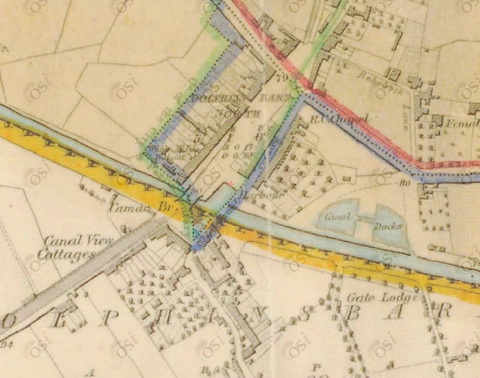
Dolphin’s Barn
 Wasn’t that fun?
Posted in Ashore, Built heritage, Drainage, Economic activities, Engineering and construction, Extant waterways, Foreign parts, Industrial heritage, Ireland, Operations, Rail, Shannon, Sources, The cattle trade, The turf trade, Uncategorized, waterways, Waterways management
Tagged asset, boats, bridge, canal, department of arts heritage and the gaeltacht, disposal, Dublin, Grand Canal, Ireland, lock, North South Ministerial Council, Operations, property, Royal Canal, Shannon-Erne Waterway, vessels, water level, waterways, Waterways Ireland
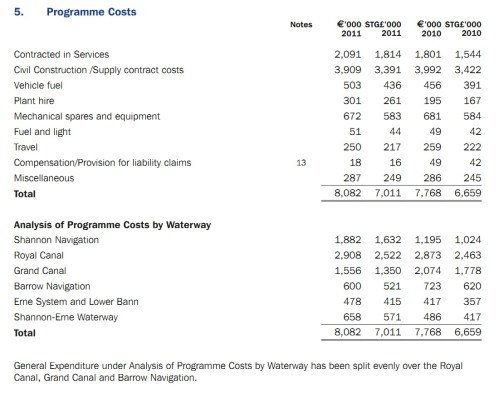
From WI’s annual report for 2011
Note that programme costs do not include staff costs, as the income and expenditure account for y/e 31 December 2011 makes clear.

From WI’s annual report for 2011
The most startling thing in the programme costs is that Shannon costs have increased 57% while Grand Canal costs have decreased by 25%. I presume that the change is in the Civil Construction/Supply contract costs, as the other items don’t seem to have enough scope for such large changes. It would be interesting to know what the contracts were. The accounts of Grand Canal improvements on pages 12 and 16 don’t suggest any diminution in activity, although they are not specific enough to be definitive; the account for the Shannon on page 17 mention some new undertakings, of which the most significant was perhaps the new mooring at Killaloe, whereof the Chief Executive said in the Foreword:

From WI’s annual report for 2011
And so, I’m sure, say all of us.
But wouldn’t that be a capital cost? I can’t work out how the income and expenditure figures link to the activities covered in the descriptions of achievements.
Posted in Economic activities, Engineering and construction, Extant waterways, Industrial heritage, Ireland, Irish waterways general, Operations, People, Restoration and rebuilding, Shannon, Sources, Tourism, waterways, Waterways management
Tagged boats, bridge, canal, Clare, costs, department of arts heritage and the gaeltacht, Dublin, Grand Canal, Ireland, Killaloe, Lough Derg, Operations, Shannon, waterways, Waterways Ireland
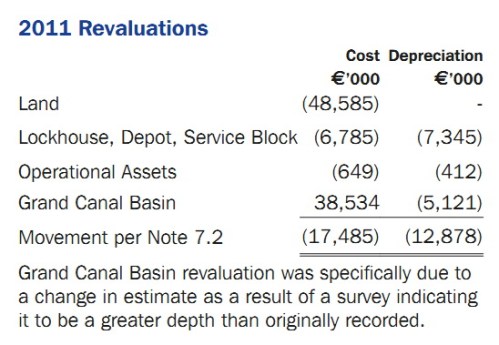
From WI’s annual report for 2011
Posted in Ashore, Built heritage, Drainage, Economic activities, Engineering and construction, Extant waterways, Industrial heritage, Ireland, Irish waterways general, Operations, Sources, waterways, Waterways management
Tagged canal, department of arts heritage and the gaeltacht, Dublin, Grand Canal, Grand Canal Basin, Ireland, waterways, Waterways Ireland
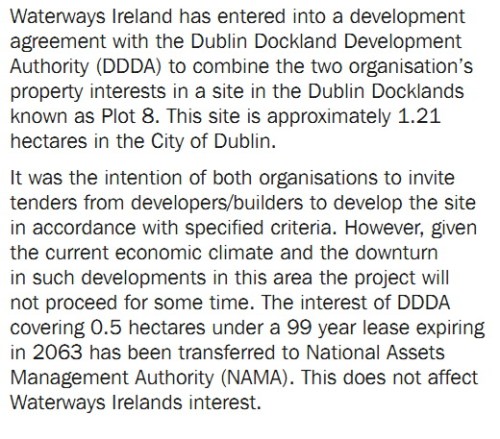
From WI’s annual report for 2011
Posted in Ashore, Built heritage, Economic activities, Engineering and construction, Extant waterways, Industrial heritage, Ireland, Irish waterways general, Non-waterway, Operations, Politics, Restoration and rebuilding, waterways, Waterways management
Tagged canal, DDDA, dry dock, Dublin, Grand Canal, Grand Canal Dock, NAMA, Plot 8, Ringsend, Waterways Ireland

 Irish waterways history