Tag Archives: waterways

Scottish canal developments

Application of locomotive steam power to the navigation of canals

On Monday and Tuesday the following novel experiment of locomotive steam-power was tried on the Forth and Clyde Canal. Mr John M’Neil, the civil engineer of the Clyde navigation, has had constructed on the banks of the canal a railway upon blocks, on which a locomotive engine has been put, which was used on the above named days instead of horses, to draw the canal passage-boats, and succeeded in taking them the whole distance of the line at the rate of eight miles an hour. The company having ascertained the full success of the experiment, will construct a tramway along the canal bank, and will be able to take their passage-boats in future at the rate of 18 miles an hour.

Bradford Observer quoting the Stirling Journal 5 September 1839

Brendan Smith TD and W T Mulvany

Wednesday 22 May 2013

Brendan Smith [FF, Cavan-Monaghan]: To ask the Minister for Arts, Heritage and the Gaeltacht the position regarding the feasibility study that has been underway for some time in relation to the proposed extension of the Erne Navigation from Belturbet to Killykeen and Killeshandra; when this study will be completed; and if he will make a statement on the matter.

Jimmy Deenihan [FG Kerry North/West Limerick]: I am informed by Waterways Ireland that the current position is that work is continuing on the collection of data relating to this project and Waterways Ireland is currently preparing draft options for the project. At that point consultants will then assess the environmental implications of the options. It is expected that the feasibility study will be completed as planned by the end of 2013.

19 December 2013

Brendan Smith: To ask the Minister for Arts, Heritage and the Gaeltacht if he has received the feasibility study on the proposed extension of the Erne navigation from Belturbet to Killeshandra and Killykeen; and if he will make a statement on the matter.

Jimmy Deenihan: I am informed by Waterways Ireland that it commissioned a Strategic Environment Assessment for the possible extension of the Erne Navigation from Belturbet to Killeshandra and Killykeen.

On reviewing the environmental information from this process, Waterways Ireland considers that the environmental designations of this lake complex make the feasibility of the proposed navigation extension highly unviable. For that reason, I am advised that Waterways Ireland does not propose to pursue this project any further at this time.

11 December 2014

Brendan Smith: To ask the Minister for Arts, Heritage and the Gaeltacht the position regarding the proposal to extend the Erne navigation from Belturbet to Killykeen and Killeshandra, County Cavan; when this project will proceed to the next stage; and if she will make a statement on the matter.

Heather Humphreys [FG, Cavan-Monaghan]: I have been informed by Waterways Ireland that it commissioned a Strategic Environmental Assessment for the proposed extension of the Erne Navigation from Belturbet to Killeshandra and Killykeen in County Cavan. I am further advised that, on reviewing the environmental information from this process, Waterways Ireland’s considered view is that the development of a viable project is not feasible, given the conservation designations of the lake complex. Waterways Ireland does not, therefore, propose to pursue the proposal further at this time.

It would be nice if Mr Smith would (a) check what he was told last time and (b) tell whatever constituent is lobbying for this scheme to get stuffed. Even W T Mulvany wasn’t able to get a navigation to Lough Oughter.

Building more navigations in Ireland is a waste of money: it simply spreads the existing business more thinly. It will not attract extra business from inside or outside the state (apart from a small number of waterway twitchers). Some pub-owners in Killykeen or Killeshandra might sell some more beer-like substance, and if they would like to pay for a navigation that’s fine, but there is no advantage to the state in paying for it.

Thanks to KildareStreet for the notification.

From the [UK] Civil Service Quarterly

An interesting article [h/t celr] about the setting up of the Canal & River Trust, which runs (it says itself) 2000 miles of waterway in England and Wales. The article is not, perhaps, to be seen as an objective evaluation of the benefits of the UK’s Public Bodies Reform Programme, but the idea of transferring a large operation to the voluntary sector is an interesting one, as is the scope for volunteer donations and involvement (British Waterways, C&RT’s predecessor, had nothing like as high a proportion of lockkeepers as Waterways Ireland has).

I have occasionally been asked, by British folk, whether the possibility of transferring Waterways Ireland to the voluntary sector is being considered here. I have explained (a) that WI has nothing like as significant an independent (non-grant) income as BW had and (b) that any such transfer would require the rewriting of the Good Friday, St Andrew’s and (now) Stormont House Agreements. So we are stuck with the current arangements, which at present are leaving WI at the mercy of budget cuts, a disastrous pensions arrangement, disputes between its two governing departments and a nitwitted demand, from Sinn Féin and Fianna Fáil and perhaps from Fine Gael too, for a pointless canal reconstruction.


Tourism and beer

According to Padraig Cribben of the Drinks Industry Group of Ireland [which seems to include the brewers of the beers we don’t drink],

[…] the latest figures I have seen show that 35% of foreign tourists do not move outside Dublin. That creates a massive challenge. That challenge is being addressed, initially through the Wild Atlantic Way, but even if one looks at the figures for that, my understanding is that while it was very successful last year, two thirds of all visitors to the Wild Atlantic Way were domestic visitors. There is still a great deal of scope there and it will pay more dividends over time.

There is an initiative due to happen in 2015 which is being broadly termed “south and east” and involves a trail from the Boyne Valley through to the heritage centres in the south east. In 2016 or thereabouts, a whole waterways section will relate to the Shannon and the canals to increase the dispersal.

Jolly good, but why is the drinks industry announcing this? Whose initiatives are these? Who else is involved? More info and links welcome, please.

By the way, Mr Cribben also said

The other point to make is that the Irish pub is unique. It is not just unique here, it has been replicated around the world.

I’m still trying to work out what “unique” means there.

Folk seeking interesting Irish beer should start with the Beoir directories.

Rail, road and river: steam in 1829

Four news items, all in the Varieties section of the Hampshire Chronicle on 19 October 1829.

Rail

The trial of the locomotive carriages near Liverpool was continued on Saturday, when Mr Stephenson’s engine, the Rocket, disencumbered of every weight, shot along the road at the almost incredible rate of 32 miles in the hour! So astonishing was the celerity with which the engine, without its apparatus, darted past the spectators, that it could be compared to nothing but the rapidity with which the swallow darts through the air.

Road 1

Mr Gurney’s steam carriage can be stopped dead within the space of two yards, though going at the rate of from 18 to 20 miles an hour, and this without any inconvenient shock to the machinery or passengers. It is capable of dragging a carriage, weighing three tons and containing 100 passengers, over a level road, at the rate of eight, nine, or ten miles an hour: will drag the same carriage, containing 25 passengers, up the steepest road in England, at the same rate. On ascending hills, for every cwt that is shifted from the front to the hind wheels, the carriage requires an additional drawing power of 4 cwt and on level ground an additional power of half a ton. The contrivance by which the carriage may be retarded at pleasure on descending hills, acts independently of the wheels, so that the sliding and cutting effect of the ordinary drags is entirely avoided.

Road 2

Sir James Anderson has entered into a contract with the Irish Post Office, by which he undertakes to convey the mails throughout Ireland at the rate of 12 miles an hour, in coaches impelled by steam, calculated to carry two or three passengers, in addition to the coachman and guard. This invention of Sir James Anderson, for which he has obtained a patent, has seldom been exhibited out of the yard in which it was constructed; but it is said to bear very little resemblance to the drag-coach of Mr Gurney. The contract is understood to be for 14 years, and the only pecuniary stipulation made by Sir James is, that he shall receive half the money which the Government shall save by adopting his system. He will shortly commence carrying the mails between Howth and Dublin. The road is level and good, and the distance not more than nine or ten miles.

[Note: an 1841 proposal by Sir James Anderson is covered here. And here is a longer piece about Sir James and the Steam Carriage and Waggon Company of Ireland.]

River

An iron steam boat of a peculiar construction, and having the paddles in the centre, has been built at Liverpool, by Messrs Fawcell and Co for the Irish Inland Steam Navigation Company. This vessel was tried in the Mersey on Monday, and the result was highly satisfactory. Another iron vessel, of 60 tons burden, was launched on Tuesday from Messrs Wm Laird and Son’s yard, on the banks of Wallasey Pool.

[Note: the Fawcett steamer and the 60-ton barge were destined for the Shannon. The barge was the first iron vessel built by Lairds.]

Saunderson’s Sheugh and northsouthery update

I’m trying to catch up on things I was too busy to cover late last year.

Saunderson’s Sheugh 1

For new readers: the proposed rebuilding of the Ulster Canal started off in the 1990s with the idea of rebuilding the whole thing and thus linking Lough Erne and Lough Neagh. It became clear that that would be ridiculously expensive (even by politicians’ standards: to my mind anything more than sixteen and thruppence farthing would be too much) so TPTB decided to look at rebuilding the two ends, leaving the BITM (as WRGies might say) until gold was discovered in Monaghan or something. Then that got shot down but the heroic Irish government, rolling in the profits of property development, volunteered to pay the entire cost of rebuilding one end, from Lough Erne to Clones. This, known as the Clones Sheugh, was held up when the property boom bust; after that the Irish government has asked a group of treasure-seekers to find money. The group doesn’t seem to publish reports, but in recent months we’ve had whispers from two directions:

  • the Irish government seems to think that making the Finn navigable to Castle Saunderson would be a good idea: thus Saunderson’s Sheugh. And see this
  • Her Majesty’s Devolved Administration has been constructing a Business Case to show that it would be a very good idea for (a) the Irish government, (b) the British government, (c) the European Union, (d) Santa Claus or (e) anyone else, really, to do something that is so far unspecified. Actually, that’s guesswork on my part: I don’t know what’s in the business case (see below) but if it’s anything like the last one ….

Hands across the border

The North South Ministerial Council (waterways) met on 27 November 2014. Highlights:

  • WI wants Euroloot (don’t we all)
  • there is to be consultation on new Erne byelaws
  • repairs are taking most of the capital budget
  • there is “a new cruise hire business on the Shannon-Erne Waterway” [someone tell me more, please]
  • there is a Blueway
  • the ministers agreed the “indicative” [I don’t know what that is] budget for 2013. In November 2014. Which must have been helpful in budgeting. Maybe the 2013 accounts will be published soon
  • the “2013 indicative budget of €29.47m (£24.17m)” will be “a baseline for 2014-2016 draft budgets”, one third of that period having expired
  • the amount of the indicative budget for 2013, €29.47m, is 30% down on WI’s total income for 2012, as shown in its income and expenditure account for y/e 31 December 2012. I don’t know whether those figures can be compared directly, so please correct me if I’m wrong, but 30% is a hell of a cut in one year. And that’s without taking account of the increased cost of pensions
  • the 2014-2016 Corporate Plan isn’t available to citizens yet but the NSMC “noted” WI’s “draft Business Plan and Budget provision” for 2014 and 2015 and Corporate Plan for 2014-2016; they have to be approved at some future NSMC meeting
  • no info about the Sheugh was included in the minutes.

More hands across the border

As if all that wasn’t enough excitement, there was a Plenary NSMC meeting on 5 December 2014. That’s where lots of ministers go along: I make it 14 from north and 15 from south. They had their eyes on PEACE and INTERREG Euroloot, assuming the entire EU economy hasn’t collapsed by spring 2015. Apart from that, the only interesting bit was:

Waterways Ireland has developed the Shannon Blueway, Ireland’s first Blueway (a multi-activity trail running alongside water) between Drumshanbo and Carrick-on-Shannon in Co Leitrim in conjunction with the National Trails Office, Canoeing Ireland, Leitrim County Council and Leitrim Tourism. The Body continue to engage with relevant organisations, interested in further development of Blueways or Greenways including exploring opportunities that may exist for EU funding.

There are cycling, walking and canoeing routes along parts of the Ulster Canal: getting Euroloot for them would be a far better idea than making the thing navigable for cruisers.

Stormont

The Stormont House Agreement was signed on 23 December 2014. Slugger O’Toole has the text, a link to the NIO and a summary.

Most of it is very boring, except for the provision that the Ulster Canal is to be restored as an Orangeway, along which all Orange parades will henceforth be routed, giving the marchers entire freedom to do or say whatever they want. It is understood that an abandoned railway will be given to Green marchers for the same purpose.

No, of course not: that’s a joke. The bits that might become interesting are:

60. A reduction in the number of departments from twelve to nine should be made in time for the 2016 Assembly election, with the new allocation of departmental functions to be agreed by the parties.

Will DCAL survive?

70. On the St Andrews Agreement Review, the NSMC (meeting in Institutional format) will agree before the end of February 2015 a report on new sectoral priorities for North/South cooperation, identified during Ministerial discussions since November 2013. A report on new sectoral priorities will be a standing item for future meetings of the NSMC meeting in Institutional format.

Will waterways be affected?

Saunderson’s Sheugh 2

Something is moving in the undergrowth. Every so often I have asked DCAL for news of the development of its business case for the Ulster Canal. On 2 January 2015 I said:

I would be grateful if you could:

– tell me whether the Ulster Canal Restoration Lough Erne – Clones Section Addendum to 2007 Business Case is now complete and available for release

– let me have a copy if it is available

– tell me the revised expected release date if it is not available.

DCAL has very kindly written to say:

The updated business case for the Ulster Canal restoration is currently with our colleagues in the Department of Arts, Heritage and the Gaeltacht in the south as co sponsors of Waterways Ireland. They are seeking approval from the Irish Government for the updated business case. Until such time as this approval is granted the business plan cannot be released. Unfortunately I am not able to put a specific date on when this will be, but I am hopeful it will be sooner rather than later. I will ensure that you are advised as soon as the approval is granted.

I must say it seems odd to me that an Irish government department should be seeking Irish government approval for a business case prepared by a Northern Ireland department. But the Shinners want a Sheugh, for reasons best known to themselves [although I suspect it’s because their economic and political thinking stopped in 1797], and the Irish department is now headed by a minister from Sheughland. The prospects for a sane decision look slim.

Addendum: this suggests that the shinners’ main interest may be in getting something — anything — crossborderish built, even if it makes no sense. The Narrow Water Bridge project is like that. What’s really needed up there is a southern bypass of Newry, but that would be entirely within Northern Ireland. So Sinn Féin would prefer an “iconic” bridge in the middle of nowhere that happens to span the border.

Taking the pills

St John’s and other pills are discussed on this page, where I said

The term is associated with south-western England and Wales but it is also found in south-eastern Ireland.

Reading Hugh Conway-Jones’s excellent Working Life on Severn & Canal: reminiscences of working boatmen (Alan Sutton, 1990), I noted this:

By the time you got to Avonmouth, the tide was more than half-ebbed out and the dock gates were closed. So the tug took you round into the Old Entrance (what we called the Old Way), and you tied up there alongside the pier. As the tide ebbed, the barges lay on the bottom and then you could get your head down for a nice sleep while the tug went off to Portishead to anchor in the pill there.

I’m not sure whether this Pill is the one the boatman had in mind: although the two places, Portishead and Pill, are often mentioned together, it seems a bit far away to be regarded as Portishead’s pill. Further information welcome — and sightings of any other pills from either side of the Severn.

Incidentally, the sort of traffic and conditions Conway-Jones wrote about seem to be similar to those on the Barrow and Suir estuaries (allowing for their smaller scale).


The Shannon in winter

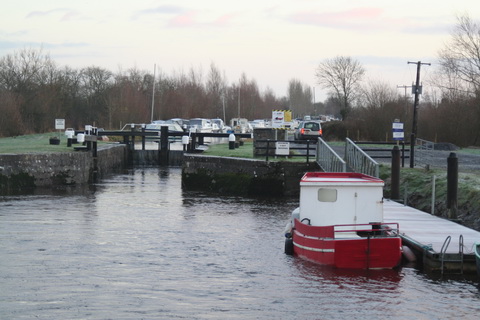
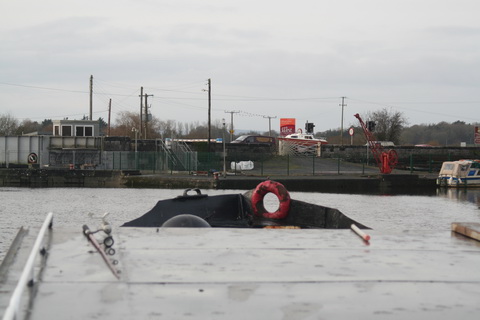
Downriver from Shannon Harbour to Dromineer in December 2014. It began as a bright, cold morning.

Shannon Harbour to Dromineer December 2014 01_resize

Leaving Shannon Harbour after icebreaking between the locks

Shannon Harbour to Dromineer December 2014 02_resize

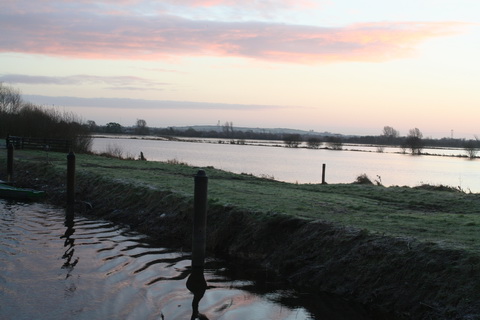
Flooding to the south-east

Shannon Harbour to Dromineer December 2014 03_resize

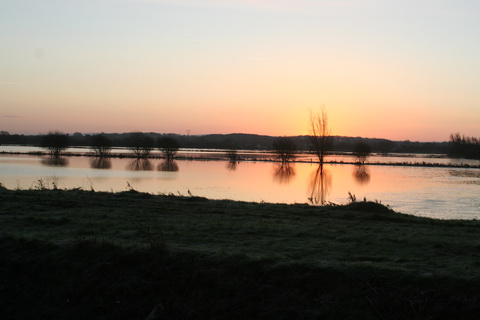
But southward, look …

Shannon Harbour to Dromineer December 2014 06_resize

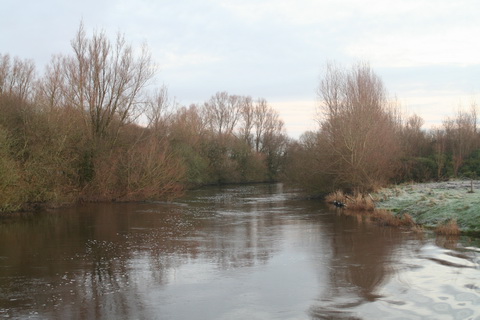
The Brosna

Shannon Harbour to Dromineer December 2014 73_resize

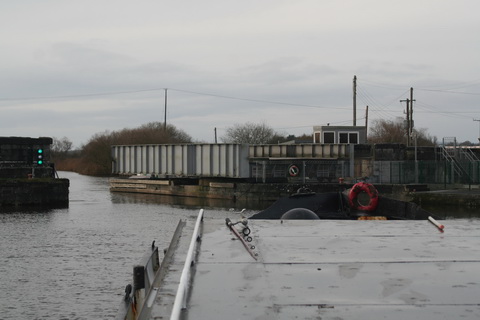
Heading for Banagher Bridge 1

Shannon Harbour to Dromineer December 2014 75_resize

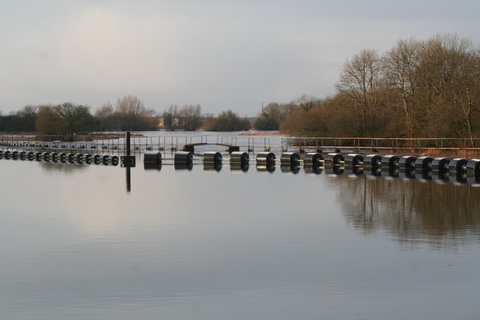
Keeping close to the pontoons

Shannon Harbour to Dromineer December 2014 98_resize

Heading for Banagher Bridge 2

Shannon Harbour to Dromineer December 2014 103_resize

Heading for Banagher Bridge 3

There is a YouTube video of the shooting of the bridge here. It seems to start automatically, including sound; I don’t know how to avoid that.

Shannon Harbour to Dromineer December 2014 107_resize

Looking back at Banagher

Shannon Harbour to Dromineer December 2014 116_resize

Colours

Shannon Harbour to Dromineer December 2014 124_resize

Invernisk

Shannon Harbour to Dromineer December 2014 129_resize

Shannon Grove

Shannon Harbour to Dromineer December 2014 134_resize

Current

Shannon Harbour to Dromineer December 2014 140_resize

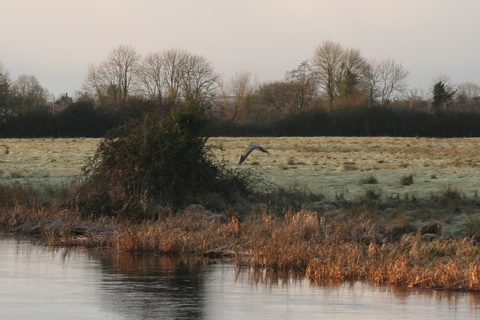
Scarpering heron

Shannon Harbour to Dromineer December 2014 146_resize

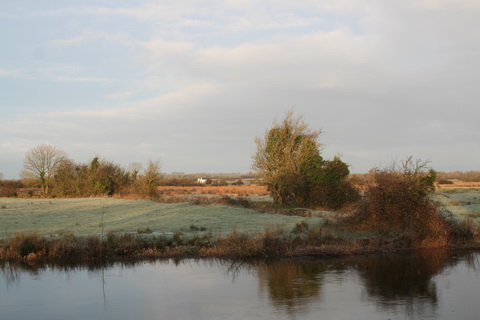
Colours

Shannon Harbour to Dromineer December 2014 149_resize

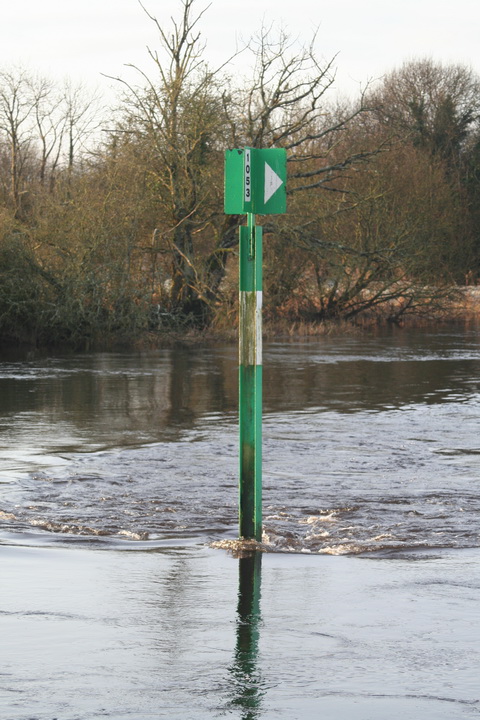
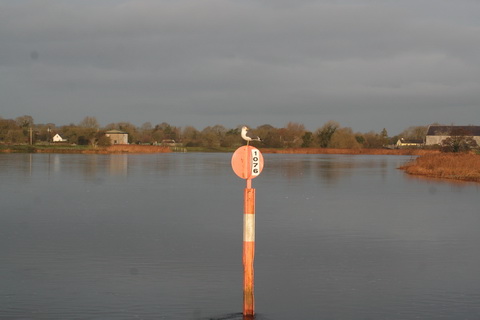
Marker and gauge

Shannon Harbour to Dromineer December 2014 151_resize

House

Shannon Harbour to Dromineer December 2014 169_resize

Boats at Meelick

Shannon Harbour to Dromineer December 2014 170_resize

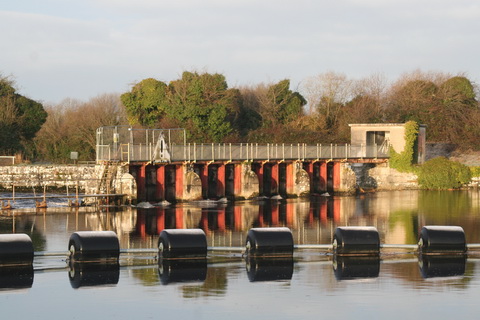
Meelick weir

Shannon Harbour to Dromineer December 2014 174_resize

East bank

Shannon Harbour to Dromineer December 2014 176_resize

Protective boom

Shannon Harbour to Dromineer December 2014 181_resize

Sluices

Shannon Harbour to Dromineer December 2014 198_resize

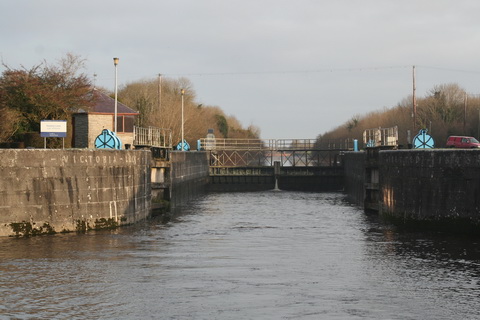
Through Meelick Lock

Shannon Harbour to Dromineer December 2014 205_resize

One bird

Shannon Harbour to Dromineer December 2014 213_resize

Many birds

Shannon Harbour to Dromineer December 2014 221_resize

Reeds

Shannon Harbour to Dromineer December 2014 226_resize

Architecture

Shannon Harbour to Dromineer December 2014 228_resize

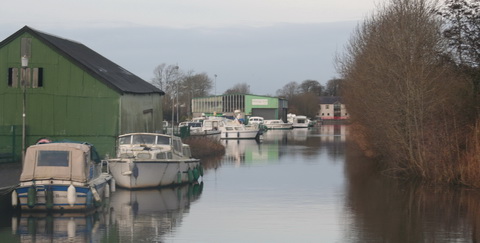
Munster Harbour

Shannon Harbour to Dromineer December 2014 233_resize

Delaying Eamon Egan

Shannon Harbour to Dromineer December 2014 235_resize

Gateway to civilisation

Shannon Harbour to Dromineer December 2014 237_resize

Connacht Harbour

Shannon Harbour to Dromineer December 2014 239_resize

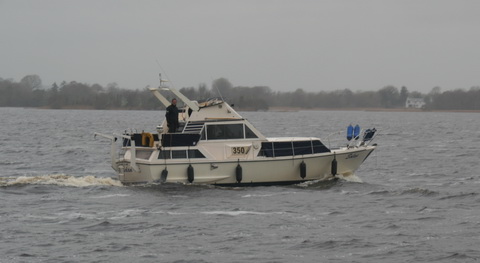
Lough Derg: weather has changed

Shannon Harbour to Dromineer December 2014 243_resize

Journey’s end, Dromineer


The River Shannon and its Shrines

One of the Shannon books that are listed on the IWAI website but that I’d never seen is J B Cullen’s The River Shannon and its Shrines, which the IWAI list says is

Dublin. C.T.S. of Ireland. 1909. p.p.107. Green boards. Prof. illus.

IWAI also lists J E McKenna Lough Erne and its Shrines published by the Catholic Truth Society of Ireland in 1909, and it provides a link to a downloadable copy of what is a short work of 32 pages.

How many pages?

In 2004 that learnéd bibliophile Michael Slevin also provided a list of books being sold by Healy Rare Books, which included

J.B. Cullen. The River Shannon and its Shrines. Dublin. Browne & Nolan. n.d. Disbound. p.p.28. Illustrated.

I mention this because I have recently acquired a copy matching that description (though, I suspect, not at Healy prices). The number of pages is indeed 28 rather than the 107 mentioned on the IWAI listing. So were there two books with the same title by J B Cullen? My copy concludes with the words

At Killaloe may end the notice of the Upper Shannon and its Shrines.

That is followed by

[The Story of Saint Senanus, which is to follow, will introduce the remaining Sanctuaries of the hallowed and majestic River.]

It seems possible, therefore, that Cullen wrote more than one piece on the Shannon; perhaps they were originally published in the Catholic Truth Society magazine and then assembled to provide a 107-page book. The National Library suggests that there may have been four pieces.

I would be glad to hear from anyone who knows more about this — and to get copies of any other sections that may exist.

Athlone

Here is an extract from Cullen about Athlone.

To-day Athlone presents a picture of greater interest than many of our Irish cities or towns. Its normal population is some ten thousand inhabitants, but its importance as a military station often swells this aggregate. This latter circumstance gives a very distinct feature to Athlone. The town is generally bright and gay with the parade of military, and joyous with the strains of martial music, while ever and anon the practice of artillery keeps the echoes of the Shannon busy recalling — in our peaceful days — the stirring memories of the warring past.

The book was published in 1909: the army is that of His late Majesty King Edward VII.

Shannon -v- Erne

McKenna’s Erne book has a practical tone: it mentions the “finely-equipped paddle-steamer Lady of the Lake” but says

We prefer a modest little steam launch for the purpose of our present excursion.

Assuming we have a few quid to spare, of course. But Cullen says nothing about how the traveller is to get around. He has clearly been on the water (he visited several islands — and even Lough Forbes, which is not easy to see by road) but also travelled by land to Kilronan, Edgeworthstown and Roscommon. It would be interesting to know how and when he made his journeys.

Despite its title, his book[let?] displays an interest in military as well as in religious sites and history, but there is nothing about contemporary waterways usage or traffic.

J B Cullen

From searching tinterweb, I conclude that John Bernard Cullen may have attended Mungret College in Limerick [PDF; mostly irrelevant] and had a brother called James who was a Jesuit, co-founded the Rosbercon Choir, lived at Bawnjames House near New Ross, was a founding committee member of the Catholic Truth Society of Ireland, contributed to the Parnell National Tribute and wrote lots of light historical articles. In 1886 two of his daughters, aged 3 and 13, drowned in an ornamental pond in his gardens.

I would welcome more information.

As far as I can tell he was dead before 1933 and his work is therefore out of copyright; accordingly I provide a PDF [5.3 MB] below.

The River Shannon and its Shrines

Nenagh Canal

Canal between Nenagh and the River Shannon

At a numerous and highly respectable Meeting of the Gentry, Merchants, Traders, and Freeholders of the Baronies of Upper Ormond, Lower Ormond, and Owney and Arra, held at Nenagh, County of Tipperary, on Wednesday, the 30th day of January, 1839.

PETER HOLMES, Esq, JP, and DL, in the Chair.

Moved by John Bayly, Esq; seconded by the Rev J H Poe, Rector of Nenagh:

Resolved — That we consider a Canal communication between Nenagh and the River Shannon, of vital importance to the prosperity of the town and neighbourhood, as increasing commerce, lessening the cost of fuel, facilitating intercourse with the sea ports of the country, and giving employment to the poor.

Moved by John Bouchier, Esq; seconded by the Reverend Ambrose O’Connor, PP of Nenagh:

Resolved — That we have heard with interest the Report of Mr Henry Buck, Engineer, on the proposed line of Canal; and recommend the adoption of the line he has surveyed.

Moved by John M’Keogh Dwyer, Esq; seconded by Thomas Maguire, Esq:

Resolved — That we recommend the adoption of the Prospectus that we have heard read.

Moved by Hastings Atkins, Esq; seconded by J J Poe, Esq:

Resolved — That we appoint Peter Holmes, Esq, a Commissioner, who is to name a second, the second a third, and so on, until the whole are appointed.

Moved by O’Brien Dillon, Esq; seconded by John Bayley, Esq:

Resolved — That the names of Lords Dunally, and Orkney be added to the list of Commissioners.

Moved by Doctor Quin; seconded by Doctor Dempster:

Resolved — That we recommend the proceedings of the Meeting to be published in the Nenagh Guardian, Limerick Chronicle, and other Papers, and that the Secretary be instructed to get printed 300 copies of the Prospectus.

Moved by John M’Keogh Dwyer, Esq; seconded by Thos Maguire, Esq:

Resolved — That we now enter into a Subscription list for Shares, according to the provisions of the Prospectus read at this Meeting.

PETER HOLMES, Chairman.
O’BRIEN DILLON, Secretary.

Mr Holmes having left the Chair, and Mr Bayley having been called thereto —

Resolved — That the thanks of the Meeting are due, and hereby given, to Peter Holmes, Esq, for his impartial conduct in the Chair, and for the spirited example he has set in being the first to subscribe for Fifty Shares.

JOHN BAYLEY, Chairman.
O’BRIEN DILLON, Secretary.

Dublin Monitor 7 February 1839