Category Archives: Charles Wye Williams

The far end of the Shannon

Apologies to folk who have left Comments or otherwise communicated in recent weeks: I’ve been away, most recently at the far end of the Shannon and at Greenwich. I am now beginning to tackle my correspondence.

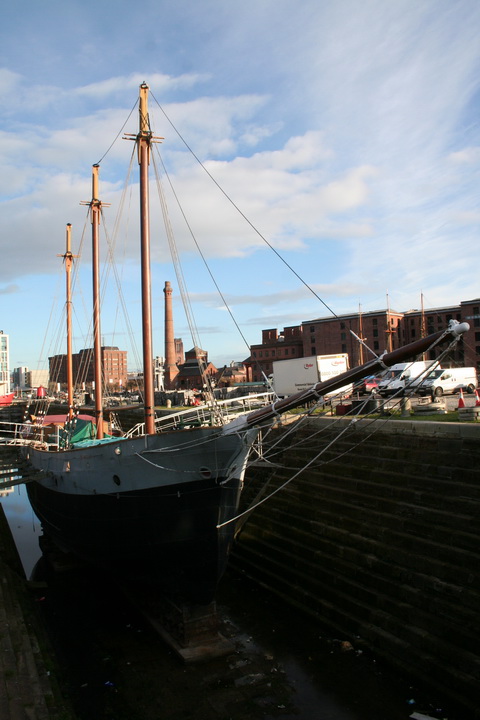
De Wadden

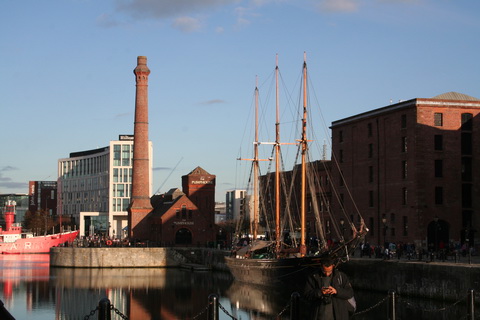
De Wadden formerly traded to the (Munster) Blackwater and is now displayed in a dry dock at Liverpool. I knew she was there, but I hadn’t known that the Kathleen & May, now on sale, was there too.

Kathleen & May

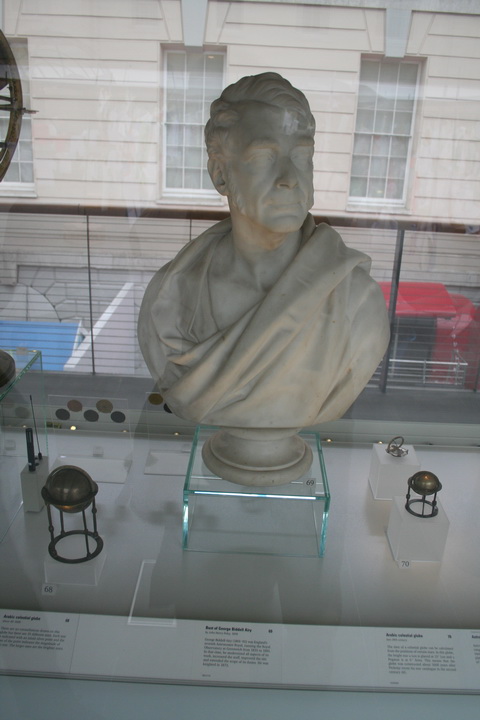
In Greenwich, I saw a bust of George Biddell Airy, late Astronomer Royal, whose work on the tides of the Shannon Estuary is of such great interest.

George Biddell Airy


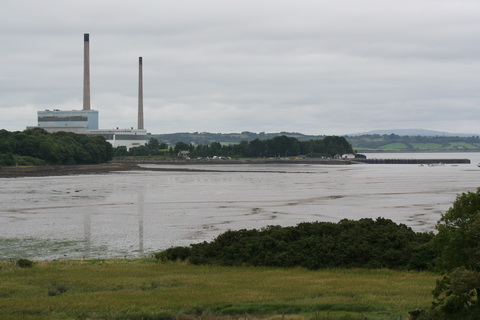
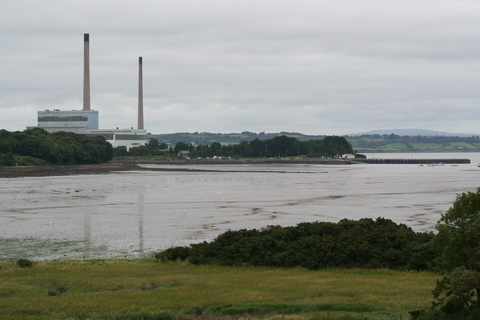
Forts, weirs, piers, power stations …

… just some of the things you can see from the Killimer to Tarbert ferry.

Actually, I lied about the weirs, but they were there once. As were the salmon.

Championing waterways heritage

O’Briensbridge, covered here on this site, makes the front page of the Clare Champion this week.

Pue’s Occurrences

I’ve had an article accepted at the history blog. It’s about the capstan at O’Briensbridge on the old Limerick Navigation and the trade it facilitated. There is more information about the technicalities on my own page about O’Briensbridge.

The Junction Navigation

Here are some pages about the Junction Navigation in the Ballinamore & Ballyconnell drainage district. It later became known as the Ballinamore & Ballyconnell Canal and later still as the Shannon–Erne Waterway.

The role of the cads and bounders of the Ulster Canal Company in getting a canal built at taxpayers’ expense

The construction of the Junction Navigation at Aghoo (Lock 4)

Lock gear old and new

And here’s a reminder of an old page about the Belturbet-built dredger used in constructing the navigation.

Garryowen and Dover Castle

In 1840 the rival steamers Dover Castle and Garryowen competed for traffic on the Shannon Estuary. While I know of no pictures of the steamers (if you know of any, please let me know), we have a reasonable amount of information about their operations. I discuss some aspects of those operations here. For an explanation of the page title, see here, but do not be diverted down this byway.

Not at all boring

A Shannon Commissioners quay that is not at all boring. Shipbuilding,
barges, mud: what’s not to like?

Diesel, gas, turf or battery?

The Irish Times tells us that Endesa, a Spanish company, intends to sell its Irish operations. They include two water-side sites, at Great Island in Co Wexford and Tarbert in Co Kerry, as well as a near miss in Rhode, Co Offaly, and a fourth in Co Mayo.

The Great Island power station on the Suir opposite Cheekpoint

The Irish Times says that Endesa had intended to change Great Island and Tarbert from diesel to natural gas. The Tarbert project received planning permission in December 2010; the Irish Times report was probably inaccurate in suggesting that a submarine cable from Tarbert would supply the ESB generating station at Moneypoint which, being a generating station, would be able to generate its own.

The old Tarbert power station

However, I had heard that Tarbert might have received its natural gas from the proposed storage plant at Ballylongford, near Saleen Pier whence Trinity College turf was sent to Limerick. A pipe from Tarbert might have supplied Moneypoint. I don’t think construction has yet begun.

The old Tarbert power station was built on the site of the Tarbert battery, the largest of the six Shannon estuary batteries and the only one to mount seven guns.


Ephemera 8: Tarbert

Tarbert Island

The Irish Times reports that:

AN BORD Pleanála has approved the application by Endesa Ireland, part of the Spanish energy company, to build a combined-cycle gas turbine power plant on the former ESB station at Tarbert, Co Kerry.

I presume that, when it says that “A submarine cable is to supply Moneypoint.” it means that a submarine pipe will do so: I imagine that the power station at Moneypoint is more likely to want gas than electricity from its rival across the estuary.

Tarbert is now the southern station for the ferries that cross the Shannon Estuary, but it has had a long history as an estuary port. Even before the first of the piers was built, Tarbert Roads provided a sheltered anchorage, and the estuary steamers adopted ingenious methods to get passengers and cargo from shore to steamer and vice versa.

Tarbert was also an important administrative centre and Tarbert Island (as was), which now houses piers and power station, had a Coast Guard station, a lighthouse, a signal mast and the largest of the six forts that guarded the Shannon Estuary. The ESB power station is built on the Ordnance Ground, right on top of the seven-gun battery, as you can see if you play with the Overlay feature on the Historic 6″ Ordnance Survey map.

Moneypoint had a large quarry; it may have been from there that Charles Wye Williams got the “marble” that he polished in the marble mill at Killaloe.

Saleen Pier at Ballylongford is covered here.

Killaloe to Limerick Docks via Ardnacrusha

Join the ex-Grand Canal Company motor-barge 68M on its trip from Killaloe to Limerick Docks, carrying barrels of stout for Dolan’s Pub. The trip marked two occasions: Arthur’s Day, the annual Guinness marketing opportunity, and the fiftieth anniversary of the last commercial cargo on the Grand Canal and the Shannon, which was a shipment of stout to Limerick.

This page provides a slide-show of 300 photos taken from 68M on its journey. If you can’t make the trip in person, do it this way.

Note that the page takes some time to load. And, even clicking through pretty fast, the show is likely to take at least ten minutes.

Click on the first photo to bring up the controls. If you have any problems with it, leave a Comment to let me know. I haven’t done this before. I may not be able to fix any problems, but I can at least look into them.