
As part of the tourism-oriented improvements at Dromineer, a new water feature is being tested.
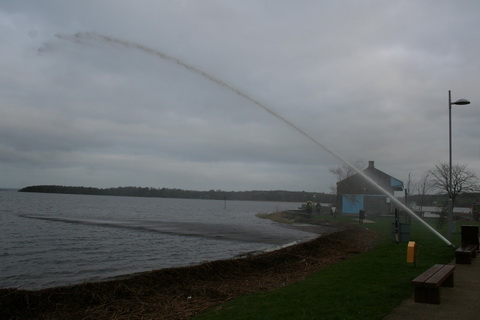
Dromineer water feature
As part of the tourism-oriented improvements at Dromineer, a new water feature is being tested.
Dromineer water feature
This morning, on the wireless, I heard two people opposing the use of fracking to find gas around Lough Allen in Co Leitrim. Neither of them was convincing. One started by objecting to big multinationals being given licences to investigate the resources available; it is not clear that there was any ban on small native companies or workers’ cooperatives (or soviets of workers, peasants and soldiers) applying for licences, and presumably they could use traditional Irish implements like sleans if they wanted to.
The general line of argument adopted by the objectors was that anything that could go wrong would go wrong, probably all at the same time, wiping out the whole of Irish agriculture (some of which is not in Leitrim) and, er, eco-tourism. There would, the objectors seemed to suggest, be no preventive or mitigating measures and no insurance and the full cost of every accident would be borne by the residents of the area.
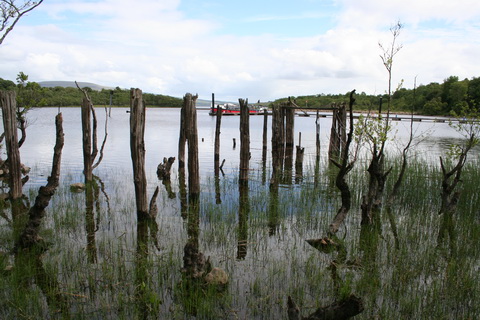
Remains of a pier at the brickworks, Spencer Harbour, Lough Allen
But the bit that really annoyed me was the depiction of the area as one of rural seclusion. Yet Lough Allen had canals, railways, coal mines, dams, iron works and brick works.
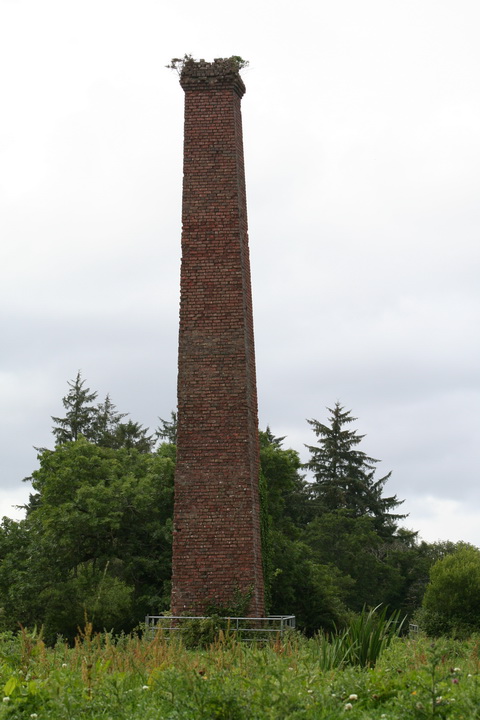
Spencer Harbour on Lough Allen
The very canal linking Lough Allen to the
rest of the Shannon Navigation owes its very existence to the desire
to carry coal from around Lough Allen to Dublin. And one of the most best tourism initiatives in the area, the Arigna Mining Experience, recognises that heritage.
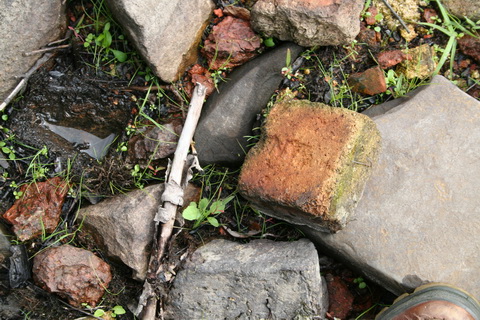
Part of a brick
Insist on proper assessment and management of risk by all means, but don’t exaggerate it — and don’t ignore Leitrim’s industrial heritage.
Posted in Ashore, Built heritage, Economic activities, Engineering and construction, Extant waterways, Industrial heritage, Ireland, Irish waterways general, Natural heritage, Non-waterway, Operations, People, Politics, Rail, Scenery, Shannon, The turf trade, Tourism, Water sports activities, waterways, Waterways management, Weather
Tagged Arigna, boats, bricks, canal, Clare, coal, dam, ESB, fracking, gas, industry, Ireland, iron, jetties, lock, Lough Allen, Operations, Shannon, Spencer Harbour, vessels, waterways, workboat
News reaches us that the fisheries folk, who were threatening to block the Suir (Carrick to Clonmel) navigation with a weir so that they could count fish, have removed the material they had put on site without planning permission. Let joy be unconfined (but let not vigilance be relaxed).
Posted in Ashore, Economic activities, Engineering and construction, Extant waterways, Industrial heritage, Ireland, Irish waterways general, Operations, Politics, Restoration and rebuilding, Suir, The fishing trade, Tourism, waterways
Tagged boats, canoe pass, Carrick-on-Suir, Clonmel, fish, fisheries, flow, Ireland, salmon, Suir, vessels, waterways, weir
The Kildare Archaeological Society’s programme for 2012 is available on the Co. Kildare Online Electronic History Journal website (which, incidentally, has a useful RSS feed). Its Heritage Week outing in August 2012 is waterway-based:
Sunday 26th August, 3.00 pm – Heritage Week Outing
Robertstown, the Grand Canal and Lowtown Lock
Guided walk by Karen Gorey.
Meet at the Holiday village Car Park, Robertstown. No Charge.
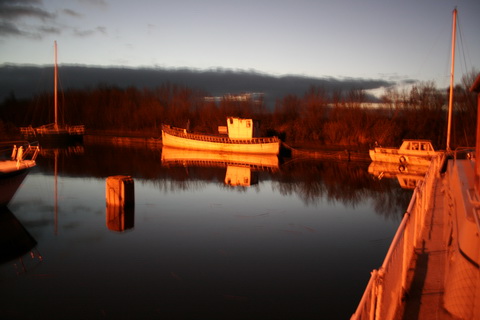
Dromaan at night (December 2011)
Posted in Extant waterways, Ireland, Irish waterways general, Natural heritage, Scenery, Shannon, waterways, Weather
Tagged boats, Clare, Dromaan, Ireland, Lough Derg, night, Shannon, weather
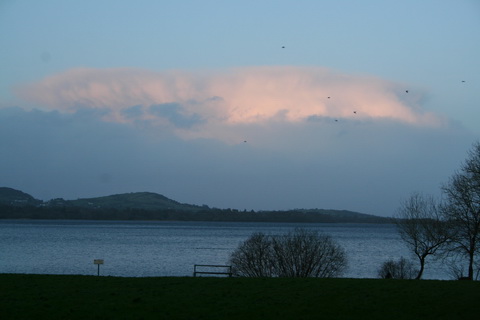
From Twomilegate December 2011
Posted in Ashore, Extant waterways, Ireland, Irish waterways general, Natural heritage, Scenery, Shannon, waterways, Weather
Tagged birds, Ireland, Lough Derg, Shannon, sky, Twomilegate, waterways, winter
Posted in Ashore, Extant waterways, Ireland, Irish waterways general, People, waterways, Waterways management
Tagged Barrow, bridge, canal, Grand Canal, Ireland, waterways
The next time some idiot politician curries favour by promising special tax breaks for some favoured area, just mention the Upper Shannon Renewal Scheme. I mentioned before that IrelandAfterNama had covered it; now NamaWineLake, one of the best sites covering the wreckage of the Irish property market, has pointed to the evidence provided by the returns of stamp duty on property sales in 2010. Counties Leitrim and Longford — both covered by the scheme — each paid only €600,000 in stamp duty in 2010:
Practically nothing was sold in Longford and Leitrim which recorded the lowest stamp duty receipts of €0.6m apiece. If the receipts were all for residential property and the average transaction price was €200,000 then that would mean about 100 homes were sold in 2010 in each county.
So as well as spoiling the scenery by cluttering the place with colonies of white houses for white settlers, the scheme has also ruined the property market for the natives. Anyone needing to sell a house, perhaps to move in pursuit of employment, will find it more difficult to sell.
Jimmy Deenihan TD, Minister for Arts, Heritage and the Gaeltacht, in the Dáil debate on Financial Resolution No. 13: General on 7 December 2011:
Turning to North-South co-operation, I am committed to developing such co-operation within the broader arts, heritage and commemorative activities of my Department, as well as through the funding of the North-South bodies that come under the aegis of my Department. Provision of €42.718 million has been made in 2012 to support the two North-South implementation bodies, An Foras Teanga, comprising Foras na Gaeilge and the Ulster Scots Agency, and Waterways Ireland. These budgets will be subject to the approval of the North-South Ministerial Council in due course. It is envisaged savings will be achieved through efficiencies and increased focus on front-line services. The Minister of State will speak about An Foras Teanga but for Waterways Ireland the proposed breakdown for the 2012 allocation for this area is a provision of €22.59 million in current funding and capital funding of €4.5 million. This allocation will facilitate the ongoing maintenance and restoration of Ireland’s inland waterways, thereby increasing recreational access along routes and waterways. This expenditure will also assist in attracting increased numbers of overseas visitors and in stimulating business and regeneration in these areas.
I wonder what “commemorative” means in this context.
Posted in Ashore, Economic activities, Engineering and construction, Extant waterways, Foreign parts, Industrial heritage, Ireland, Irish waterways general, Operations, People, Politics, Restoration and rebuilding, Sources, Tourism, Ulster Canal, waterways, Waterways management
Tagged Clones, department of arts heritage and the gaeltacht, Ireland, Ulster Canal, waterways, Waterways Ireland
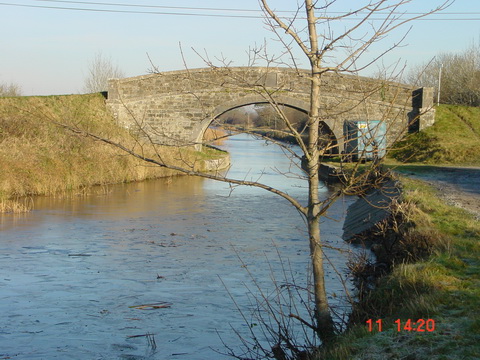

 Irish waterways history