Category Archives: Ireland

Riverfest in Limerick

Riverfest is an annual, er, happening in Limerick. I don’t know much about it: I’ve never been because I dislike both crowds and festivals and it would take something remarkably interesting to outweigh my dislike and persuade me to attend any part of the thing. I took notice of this year’s event only because I wanted to find out what streets would be closed to traffic; the festival organisers did not, alas, think to provide a map showing the closures.

I have only two other comments on the event:

  • the brochure [PDF] mentions a workshop called “Craft a River” but doesn’t say what, or indeed where, it is
  • in a city whose history is so intertwined with that of the food industry, and which has, in the Milk Market, the best Irish market outside Cork, it seems ludicrous to import a “continental market” instead of showcasing local producers.

But I acknowledge that I am not really entitled to comment; Brian Leddin, on the other hand, has a better informed view.

William P O’Brien

On 18 July 1975 the Irish Department of Education wrote to William P O’Brien, of 17 Victoria Street, Armagh, asking him to set the exam paper for the Intermediate Certificate French exam of 1977. He was offered a fee of £38.50 for setting the paper, consultation and revision and correcting the proofs. He posted the paper to the department on 31 July and received an acknowledgement on 5 August 1975.

Mr O’Brien was a member of the Thomond Archaeological Society and, on 6 December 1975, paid it £5.50 in a cheque drawn on his account with the Bank of Ireland in Armagh.

Some day, somebody may want to know that.

Hurrah for the red, white and orange

Colour discrimination seems to be rampant in Ireland. Of the sets of colours [red, white and blue] and [green, white and orange], there is Official Endorsement of two, green and blue, while red, white and orange are ignored. Even the North/South Ministerial Council has got in on the act, with a whole page on its website about greenways and blueways. They must have been overdosing on the Erne flag. Their page is a list of links, sort of plonked there without context or explanation, but there’s probably some hands-across-the-borderism or something going on.

I read in the Guardian today of a proposal for a greenway on the former railway line between Roscrea and Portumna via Birr. And a jolly good thing too, but how many greenways and blueways can one small island accommodate? How thinly will the tourists be spread? And what about those of us who hate walking, cycling, kayaking and other such energetic pursuits?

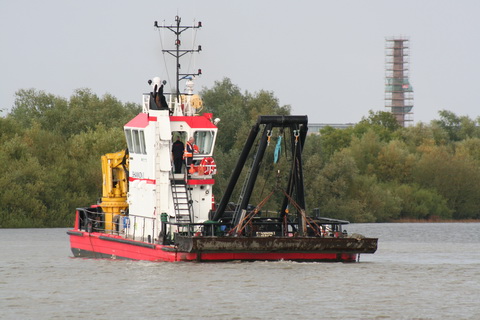
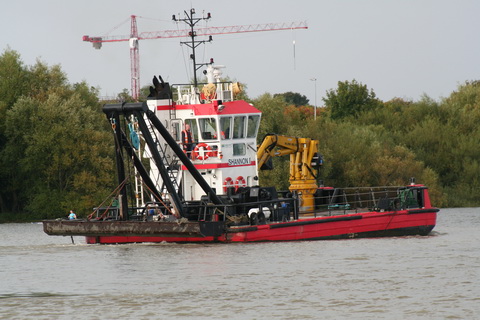
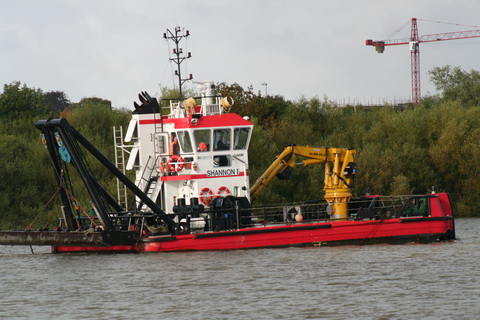
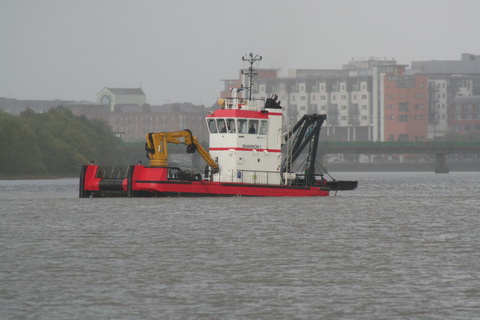
The Shannon One

Copy of IMG_4546_resize

Heading down the estuary past Shannon Airport

Limerick Port dredger Shannon I 3_resize

Working in Limerick

Limerick Port dredger Shannon I 4_resize

Almost as much kit as WI’s Swiss Army Knife

Limerick Port dredger Shannon I 5_resize

The big crane, though, is not part of the kit

Limerick Port dredger Shannon I 7_resize

Great view from the cab … er, wheelhouse

Limerick Port dredger Shannon I 11_resize

Pusher bow?

Limerick Port dredger Shannon I 1_resize

Limerick in the background

Limerick Port old dredger Curraghgour II 3_resize

Shannon 1’s predecessor Curraghgour II


Races on Lough Erne

To the Editor of the Erne Packet

Me Editor — The stir visible amongst the seamen of the Lake, assures a most interesting contest. Four new boats are to enter the lists — their prowess will best prove the merit of those which have on former occasions been exhibited.

To the amateur, the scene cannot fail of proving most interesting, as well from the unrivalled beauty of the sailing ground, as from the superiority of the boats, some of which, built on the Thames, are considered to be superior to any other vessels of any size, for lake sailing.

The mariners of Donegal Bay will not, it is to be hoped, sleep on their oars; if rumour is to be credited, they are not to yield the palm so easily as they did last year. Four boats besides those already mentioned, are reported to be in readiness to invade the lake, from the sea, to assert the superiority of the Donegalian over his fresh-water competitor.

Some experiments are to be tried upon scientific principles,where lightness of draught of water, and form, altogether differing from what, for centuries, has been in use, are to be put into competition with bulk and beam. The well established speed of the Lough Erne cot is also to be tried, a boat being in preparation; these rivals to be pulled by Gentlemen of the lake. Great confidence is expressed by the owners, and any money for hands with good beam and bottom. NB — Dandies not admitted.

To cheer the toils of the seamen, two Balls are in contemplation, where all the rank and fashion of a wide extended country have engaged to attend. A very distinguished party from London, òn a visit to the Lakes and Bundoran, will also be present, and gratify the eye, as they have already done the mind’s eye of most of us.

Besides the beauty of the Lakes, much speculation exists to account for their visit, whether an examination into the minerals and collieries of the neighbourhood, or the general capabilities of Lough Erne, an extension of the navigation, and perhaps a decision of a question which has long barred up our Lake; the choice between a canal to Lough Neagh and Belfast, or one from Ballyshannon. In giving information to these sagacious explorers, Gentlemen will do well to bear in mind, that their evidence should be divested of any private favour, for should it be found to contain more affinity for party purposes than the general object, the benefit of the country, it will instantly, and perhaps not civilly, be rejected as unfit matter to enter into such an important digest.

NOTUS

Enniskillen Chronicle and Erne Packet
12 August 1824

Backtracking the Barrow trackway

Some time ago I put up a page about the Barrow trackway [towing-path]. For some reason, the page disappeared shortly afterwards. I have now recreated it; unless or until it disappears again, it is here.

Momentous day on the Ulster Canal

The day work finally began on the Ulster Canal, after many years of planning and consideration. The opening ceremony was attended by many of the local gentry; the royal standard was hoisted, a 21-gun salute was fired, hundreds of people had turned up to see it and “the country people were liberally supplied with ale”. That evening, those most involved dined together in Caledon with toasts to the king, to the queen and the rest of the royal family and to the army and navy.

I suppose that similar festivities would attend the start of work on any canal nowadays, but that was back in 1835, and the canal was the real Ulster Canal.

Theft on Lough Ree …

… in the National Archives of Ireland May 2015 document of the month.

Portland House

Portland House from the Shannon

Chimneys of Portland House seen from the Shannon

Here is a good article about the destruction of Portland House, just upstream of Portumna on the east bank of the Shannon, by ruffians in 1938.

The Boyne’s turf-sided lock

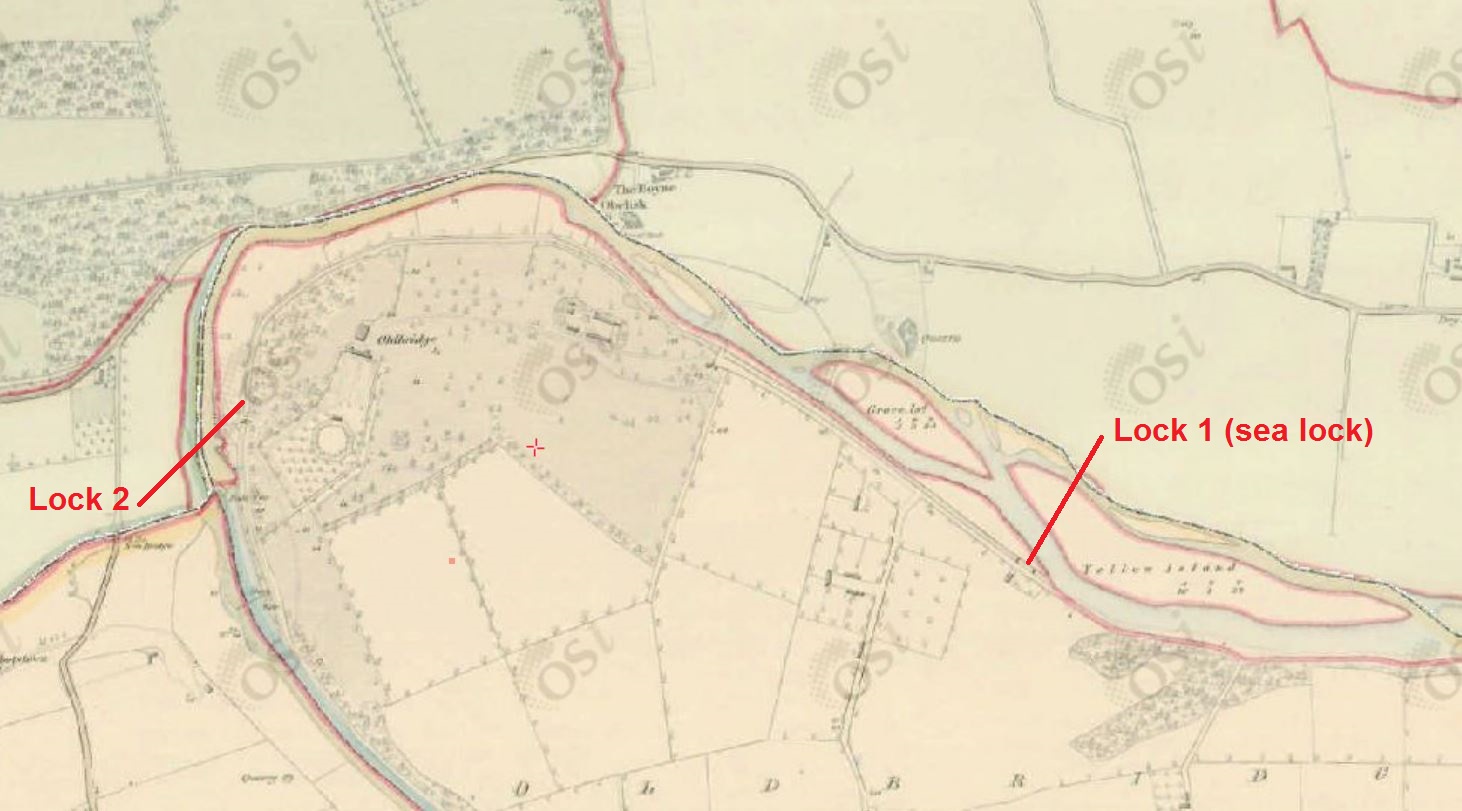
I have a vague recollection of being told that there was no evidence that the turf-sided Lock 2, Oldbridge Guard Lock, on the Boyne Navigation was ever fitted with gates. Or perhaps it was that only a single pair was fitted and that the lock did not operate as a lock.
Boyne Locks 1 & 2 (OSI ~1840)

Boyne Locks 1 & 2 (OSI ~1840)

I’m not clear about what I was told but I recall feeling somewhat surprised, given that the lock has stone buttresses at both ends that could have been fitted with gates.
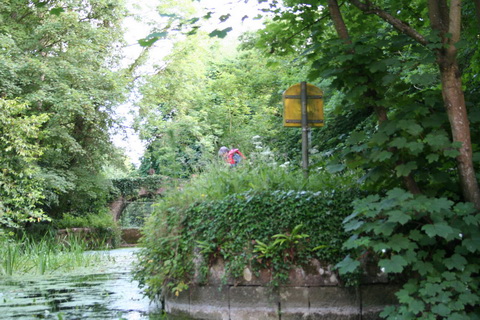
Gate buttresses of turf lock 01_resize_resize

Looking up into the lock past the lower stone buttresses

I should point out that my photos were taken in 2008; much more work has been done since then.
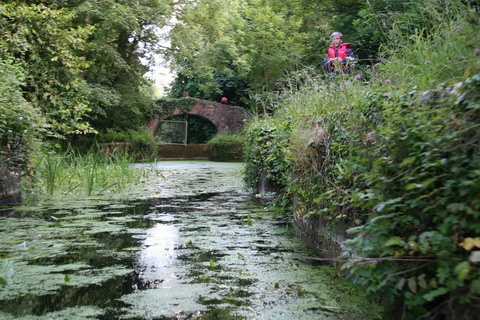
Gate buttresses of turf lock 02_resize_resize

Both sets of buttresses and the bridge
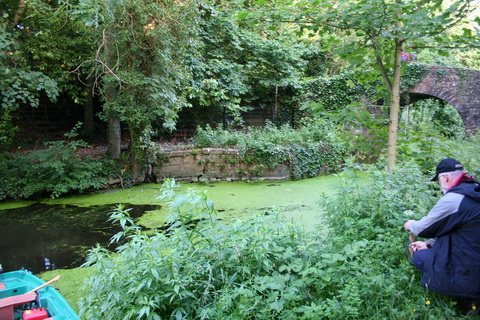
Gate buttresses of turf lock 03_resize_resize

The upper buttresses

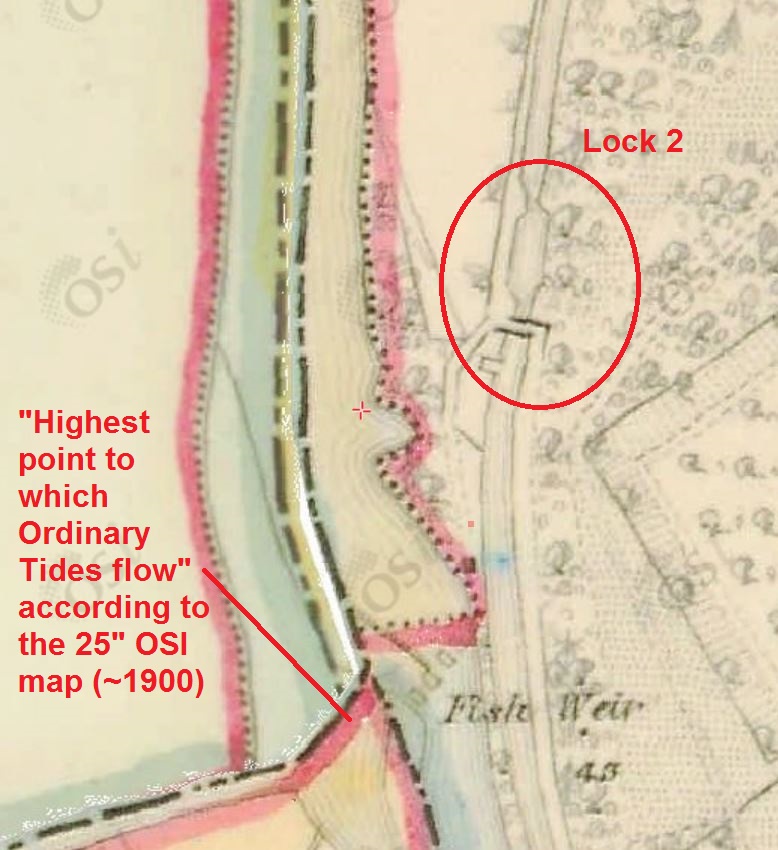
Yet it is true that the 6″ Ordnance Survey map, from around 1840, does not show gates on the lock.
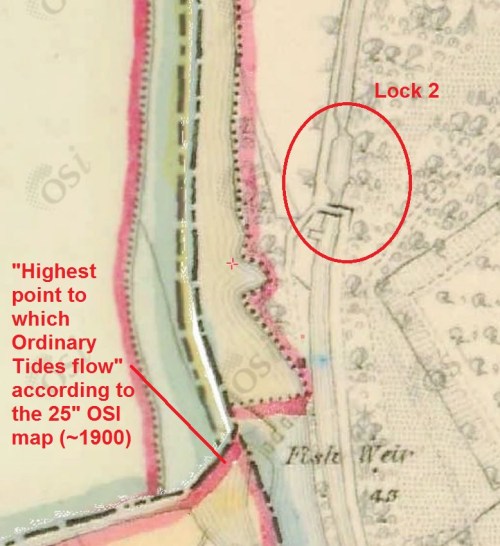
Oldbridge Guard Lock (Lock 2) (OSI ~1840)

Oldbridge Guard Lock (Lock 2) (OSI ~1840)

Unfortunately the relevant section of the 25″ OSI map, from around 1900, is blank at time of writing so I can’t check what it shows.
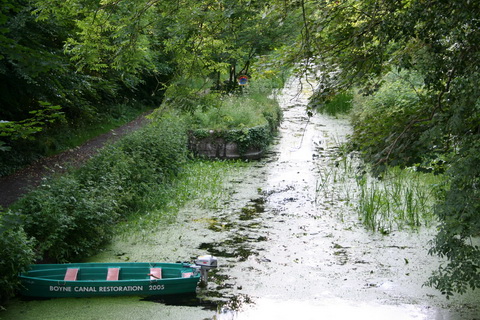
The turf-sided lock on the Boyne

The turf-sided lock on the Boyne

The IWAI Boyne Navigation Branch is currently (March 2015) working towards the installation of gates at the lock but I don’t know whether they’re installing one pair or two pairs.

From reading the reports of the Superintendent for the Boyne Navigation, it is clear that, for at least some part of the period while the navigation was controlled by the Board of [Public] Works, the lock had both top and bottom (breast and tail) gates. Here are some relevant extracts from the reports; I’ve given only enough to make the point.

In January 1869 James Bellew, Superintendent, reported on the works carried out on the Boyne Navigation in 1868. His report, published in the Thirty-seventh Report from the Board of Public Works, Ireland: with the Appendices, for the year 1868 [Alexander Thom for HMSO, Dublin 1869], included this:

Oldbridge Station.

The lock-gates at this station are in excellend working order. The chimney of the lock-keeper’s house has been rebuilt, and some alterations made in the house to render it more comfortable. The guard lock-gates are old, but as they are used only in time of flood, I am of opinion they will last some time longer.

In March 1871, his successor, P J Dodd, wrote in the Thirty-ninth Report:

Oldbridge Guard-lock gates.

The Oldbridge Guard-lock gates are in a very bad state of repair, but new breast gates have been ordered, the contractors have same in hands, and they will be erected during the coming fine season.

And in March 1873 Dodd wrote in the Forty-first Report:

Oldbridge Guard-lock Gates.

The new breast gates of guard-lock [sic] have acted well during the year and heavy flood season, and are in a first class state at present; the tail gates, although old and shaken, are in fair working order, and did very well during the year.

In March 1877 he wrote in the Forty-fifth Report:

Oldbridge Guard Lock-gates.

The breast gates are in very good order; but the tail gates are somewhat shaken, being old.

The gates were tarred in 1878 (Forty-seventh Report); the tail gates had “a slight repair” in 1878 (Forty-eighth Report) and, in April 1881 (Forty-ninth Report), Dodd reported that

These [guard lock] gates require some repairs to sluices and also to the sheeting.

In March 1882 (Fiftieth Report) Dodd wrote:

Oldbridge Guard Locks.

The breast gates are in good repair, tail gates require two new cross rails, sheeting for both folds, and one new balance beam and handrails for both gates.

I do not, of course, know whether there were two pairs of gates at other times.

My OSI logo and permit number for website