Category Archives: People

Some new things arise

First, I’ve checked all the linked sites listed at the bottom of the right-hand column and removed some that have died. If you know of others to which I should provide a link, do please let me know.

Second, I’ve added a link to the excellent Grace’s Guide to British Industrial History, and I take the opportunity to draw it to the attention of folk interested in who made what. I have received much useful information from its volunteers and I have been able to contribute photos of a few artefacts. It’s well worth exploring. I have also added a link to the Railway and Canal Historical Society.

Third, I am glad to see that the Irish Times‘s conversion to the benefits of civilisation continues: yesterday it featured an Intel Pentium chip from 1994, which provided the basis for an essay on Ken Whitaker’s 1950s report, globalisation, television, women, Northern Ireland and Viagra. If only some more of the nineteenth century industrialists, entrepreneurs, engineers and modernisers had been covered.

That, fourth, reminds me that I came across a couple of interesting articles by Roy Johnston on the Victorian Web site: they’re under the heading Science, Technology, and Politics, on this page, which has several articles about Ireland. They include articles on whether Ireland was a colony, although I must confess that I have yet to be persuaded that that is a question in which I should take an interest.


Foreign parts

News of barge traffic on the Mississippi, a river in the United States of America, and of a floating hostel in Britain.

The Rideau Canal

The Cedar Lounge Revolution has an article about those who worked on the construction of the Rideau Canal in Canada in the 1820s and 1830s. Readers will, of course, recall that Charles Wye Williams compared the Rideau and the Shannon in his 1835 […] speech on the improvement of the Shannon: being in continuation of the debate in the House of Commons, 12th May, 1835, giving a comparative view of the navigation of the Rideau Canal, in Canada, and the River Shannon in Ireland, with observations on the value of a connection by steam packets, with British America.

SESIFP

Read about the draft Strategic Integrated Framework Plan (SIFP) for the Shannon Estuary here. You can comment on it up to 15 February 2013.

Tinarana

According to the Sindo Tinarana House on Lough Derg has been sold.

Errina Bridge

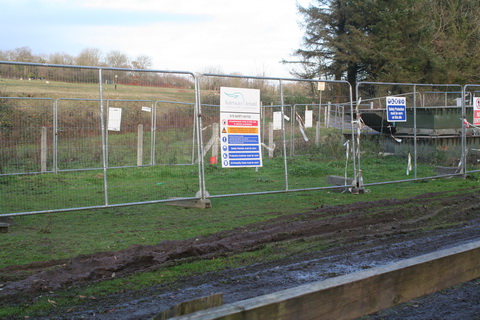
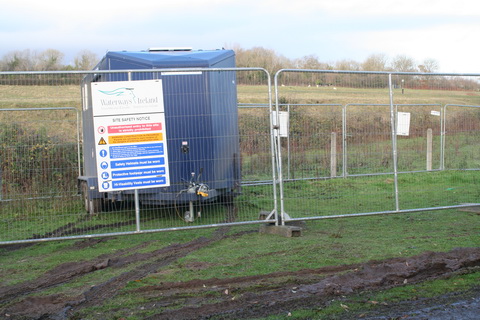
I remarked in November 2012 that Waterways Ireland had parked a canteen trailer and some pontoons at Errina Bridge, the uppermost bridge on the Plassey–Errina Canal, which is part of the old Limerick Navigation.

WI pontoons

WI pontoons

WI canteen

WI canteen

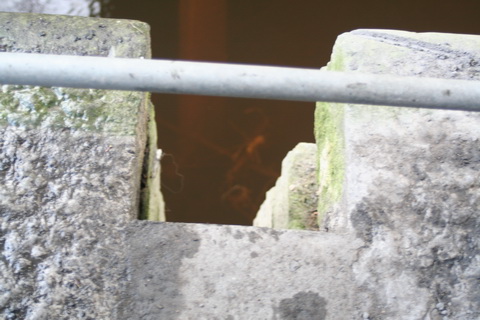
I wondered what was to be done; I noted that a stone at the top of one of the stop-plank grooves under the bridge had been removed (the stone on the far side was removed some time ago).

So I asked Waterways Ireland what was happening. They said:

The works in Clonlara are Flood relief works to protect Errina Lock from catastrophic failure. After the flooding in 2009, during which the dam in Errina Lock was overtopped by approximately 0.5 metres, it was decided to protect it from this happening again.

It has happened before too: in February 1809 the lock was destroyed by floods when heavy snows melted.

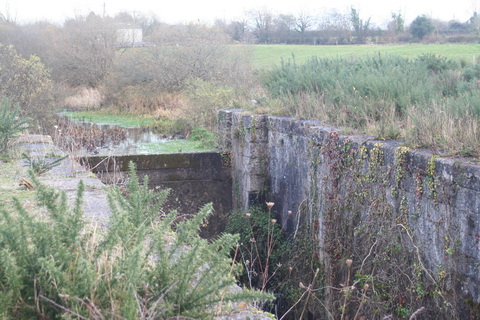
Errina Lock (looking upstream)

Errina Lock (looking upstream)

I asked WI about the nature of the works. They said:

Stop logs are to be put into the grooves under the bridge forming a dam with the same size opening as that in the concrete dam in Errina Lock. As for the stone which is removed to facilitate the installation of the timbers, this will be replaced once the timbers are in place.

That is good to know.

Errina Bridge stop-plank grooves (towing-path side, with uppermost stone removed)

Errina Bridge stop-plank grooves (towing-path side, with uppermost stone removed)

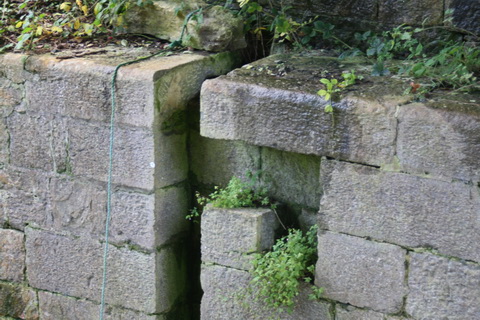
Errina Bridge stop-plank grooves (off side)

Errina Bridge stop-plank grooves (off side)

An authority on waterways has suggested that the curious shape of the grooves was designed to allow planks to be inserted from boats rather than from land.


An abandoned section of the Royal Canal

Here is a page about a plan to route the Royal Canal through Kinnegad.

No Heritage Council grants this year

Heritage Council Grant Programme Suspended for 2013:

In 2012 the Heritage Council was in a position to allocate €1.4 million to 273 public projects across Ireland supporting jobs and improving the quality of our tourism product now and for the long term. Regrettably, due to additional budget cuts from the Dept. of Arts, Heritage & the Gaeltacht for 2013, the Heritage Council will not be in a position to advertise grants for the coming year. This is the first time since the Heritage Council was established in 1997 that it will be unable to allocate funding for the wider heritage sector and we will be working to see that this situation is reversed for 2014.

Core aspects of our national heritage infrastructure, including the Heritage Officer Programme, the Irish Walled Towns Network (IWTN), the Irish Landmark Trust, and the National Biodiversity Data Centre (NBDC) will continue to receive some level of support. Funding for the 2012/13 REPS4 Traditional Farm Buildings Grant Scheme, which is funded by the Dept. of Argiculture, Food & the Marine will not been affected.

The Council had conducted a strenuous and successful campaign to ensure its own survival, as I noted back in November.

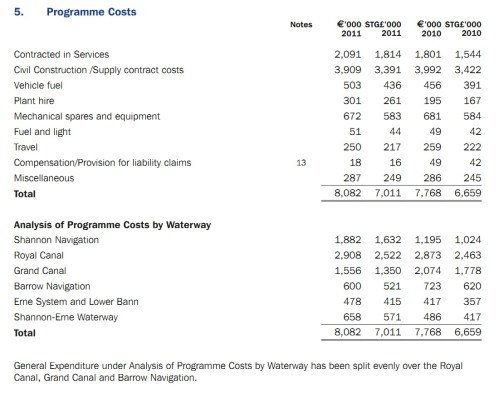
WI programme costs

From WI's annual report for 2011

From WI’s annual report for 2011

Note that programme costs do not include staff costs, as the income and expenditure account for y/e 31 December 2011 makes clear.

From WI's annual report for 2011

From WI’s annual report for 2011

The most startling thing in the programme costs is that Shannon costs have increased 57% while Grand Canal costs have decreased by 25%. I presume that the change is in the Civil Construction/Supply contract costs, as the other items don’t seem to have enough scope for such large changes. It would be interesting to know what the contracts were. The accounts of Grand Canal improvements on pages 12 and 16 don’t suggest any diminution in activity, although they are not specific enough to be definitive; the account for the Shannon on page 17 mention some new undertakings, of which the most significant was perhaps the new mooring at Killaloe, whereof the Chief Executive said in the Foreword:

From WI's annual report for 2011

From WI’s annual report for 2011

And so, I’m sure, say all of us.

But wouldn’t that be a capital cost? I can’t work out how the income and expenditure figures link to the activities covered in the descriptions of achievements.

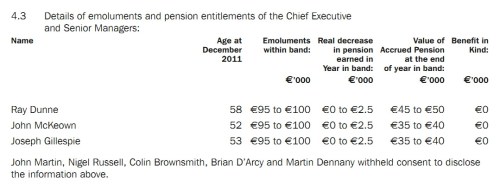
WI’s shy leaders

From WI's annual report for 2011

From WI’s annual report for 2011