
Limerick Leader story here.
I have found nothing relevant in the British Newspaper Archive between 1 January 1900 and 31 December 1910, but I may have used the wrong search terms.
Limerick Leader story here.
I have found nothing relevant in the British Newspaper Archive between 1 January 1900 and 31 December 1910, but I may have used the wrong search terms.
John William White was captain of the steamer Dover Castle on the Shannon Estuary when it was owned by the Limerick Shipping Company. However, after the steamer was bought by the City of Dublin Steam Packet Company in 1841, his employment ceased. He became instead captain of a small schooner called Native, owned by Francis Spaight of Limerick and employed on the Limerick–London route. Here is the story of what happened to the Native and to Captain White.
Posted in Charles Wye Williams, Economic activities, Engineering and construction, Extant waterways, Foreign parts, Historical matters, Ireland, Irish inland waterways vessels, Operations, People, Sea, Shannon, shannon estuary, Sources, Steamers, The grain trade, waterways, Weather
Tagged Dover Castle, Francis Spaight, gales, Isle of Wight, John William White, Joseph Younghusband, Motherbank, Native, Ryde, Tasmania, tea, transportation
Some of the boatmen of Carrick-on-suir burned a new boat to the water’s edge, on Monday last, as it was made contrary to the rules of the body, that no boat should be built except an old one was broken up. Informations have been taken.
Clare Journal, and Ennis Advertiser
24 August 1843

Here is a piece about the Aaron Manby, the first iron steamer to make a sea voyage, and its links to Irish inland waterways transport.
The piece was first published in the rally magazine of the Inland Waterways Association of Ireland Lough Derg Branch in July 2017.
Posted in Charles Wye Williams, Economic activities, Engineering and construction, Extant waterways, Foreign parts, Historical matters, Industrial heritage, Ireland, Irish inland waterways vessels, Operations, Passenger traffic, People, Sea, Shannon, shannon estuary, Sources, Steamers, The cattle trade, Tourism, waterways, Waterways management
Tagged Aaron Manby, Charles Napier, Charles Wye Williams, Irish Sea, iron, John Grantham, John Oldham, Liverpool, Shannon, steam
The current issue of the Railway & Canal Historical Society‘s Journal contains an article on the sinking of the passage boat Longford on the Royal Canal in 1845 and the fifteen deaths that resulted. The story has also been told here, starting from this page.
No need for horses or mules. Those Volga chaps were clearly wimps.
I note that Mr “Savkin dedicated his incredible achievement to Russian President Vladimir Putin”, the Leader of the Free World.
Posted in Foreign parts, Operations, People
Richard North (the knowledgeable Brexiteer) says:
Observing the more than usually lugubrious Prince Charles alongside his mother, yesterday, one could only marvel at the Queen’s modernity in celebrating “bring your child to work” day.
Pic at the link.
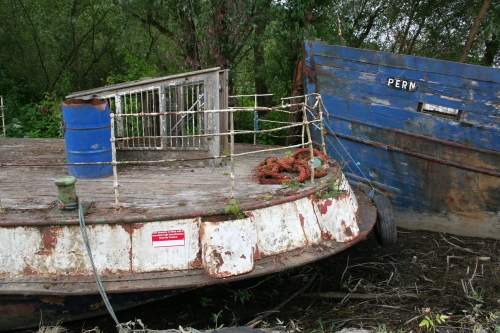
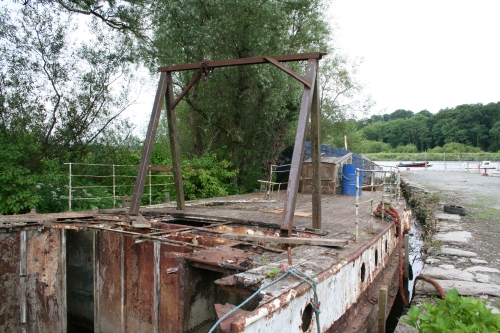
According to the Heritage Boat Association, the steamer Ferry King was built in 1918 by Camper and Nicholson and operated by the Gosport and Portsea Steam Launch Association until 1955. It was then sold to the Solent Boating Company, fitted with a Gardner diesel and renamed Solent Queen. In 1985 it was sold to Waterford owners, renamed Crystal Rose and operated as a cruising bar and disco on the Barrow, Nore and Suir estuaries. Grounded and abandoned some time later, it was bought in 2005 and berthed at Ballinagoth Quay on the River Nore, where restoration work began.
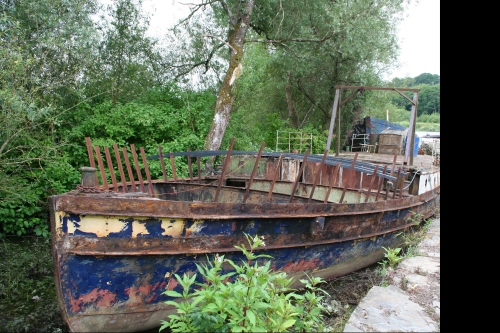
Ferry King in 2009: view from the bow
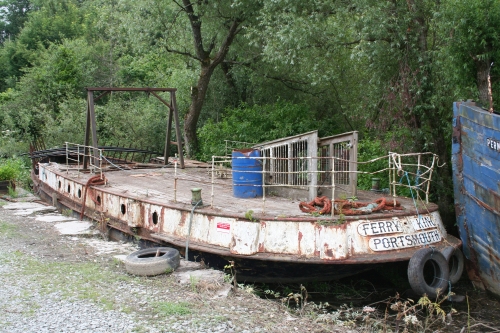
Ferry King in 2009: view from the stern
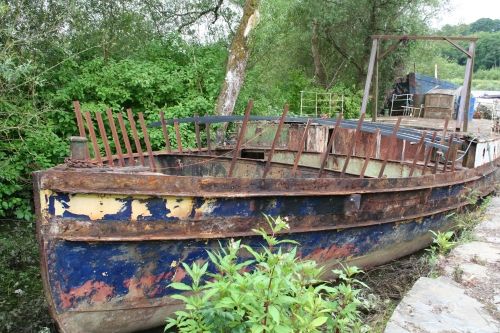
Ferry King in 2009: steelwork in progress
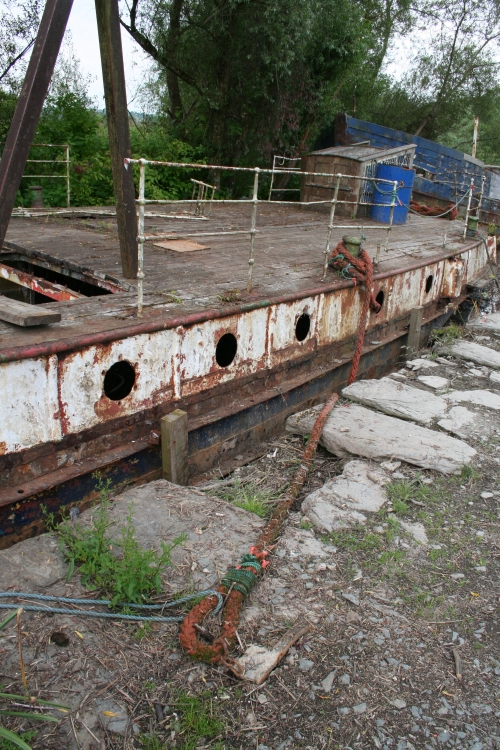
Ferry King in 2009: portholes
Ferry King in 2009: stern
Ferry King in 2009: rear deck
On 18 April 2017, Kilkenny County Council published this notice:
Notice of Intention to Remove and Dispose of a Wreck situated at Ballinagoth Quay, Ballinagoth, County Kilkenny0
KILKENNY COUNTY COUNCIL
Section 52 Merchant Shipping (Salvage and Wreck) Act 1993
NOTICE OF INTENTION TO REMOVE AND DISPOSE OF A WRECK
Re:- “The Ferry King”, situated at Ballinagoth Quay, Ballinagoth, County Kilkenny.
WHEREAS: Kilkenny County Council is the local authority for the County of Kilkenny (hereinafter called “The Council”)
AND WHEREAS: There is located at Ballinagoth Quay, Ballinagoth, County Kilkenny a vessel known as “The Ferry King” (hereinafter called “the Wreck”) which the Council is of the view constitutes a wreck for the purpose of the Merchant Shipping (Salvage and Wreck) Act 1993 (hereinafter called “the Act”)
AND WHEREAS: The Council is of the opinion that the Wreck constitutes a threat of harm to the marine environment or to related interests (as defined in the Act)
NOW TAKE NOTICE that the Council, after the lapse of thirty days from the date of this Notice, intend to take, do the following:
- Take possession of the Wreck and remove the Wreck from Ballinagoth Quay,
- Sell or otherwise dispose of the Wreck,
- Retain out of the proceeds of sale the expenses incurred by the Council in relation to the removal of the Wreck.
Dated this 18th day of April 2017
Tim Butler
———————————————–
For and on behalf of Kilkenny County Council
County Hall,
John Street,
Kilkenny.
According to the Kilkenny People,
‘The Ferry King’ is in poor condition and has remained at the quay for more than a decade now. Local councillor Michael Doyle has raised the issue on a number of occasions, saying that the vessel had become unsightly, as well as a health and safety problem.
The article linked within that quotation did not mention either Ballinagoth or Ferry King, so it may be about a different vessel.
I asked Kilkenny County Council whether the vessel was actually removed 30 days after 18 April. I was told that letters have gone out today seeking tenders for its removal, so Ferry King is still there.
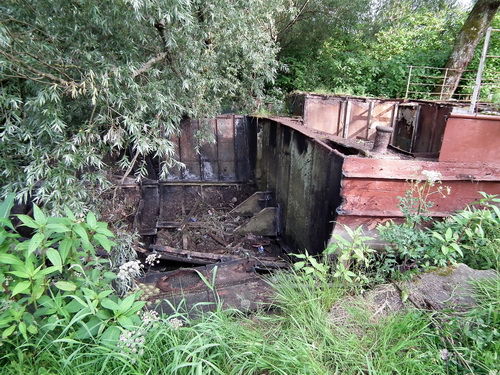
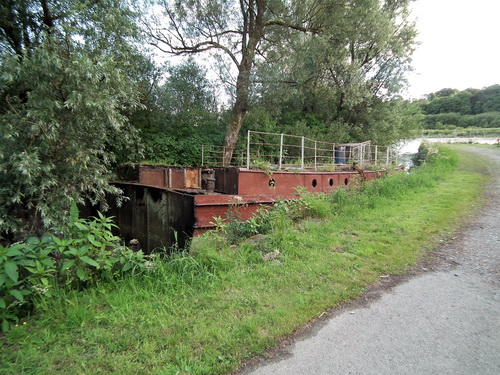
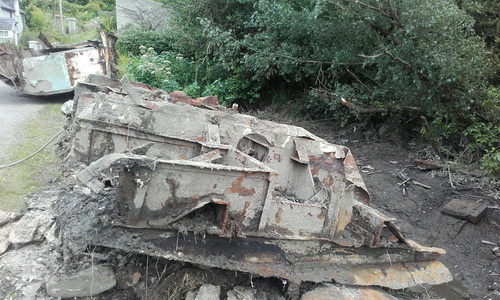
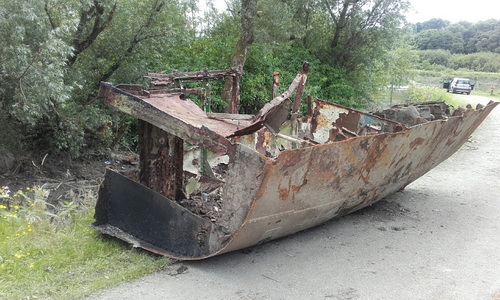
By 8 August (see Ted’s comment below) Ferry King had been cut up and removed and
A steel structure has been placed at the river end of the inlet to prevent any other large vessel occupying the berth in which she lay.
Here are some photos courtesy of John Dimond, who owns the copyright on them [(c) John Dimond 2017].
Posted in Ashore, Engineering and construction, Extant waterways, Foreign parts, Forgotten navigations, Historical matters, Ireland, Irish inland waterways vessels, Modern matters, Operations, Passenger traffic, People, Politics, Restoration and rebuilding, waterways, Waterways management
Tagged Ballinagoth, Barrow, Crystal Rose, Ferry King, heritage boat, Inistiogue, Kilkenny County Council, Nore, Rathsnagadan, Solent Queen, Suir, Waterford

 Irish waterways history