Category Archives: shannon estuary

A problem in trigonometry

I mentioned the other day that extensive searches of tinterweb had failed to find any data on the heights of overhead power lines above the Shannon and that I had been forced to resort to the telephone.

I am pleased to report that the ESB expert duly rang me back today, and further pleased to report that he had himself measured the height of every cable over the Shannon. Oh joy, oh happiness, I thought. But not for long.

The ESB, it seems, does not reveal the actual height of power lines above the water. This, if I understood the reasoning correctly, is because the water level varies and a boat-owner might not understand that, hit a line with a mast and then sue the ESB [where “ESB” means “electricity transmission or distribution operation”]. I have been told that a boat-owner in coastal water did just that (presumably between the mainland and an island) and that the lawyers have advised ESB to take no further risk; I would welcome information about the incident.

So, if you want to find the height of a power line, you’ll need to polish up your trigonometry (and then relate the height to Ordinary Summer Level). But the ESB does supply the information to one organisation that makes charts: the United Kingdom Hydrographic Office. That’s OK for coastal charts, but the UKHO (to the best of my knowledge) has not surveyed the inland Shannon since 1839, and I don’t think its inland charts have been updated since then. It is possible, of course, that the UKHO supplies the data to other (electronic or paper) chart-makers; I have emailed them to ask.

The quest continues again. More info when I get it.
The surprising importance of the Shannon steamers in the 1830s

A short, lavishly illustrated talk in Killaloe Cathedral, Co Clare, at 6.00pm on Sunday 29 April 2012, as part of the Waterways Ireland Discover Killaloe and Ballina thingie.


Estuarial islands

The Shannon Fergus Islands Group is seeking consultants to undertake

research on access, tourism and agricultural sustainability of the islands while identifying how best to deliver on the vision being ever mindful of the primary constraints of physical access limitations and environmental designation.


Competition closed

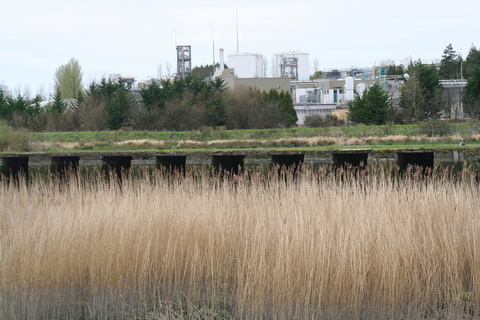
Nobody has attempted to identify this quay, so the competition is now closed and I’ll drink the sherry myself.

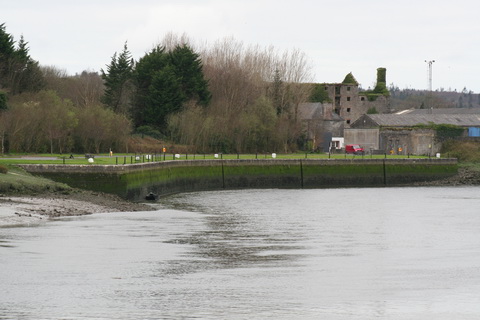
It is, of course, the downstream quay at Clarecastle at the head of the Fergus Navigation.

Clarecastle downstream

Here is the upstream quay, just around the corner.

Clarecastle upstream

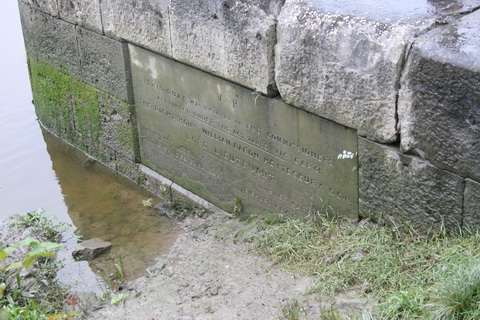
The upstream quay bears the following inscription.

Inscription at Clarecastle

I really must return and get a better photo when it’s less slippy. Note that, although this is on tidal waters, Thomas Rhodes was the engineer.

Did you know that Clarecastle still has its own port authority? Go to this excellent pub and ask John Power about it. His brother (Dr Joe) wrote the definitive history of Clarecastle. John has lots of interesting old photos and maps on display in a really good traditional pub. He’s got a facetweet thingie too.

Prothero

This site includes several extracts from F E Prothero’s 1896 and 1898 accounts of small-boat trips on Irish waterways. This short page shows what I know about Mr Prothero; I would welcome further information.

Shannon 1 design

If you don’t like hanging around airports, Shannon offers you a choice: you can go and look at the estuary instead, which is much more interesting.

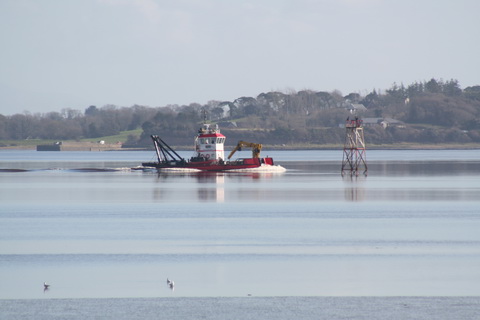
Shannon Foynes Port Company workboat Shannon 1 passing Shannon Airport; Ringmoylan Pier in the background

Shannon 1, the successor to Curraghgour II, is a Damen MultiCat.

Shannon Foynes Port Company has updated its website.


Sunset on the Lower Shannon

A poem by Sir Aubrey de Vere, father of the more famous Aubrey Thomas de Vere. The family estates were at Curraghchase, now a forest park, on the south side of the Shannon estuary and now best known as the home of Caroline Rigney, producer of some of Ireland’s best bacon. Sir Aubrey’s wife was one Mary Rice, of the Mount Trenchard family, one of whose members had a major role in the development of the Shannon in the 1840s.

Sunset on the Lower Shannon

How beautiful the tints of closing even!
The dark blue hills, the crimson glow of heaven,
The shadows purpling o’er the wat’ry scene,
Now streaked with gold — now tinged with tender green;
And yon bright path that burns along the deep,
Ere the sun sinks behind his western steep,
Soft fades the parting glory through the sky,
Commingling with the cool aerial dye;
While every cloud still kindling in the beam,
In mirrored beauty prints the waveless stream,
Light barques, with dusky sails, scarce seen to glide,
Bend their brown shadows o’er the glowing tide;
And hark! at intervals the sound of oars
Comes, faint from distance, to the silent shores,
Blent with the plaintive cadence of the song
Of boatmen, chanting as they drift along.
But see the radiant orb now sinks apace —
Gradual and slow, he stoops his glorious face;
And now — but half his swelling disk appears —
And now, how quickly gone! he scarcely rears
One burning point above the mountain’s head —
And now, the last expiring beam has fled.

Sir Aubrey de Vere in The Dublin Penny Journal Vol 1 No 17
October 20 1832

The “light barques” probably included some turf boats.

There are more poems by Sir Aubrey here.

Waterways power stations


Great Island from downstream

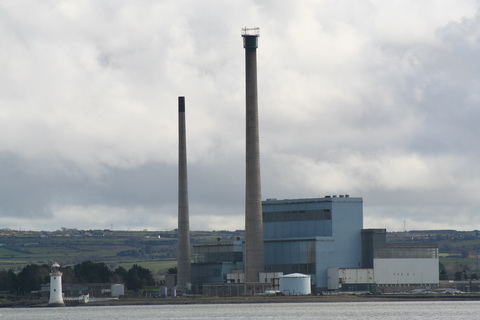
According to the Sunday Business Post [paywall], an American venture capitalist firm and a Singaporean company have considered buying the Tarbert (Shannon Estuary) and Great Island (Suir Estuary) power stations from Endesa, which bought them from the ESB. Endesa had intended to invest in its Irish operations, but it was taken over by an Italian company, Enel, in 2009; Enel wrote down the value of the Irish assets and wants to sell them off.

Tarbert from the ferry


Sailing merchant vessels

Niall O’Brien, author of the history of the Blackwater and Bride, has set up a Facebook page about sailing merchant vessels of Ireland and Britain. Many of these used the Irish estuaries — including the Shannon, Blackwater, Barrow and Suir — and thus overlapped with inland navigation.

Lough Derg in 1820

Troll along (h/t Co Kildare Online Electronic Historu Journal) to the National Archives new online section showing the papers of the Chief Secretary of Ireland. So far they’ve put up a catalogue for the first five years, 1818 to 1822 inclusive, with images of some pages, including 17 maps and drawings.

The second map shows the Ballyteigue Canal in Co Wexford, the third is John Killaly’s map of Lough Derg in 1820 and the fourth (which is as far as I’ve got in looking through them) shows Cappa Pier at Kilrush. They’re a bit small when seen online, but you can select (and save a copy of) a PDF version.

Big it up for the National Archives and for Professor Francis J Crowley, whose bequest made this possible.