Tag Archives: vessels

Rail, road and river: steam in 1829

Four news items, all in the Varieties section of the Hampshire Chronicle on 19 October 1829.

Rail

The trial of the locomotive carriages near Liverpool was continued on Saturday, when Mr Stephenson’s engine, the Rocket, disencumbered of every weight, shot along the road at the almost incredible rate of 32 miles in the hour! So astonishing was the celerity with which the engine, without its apparatus, darted past the spectators, that it could be compared to nothing but the rapidity with which the swallow darts through the air.

Road 1

Mr Gurney’s steam carriage can be stopped dead within the space of two yards, though going at the rate of from 18 to 20 miles an hour, and this without any inconvenient shock to the machinery or passengers. It is capable of dragging a carriage, weighing three tons and containing 100 passengers, over a level road, at the rate of eight, nine, or ten miles an hour: will drag the same carriage, containing 25 passengers, up the steepest road in England, at the same rate. On ascending hills, for every cwt that is shifted from the front to the hind wheels, the carriage requires an additional drawing power of 4 cwt and on level ground an additional power of half a ton. The contrivance by which the carriage may be retarded at pleasure on descending hills, acts independently of the wheels, so that the sliding and cutting effect of the ordinary drags is entirely avoided.

Road 2

Sir James Anderson has entered into a contract with the Irish Post Office, by which he undertakes to convey the mails throughout Ireland at the rate of 12 miles an hour, in coaches impelled by steam, calculated to carry two or three passengers, in addition to the coachman and guard. This invention of Sir James Anderson, for which he has obtained a patent, has seldom been exhibited out of the yard in which it was constructed; but it is said to bear very little resemblance to the drag-coach of Mr Gurney. The contract is understood to be for 14 years, and the only pecuniary stipulation made by Sir James is, that he shall receive half the money which the Government shall save by adopting his system. He will shortly commence carrying the mails between Howth and Dublin. The road is level and good, and the distance not more than nine or ten miles.

[Note: an 1841 proposal by Sir James Anderson is covered here. And here is a longer piece about Sir James and the Steam Carriage and Waggon Company of Ireland.]

River

An iron steam boat of a peculiar construction, and having the paddles in the centre, has been built at Liverpool, by Messrs Fawcell and Co for the Irish Inland Steam Navigation Company. This vessel was tried in the Mersey on Monday, and the result was highly satisfactory. Another iron vessel, of 60 tons burden, was launched on Tuesday from Messrs Wm Laird and Son’s yard, on the banks of Wallasey Pool.

[Note: the Fawcett steamer and the 60-ton barge were destined for the Shannon. The barge was the first iron vessel built by Lairds.]
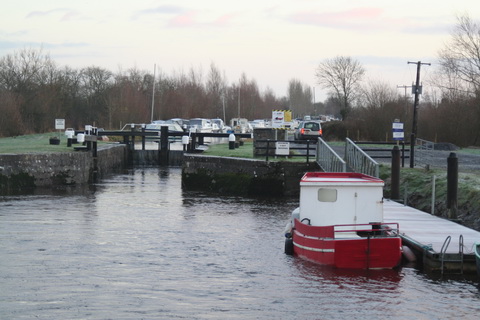
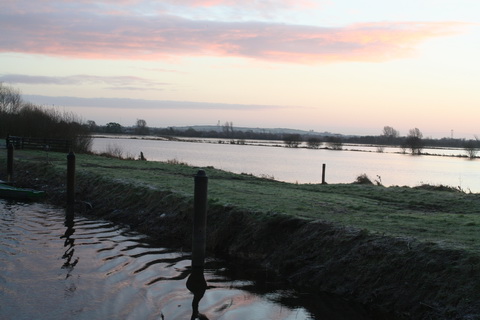
The Shannon in winter

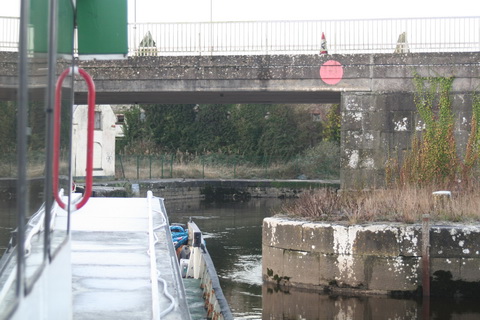
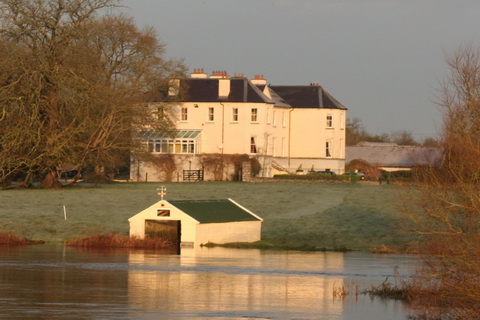
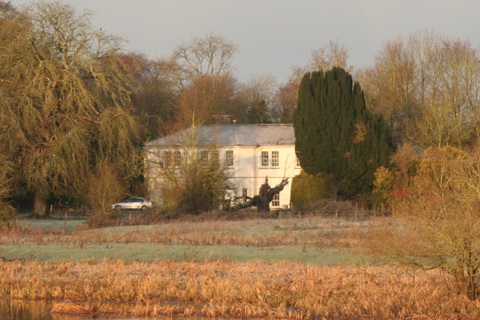
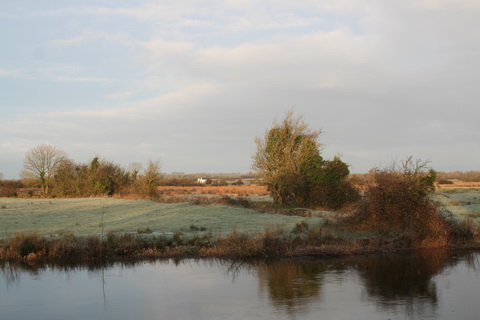
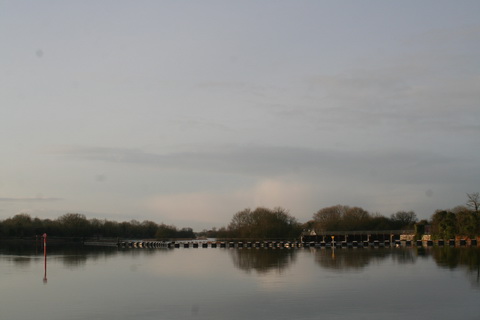
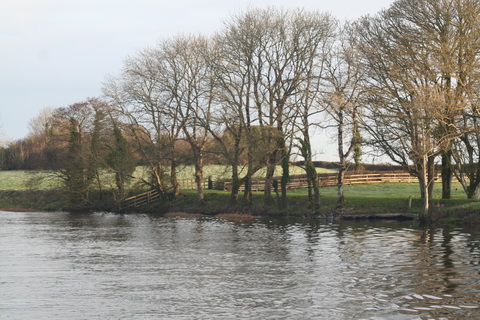
Downriver from Shannon Harbour to Dromineer in December 2014. It began as a bright, cold morning.

Shannon Harbour to Dromineer December 2014 01_resize

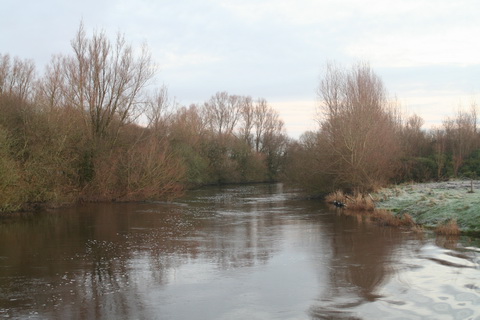
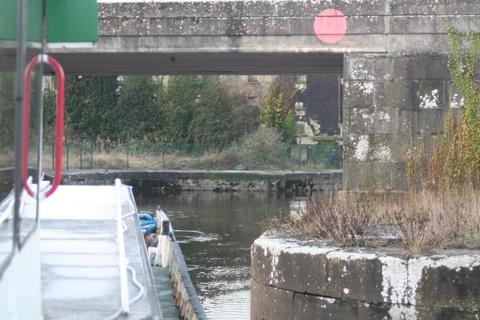
Leaving Shannon Harbour after icebreaking between the locks

Shannon Harbour to Dromineer December 2014 02_resize

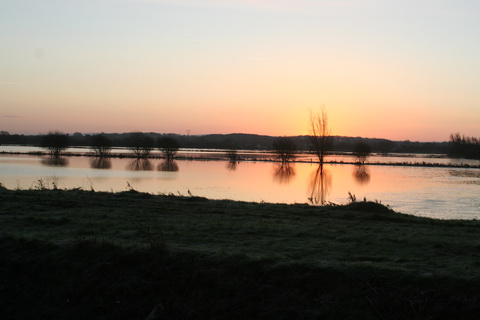
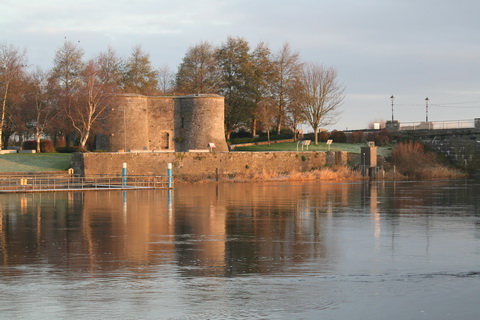
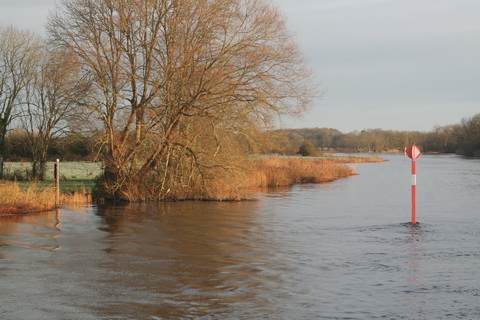
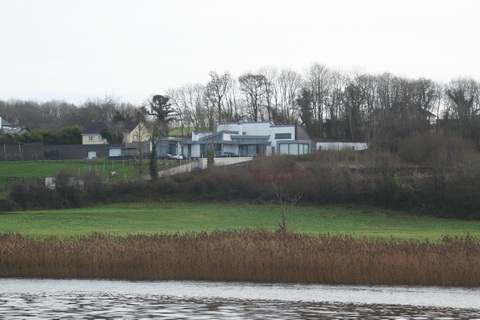
Flooding to the south-east

Shannon Harbour to Dromineer December 2014 03_resize

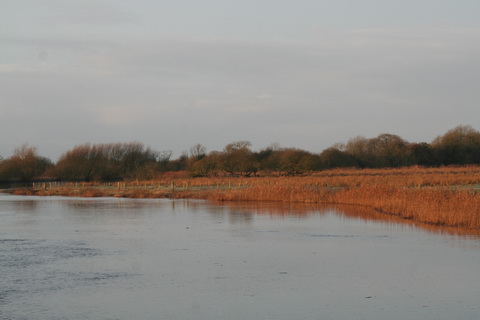
But southward, look …

Shannon Harbour to Dromineer December 2014 06_resize

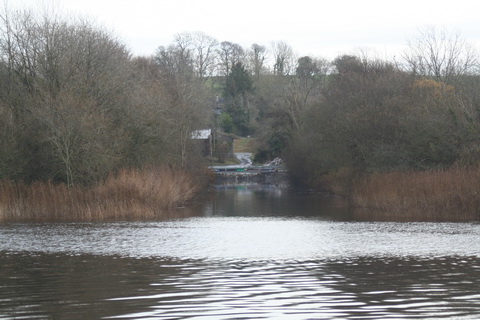
The Brosna

Shannon Harbour to Dromineer December 2014 73_resize

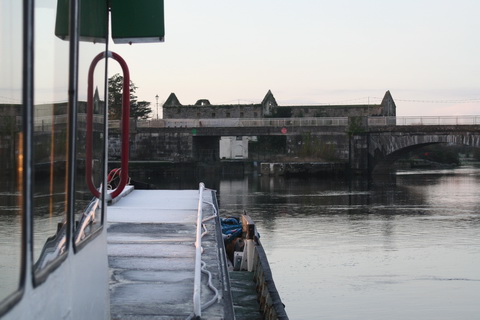
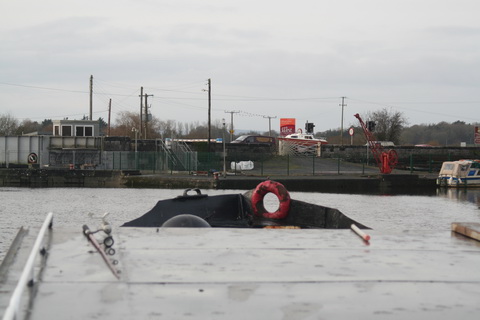
Heading for Banagher Bridge 1

Shannon Harbour to Dromineer December 2014 75_resize

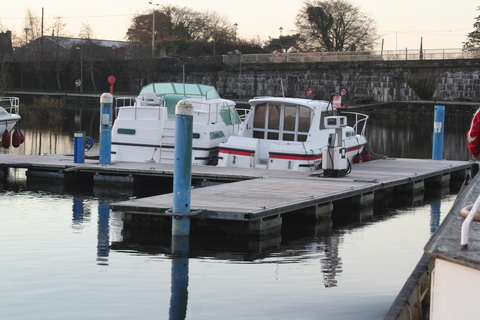
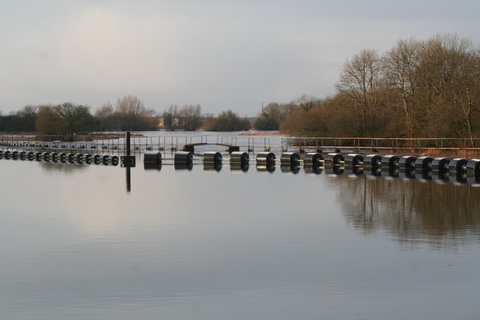
Keeping close to the pontoons

Shannon Harbour to Dromineer December 2014 98_resize

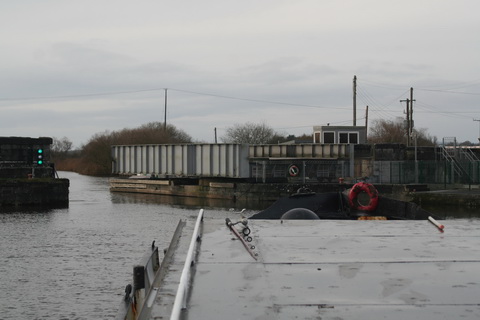
Heading for Banagher Bridge 2

Shannon Harbour to Dromineer December 2014 103_resize

Heading for Banagher Bridge 3

There is a YouTube video of the shooting of the bridge here. It seems to start automatically, including sound; I don’t know how to avoid that.

Shannon Harbour to Dromineer December 2014 107_resize

Looking back at Banagher

Shannon Harbour to Dromineer December 2014 116_resize

Colours

Shannon Harbour to Dromineer December 2014 124_resize

Invernisk

Shannon Harbour to Dromineer December 2014 129_resize

Shannon Grove

Shannon Harbour to Dromineer December 2014 134_resize

Current

Shannon Harbour to Dromineer December 2014 140_resize

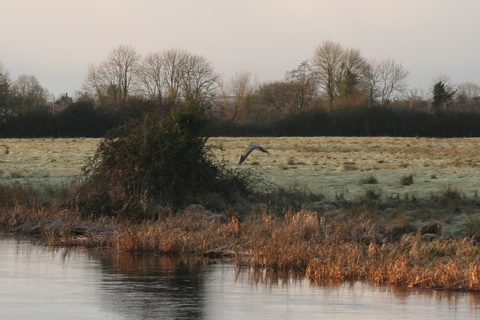
Scarpering heron

Shannon Harbour to Dromineer December 2014 146_resize

Colours

Shannon Harbour to Dromineer December 2014 149_resize

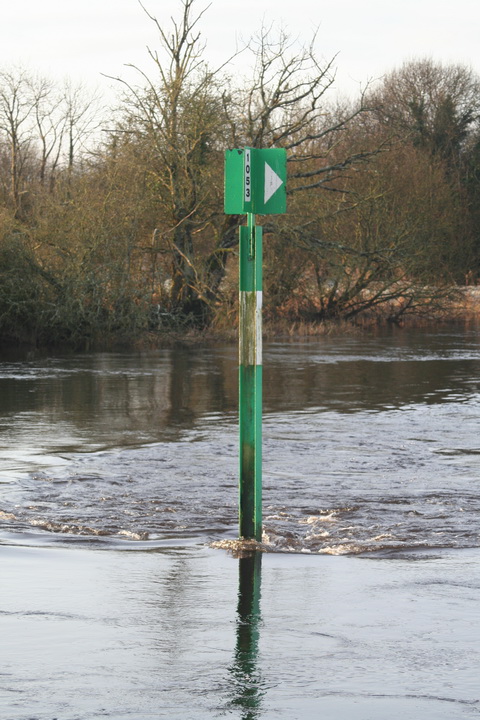
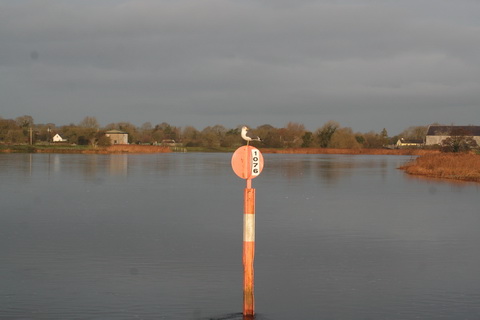
Marker and gauge

Shannon Harbour to Dromineer December 2014 151_resize

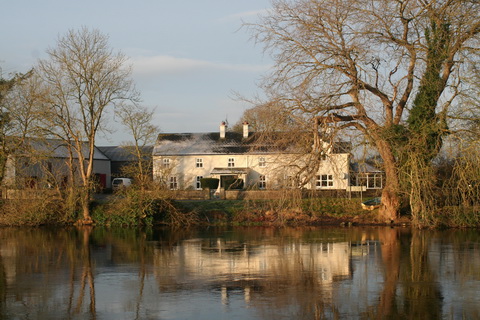
House

Shannon Harbour to Dromineer December 2014 169_resize

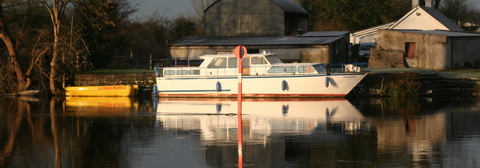
Boats at Meelick

Shannon Harbour to Dromineer December 2014 170_resize

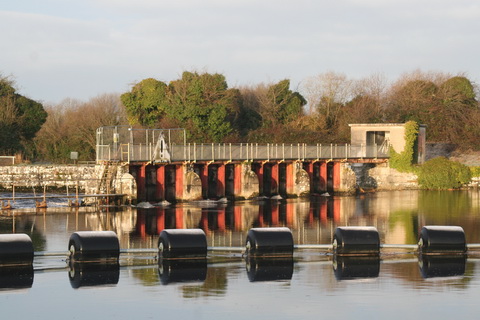
Meelick weir

Shannon Harbour to Dromineer December 2014 174_resize

East bank

Shannon Harbour to Dromineer December 2014 176_resize

Protective boom

Shannon Harbour to Dromineer December 2014 181_resize

Sluices

Shannon Harbour to Dromineer December 2014 198_resize

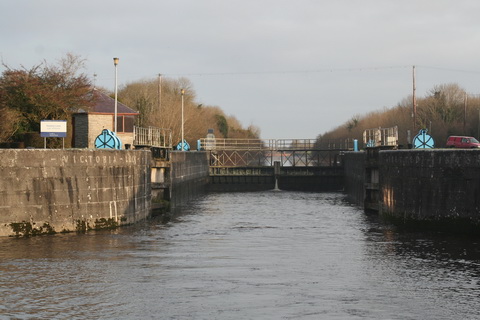
Through Meelick Lock

Shannon Harbour to Dromineer December 2014 205_resize

One bird

Shannon Harbour to Dromineer December 2014 213_resize

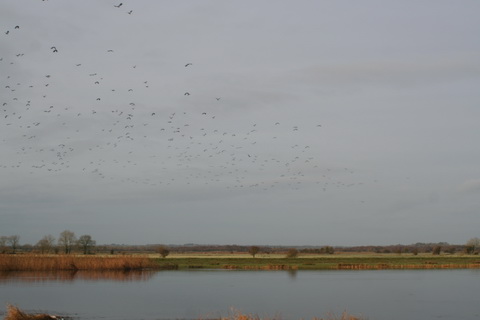
Many birds

Shannon Harbour to Dromineer December 2014 221_resize

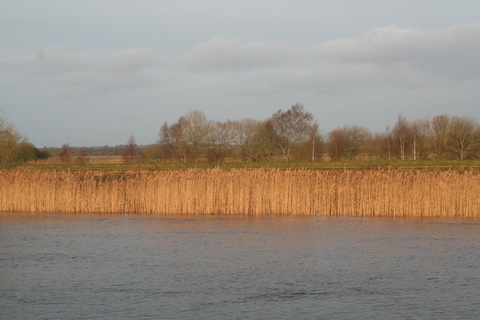
Reeds

Shannon Harbour to Dromineer December 2014 226_resize

Architecture

Shannon Harbour to Dromineer December 2014 228_resize

Munster Harbour

Shannon Harbour to Dromineer December 2014 233_resize

Delaying Eamon Egan

Shannon Harbour to Dromineer December 2014 235_resize

Gateway to civilisation

Shannon Harbour to Dromineer December 2014 237_resize

Connacht Harbour

Shannon Harbour to Dromineer December 2014 239_resize

Lough Derg: weather has changed

Shannon Harbour to Dromineer December 2014 243_resize

Journey’s end, Dromineer


DUKWs? Fiat lux

I have written here about a series of misfortunes suffered by DUKWs in Liverpool and London. On 16 June 2013 I put up some photos of DUKWs in Dublin and Liverpool; I pointed to what seemed to me to be two differences between practices in the two cities:

First, before they enter the water at Grand Canal Dock, Ringsend, the DUKWs are fitted with extra buoyancy in cylinders that slide into racks along their sides. I saw the VikingSplash crew removing the cylinders from the yellow DUKW; it took only a couple of minutes, and I presume that it didn’t take much longer to put the cylinders on.

Second, the Dublin passengers are issued with buoyancy aids before they take to the water. I can’t see any buoyancy aids on the Liverpool passengers, although it’s possible that they are out of camera shot.

There are links on that page to photos, news reports and a seriously scary video of the sinking of a DUKW in Liverpool. Then, in September 2013, a DUKW went on fire on the Thames; my brief report and links here. In October 2013 the UK Marine Accident Investigation Branch issued a safety bulletin (my report here, with links) pointing to foam buoyancy as a common factor. The Liverpool DUKWs did not have enough buoyancy to keep them afloat if they started taking water and MAIB thought it would be impossible to get enough into them. On the London vessel,

… the most likely cause of fire was the action of the rotating drive shaft (or other moving parts) on the oil contaminated surfaces of the buoyancy foam blocks.

In November 2013 I noted that the wearing of lifejackets had been discussed in London and I commented on the policy of the Dublin operator, VikingSplash:

The point that strikes me is that, in both UK accidents, passengers had little time to don lifejackets and would have been trying to put them on in a confined space and under less than ideal conditions. It seems to me that Viking Splash’s policy [having passengers don lifejackets before taking to the water] is the right one.

In December 2014 the MAIB published its report into the two accidents. There’s a Guardian news report here [h/t gjb] and you can download the MAIB’s full report and annexes from this page. The London and Liverpool accidents are covered in the same report.

It’s well worth reading and pulls (as far as I could tell) no punches, even tearing strips off the Maritime and Coastguard Agency and the Vehicle and Operator Services Agency, both within the UK Department for Transport and both involved because the DUKW is an amphibian.

I took three main points from the report.

The Irish approach

First, the Irish authorities seem to have thought seriously about the safety problems. My understanding of the buoyancy requirements was mistaken: the UK DUKWs had added buoyancy (although not enough, and adding more foam caused fire) and the Irish buoyancy cylinders are not designed to keep the vessel afloat. Here’s what MAIB says:

In Ireland, APV operators have been permitted to operate vintage DUKWs without having to provide any residual buoyancy. To mitigate the consequences of serious flooding, the Irish regulator required the operators to:

  • Fit external buoyancy tubes designed to slow the sinking process and make the vehicle sink bodily [my emphasis].
  • Retract the canopy roof and open the side curtains prior to entering the water.
  • Require passengers and crew to wear PFDs while on the water.
  • Provide a fast rescue craft, rescue crew and an inflatable liferaft at the slipway.
  • Limit operations to a non-tidal area.

This approach focused on passenger survivability by reducing the risk of entrapment and drowning, rather than vehicle survivability, and introduced several of the interim measures recommended by the NTSB following the sinking of Miss Majestic.

The Irish model demonstrates that open topped APVs can be operated successfully in similar weather conditions to those experienced in the UK, and that passengers are willing to wear PFDs.

So big it up for the Irish Maritime Administration.

The speed of the sinking

Second, if you’ve seen the video of the Liverpool sinking you may have been struck by its speed. In both Liverpool and London passengers had very little time to get out and the report’s synopsis says

In both instances, the crew had little time to co-ordinate the evacuation process and the confined nature of passenger spaces made it almost impossible for them to control or assist the passengers.

And in 4.3 Common safety issues:

8.  It was extremely fortunate that all on board WQ1 and Cleopatra were able to evacuate into the water unharmed. In both cases the passengers were forced to act on instinct and exit the vehicles under their own initiative.

Any of several issues could have cut the time available and “the risk of entrapment and the likelihood of loss of life would have been considerably higher”.

So Figure 63 of a Dublin DUKW doesn’t just show the external buoyancy cylinders: the passengers are wearing buoyancy aids, there is a crewman already stationed at the stern and the side and roof canopies are open, all giving more chance of escape.

I’m not in any position to assess the overall safety of the Irish DUKW operation. What interests me here is a more general point about the evacuation of passengers from trip vessels: getting a large number of people out of a small space in a short time is not easy. And the recent problem of getting people off the Norman Atlantic didn’t make me feel any better.

Photo

Third, I am delighted that my photo of a DUKW in Liverpool was useful to the  UK Marine Accident Investigation Branch (see the report’s Figure 16) but they really should have asked for permission to use it.


Sorry, Longford

Waterways Ireland’s Feasibility Study into the Restoration of the Longford Branch of the Royal Canal is available for download [7 PDFs: main report + 6 appendices]. Skip straight to page 59:

6.5 Recommendation

Given the current financial climate and because of the associated costs, environmental issues and uincertainty regarding planning approval it is not recommended to pursue this project any further at this time.

The recent work undertaken in regard to the shared walkway/cycleway has protected the asset as a publicly owned recreational amenity and it is recommended that any outstanding property issues be resolved and finalised in order to complete the protection of the asset.

I hope that admirable recommendation survives the pre-election period.

By the way, there’s a snail ….

Recent developments in boat design

Mr Busk’s elastic paddle

A small Steam Boat (apparently about fifty feet long, and six or seven feet wide), belonging to Mr Wm Busk, of Pall-mall, was exhibited on Friday on the Thames. The boat was propelled easily and rapidly through the water, both with and against the tide, by a very small steam power, without the use of any paddle-wheel, by means of an elastic paddle, or fin, recently invented by Mr Busk, which was subject to a reciprocating motion wholly under water, and acting equally both ways.

When the action is not brought too near the surface, no motion seems to be occasioned in the water which could at all prejudice canal banks; and as the range of the fins, by their being placed in the narrow after-part of a boat, admits of being confined completely within the depth and breadth of the boat, no impediment need be presented to the passing of locks or bridges. The invention appears to be extremely simple and efficacious, and of very ready application to vessels of all classes and dimensions.

Bath Chronicle and Weekly Gazette 5 May 1825

Canal steam navigation

Experiments of rather a novel character have for some weeks been in progress on the Forth and Clyde Canal, to ascertain the merits of an invention for propelling boats on canals at greater velocities than have hitherto been attained either by steam or horses. The principle on which the experiments are founded may be thus described.

A light chain is laid in the canal, from one extremity to the other, and firmly fixed at each end. To effect motion by this means, a twin boat is used, in the trough of which a grooved wheel (receiving the chain) is made to revolve by a steam engine placed in the boat. From this description it will be evident that, as the wheel revolves, the boat is drawn forward at a speed equivalent to the power, or at precisely the same velocity as the periphery of the grooved wheel.

At first sight there appear to be several objections to the plan, not the least of which are turning the bends, and meeting and passing general craft on the canal. The experiments made on Friday the 29th ult, however, fully prove the facility with which the vessel can be steered from side to side of the canal; describing, at the same time, quicker curves than any to be met with on the Forth and Clyde navigation.

On the whole the experiments, though conducted under great disadvantages, were highly satisfactory, and such as to induce further trials. A speed of 8¼ miles per hour was attained, and there was little doubt in the minds of those who witnessed the trials, that, with a lighter engine, and a boat drawing less water, a higher velocity might be acquired at a cheaper rate than is now produced by horses.

It will be proper here to observe that it is not intended to carry passengers in the same boat that contains the engine and propelling apparatus.

Chester Chronicle 12 September 1834

India Rubber Boat

An American journal says that a Mr Caleb Williams, of New York, has just constructed a boat of this material, and that he has applied for a patent for his invention.

Huntingdon, Bedford & Peterborough Gazette 4 July 1835


Any old iron

Amongst the objects of iron found during the Shannon Navigation Works, 1843–48, and presented by the Shannon Commissioners to the Academy, an iron sword (figure 1) is of much interest. It is of the Halstatt class, and is, I believe, the only iron example of that class which has been found in Ireland.

A label attached to the sword states that it was “taken up in the buckets of the ‘C’ dredger” out of the bed of the Shannon above the new bridge of Athlone, August, 1847.

It is incomplete, and has lost much of its substance from rust, especially along the edges. The form, however, can be distinguished. It is made on the pattern of the leaf-shaped bronze sword. The width of the blade increases towards the point, and the handle-plate was of the flat form of the bronze swords.

Fig 1 Iron sword found in the Shannon [rotated]

Fig 1 Iron sword found in the Shannon [rotated]. Top end to right-hand side

This latter feature is certain, and is the most definite in the specimen. The edge of the handle-plate is intact for a short length at the right side; and the remains of a rivet-hole can be seen on the expanded portion at the hilt.

The curve in the blade does not appear to be intentional, but to be due to a bend it has received about one-third up; the line of the ridge is straight to and beyond the bend. This ridge along the centre of the blade is not a very usual feature; but it occurs occasionally on the bronze swords, and on an iron Halstatt sword found in Poitou, figured by the Abbé H Breuil (Revue Archéologique 1903 II p57).

This latter sword was found at Mignaloux-Beauvoir, near Poitiers, in 1836, but had remained unnoticed in the Museum at Poitiers until the paper mentioned. It measures in its present state 45 cm. The Irish fragment is 18½ inches long (47 cm); so the two swords were much of the same length.

A fairly large number of the bronze swords of the Halstatt type have been found in Ireland. There are twenty in the collection, and six of the winged chaps or scabbard ends of that period.

The occurrence in Ireland of the type in iron is therefore of considerable interest. The somewhat slender look of the sword and the ridge disposes me to regard it as late in the series; it must, however, rank as probably the earliest type of the iron sword which has been found in this country.

The early iron sword with flat handle-plate had been found in considerable numbers east and south of Poitou in Berry, Bourgogne, and in Lot. But its extension to the west had not been known till the example figured by the Abbé Breuil. It should be noted that Poitiers is close to the old line of communication between Ireland and the Continent by way of the Loire valley.

Illness has prevented me from placing before the Academy the archaeological evidence I have collected bearing on the question of early intercourse between Gaul and Ireland; but I should like to state as a preliminary note, that certain forms of bronze caldrons and types of pottery at the close of the Bronze Age, also of types of iron spear-heads and other objects of the La Tene period, may be advanced in support of the historical tradition in our tales of a settlement of Gauls in Leinster under Labraidh Loinngsech, at a date placed perhaps too early by the Four Masters (BC 541), and from whose “broad blue spears” the name of the province of Leinster (Laighen) is derived.

George Coffey “Early iron sword found in Ireland” Proceedings of the Royal Irish Academy Vol XXVI Section C No 3 February 1906 Hodges, Figgis & Co Ltd, Dublin; Williams & Norgate, London

Three drowned on Lough Neagh

Most distressing accident on Lough Neagh — three young gentlemen drowned

It is with painful regret we have to announce a very afflicting calamity that occurred on Lough Neagh, on Friday, by which Mr Alexander Charters, son of our esteemed townsman, Mr John Charters, Mr Henry Nelson, son of Mr James Nelson, Ballinderry, and Mr Allen Bell, Glenavy-water-foot, have been consigned to an early grave.

They had that day gone on the lake on a pleasure excursion; and between three and four o’clock in the afternoon, when rounding Ram’s Island, the yacht in which they were capsized in a sudden and violent squall and sunk, when the three young men perished. Several persons on the shore witnessed the occurrence, but at the distance, and the wind blowing an unusually stiff gale from the north, no assistance could be afforded.

All the bodies have been recovered. Mr Alexander Charters, whose untimely death it is thus our melancholy duty to record, had been on a visit to his uncle, who resides near the shore of the lake.

The Dublin Monitor 3 May 1844, quoting the Northern Whig

The captain and the perjurer

Mary Meehan’s was a dramatic story.

In April 1847 she had gone to the house of William Dwyer at Cuphaunhane [Cappanahanagh?]. She heard voices inside and stopped to listen. The door opened and William Dwyer ran out. She went in and saw William’s wife Mary dragging the seemingly lifeless body of Ellen Dwyer, William’s sister, into the room. Mary Dwyer then ran off and Mary Meehan raised Ellen’s head; she saw blood on the left side of the head.

She went home and told her husband about it; he told her to say nothing. About two hours later she was in the haggard and saw William and Mary Dwyer digging at the brink of the ditch. She gave a deposition to Edward J Bell RM on 8 October 1849, adding on 16 December 1849 that, if Bell were to dig in the field near the Dwyers’ house, or in the nearby quarry, he would find the remains of a human body.

Bell, with Mr Head and the Castleconnell police, dug more than forty times in the field in question, but with no success. They then drained four feet of water from the quarry and found a skull and some human bones in the mud. Constable Swan delivered them to Dr Thomas Travers Riordan at Castleconnell.

Dr Riordan thought that the skull was more likely to be that of an old woman than that of a fifteen-year-old girl. The bones had been in water or earth for much more than two years and belonged to a tall muscular person: the skull and the bones were almost certainly from two different people. The church at Abington was close to the quarry.

On 14 March 1840 Mary Meehan was indicted …

… for that she with felonious intent to injure William Dwyer …

… did swear to an untrue story. She was described as …

… a woman of about forty years of age, […] dressed in a blue cloth cloak, clean white cap, and white woollen shawl, as the wife of a farmer in comfortable circumstances. Her appearance was not unprepossessing, but there was a peculiarly sinister expression about the eyes.

Mr Bell had taken depositions from William and Mary Dwyer; they contravened Mary Meehan’s statements but she stuck to her story. No witnesses supported her.

William Dwyer said that he had sent his sister to England [en route to America?] that April: his wife had accompanied her to Killaloe and seen her aboard one of the [City of] Dublin Steam Packet Company’s boats. He had not heard from her since then.

Mary Dwyer said that she and her sister-in-law had slept at the house of Mary’s father Michael Healy, in Killaloe, the night before Ellen’s departure. The following morning they went to the house of Nancy Preston, who accompanied them to the steamer to help Ellen get a cheaper fare. Michael Healy confirmed that evidence, as did Nancy Preston. Mary Dwyer said that she was on board with her sister-in-law until the boat left.

The final witness was the steamer’s captain, Captain Winder. He said he remembered the circumstances perfectly and had charged Ellen only 4s 3d for the passage to Dublin.

His Lordship charged, expatiating on the enormity of the prisoner’s offence, and the revolting exhibition of the remains of the skull and bones of a human being on the table, and adding that from the evidence they could hardly hesitate in finding a verdict of guilty.

The Jury returned a verdict of Guilty accordingly.

The Limerick Reporter and Tipperary Vindicator 15 March 1850

Pumps and crisps

Thanks to Colin Becker, I have updated this page to show the location of the ESB’s third pumping station between Meelick and Portumna: I had known only where two of them were.

I have also added to the page some rude remarks about the ESB’s policy of not revealing the clearance of their cables above navigable waterways. If, dear reader, you know of a change in the policy, or if you can effect such a change, or if you know the clearances, do please let me know by leaving a Comment.


The Slaney cot: photos

I wrote here about a Slaney cot, built by Larry Duggan, which we had spotted on its way to Wales. The owner has very kindly sent some more photos of the cot’s construction, of Larry Duggan and of the cot on the Usk; I have put them on a separate page here.