Tag Archives: waterways

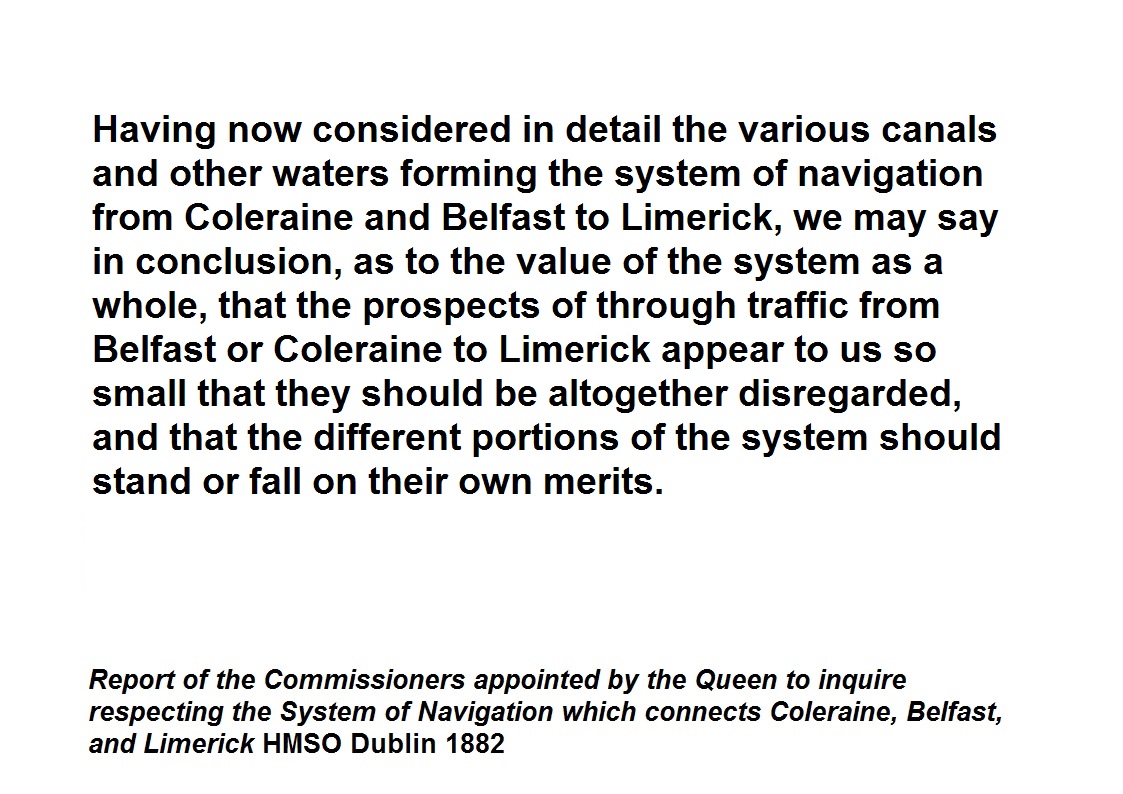
How true these words are …

… even today.

Connected system

Blueways and traffic

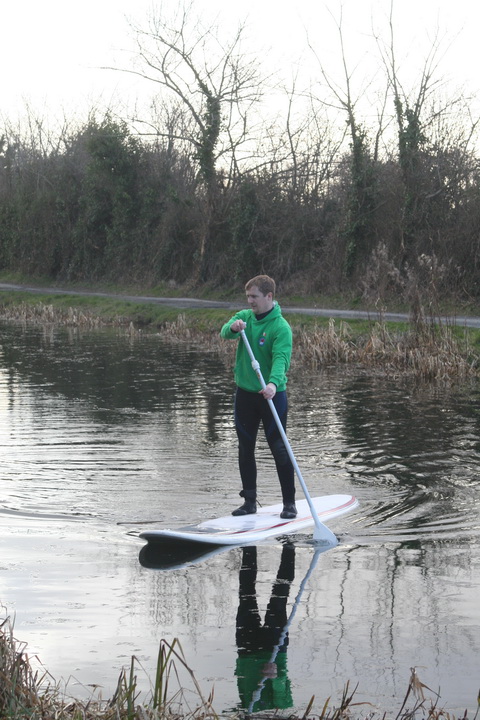
I wonder whether it would be wise to issue some guidance to masters of larger vessels about (a) the likelihood of meeting numbers of canoeists, kayakers, stand-up paddleboarders (SUPpers) and others on particular stretches of water and (b) what to do on meeting them. Guidance to operators of the smaller craft might be useful too. I’m thinking in particular of the restricted visibility on parts of the Camlin and the prospect of encountering a fleet of SUPpers on a tight bend.

The Camlin and the Lough Allen Canal in effect enforce their own speed limits, but I don’t know whether there is any limit on the Shannon between Tarmonbarry and Lough Forbes. If there isn’t, perhaps a limit should be imposed to protect those on small craft.


Blueways

Longford Tourism and Waterways Ireland are holding an information meeting about Blueways in Longford tomorrow. It’s in the Backstage Theatre on Tuesday 24 March 2015 at 7.00pm. The blurb reads:

Are you an activity provider, accommodation provider, walker, boater, canoeist, outdoor enthusiasts?

Longford Tourism, in conjunction with Waterways Ireland is delighted to invite you to a Public Information Meeting regarding exciting new recreation and tourism products called Blueways.

Blueways are a series of innovative, safe and easy to use water and land-based trails. These provide for guided and unguided paddling, walking and cycling. Visitors can opt to paddle along the Shannon Blueway, on a 10km looped trail along the Camlin and Shannon Rivers, while the Royal Blueway provides 16km of off road walking and cycling from Cloondara to Longford Town.

To celebrate this exciting trails development, Longford Tourism will host the inaugural Longford Blueways Festival in April. So, come along and hear how you can get involved. All are welcome to attend.

I wish them well and I hope this initiative works. I think that the Blueways are more likely to be successful than any attempted revival of the cruiser-hire business (although I’d like that to work too). However, I would like to learn more about the Blueways business model (if that’s the right term). Who has to invest how much and who gets what returns? Clearly, Waterways Ireland spends money up front, but far less (I presume) than (say) canal restoration would require. But are there viable businesses, or at least viable supplementary income-generating activities, for small local service providers? How do they reach overseas markets? Or is the focus on domestic markets?

One point that strikes me is that Blueways allow for more interaction between tourists and locals: something that used to be a strength of the Irish tourism offering (I’m trying to keep up with modern marketing jargon here) until we decided we were too busy being rich and successful to waste time chatting to tourists (or, if you prefer, providing unpaid support services to the tourism industry). Indeed we felt that even paid employment in tourist enterprises was beneath us: we could get nice people from overseas to do that work instead. Did we, I wonder, hollow out Ireland, removing the Irishness, the distinctiveness (whatever it was) from the tourist experience?

If so, the Blueways’ opportunities for interaction with small-scale and local enterprises might put them back again. There are difficulties in making a living from small-scale operations, but there are benefits too. And the Blueways might tap into other local, small-scale developments: for instance, the recent startling growth in the number of craft breweries. The Lough Allen and Longford Blueways each have a local brewery — St Mel’s in Longford and Carrig in Drumshanbo — and the products of at least one other brewery, Co Roscommon’s Black Donkey, are available on the North Shannon. Maybe, now that KMcG is back, “Places to find good beer” might be added to places to stay, eat and go on the Blueways website.

A Blueway is defined there as

a recreational water activity trail that is developed for use by non-motorised water activity enthusiasts. It is defined by trail heads, put in and take out points and readily available trail information. Blueways can be developed on canals, rivers, lakes or along the coast and can incorporate other associated land base​d trails adjacent to the water trail.

So what about a Blueway for Lough Oughter, with sailing, canoeing and camping?

[h/t Carthach O’Maonaigh]

Buy a pub; fund a sheugh

Waterways Ireland is being forced to pay €2 million to dredge the River Finn to Castle Saunderson. This new sheugh is to be called the Ulster Canal.

Waterways Ireland’s wicked stepmother, the Department of Arts, Heritage and the Gaeltacht, has failed to convince the government to come up with any money to fund this insane project. It has therefore decided to force Waterways Ireland to pay for it, at a time when WI’s budget has been cut by 31% over the past six years. That suggests to me that the parent departments, DAHG and the Northern Ireland Department of Culture, Arts and Leisure, are prepared to let the other waterways go hang in favour of a pointless extension of the Erne navigation.

DAHG said:

As the project will be funded from Waterways Ireland’s own resources, additional Exchequer funding will not be required.

Not that Waterways Ireland has any spare money, and it has very few surplus assets. Some years ago DAHG’s predecessor proposed to sell Plot 8, in the Grand Canal Docks at Ringsend, to fund the Clones Sheugh, but the property collapse put a stop to that. It’s still the most valuable saleable asset and it was never clear to me how the property of Waterways Ireland could be seized by its wicked stepmother.

Waterways Ireland has to come up with €1.4 million of the €2 million cost of Saunderson’s Sheugh this year. It hopes to get €900,000 of that from the sale of property. Apart from Plot 8, it has only three surplus assets:

  • Percy Place, valued at €650,000 in WI’s 2012 accounts
  • 47 Lennox Street, valued at €195,000
  • the Hatch Bar, which I presume to be the one at Hazelhatch [is there another?], valued at €45,000.

And that lot adds to €890,000. Add a few quid from the recent sale of old barges and you’ve got €900,000.

Given the details of the Hatch Bar in this Lisney PDF, I presume that what Waterways Ireland is selling is the freehold [but I’m not sure about this: if, Gentle Reader, you know more about it, please leave a Comment below]. Whoever buys it will have the satisfaction of knowing that they are helping to dig a ditch in Co Cavan.


Navigations under threat

Limerick City & County Council [why don’t they shorten it to Limerick Council?] is examining options for an improved road from Limerick to Foynes, which is the main port on the Shannon Estuary. The options are set out on this website and you can download a PDF map that makes it easier to see the details.

The Red Route would cross the Deel Navigation just below Askeaton: the existing route does the same so there might not be any extra interference with the navigation. But the Red Route would also cross the Maigue and the Blue Route would do so just below the new quay at Adare. No doubt the Adarians would welcome a bypass but I imagine that some will be watching to ensure that navigation on the Maigue is not impeded.

Meanwhile we learn that some folk and some other folk want the railway line from Foynes to be reinstated. I have no idea why they think that’s a good idea: it’s not as if there were vast piles of incoming freight piled up at Foynes, unable to be shifted by road. Rip up the tracks and make a greenway, that’s what I say.

Crossing the Barrow

The trackway [towing-path] on the River Barrow changes from the east {left) bank to the west at Leighlinbridge and back again at Graiguecullen/Carlow.

It seems to me that there may have been some difficulties in getting horse-drawn boats from one side of the river to the other and I have found no evidence on how it was done, so here is some speculation instead.

The stolen railway

I’ve just been flying by rail: looking over some of the present and former railways that cross[ed], impinge[d] upon or were otherwise related to waterways. They are all on Industrial Heritage Ireland’s new Historic Map of Irish railways.

In the midlands, for example, it shows the line from Clara to Banagher, home of Ireland’s shortest canal: folk visiting Shannon Harbour will know about that. And anyone driving to Shannon Harbour from (say) Limerick will have crossed the Stolen Railway from Birr (then Parsonstown) to Portumna: it’s there too, as are the lines on both sides of the Shannon Estuary, and those near the Suir and Barrow and many many more.

Work has begun on providing links to a database with information about the individual stations: Donegal, which had an extraordinary number of them, was the first area to be done.

Hours of enjoyment; thanks to Ewan Duffy for putting in so much work.
 

The Liffey link lottery

In The Grand Canal of Ireland [David & Charles, Newton Abbot 1973], Ruth Delany says

In 1784 the construction of a link with the River Liffey had been discussed.

John Brownrigg had suggested a link from the Grand Canal Company’s harbour at James’s Street, but the plan eventually adopted was that of the Circular Line, the four-mile canal we have today, joining the Liffey via the Grand Canal Docks at Ringsend.

However, I have found a piece of evidence showing that the company considered the Liffey link ten years earlier, in 1774. Delany says that there are no board minutes for two years between 1773 and 1775, which would explain why this earlier plan has not hitherto been noticed. The evidence is from the Hibernian Journal; or, Chronicle of Liberty 19 October 1774.

The Trustees for executing the Canal of Communication between the Canal and the Harbour of Dublin, Toll free, confiding in the Favour of the Public for the Support of a Work of so great national Utility, have unanimously resolved upon the following Scheme, grafted upon the State Lottery for this present Year, for raising a Fund for that Purpose.

The Necessity of this Application to the Public at present, will appear from a Report of the Committee of Works of the Canal Company, certifying that the Works contracted for by Mr Traill between the Liffey at or near Sallins and the City Bason, are in such Forwardness as to render it absolutely necessary to proceed in making the above mentioned Communication early in the next Year; the said Report is in the Hands of the Secretary to the Canal Company.

2 prizes of                      £2000          is £4000
4 prizes of                         £750          is £3000
5 prizes of                         £150          is   £750
10 prizes of                          £50          is   £500
20 prizes of                          £40         is   £400 *
40 prizes of                             £5        is   £200
180 prizes of                            £1/10   is   £270
600 prizes of                           £1         is   £600
19150 prizes of                          £0/6     is £5740 *
First drawn first three days £40          is   £120
Last drawn                          £200          is   £200
£15780

NB Not quite two Blanks to a Prize; and the Publick will take notice, that £35 is accounted for more than the Tickets will amount to.

Ten per Cent to be deducted from the Prizes for the Use of the Scheme.

15000 Tickets, 4 Numbers each, at £1 1s each to Subscribers for a Lot not less than 50 Tickets.

Price to Non-subscribers, one Guinea each Ticket.

Subscriptions are now receiving, and Tickets delivering out at the Navagation-house [sic] in Grafton-street, where the Prizes will be paid immediately after the Arrival of the Numerical Book from London. The Securities required from the Subscribers, viz Bankers Notes, Government and Fire-office Insurance Debentures, and City of Dublin Bonds, are to be lodged in the Bank of Thomas Finlay, Esq, and Company.

The Names of the Trustees for carrying the above Scheme into Execution, may be seen at the Navigation-House [sic], in Grafton-street.

There’s an idea for DAHG.


* sic

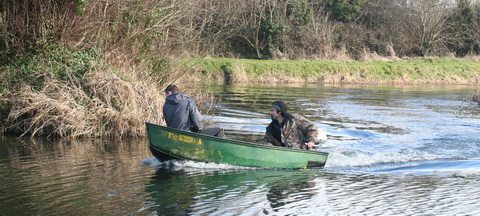
Nobody boats on the canal in winter?

Sallins 20150308 01

Rounding Soldier’s Island

Sallins 20150308 02

SUPper at the dry dock

… and a two-man racing kayak that I didn’t photograph. All in the space of about half an hour at Sallins.

Sort it yourself, Heather

No, that’s not me saying it: that’s the message from Enda Kenny to Heather Humphreys about Saunderson’s Sheugh. Recall that Ms Humphreys’s Northern Ireland counterpart has been pressing her to do something about the Ulster Canal:

Moving to implementation would have a positive impact on wider North/South relations. It would provide delivery on a commitment given by the North South Ministerial Council in 2007 in the context of the restoration of the Northern Ireland Assembly and Executive following a five year hiatus. It had not been possible to make visible progress up to now in the absence of planning permission. However, now that the necessary preparatory work has been completed and the required planning permissions are in place, failure to proceed to implementation could be viewed as tantamount to retracting the commitment given in 2007 and reported on regularly at North South Ministerial Council meetings since then.

Strange words to find in a business case, but that’s where they are: in the Department of Arts, Heritage and the Gaeltacht’s Restoring the Ulster Canal from Lough Erne to Clones: Updated Business Case February 2015. They read to me as if they might have been written by Carál Ní Chuilín’s Department of Culture, Arts and Leisure in the draft they sent to DAHG; it might have been tactful to remove them, as they smack of the message I envisaged here:

[…] I suspect that Sinn Féin put a gun to someone’s head: “We’re fed up waiting for our sheugh. Start digging or the baby gets it.”

Presumably, then, Ms Humphreys went to her government colleagues and asked for money to buy a few shovels. It is clear that the government took a decision on the matter:

The Government also remains committed to the Narrow Water bridge project and to developing the Ulster Canal. The Government made a decision in regard to an element of that project today.

That was Enda Kenny in the Dáil on 24 February 2015. Later in the same discussion, he said:

This morning, on a recommendation from the Minister for Arts, Heritage and the Gaeltacht, the Government approved a recommendation from Waterways Ireland to allocate €2 million from its resources to address a 2.5 km section of the Ulster Canal. It is a stand-alone project which will demonstrate further evidence of great co-operation. I understand a further 11 km are due for assessment after that.

Now, I am quite ready to believe Mr Kenny’s assertion that Waterways Ireland volunteered to have its already tattered budget cut by another €2 million to pay for dredging the River Finn; I also believe Mr Kenny’s assertions about economic recovery and about the existence of unicorns. I’m less certain that having the southern state pay the entire cost can be called “evidence of great co-operation”. But I am happy to note that no decision has been taken to dig a further 11 km of sheugh to Clones.

It seems, though, that — despite its commitment to sheughery — Mr Kenny’s government does not intend (at least until that economic recovery is further advanced and the unicorn mating season is over) to pay an extra penny or cent to cover the costs. That is very wise, but I suspect that it left Ms Humphreys swinging in the wind: forced to do something to satisfy DCAL and Sinn Féin but unable to extract any extra money from the government. Waterways Ireland then — without, I am sure, any prompting — nobly volunteered to reduce the spending levels agreed in its business plan just two months before, and to sell some unidentified property, to come up with €2 million to save its southern minister.

I have asked DAHG for a list of those government departments to which the business case was sent; I’ll then ask them what they said about it. As it stands, it seems that DAHG’s work of imaginative literature failed to convince the Irish government.