Category Archives: Built heritage

Riverfest in Limerick

Riverfest is an annual, er, happening in Limerick. I don’t know much about it: I’ve never been because I dislike both crowds and festivals and it would take something remarkably interesting to outweigh my dislike and persuade me to attend any part of the thing. I took notice of this year’s event only because I wanted to find out what streets would be closed to traffic; the festival organisers did not, alas, think to provide a map showing the closures.

I have only two other comments on the event:

  • the brochure [PDF] mentions a workshop called “Craft a River” but doesn’t say what, or indeed where, it is
  • in a city whose history is so intertwined with that of the food industry, and which has, in the Milk Market, the best Irish market outside Cork, it seems ludicrous to import a “continental market” instead of showcasing local producers.

But I acknowledge that I am not really entitled to comment; Brian Leddin, on the other hand, has a better informed view.

Hurrah for the red, white and orange

Colour discrimination seems to be rampant in Ireland. Of the sets of colours [red, white and blue] and [green, white and orange], there is Official Endorsement of two, green and blue, while red, white and orange are ignored. Even the North/South Ministerial Council has got in on the act, with a whole page on its website about greenways and blueways. They must have been overdosing on the Erne flag. Their page is a list of links, sort of plonked there without context or explanation, but there’s probably some hands-across-the-borderism or something going on.

I read in the Guardian today of a proposal for a greenway on the former railway line between Roscrea and Portumna via Birr. And a jolly good thing too, but how many greenways and blueways can one small island accommodate? How thinly will the tourists be spread? And what about those of us who hate walking, cycling, kayaking and other such energetic pursuits?

Backtracking the Barrow trackway

Some time ago I put up a page about the Barrow trackway [towing-path]. For some reason, the page disappeared shortly afterwards. I have now recreated it; unless or until it disappears again, it is here.

Momentous day on the Ulster Canal

The day work finally began on the Ulster Canal, after many years of planning and consideration. The opening ceremony was attended by many of the local gentry; the royal standard was hoisted, a 21-gun salute was fired, hundreds of people had turned up to see it and “the country people were liberally supplied with ale”. That evening, those most involved dined together in Caledon with toasts to the king, to the queen and the rest of the royal family and to the army and navy.

I suppose that similar festivities would attend the start of work on any canal nowadays, but that was back in 1835, and the canal was the real Ulster Canal.

The K&A in slow time

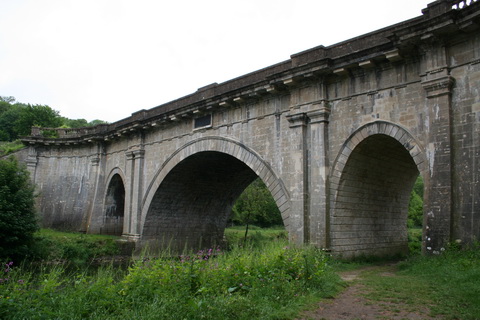
The Dundas aqueduct

The Dundas aqueduct

There is a television station or channel called BBC 4. On Tuesday next, 5 May 2015, it will broadcast

A two-hour, real-time canal boat journey down one of Britain’s most historic waterways, the Kennet and Avon Canal, from Top Lock in Bath to the Dundas Aqueduct. Using an uninterrupted single shot, the film is a rich and absorbing antidote to the frenetic pace and white noise of modern life.

More info here. I do not know whether folk outwith HM Realm can watch the programme on television or on tinterweb.

Portland House

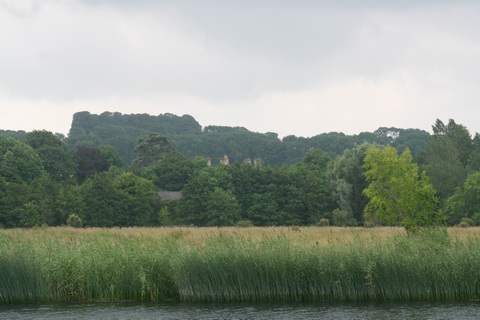
Portland House from the Shannon

Chimneys of Portland House seen from the Shannon

Here is a good article about the destruction of Portland House, just upstream of Portumna on the east bank of the Shannon, by ruffians in 1938.

Early water transport

In a piece about the Augustinian Priory at Athassel, near Golden in Co Tipperary, I wrote

But the really extraordinary thing about Athassel, at least from the waterways viewpoint, is that Dundry stone was used for sculptural (but not for structural) work.

Now, that may mean as little to you as it did to me, until I looked it up and found that Dundry is in Somerset, on the Bristol Channel. The stone could have been taken from there to Waterford by sea and it must have been hauled up the Suir from there.

In the last century, the horse-drawn traffic up the Suir to Clonmel ceased, and Carrick-on-Suir became the effective head of the navigation. But Athassel is at least another twenty miles upstream from Clonmel, and cargoes were brought up there seven hundred or so years ago.

However, traffic in materials for religious establishments was not all one way, and I am indebted to John Ditchfield for the information that some of the oak used in the roof of Salisbury Cathedral was felled in Ireland, on or near the east coast, in the spring of 1222 and used by 1225. Timber from 75 trees has been identified and at least one shipment, by William of Dublin, is recorded in 1224.

Inside Salisbury Cathedral (courtesy of John Ditchfield 2015)

Inside Salisbury Cathedral (courtesy of John Ditchfield 2015)

A 2003 story in the Telegraph says

The wood was bought from “William of Dublin” and carted from Bristol or Southampton.

However, in the English Heritage [now Historic England] report from 2002 on The Tree-Ring Dating of the Roof Carpentry of the Eastern Chapels, North Nave Triforium, and North Porch, Salisbury Cathedral, Wiltshire [PDF], I found nothing about how the timber got from the English coast to Salisbury, which is some distance inland.

It may be, of course, that the Patent Rolls for AD 1224 say what English port was used and how the timber was transported from there to Salisbury. I do not, alas, have a copy of the Patent Rolls to hand and Messrs Google don’t seem to have been able to get hold of them for digitising.

But if the Patent Rolls don’t provide evidence to the contrary, my guess would be that the timber was carried up the Avon. And that might enable Rollalot to insert another date between the first and second in the history of Avon navigation on this page; Rollalot, like me, has read Douglas Caffyn on the right to navigate on rivers.


The Boyne’s turf-sided lock

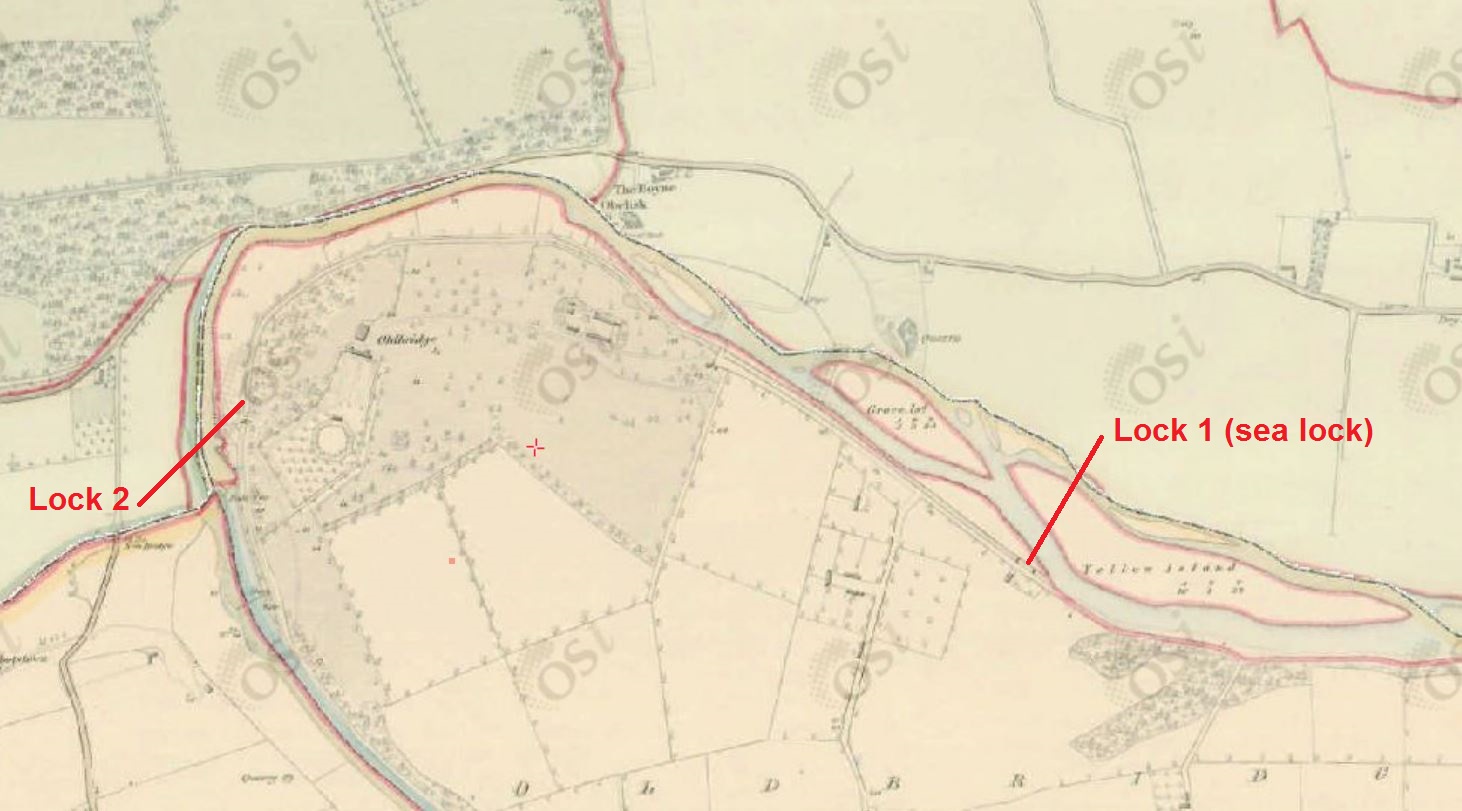
I have a vague recollection of being told that there was no evidence that the turf-sided Lock 2, Oldbridge Guard Lock, on the Boyne Navigation was ever fitted with gates. Or perhaps it was that only a single pair was fitted and that the lock did not operate as a lock.
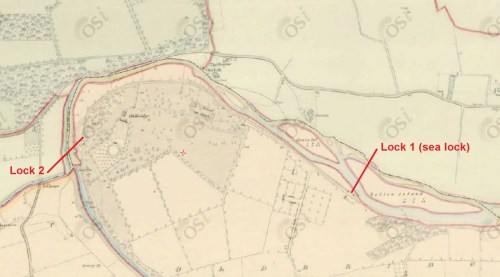
Boyne Locks 1 & 2 (OSI ~1840)

Boyne Locks 1 & 2 (OSI ~1840)

I’m not clear about what I was told but I recall feeling somewhat surprised, given that the lock has stone buttresses at both ends that could have been fitted with gates.
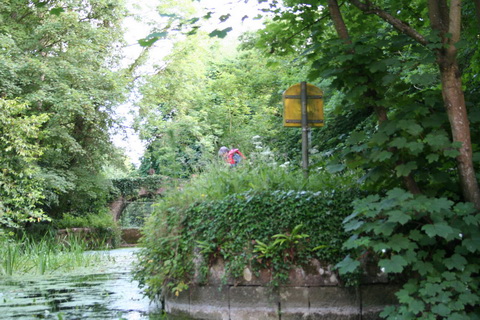
Gate buttresses of turf lock 01_resize_resize

Looking up into the lock past the lower stone buttresses

I should point out that my photos were taken in 2008; much more work has been done since then.
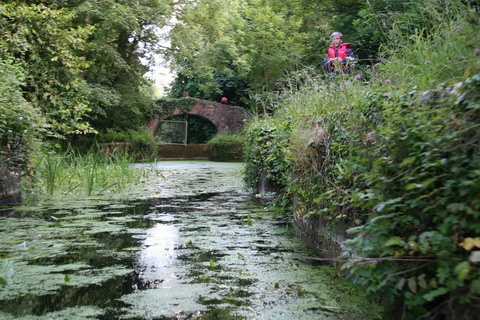
Gate buttresses of turf lock 02_resize_resize

Both sets of buttresses and the bridge
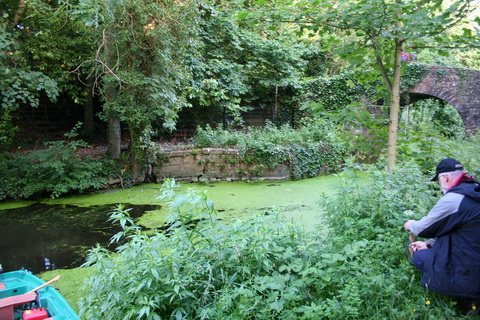
Gate buttresses of turf lock 03_resize_resize

The upper buttresses

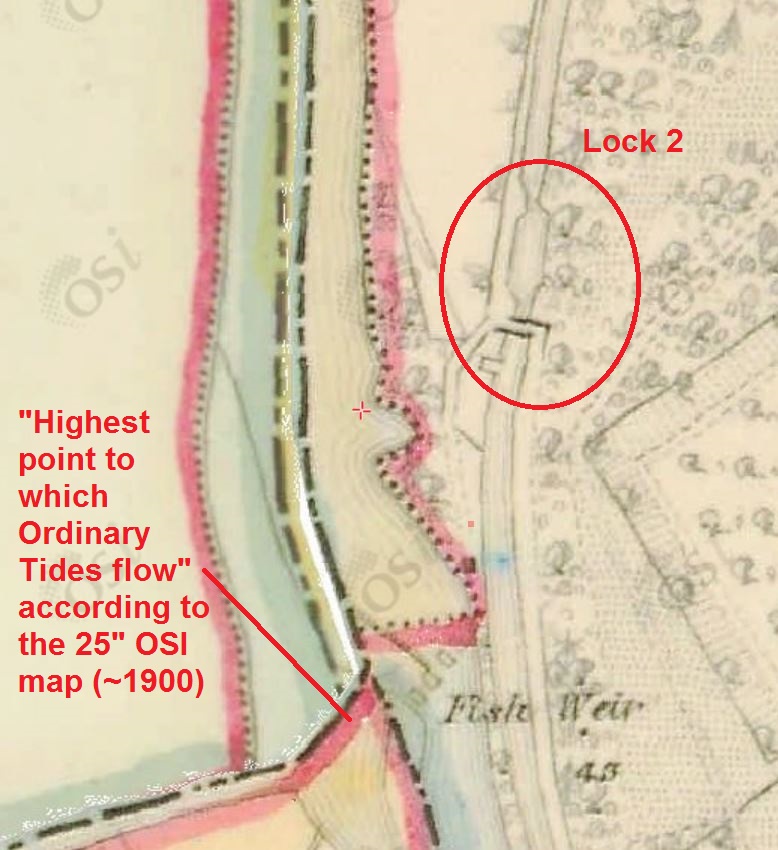
Yet it is true that the 6″ Ordnance Survey map, from around 1840, does not show gates on the lock.
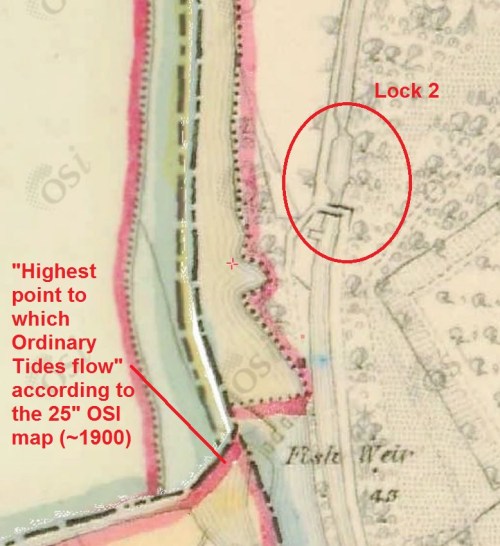
Oldbridge Guard Lock (Lock 2) (OSI ~1840)

Oldbridge Guard Lock (Lock 2) (OSI ~1840)

Unfortunately the relevant section of the 25″ OSI map, from around 1900, is blank at time of writing so I can’t check what it shows.
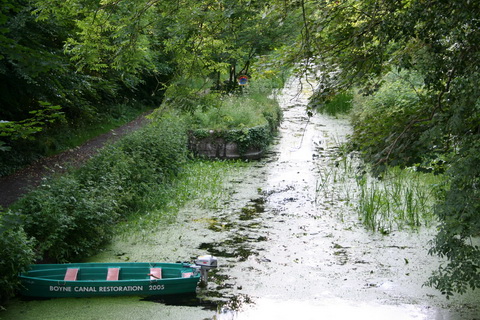
The turf-sided lock on the Boyne

The turf-sided lock on the Boyne

The IWAI Boyne Navigation Branch is currently (March 2015) working towards the installation of gates at the lock but I don’t know whether they’re installing one pair or two pairs.

From reading the reports of the Superintendent for the Boyne Navigation, it is clear that, for at least some part of the period while the navigation was controlled by the Board of [Public] Works, the lock had both top and bottom (breast and tail) gates. Here are some relevant extracts from the reports; I’ve given only enough to make the point.

In January 1869 James Bellew, Superintendent, reported on the works carried out on the Boyne Navigation in 1868. His report, published in the Thirty-seventh Report from the Board of Public Works, Ireland: with the Appendices, for the year 1868 [Alexander Thom for HMSO, Dublin 1869], included this:

Oldbridge Station.

The lock-gates at this station are in excellend working order. The chimney of the lock-keeper’s house has been rebuilt, and some alterations made in the house to render it more comfortable. The guard lock-gates are old, but as they are used only in time of flood, I am of opinion they will last some time longer.

In March 1871, his successor, P J Dodd, wrote in the Thirty-ninth Report:

Oldbridge Guard-lock gates.

The Oldbridge Guard-lock gates are in a very bad state of repair, but new breast gates have been ordered, the contractors have same in hands, and they will be erected during the coming fine season.

And in March 1873 Dodd wrote in the Forty-first Report:

Oldbridge Guard-lock Gates.

The new breast gates of guard-lock [sic] have acted well during the year and heavy flood season, and are in a first class state at present; the tail gates, although old and shaken, are in fair working order, and did very well during the year.

In March 1877 he wrote in the Forty-fifth Report:

Oldbridge Guard Lock-gates.

The breast gates are in very good order; but the tail gates are somewhat shaken, being old.

The gates were tarred in 1878 (Forty-seventh Report); the tail gates had “a slight repair” in 1878 (Forty-eighth Report) and, in April 1881 (Forty-ninth Report), Dodd reported that

These [guard lock] gates require some repairs to sluices and also to the sheeting.

In March 1882 (Fiftieth Report) Dodd wrote:

Oldbridge Guard Locks.

The breast gates are in good repair, tail gates require two new cross rails, sheeting for both folds, and one new balance beam and handrails for both gates.

I do not, of course, know whether there were two pairs of gates at other times.

My OSI logo and permit number for website

Interesting information about the Ulster Canal …

… as distinct from ministerial reelection photo opportunities.

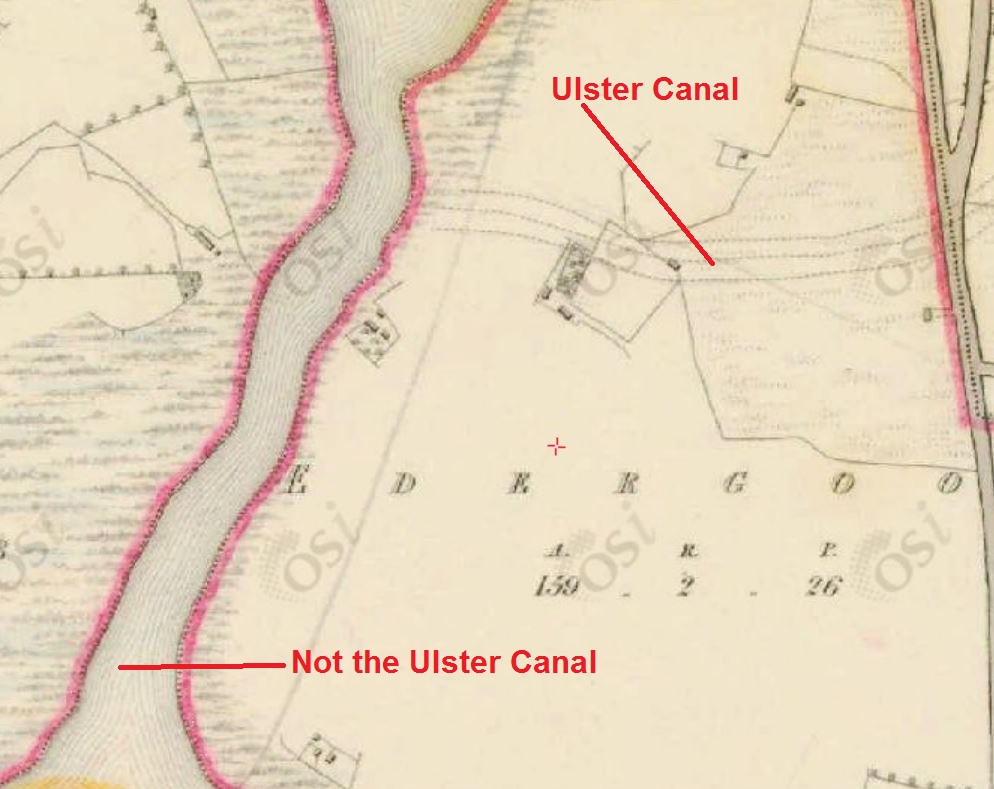
By the way, some folk get confused about the location of the Ulster Canal; this map may help:

Saunderson's Sheugh -v- the Ulster Canal (OSI ~1840)

Saunderson’s Sheugh -v- the Ulster Canal (OSI ~1840)

Anyway, for folk who are interested in weightier matters than ministers talking through portions of their anatomies that they can’t distinguish from their elbows, here is some speculation about opening bridges on the Ulster Canal.

That’s the Ulster Canal Ulster Canal, not the Saunderson’s Sheugh “Ulster Canal”, by the way.

My OSI logo and permit number for website


The industrial heritage of Mullingar …

in song.