Category Archives: Built heritage

Ballinlaw ferry

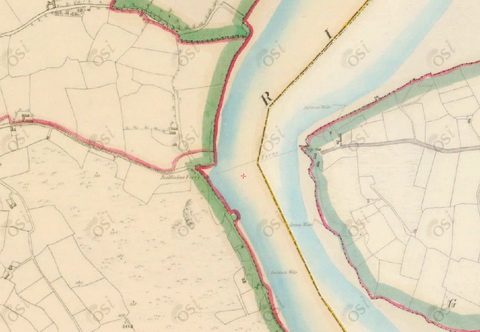
A visitor to my page on the tidal Barrow is a descendant of ferrymen at Ballinlaw on the Barrow. He would like to find a photograph (or, presumably, other illustration) of the ferry boat and I would welcome more information about the service (eg when it ended).

Ballinlaw ferry (OSI ~1840)

Ballinlaw ferry (OSI ~1840)

If anyone knows of a possible source of information or illustration, I will pass it on to the enquirer.

Update January 2019: much information about Ballinlaw Ferry from Andrew Doherty here.

My OSI logo and permit number for website

Clashganny Lock on the Barrow

I would be grateful if anyone could explain the holding tank at Clashganny. Waterways Ireland’s water-level gauge [Flash thingy; takes ages to load] at Clashganny is named “Clashganny Holding Tank”.

A threat to an existing navigation

I have a page here about the River Maigue, one of Ireland’s oldest improved navigations. Incidentally, the river’s name is locally pronounced Mag, to rhyme with bag.

In 2009 I wrote to the Powers That Be to suggest that the (much to be desired) bypass of Adare, a major bottleneck on the N21 Limerick–Tralee/Killarney road, should pass to the south of the town, thus avoiding the interference with the navigation that would undoubtedly have resulted from a northern bypass. It was no doubt the strength of my case, and a recognition of the importance of the navigation, that caused the Powers to opt for a southern bypass. A proposed link to a proposed M20 Limerick–Cork motorway may have been a minor factor in their decision: as nobody was going to build a motorway to Kerry, Adare would piggyback on the motorway to Cork.

However, An Bord Pleanála overturned the decision [PDFs available here] because the M20 proposal was withdrawn. The Irish Cattle and Sheep Farmers’ Association is pleased because it wanted a northern bypass of Adare, to be linked to a new road from Limerick to the port of Foynes; its submission on the matter is here [PDF]. A Limerick ICSA chap has a letter to the editor about the Foynes link in the current issue of the Limerick Leader, although it’s not yet available online.

Now, this proposal has the drawback that it might actually be slightly sensible: a better road to Foynes might stop people agitating for a restoration of the railway line and enable a speedy ending of port activities in Limerick, thus removing large piles of scrap from the riverside. But have the ICSA not considered the damage to the turf-boat traffic to Adare if a road bridge is added to the railway bridge downstream of Adare?

A former British inland waterways campaigner has died

See here and here.

Erne

As I understand it, the level of Lough Erne, and the occasional need to use its only lock, at Portora, are both determined by the operations of the Lough Erne hydroelectric scheme, although most of the lake, and the lock, are in Northern Ireland, while the hydroelectric stations, at Cliff and Cathaleen’s Fall, are both in the republic. The Erne scheme is less well known, and has been less often written about, than the Shannon scheme at Ardnacrusha, so it is good to note that two Ballyshannon men, Dessie Doyle and Brian Drummond, have written a book about the Erne scheme.

Unfortunately it is not clear from Messrs Lilliput Press’s website whether the book has already been published or is to appear some time in 2014. No publication date is given, but on the other hand it is not in the list of forthcoming books, but that list does not extend beyond November 2013. I would be glad to be able to carry reliable information, but I regret that I am unable to do so.

Draining Lough Derg

The ESB is currently letting more water down the old course of the Shannon, from Parteen Villa Weir through O’Briensbridge, Castleconnell and the Falls of Doonass. This channel gets the first 10 cubic metres per second from the Shannon; the next 400 go through Ardnacrusha and anything left over is sent down the old course.

The result is to help to reduce the water level on Lough Derg while raising it on the old course.
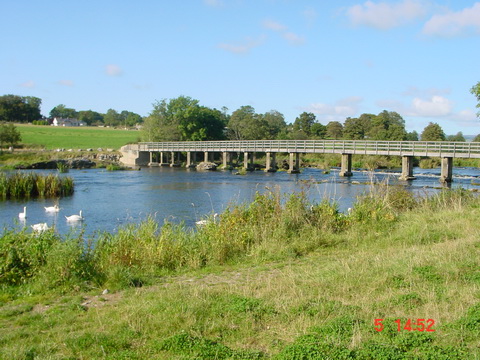
The footbridge in Castleconnell at normal summer level in 2002
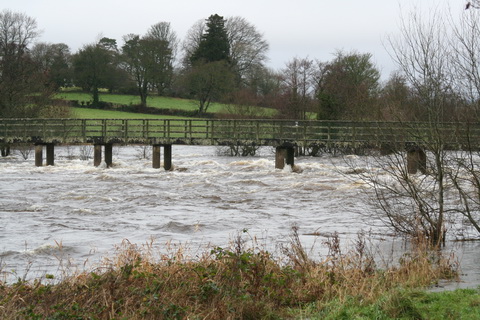
The footbridge in Castleconnell at normal summer level in 2002

The footbridge on 1 January 2014

The footbridge on 1 January 2014

Before Ardnacrusha was built, the old channel took the entire flow of the Shannon, so it can take more than it has now.
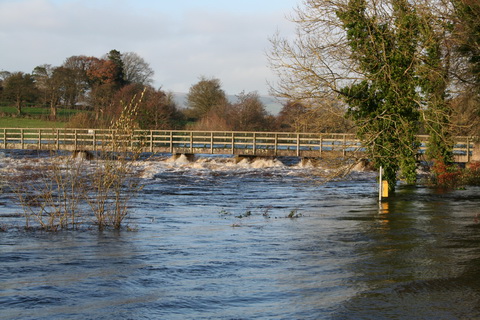
The footbridge in the floods of November 2009

The footbridge in the floods of November 2009

The level is still below that of 2009, when the land around the old channel flooded in several places. But much land is waterlogged: I saw yesterday that the upper reaches of the Nore, the Barrow and other rivers were in flood. And more rain is forecast.

Wouldn’t it be nice if some of that could be sent to Dublin instead? I see that some folk claim (on what looks like a website that hasn’t been updated for a while) that the evil Dublin folk want to extract 350 million litres of water from the Shannon every day; the original idea was to take it from Lough Ree but now it seems that Lough Derg is the preferred source.

Now 350 million litres sounds like a lot, but it’s 350 000 cubic metres per day, 14 583.3 per hour, 243.05 per minute, 4.05 per second, which is less than 1% of normal flow through the two channels draining Lough Derg. There’s a lot more at the moment, and the good citizens of Dublin are welcome to come down and fill their buckets. I suspect that Clare TD Michael McNamara has got things out of proportion.

Addendum: 350 million litres per day, over a lake whose area is 130 square kilometres, would lower the level of the lake (if my calculations are correct) by 2.69 millimetres. If no water entered the lake, the level would be down 983 mm after a year, ignoring evaporation and other abstractions and assuming that the Shannon and other tributaries no longer flowed in and that there was no rain.

Winter Quarters

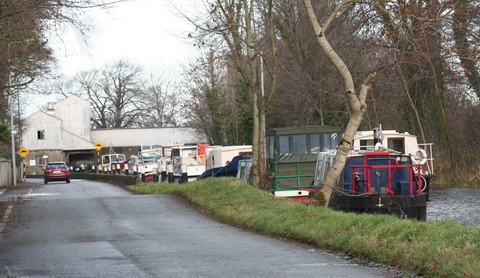
At Leinster Mills, Naas Branch, new year's eve 2013

At Leinster Mills, Naas Branch, new year’s eve 2013

Ballylongford man’s posthumous honour

Herbert Kitchener, born in Ballylongford near Saleen in 1850, shortly after the Shannon Commissioners completed their work, is to appear on a new UK £2 coin.

Lough Derg 27 December 2013

Water level

Dromineer 20131227 01_resize

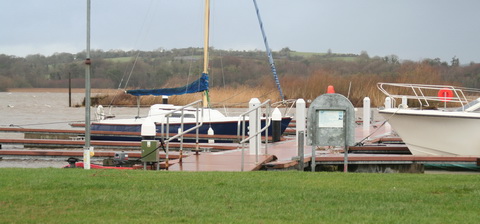
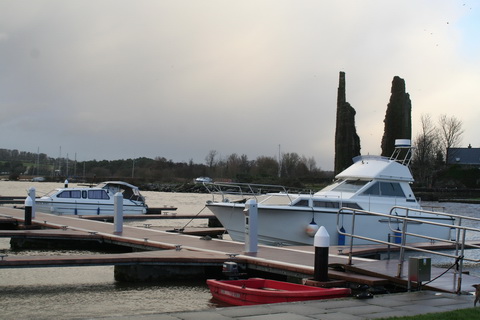
The ramp to the pontoons in Dromineer is now sloping upwards

The water level at Banagher has risen about one metre in the past 35 days.

Wind

Dromineer 20131227 02_resize

Dromineer people need to drink more wine

Dromineer 20131227 04_resize

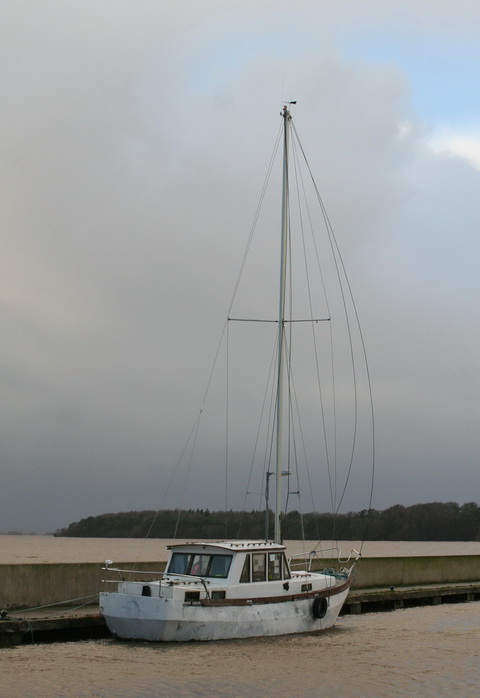
The ghost ship is back

Towers

Dromineer 20131227 05_resize

Dromineer sans ivy

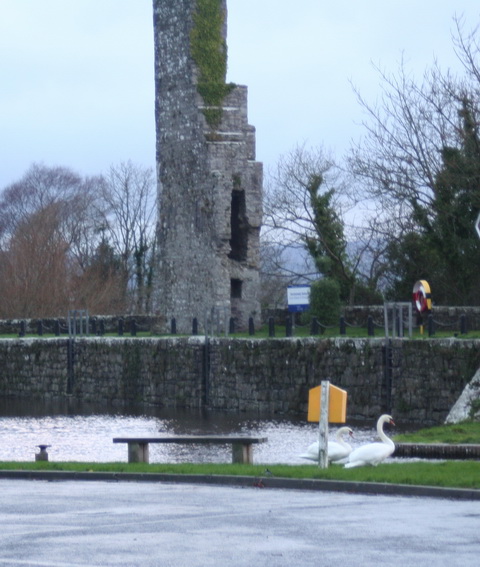
Garrykennedy 20131227 02_resize

Garrykennedy

Garrykennedy 20131227 11_resize

Garrykennedy from a distance

Shelter

Dromineer 20131227 03_resize

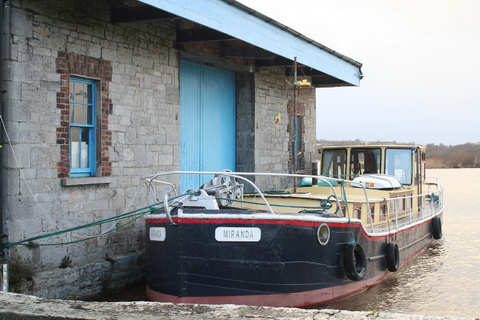
Miranda in Dromineer

Garrykennedy 20131227 04_resize

Garrykennedy 1

Garrykennedy 20131227 05_resize

Fewer boats in WI berths this year, I think

Garrykennedy 20131227 03_resize

Garrykennedy 2


Money from the bog

To a small extent reclamation is now going on in Ireland; Mr M’Nab, of Castle Connell, county Limerick, has reclaimed 80 acres of the worst red bog, devoid of vegetation and 20 feet deep. It was drained, then coated with the subsoil, and the land which was not worth 2s 6d per acre is now worth 30s per acre.

Thus Robert Montgomery Martin in his Ireland before and after the Union with Great Britain third edition with additions; J D Nichols and Son, London; James McGlashen, Dublin 1848.

I have written here about Mr Macnab (that was how the spelling settled down) and his talent for extracting money from the bog at Portcrusha, which is between Castleconnell and Montpelier, Co Limerick. It seems that his achievements are still remembered — and emulated.

Incidentally, in the same work, published in 1848, Mr Martin refers to the

… large practical mind, great experience,  and Christian philosophy …

of Sir Charles Trevelyan.