Category Archives: Canals

The Broadstone dry docks

See here for a slightly more detailed view from 1847. The third dry dock, at the junction with the main line, is here.

Mallett’s Insistent Pontoon is shown here marked “floating bridge”; the map also shows the drawbridge that featured in the attempted murder of Henry Garnett.

Waterways update: work in progress (1759)

Here is some information about the work of Messrs Ockenden and Omer on Irish waterways up to 1759. It is extracted from a book by Henry Brooke; Ockenden had, twenty years earlier, subscribed to support Brooke’s play. It is not impossible that they were acquainted, in Ireland or in England. Apart from anything else, both were supporters of Frederick, Prince of Wales: see A N Newman “The Political Patronage of Frederick Lewis, Prince of Wales” in The Historical Journal Vol 1 No 1 1958 on Ockenden’s post in the prince’s household at £100 a year and here on Frederick’s “many attentions” to Brooke.

Brooke’s account contains some information about Ockenden’s work that I have not seen elsewhere. I found the reference to Brooke in Thomas McIlvenna This Wonder-Working Canal: a history of the Tyrone Navigation Coalisland Canal Branch IWAI 2005.

Who was William Ockenden?

William Ockenden has been described as a Dutch engineer who worked on three eighteenth century Irish navigations: the Mallow to Lombardstown canal, the Kilkenny/Nore navigation and the Limerick Navigation [Park Canal section], all of them notably unsuccessful.

It seems likely that he was English, not Dutch, but may have lived in Ireland before inheriting property in England. But was he an engineer or a mill-owner and MP? Were there one or two William Ockendens at the time?

Here is some information and some speculation. I would welcome more of the first.

The Newry bypass

I hesitate to criticise the Newry & Portadown Branch of the Inland Waterways Association of Ireland, admirable folk who conduct regular work parties improving the Newry Canal. So perhaps I should say that I disagree with them instead — at least on the proposal for a Southern Relief Road, aka bypass, around Newry, linking “the Warrenpoint Dual Carriageway to the A1 Dublin/ Belfast Road“.

Such a bypass is a very good idea and, of course, far better than the insane Narrow Water handsacrosstheborder project. But the new road must cross  the Newry River and the Newry Ship Canal, and I would be vastly surprised if there were any economic justification for the cost of an opening section or for the disruption that each opening would cause to traffic. Certainly six or twelve sailing vessels would no longer be able to reach the Albert Basin in Newry, but the greatest good of the greatest number should surely prevail.

I can’t see that the absence of sailing pleasure craft from Newry would in any  way diminish the heritage or historic value of the ship canal or the basin, and they are of course entirely irrelevant to the stillwater canal.

A spokesman from the Inland Waterways Association of Ireland” says that

The IWAI was formed in 1954 to stop the building of low bridges on the River Shannon. Fortunately this campaign was successful otherwise there would be no hire boats on the Shannon today. Think of the loss of revenue. This should be a lesson to the bridge builders in Newry.

This is rubbish, for two reasons. First, sailing vessels on Carlingford Lough are never going to be available for hire on the Newry Canal, so their inability to reach Albert Basin would have little effect.

Second, the IWAI campaign on the Shannon was notably unsuccessful. Instead of swivelling bridges that would allow masted vessels through, the Shannon now has fixed bridges (Banagher, Shannonbridge, Athlone) and lifting bridges (Roosky, Tarmonbarry) that lift enough to allow motor cruisers through, but not enough for sailing vessels.

Ruth Delany [in Ireland’s Inland Waterways: celebrating 300 years Appletree Press, Belfast 2004] says that the IWAI Shannon campaign resulted in there being a minimum clearance of 4.3m on the Shannon, which is a long way from the 35m that the Newry & Portadown folk are seeking. The only Shannon bridge providing that clearance is Portumna, a swivel bridge, which (unlike the others mentioned above) was not — or its ancestor was not — built by the Shannon Commissioners.

By using the Shannon as a model, the N&P folk have actually weakened their case: the 9m clearance suggested for the Newry bypass is more than twice what the Shannon provides.

 

Up the Inny

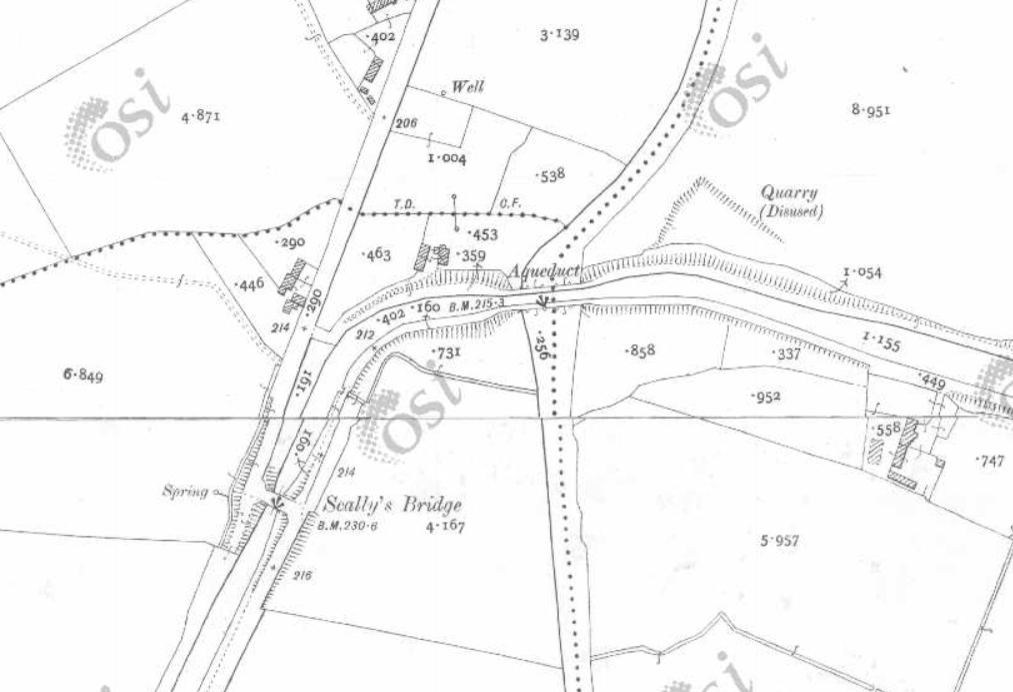
I have added some photos to my page on the Inny. They were taken in relatively poor light on 17 November 2018 and cover some places between the Red Bridge and Ballinalack. My attempt to find the canal in Baronstown was unsuccessful and I didn’t have time to go as far as Lough Derravaragh, alas.

Pumping the Royal

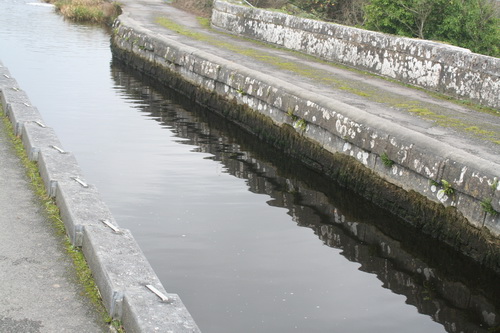
Waterways Ireland is still pumping water from the River Inny into the Royal Canal at the Whitworth Aqueduct near Abbeyshrule, but the level is still well down. I imagine that that makes it impossible, at least for larger boats, to travel the canal at present.

The location

The inflow from the pump

The level on the aqueduct

Bolshies on the Grand

The Grand Canal Company strike of 1890, starring William Martin Murphy and Barry Fitzgerald.

Maya Bugge and the Standedge Tunnel

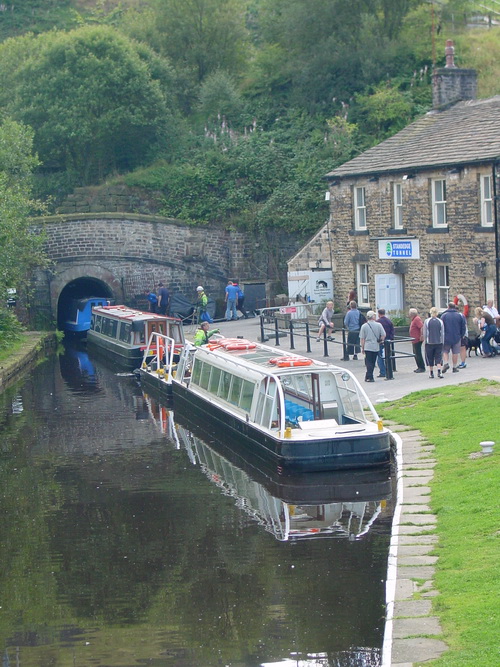
The Standedge Tunnel, on the Huddersfield Narrow Canal, is the longest (5 km), deepest (under the Pennines) and highest (above sea level) canal tunnel in Britain. There is nothing remotely like it in Ireland, where the only canal tunnel was a miserable effort on the Ulster Canal in Monaghan town.

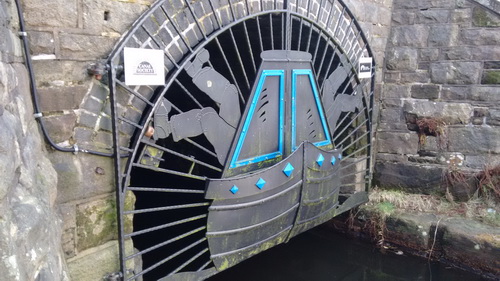
The western entrance to the Standedge Tunnel: the Diggle portal

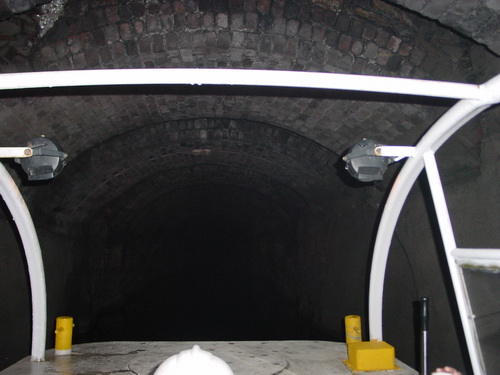
Inside the tunnel (2005)

Light at the end of the … (2005)

The eastern end at Standedge, a short walk from Marsden

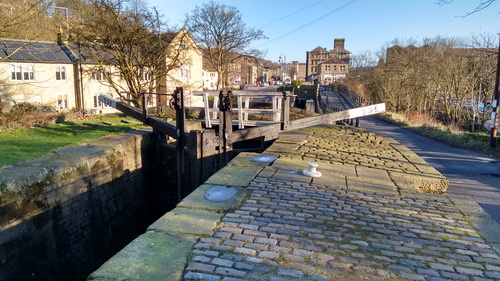
The Huddersfield Narrow Canal in Slaithwaite, downstream from Marsden

The “large village” of Marsden (home to the Riverhead Brewery) is close to the Standedge portal. It runs an annual jazz festival and, in 2017, it had the Norwegian cellist and composer Maya Bugge create, perform and record in the Standedge Tunnel.

The recording, No Exit, is now available on Bandcamp for a mere STG£10 (digital) or £12 (CD). There are five tracks:

  • Lullaby for Standedge Tunnel
  • Legging
  • Passage
  • Boat
  • No Exit.

Highly recommended.

Woodman, don’t spare that tree

I have updated my recent post about the overgrowth of trees on the Shannon–Erne Waterway to welcome today’s news that “tree trimming and hedge cutting will be carried out at various locations on the Shannon-Erne Waterway” between September 2018 and February 2019.

I hope that “trimming” is a polite understatement and that the trees will be cut right back to, or beyond, the edge of the waterway.


Imperial measure

Rule for ascertaining the weight of hay stacks

Measure the length and breadth of the stack; then take its height from the ground to the eaves, and add to this last one-third of the height from the eaves to the top. Multiply the length by the breadth, and the product by the height, all expressed in feet; divide the amount by 27, to find the cubic yards, which multiply by the number of stones supposed to be in a cubic yard (viz in a stack of new hay, six stones; if the stack has stood a considerable time, eight stones; and if old hay, nine stones), and you have the weight in stones.

For example, suppose a stack to be 60 feet in length, 30 in breadth, 12 in height from the ground to the eaves, and 9 (the third of which is 3) from the eaves to the top; then 60 X 30 X 15 = 27000; 27000 ÷ 27 = 1000; and 1000 X 9 = 9000 stones of old hay.

Samuel Salt Statistics and Calculations essentially necessary to Persons connected with Railways or Canals; containing a variety of information not to be found elsewhere 2nd ed Effingham Wilson, London 1846

You too can possess a copy of this invaluable book, which has much useful information about railways and canals