Category Archives: Irish inland waterways vessels

The olden days …

… when the police caught thieves and recovered property.

Utility and Vigilance of the City Police. — On Saturday morning, at about eight o’clock, a girl named Ann Harold, absconded with some valuable clothes the property of Mr Hannan, Catherine-streeet, Classical Teacher, to whom she was servant; and intimation of the robbery being immediately given to the police, who were all on the alert, that most indefatigable and successful “terror of evil doers”, Serjeant Reidy, discovered and arrested an associate of Harold’s from whom it was ascertained that she had sailed on board the packet for Dublin, on Saturday evening. On which Joseph Wilson, of the city police, with an alacrity and quickness not to be surpassed, set off for Killaloe, where from his activity, intelligence and knowledge of the country, he succeeded in apprehending the thief, and recovering all the stolen property, except what she had pawned and brought her into Limerick on Sunday evening, where she is now safely lodged to abide the fiat of the Recorder on Tuesday.

Clonmel Herald 12 July 1834 quoting the Limerick Star

Moral: if there’s no transport on Sundays, don’t time your getaway for Saturday evening.

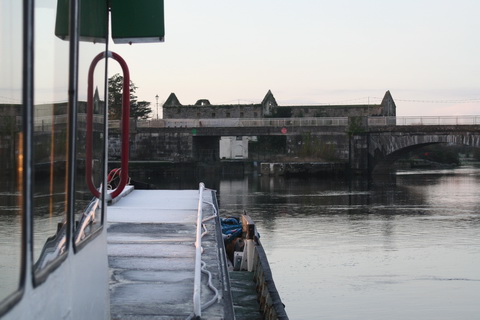
Greyways and the Black Bridge

Martin McGuinness [SF] was asked recently, in the Northern Ireland Assembly, about blueways:

Leslie Cree [UUP]: It was interesting to read that Waterways Ireland has developed this first blueway in the Carrick-on-Shannon area. Can he share with us if, in fact, Waterways Ireland has developed any projects for the Erne waterway itself?

Mr McGuinness said:

These projects are under ongoing consideration by Waterways Ireland, as the development of blueways and greenways could add to our tourist potential. It is clear from how greenways have been used, particularly in the west of Ireland, that they have huge health benefits for those now walking and cycling and involved in physical activity.

There is a proposal for another greenway from Derry city to County Donegal. Blueways and greenways offer important tourist potential, and it is exciting to see that Waterways Ireland is considering the linkage in the Leitrim area and how it can be extended to Lough Erne.

But, if I might remind TPTB, not everybody likes walking, cycling and physical activity; not everybody is going to be rolling around in a kayak or paddling a canoe. There are older folk, there are those who rightly view exercise with the gravest of suspicion and there are those whose interests simply lie elsewhere.

The Greyway concept

It is for such folk that I have developed the Greyway [TM]  concept. It’s the same as a blueway or a greenway but without the sweating or the lurid dayglo clothing.

The basic idea is that you form a “route” or “way” as a marketing concept to get more people using your existing assets. Your expenditure is low: research, product development, marketing and information provision rather than infrastructure; self-guided rather than staffed user experiences. Direct income might be low too, although there may be ways to extract cash from users; there might also be spin-off opportunities for other providers. [All my usual reservations about small-scale providers apply here too.]

There might be Greyways catering for

  • walkers: gentle walks with opportunities for sitting down, drinking tea and getting a taxi back to the start
  • drivers: long-distance routes taking in several sites
  • boaters: most of Waterways Ireland’s sites are accessible by water and by road. Furthermore, some trip boats might use elements of the Greyway material in providing information for their passengers.

Themes

You need a theme to attract people: “come and walk/drive the X Greyway and see all the lovely/interesting Ys”. No doubt there are several possible values for Y: bunnies, trees, fish, bogs, hills …. But the main thing that Waterways Ireland has to sell, and that it does not currently sell, is its industrial heritage. The Shannon, in particular, exists as an improved navigation only because of (a) steam, (b) the British industrial revolution, (c) Irish agriculture and (d) low politics. And industrial heritage is something that interests some at least of the older folk. Package it into routes and sell it for grey pounds, euros or dollars.

There is all sorts of interesting stuff along the Shannon, mostly just lying there, and it should be put to work. The most concentrated section is along the old Limerick Navigation, from Limerick to Killaloe: for instance, last time I looked seven of the original twelve milestones were still present. [The distance was 12 Irish miles, approx 24 km or 15 statute miles.] It’s a walkable route and it includes

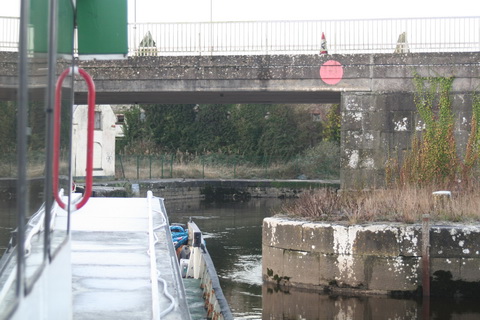
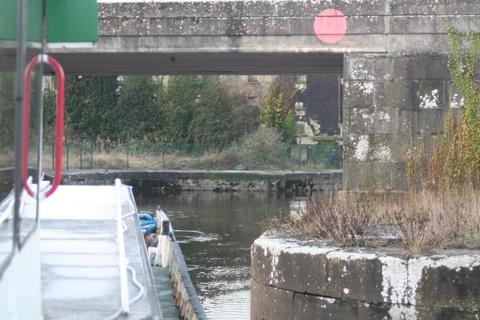
  • the neglected Black Bridge at Plassey, whose very existence reflects the Victorian version of Just-in-time delivery
  • the bridge and artefacts at O’Briensbridge
  • the richest waterways heritage site in Ireland at Killaloe.

But there could also be driving tours along the middle Shannon, between Portumna and Athlone, where there is lots to see, and from Lanesborough upwards. Shannon Harbour might eventually house a museum ….

ERIH

What I’m suggesting is that Waterways Ireland should designate the Shannon as the first route (as opposed to site) in Ireland within the European Route of Industrial Heritage [ERIH] framework. ERIH’s website includes descriptions of the route system and of anchor points, which may be too advanced for present use, but why not a European Theme Route in Transport and Communication? Ireland might even make a case for the use of advanced (or at least interesting) transport technology (steamers) in carrying agricultural produce to industrial markets.

Furthermore, if CIE were to cooperate, the railways might be brought in too, and the livestock trade, and Dublin Port, and a regional route linking to Liverpool and the railway to Manchester ….

There is an interesting story to be told about the Shannon and its links to the east coast and beyond; its industrial heritage could be used to attract tourists and entertain natives.


Brendan Smith TD and W T Mulvany

Wednesday 22 May 2013

Brendan Smith [FF, Cavan-Monaghan]: To ask the Minister for Arts, Heritage and the Gaeltacht the position regarding the feasibility study that has been underway for some time in relation to the proposed extension of the Erne Navigation from Belturbet to Killykeen and Killeshandra; when this study will be completed; and if he will make a statement on the matter.

Jimmy Deenihan [FG Kerry North/West Limerick]: I am informed by Waterways Ireland that the current position is that work is continuing on the collection of data relating to this project and Waterways Ireland is currently preparing draft options for the project. At that point consultants will then assess the environmental implications of the options. It is expected that the feasibility study will be completed as planned by the end of 2013.

19 December 2013

Brendan Smith: To ask the Minister for Arts, Heritage and the Gaeltacht if he has received the feasibility study on the proposed extension of the Erne navigation from Belturbet to Killeshandra and Killykeen; and if he will make a statement on the matter.

Jimmy Deenihan: I am informed by Waterways Ireland that it commissioned a Strategic Environment Assessment for the possible extension of the Erne Navigation from Belturbet to Killeshandra and Killykeen.

On reviewing the environmental information from this process, Waterways Ireland considers that the environmental designations of this lake complex make the feasibility of the proposed navigation extension highly unviable. For that reason, I am advised that Waterways Ireland does not propose to pursue this project any further at this time.

11 December 2014

Brendan Smith: To ask the Minister for Arts, Heritage and the Gaeltacht the position regarding the proposal to extend the Erne navigation from Belturbet to Killykeen and Killeshandra, County Cavan; when this project will proceed to the next stage; and if she will make a statement on the matter.

Heather Humphreys [FG, Cavan-Monaghan]: I have been informed by Waterways Ireland that it commissioned a Strategic Environmental Assessment for the proposed extension of the Erne Navigation from Belturbet to Killeshandra and Killykeen in County Cavan. I am further advised that, on reviewing the environmental information from this process, Waterways Ireland’s considered view is that the development of a viable project is not feasible, given the conservation designations of the lake complex. Waterways Ireland does not, therefore, propose to pursue the proposal further at this time.

It would be nice if Mr Smith would (a) check what he was told last time and (b) tell whatever constituent is lobbying for this scheme to get stuffed. Even W T Mulvany wasn’t able to get a navigation to Lough Oughter.

Building more navigations in Ireland is a waste of money: it simply spreads the existing business more thinly. It will not attract extra business from inside or outside the state (apart from a small number of waterway twitchers). Some pub-owners in Killykeen or Killeshandra might sell some more beer-like substance, and if they would like to pay for a navigation that’s fine, but there is no advantage to the state in paying for it.

Thanks to KildareStreet for the notification.

Rail, road and river: steam in 1829

Four news items, all in the Varieties section of the Hampshire Chronicle on 19 October 1829.

Rail

The trial of the locomotive carriages near Liverpool was continued on Saturday, when Mr Stephenson’s engine, the Rocket, disencumbered of every weight, shot along the road at the almost incredible rate of 32 miles in the hour! So astonishing was the celerity with which the engine, without its apparatus, darted past the spectators, that it could be compared to nothing but the rapidity with which the swallow darts through the air.

Road 1

Mr Gurney’s steam carriage can be stopped dead within the space of two yards, though going at the rate of from 18 to 20 miles an hour, and this without any inconvenient shock to the machinery or passengers. It is capable of dragging a carriage, weighing three tons and containing 100 passengers, over a level road, at the rate of eight, nine, or ten miles an hour: will drag the same carriage, containing 25 passengers, up the steepest road in England, at the same rate. On ascending hills, for every cwt that is shifted from the front to the hind wheels, the carriage requires an additional drawing power of 4 cwt and on level ground an additional power of half a ton. The contrivance by which the carriage may be retarded at pleasure on descending hills, acts independently of the wheels, so that the sliding and cutting effect of the ordinary drags is entirely avoided.

Road 2

Sir James Anderson has entered into a contract with the Irish Post Office, by which he undertakes to convey the mails throughout Ireland at the rate of 12 miles an hour, in coaches impelled by steam, calculated to carry two or three passengers, in addition to the coachman and guard. This invention of Sir James Anderson, for which he has obtained a patent, has seldom been exhibited out of the yard in which it was constructed; but it is said to bear very little resemblance to the drag-coach of Mr Gurney. The contract is understood to be for 14 years, and the only pecuniary stipulation made by Sir James is, that he shall receive half the money which the Government shall save by adopting his system. He will shortly commence carrying the mails between Howth and Dublin. The road is level and good, and the distance not more than nine or ten miles.

[Note: an 1841 proposal by Sir James Anderson is covered here. And here is a longer piece about Sir James and the Steam Carriage and Waggon Company of Ireland.]

River

An iron steam boat of a peculiar construction, and having the paddles in the centre, has been built at Liverpool, by Messrs Fawcell and Co for the Irish Inland Steam Navigation Company. This vessel was tried in the Mersey on Monday, and the result was highly satisfactory. Another iron vessel, of 60 tons burden, was launched on Tuesday from Messrs Wm Laird and Son’s yard, on the banks of Wallasey Pool.

[Note: the Fawcett steamer and the 60-ton barge were destined for the Shannon. The barge was the first iron vessel built by Lairds.]

Taking the pills

St John’s and other pills are discussed on this page, where I said

The term is associated with south-western England and Wales but it is also found in south-eastern Ireland.

Reading Hugh Conway-Jones’s excellent Working Life on Severn & Canal: reminiscences of working boatmen (Alan Sutton, 1990), I noted this:

By the time you got to Avonmouth, the tide was more than half-ebbed out and the dock gates were closed. So the tug took you round into the Old Entrance (what we called the Old Way), and you tied up there alongside the pier. As the tide ebbed, the barges lay on the bottom and then you could get your head down for a nice sleep while the tug went off to Portishead to anchor in the pill there.

I’m not sure whether this Pill is the one the boatman had in mind: although the two places, Portishead and Pill, are often mentioned together, it seems a bit far away to be regarded as Portishead’s pill. Further information welcome — and sightings of any other pills from either side of the Severn.

Incidentally, the sort of traffic and conditions Conway-Jones wrote about seem to be similar to those on the Barrow and Suir estuaries (allowing for their smaller scale).


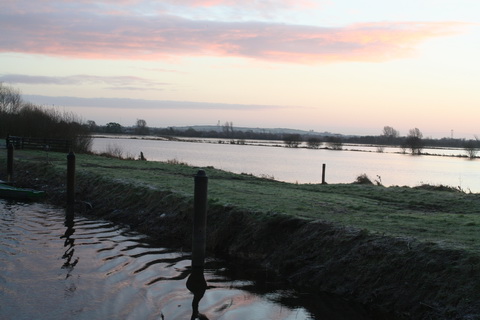
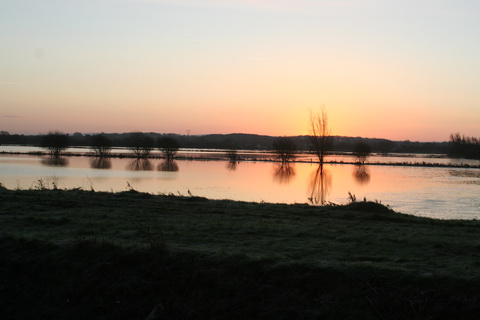
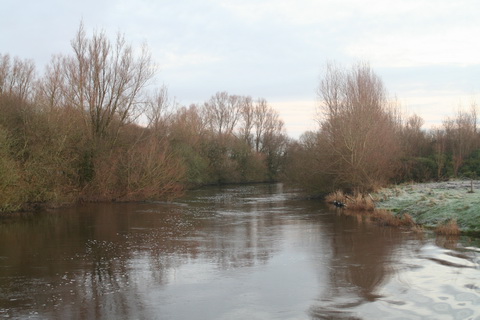
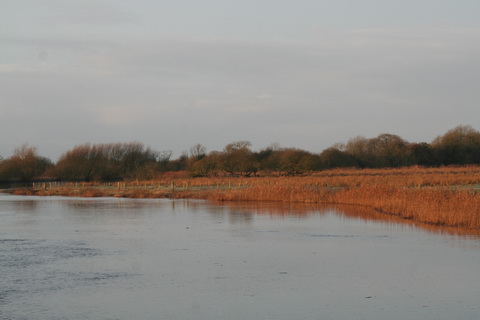
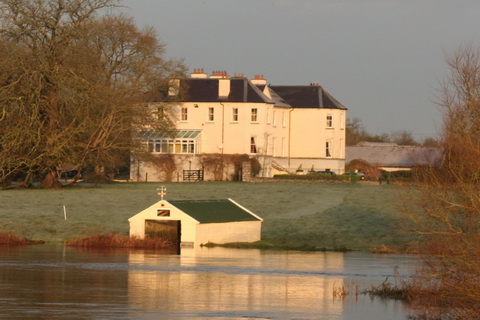
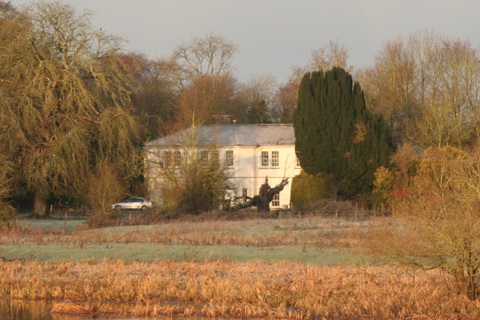
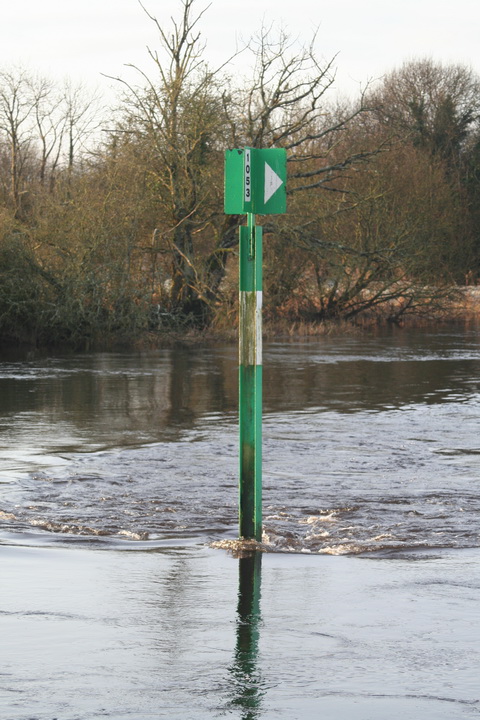
The Shannon in winter

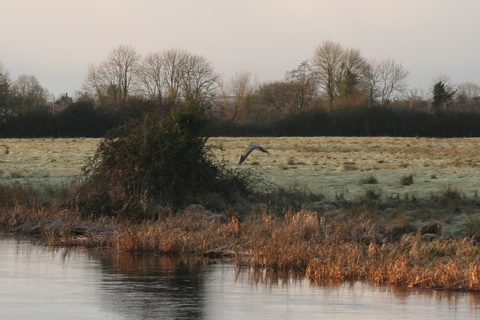
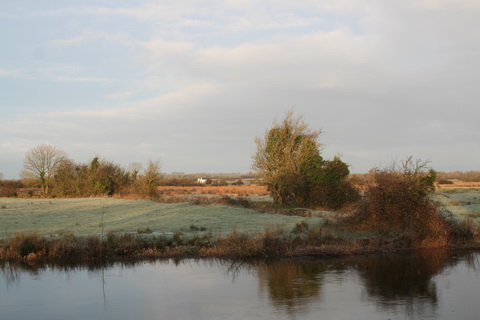
Downriver from Shannon Harbour to Dromineer in December 2014. It began as a bright, cold morning.

Shannon Harbour to Dromineer December 2014 01_resize

Leaving Shannon Harbour after icebreaking between the locks

Shannon Harbour to Dromineer December 2014 02_resize

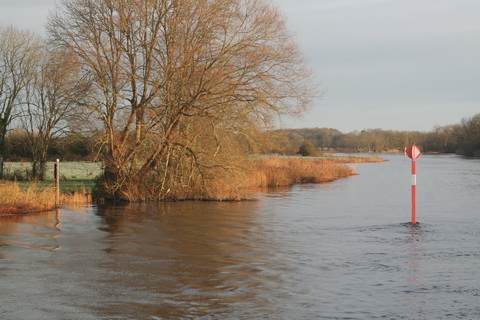
Flooding to the south-east

Shannon Harbour to Dromineer December 2014 03_resize

But southward, look …

Shannon Harbour to Dromineer December 2014 06_resize

The Brosna

Shannon Harbour to Dromineer December 2014 73_resize

Heading for Banagher Bridge 1

Shannon Harbour to Dromineer December 2014 75_resize

Keeping close to the pontoons

Shannon Harbour to Dromineer December 2014 98_resize

Heading for Banagher Bridge 2

Shannon Harbour to Dromineer December 2014 103_resize

Heading for Banagher Bridge 3

There is a YouTube video of the shooting of the bridge here. It seems to start automatically, including sound; I don’t know how to avoid that.

Shannon Harbour to Dromineer December 2014 107_resize

Looking back at Banagher

Shannon Harbour to Dromineer December 2014 116_resize

Colours

Shannon Harbour to Dromineer December 2014 124_resize

Invernisk

Shannon Harbour to Dromineer December 2014 129_resize

Shannon Grove

Shannon Harbour to Dromineer December 2014 134_resize

Current

Shannon Harbour to Dromineer December 2014 140_resize

Scarpering heron

Shannon Harbour to Dromineer December 2014 146_resize

Colours

Shannon Harbour to Dromineer December 2014 149_resize

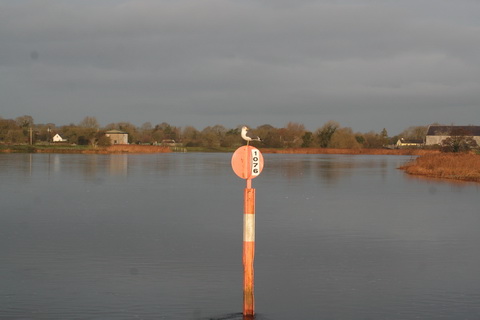
Marker and gauge

Shannon Harbour to Dromineer December 2014 151_resize

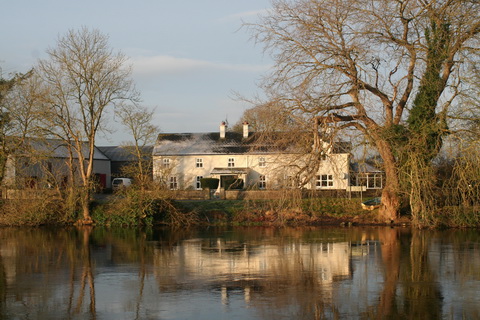
House

Shannon Harbour to Dromineer December 2014 169_resize

Boats at Meelick

Shannon Harbour to Dromineer December 2014 170_resize

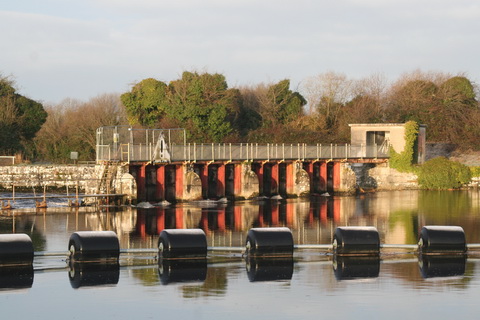
Meelick weir

Shannon Harbour to Dromineer December 2014 174_resize

East bank

Shannon Harbour to Dromineer December 2014 176_resize

Protective boom

Shannon Harbour to Dromineer December 2014 181_resize

Sluices

Shannon Harbour to Dromineer December 2014 198_resize

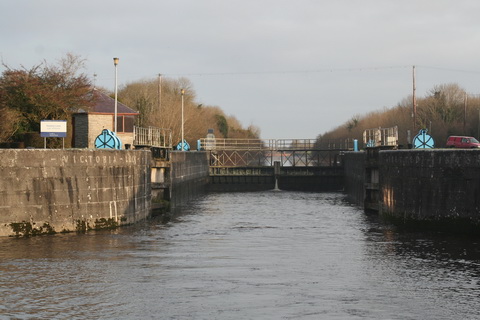
Through Meelick Lock

Shannon Harbour to Dromineer December 2014 205_resize

One bird

Shannon Harbour to Dromineer December 2014 213_resize

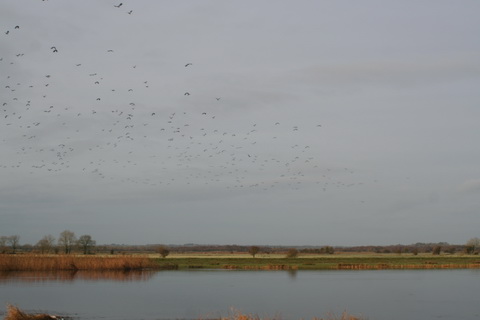
Many birds

Shannon Harbour to Dromineer December 2014 221_resize

Reeds

Shannon Harbour to Dromineer December 2014 226_resize

Architecture

Shannon Harbour to Dromineer December 2014 228_resize

Munster Harbour

Shannon Harbour to Dromineer December 2014 233_resize

Delaying Eamon Egan

Shannon Harbour to Dromineer December 2014 235_resize

Gateway to civilisation

Shannon Harbour to Dromineer December 2014 237_resize

Connacht Harbour

Shannon Harbour to Dromineer December 2014 239_resize

Lough Derg: weather has changed

Shannon Harbour to Dromineer December 2014 243_resize

Journey’s end, Dromineer


DUKWs? Fiat lux

I have written here about a series of misfortunes suffered by DUKWs in Liverpool and London. On 16 June 2013 I put up some photos of DUKWs in Dublin and Liverpool; I pointed to what seemed to me to be two differences between practices in the two cities:

First, before they enter the water at Grand Canal Dock, Ringsend, the DUKWs are fitted with extra buoyancy in cylinders that slide into racks along their sides. I saw the VikingSplash crew removing the cylinders from the yellow DUKW; it took only a couple of minutes, and I presume that it didn’t take much longer to put the cylinders on.

Second, the Dublin passengers are issued with buoyancy aids before they take to the water. I can’t see any buoyancy aids on the Liverpool passengers, although it’s possible that they are out of camera shot.

There are links on that page to photos, news reports and a seriously scary video of the sinking of a DUKW in Liverpool. Then, in September 2013, a DUKW went on fire on the Thames; my brief report and links here. In October 2013 the UK Marine Accident Investigation Branch issued a safety bulletin (my report here, with links) pointing to foam buoyancy as a common factor. The Liverpool DUKWs did not have enough buoyancy to keep them afloat if they started taking water and MAIB thought it would be impossible to get enough into them. On the London vessel,

… the most likely cause of fire was the action of the rotating drive shaft (or other moving parts) on the oil contaminated surfaces of the buoyancy foam blocks.

In November 2013 I noted that the wearing of lifejackets had been discussed in London and I commented on the policy of the Dublin operator, VikingSplash:

The point that strikes me is that, in both UK accidents, passengers had little time to don lifejackets and would have been trying to put them on in a confined space and under less than ideal conditions. It seems to me that Viking Splash’s policy [having passengers don lifejackets before taking to the water] is the right one.

In December 2014 the MAIB published its report into the two accidents. There’s a Guardian news report here [h/t gjb] and you can download the MAIB’s full report and annexes from this page. The London and Liverpool accidents are covered in the same report.

It’s well worth reading and pulls (as far as I could tell) no punches, even tearing strips off the Maritime and Coastguard Agency and the Vehicle and Operator Services Agency, both within the UK Department for Transport and both involved because the DUKW is an amphibian.

I took three main points from the report.

The Irish approach

First, the Irish authorities seem to have thought seriously about the safety problems. My understanding of the buoyancy requirements was mistaken: the UK DUKWs had added buoyancy (although not enough, and adding more foam caused fire) and the Irish buoyancy cylinders are not designed to keep the vessel afloat. Here’s what MAIB says:

In Ireland, APV operators have been permitted to operate vintage DUKWs without having to provide any residual buoyancy. To mitigate the consequences of serious flooding, the Irish regulator required the operators to:

  • Fit external buoyancy tubes designed to slow the sinking process and make the vehicle sink bodily [my emphasis].
  • Retract the canopy roof and open the side curtains prior to entering the water.
  • Require passengers and crew to wear PFDs while on the water.
  • Provide a fast rescue craft, rescue crew and an inflatable liferaft at the slipway.
  • Limit operations to a non-tidal area.

This approach focused on passenger survivability by reducing the risk of entrapment and drowning, rather than vehicle survivability, and introduced several of the interim measures recommended by the NTSB following the sinking of Miss Majestic.

The Irish model demonstrates that open topped APVs can be operated successfully in similar weather conditions to those experienced in the UK, and that passengers are willing to wear PFDs.

So big it up for the Irish Maritime Administration.

The speed of the sinking

Second, if you’ve seen the video of the Liverpool sinking you may have been struck by its speed. In both Liverpool and London passengers had very little time to get out and the report’s synopsis says

In both instances, the crew had little time to co-ordinate the evacuation process and the confined nature of passenger spaces made it almost impossible for them to control or assist the passengers.

And in 4.3 Common safety issues:

8.  It was extremely fortunate that all on board WQ1 and Cleopatra were able to evacuate into the water unharmed. In both cases the passengers were forced to act on instinct and exit the vehicles under their own initiative.

Any of several issues could have cut the time available and “the risk of entrapment and the likelihood of loss of life would have been considerably higher”.

So Figure 63 of a Dublin DUKW doesn’t just show the external buoyancy cylinders: the passengers are wearing buoyancy aids, there is a crewman already stationed at the stern and the side and roof canopies are open, all giving more chance of escape.

I’m not in any position to assess the overall safety of the Irish DUKW operation. What interests me here is a more general point about the evacuation of passengers from trip vessels: getting a large number of people out of a small space in a short time is not easy. And the recent problem of getting people off the Norman Atlantic didn’t make me feel any better.

Photo

Third, I am delighted that my photo of a DUKW in Liverpool was useful to the  UK Marine Accident Investigation Branch (see the report’s Figure 16) but they really should have asked for permission to use it.

 

Inland waterways transport

I mentioned back in October 2014 that the Joint Oireachtas Committee on Jobs, Enterprise and Innovation (whom god preserve, although I don’t know whether they have any connection with Utrecht) had applied its collective mind to COM (2014) 452. And I’m sure we were all very relieved at the news.

Regular readers, a well-informed lot, will not of course need to be told what  COM (2014) 452 is all about. However, in case you’re new here, perhaps I should explain that COM (2014) 452 is a proposal for a European Council directive implementing the European agreement concluded by the European Barge Union, EBU, the European Skippers Organisation, ESO, and the European Transport Workers Federation, ETF, concerning certain aspects of the organisation of working time in inland waterway transport.

And rightly so, I hear you say. But the Joint Oireachtas Committee on Jobs, Enterprise and Innovation “agreed that this proposal warrants further scrutiny”, which is slightly odd given that (a) Ireland has no inland waterways transport and (b) the members of the Joint Oireachtas Committee on Jobs, Enterprise and Innovation presumably have other things they could be doing with their time. However, I thought (after wading through the gobbledegook) that the proposal might affect hours of work on the half dozen or so trip-boats on Irish inland waterways.

Well, the Joint Oireachtas Committee on Jobs, Enterprise and Innovation has been giving the proposal more scrutiny. It — or at least its chair, one Marcella Corcoran Kennedy, a Fine Gael TD for Banagher (where there is a trip-boat) and some other places — recommended that

[…] the committee consider the merit of the submission of a political contribution on this proposal. The political contribution would focus on the following: the committee’s concern regarding the lack of clarity in the scope of the agreement from a sufficiently early stage; the fact that an exemption was not carved out for Ireland and other member states, as had been done previously; the issue of proportionality; and that the committee recommends in future proposals which relate to sector policy areas within which certain member states have traditionally been exempted should indicate clearly from the beginning the intended scope of application, and this would allow member states the full opportunity to scrutinise the proposal and submit a reasoned opinion within the allowed 56 day timeframe.

That seems to mean “we didn’t read the stuff properly when it came out”. But the other members agreed to the recommendation: in fact their combined contributions spent more time on wishing each other happy xmases than on debating the proposal. I hesitate to suggest that they hadn’t actually read it, but the report of proceedings provides no evidence that they had done so. Any members of the JOC who wish to prove their mastery of the issues are invited to leave Comments below.

The upshot is that Ireland, which has no inland waterways transport, is to submit an objection, on procedural but not on substantive grounds, to a proposal that seems to have emanated from countries where there are real inland waterways transport industries. It seems that Ireland is following the lead of Her Majesty’s Government across the water, which is always nice.

Of course, the United Kingdom has no serious inland waterways transport either. And, as far as I can see, neither Cyprus nor Malta, the other driving-on-the-left imperial remnants that joined the resistance movement, has any inland waterways, never mind any transport thereon. Checking on waterways in the Czech Republic, Estonia, Greece and Hungary, the other heroes of the people’s revolution, is left as an exercise for the reader.

So we have countries with no serious inland waterways transport objecting to arrangements made by and for those who have real waterways. That should make the remnants of empire popular.

No doubt the members of the Joint Oireachtas Committee on Jobs, Enterprise and Innovation reached their decision on opposing the proposed EU directive after appropriate analysis and consideration. They have not, alas, revealed the results of either of those processes. It would be nice to know who in Ireland would be affected by the proposed directive and what representations such persons have made to the Joint Oireachtas Committee on Jobs, Enterprise and Innovation.


Canoe camping

Messrs Pesda Press have a new book on Canoe Camping. I haven’t read it, but Pesda produced the excellent Oileáin, David Walsh’s superb guide to 570 Irish offshore islands, many of them most easily accessible by kayak. With more emphasis on the development of blueways and canoe trails in Ireland, Tim Gent’s book on canoe camping might be of interest to canoeists and kayakers and to those providing facilities and services for them.


Green diesel

Big it up for Messrs Breakingnews.ie for the information that the European Commission is taking Ireland to court over the ludicrous regulations for the use of green diesel in private pleasure craft. The topic has been covered here more than once, most recently here; I discussed the ludicrous regulations here.

Breakingnews.ie says that Ireland ignored the EU’s “letters” (presumably the Reasoned Opinion) on the subject. That is consoling, because my own requests for information about Ireland’s response to the Reasoned Opinion have likewise been ignored.

The EU’s press release is here; the EU notes that

While Irish law requires craft owners to pay to the Revenue the difference between the tax paid on marked gas oil and that due if the gas oil had been charged at the standard rate, the low number of tax returns indicate that the minimum level of taxation is not applied.

Indeed.