Category Archives: Irish inland waterways vessels

Errina Bridge

I remarked in November 2012 that Waterways Ireland had parked a canteen trailer and some pontoons at Errina Bridge, the uppermost bridge on the Plassey–Errina Canal, which is part of the old Limerick Navigation.
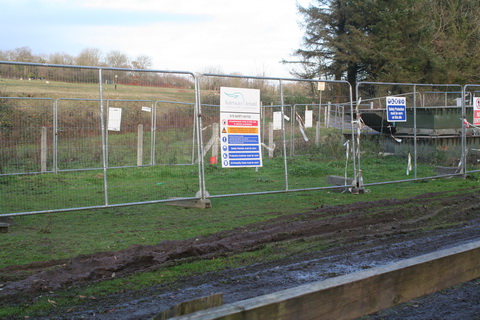
WI pontoons
WI pontoons

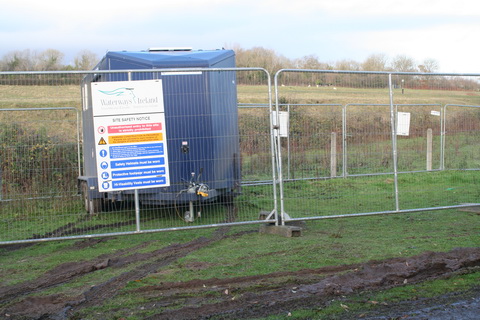
WI canteen

WI canteen

I wondered what was to be done; I noted that a stone at the top of one of the stop-plank grooves under the bridge had been removed (the stone on the far side was removed some time ago).

So I asked Waterways Ireland what was happening. They said:

The works in Clonlara are Flood relief works to protect Errina Lock from catastrophic failure. After the flooding in 2009, during which the dam in Errina Lock was overtopped by approximately 0.5 metres, it was decided to protect it from this happening again.

It has happened before too: in February 1809 the lock was destroyed by floods when heavy snows melted.
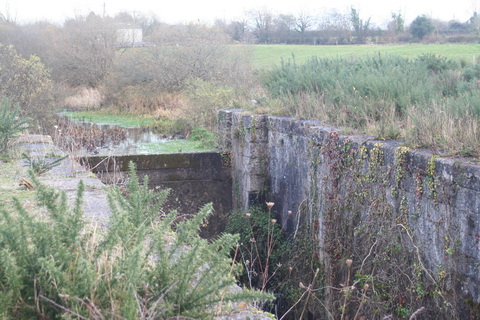
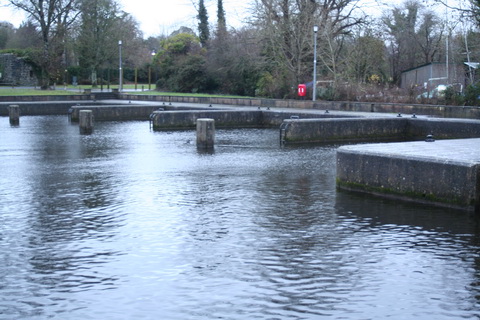
Errina Lock (looking upstream)

Errina Lock (looking upstream)

I asked WI about the nature of the works. They said:

Stop logs are to be put into the grooves under the bridge forming a dam with the same size opening as that in the concrete dam in Errina Lock. As for the stone which is removed to facilitate the installation of the timbers, this will be replaced once the timbers are in place.

That is good to know.
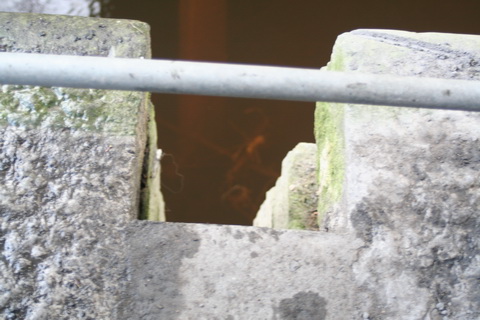
Errina Bridge stop-plank grooves (towing-path side, with uppermost stone removed)
Errina Bridge stop-plank grooves (towing-path side, with uppermost stone removed)

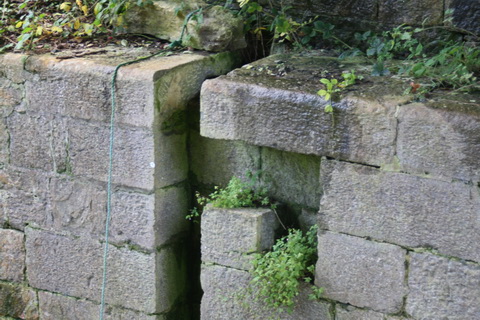
Errina Bridge stop-plank grooves (off side)

Errina Bridge stop-plank grooves (off side)

An authority on waterways has suggested that the curious shape of the grooves was designed to allow planks to be inserted from boats rather than from land.

 

Irish galleries please copy

I have often lamented the poor classification methods used by those who look after collections of paintings. They focus on the name of the painter, the date and the school to which he or she belonged, rather than on the really important facts: whether or not a painting shows a steamer, barge, canal or other object of industrial heritage interest. Thus, as I pointed out here, you get titles like “View looking down on a jetty and boats on a lake with a church in the distance” that ignore the most important aspect: that the pic shows a steamer on Lough Erne.

The other problem is that the paintings are in galleries scattered hither and yon, which means that a serious search for steamers, barges and canals would require hours of driving followed by hours of rummaging through archives, even though each pic would require only a few seconds’ attention to determine whether or not it is worthy of notice. The cost-benefit ratio is all wrong, but the use of technology can solve the problem.

I was delighted therefore to learn that, in HM Realm, the BBC and the Public Catalogue Foundation have put online tagged images of [almost] all the 200,000+ oil paintings in public ownership in the UK at the Your Paintings site. The collection is searchable: the search will return artists, painting titles and tags. And you can help by adding tags, if you have more information about a painting.

There is not much of Irish waterways interest, which is scarcely surprising, but there is an interesting illustration of the use of a pole on the Lagan [I’d welcome comment on what’s happening in that pic] and the barge at Edenderry. There is also some material for steam men.

It would be nice if Irish galleries would now do the same. The cost could be met by selling off the originals, which would no longer be necessary, and closing the galleries, at a saving to the public purse.

WI extended mooring applications Batches 2 and 3

I reported on 28 November 2012 that Waterways Ireland had issued a press release about the second batch of locations to which extended mooring permits (EMPs) would apply. WI has a new notice about it today; the notice also outlines the third batch of locations, which will …

…  include locations in Kildare on the Barrow Navigation and Royal Canals at Monasterevin, Skirteen, Obstertown and Moyvalley. In addition Ballingowan Glebe and Ballyshane in Co Offaly on the Grand Canal are open for applications. In Westmeath, Coolnahay is also opening on the 17th December.

Contrasting patterns

Recorded lock and bridge passages for the first ten months of the year for both private and hired boats.

Hired down, private flat

Hired down, private flat

Because these figures take no account of boat movements that do not use locks, they do not record much private boat usage: sailing, fishing, powerboating, waterskiing and other activities on the lakes.

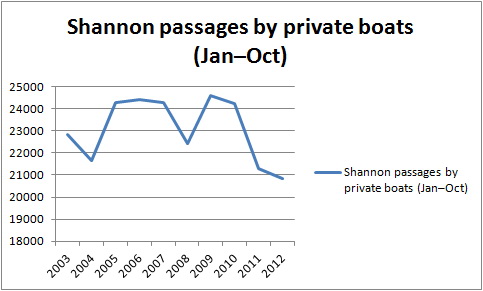
Shannon private boats

Recorded lock and bridge passages for the first ten months of the year.

Shannon private boats 2003–2012

Shannon private boats 2003–2012

In almost every year, the last two months, November and December, saw far more private boats than hired boats moving.

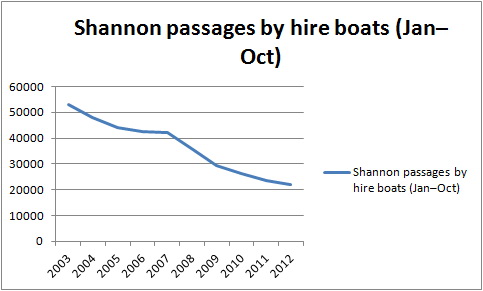
Shannon hire business

Recorded lock and bridge passages for the first ten months of the year.

Shannon hire trade 2003–2012

Shannon hire trade 2003–2012

I’ve used the first ten months because so far I have 2012 figures for only the first ten months. In previous years, only once did the number of hire passages in November and December exceed 100, so the total for any year is not very different from that for ten months.

I would like to know why there has been such a long decline.

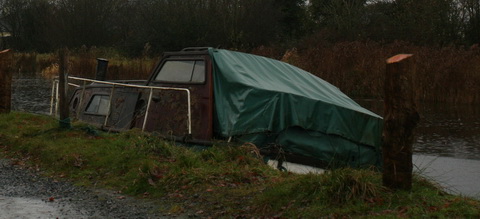
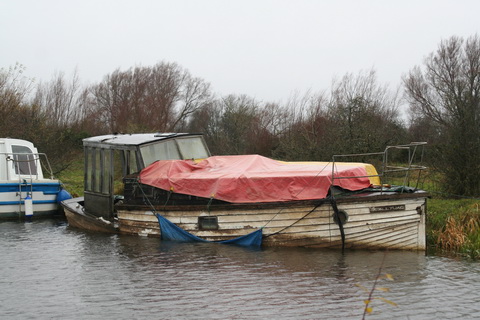
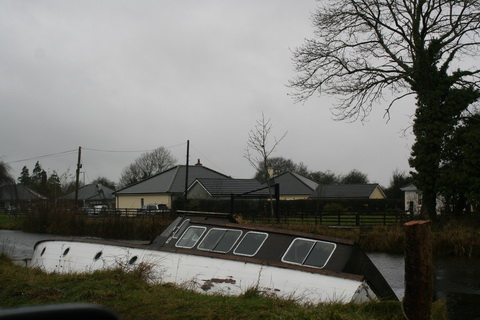
Boats at Shannon Harbour

Unidentified GRP boat

Unidentified GRP boat

Jemmy X at Shannon Harbour December 2012 03_resize

Jemmy X

Scallywag at Shannon Harbour December 2012 20_resize

Scallywag

Scalpa at Shannon Harbour December 2012 05_resize

Scalpa

All photos taken 6 December 2012.

Where are the boats?

Learned Readers will be aware that you can moor cheaply for the winter in a Waterways Ireland Shannon harbour; see Marine Notive 111/2012 about half way down this page.

Now, anyone paying commercial rates in a Shannon marina will tell you that WI’s charges represent extremely good value: cheaper even than a year’s canals permit.

But I have noted recently that there seem to be only four boats in Dromineer for the winter). Pottering about today, I found Portumna Castle Harbour deserted.

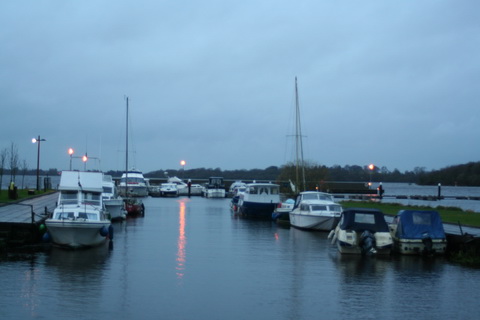
Portumna Castle Harbour December 2012

Portumna Castle Harbour December 2012

Terryglass had more boats, but most of them are on the county council’s jetty with only seven on the Waterways Ireland extension.

Terryglass December 2012 03_resize

Terryglass December 2012

There were only four boats on the west bank below the bridge in Portumne. There were a few more in Connaught Harbour, but all in all the numbers were lower than I had expected. And I don’t think they’re in Shannon Harbour, which seemed to have fewer boats than usual.

So have boat-owners found that their insurers won’t cover them if they are not in supervised marinas, or out of the water, for the winter? Are private marinas, especially those that can haul boats out of the water, more crowded than usual? Or has the number of boats decreased even more drastically than I had imagined?

I don’t know. Readers’ observations welcome.


Looking for Hilda

In Irish Passenger Steamship Services Volume 2: South of Ireland (David & Charles, Newton Abbot 1971), D B McNeill writes:

In the autumn of 1964 the Ormonde Hotel at Nenagh took delivery of the Hilda from Holland. She is a modern canal cruising launch with central heating and a transparent roof. She is used for local trips on Lough Derg.

She is described as a single-screw motor vessel with a diesel engine but no further details are given. I would welcome more information about the Hilda; a photo would be very nice.

A gratifying display of loyalty

His Excellency the Lord Lieutenant took a trip on the Shannon Estuary in July 1856 on the City of Dublin Steam Packet Company’s vessel Erin-go-Bragh. He was greeted by demonstrations of loyalty from the populace, had dejeuner on board off Scattery Island and heard an address from the proprietary, clergymen, merchants, traders and inhabitants of Kilrush, read to him by Colonel Vandeleur. Here is the Freeman’s Journal‘s account of the trip.