Category Archives: Irish inland waterways vessels

Willie Leech interview

This article, about the last of the Royal Canal boatmen, was based on an interview, arranged by Niall Galway, with Willie Leech of Killucan. Niall has now made the original interview available on YouTube, in two parts [Part 1, Part 2], with apologies for the sound.

Brexit and imported boats

Several people in Ireland have imported secondhand boats from Foreign Parts, often from the Netherlands or the United Kingdom. After Brexit, importation of a boat from the UK is likely to become more difficult.

Dr Richard North, an erudite Brexiteer, has highlighted the problem today. Within the European Economic Area (which includes the European Union)

Basically, a huge range of products, before they can be placed on the market, must be approved in a manner specified in the relevant legislation. Conformity then guarantees access to the markets of the EEA members (EU members plus the three Efta/EEA members). […]

In the first instance – intra-Union trade – the responsibility for ensuring that products conform with the legislation rests with the manufacturers. And, where the legislation requires it (as it does with a wide range of goods), it must be tested by an independent third party, known as a “notified body”. And, with certain exceptions, that notified body must be established in the EU and be recognised the European Commission.

Currently, of course, the UK is able to benefit from the intra-Union trade rules but, on leaving the EU, it will no longer enjoy what amounts to a simplified procedure. It is then that the UK becomes a “third country” and the legal responsibilities accruing to those placing products on the market move from the manufacturers to the “importer“, defined as “any natural or legal person established within the Community who places a product from a third country on the Community market”. (For “Community” you can now read “Union”.)

When products from third counties arrive at EU Member State ports, it is then for the importer to satisfy the customs and any other authorities that the products comply with EU law, and have the necessary approvals or certification – including type-approvals from notified bodies, where necessary.

Currently, there are over 25 categories of goods to which the CE marking system applies, for which a Notified Body certificate may be required. These include: […] recreational craft […].

For the UK on and after Brexit day, this gets quite interesting. Where the product relies on certification from a UK notified body (approved prior to Brexit), that notified body will no longer be approved. Arguably (and it is arguable), the certificates (on which the importer will rely) will no longer be valid.

The requirements of the 2013 Recreational Craft Directive are set out here [PDF]. Section 3.6, on page 21, says:

The private importer is a concept that did not exist under the previous Directive and that was added to ensure that private individuals importing a boat, a personal watercraft, an engine or any other product covered by the Directive are granted the same level of protection and obligation as commercial importers. The private importer is defined as any natural or legal person established in the European Union who imports in the course of a non-commercial activity a product from a third country into the EU with the intention of putting it into service for his own use.

A private importer, who imports a product for his own use in European waters, must also ensure the craft, engine or components are compliant with the EU Directive.

Article 12 provides the detailed list of the private importer’s obligations. As a start, we recommend that private importers favour products for which the original manufacturer has fulfilled his responsibilities for the conformity of the product with the EU Directive. Not only will it save a lot of time and hassle for the private importer, it guarantees he/she will acquire a safe and compliant product, thereby ensuring a higher resale value in Europe.

In the event that the original manufacturer located outside of the EU has not fulfilled his responsibilities nor carried out the conformity assessment procedures, the private importer must ensure, before putting the product into service, i.e. using it, that:

• The product has been designed and manufactured in a way that meets the essential requirements of the EU Directive
• The following requirements for manufacturers have been carried out: the technical documentation has been drawn out and must be kept for 10 years; the product is accompanied by instructions and safety information in the owner’s manual in a language or languages which can be easily understood by consumers and other end users, as determined by the Member State concerned (i.e. the country of residence)
• The private importer must cooperate with the competent national authority and provide all information and documentation necessary to demonstrate the product’s conformity.

In case the technical documentation is not available from the manufacturer, the private importer will have to draw it up using the appropriate expertise. Annex V of the Directive provides the details of the postconstruction assessment (PCA). This module is the procedure to assess the equivalent conformity of a product for which the manufacturer has not assumed the responsibility but also in cases where the importer or the distributor places a product on the market under his name or trademark, or modifies a product already placed on the market in such a way that compliance with the Directive’s requirements may be affected. The private importer must ensure that the name and address of the notified body which has carried out the post-construction assessment (PCA) of the product is marked on the product itself.

For more information about the PCA see the “Special Cases” section.


Cycling the Shannon Estuary

Limerick Leader story here.

I have found nothing relevant in the British Newspaper Archive between 1 January 1900 and 31 December 1910, but I may have used the wrong search terms.


The fate of Captain John William White

John William White was captain of the steamer Dover Castle on the Shannon Estuary when it was owned by the Limerick Shipping Company. However, after the steamer was bought by the City of Dublin Steam Packet Company in 1841, his employment ceased. He became instead captain of a small schooner called Native, owned by Francis Spaight of Limerick and employed on the Limerick–London route. Here is the story of what happened to the Native and to Captain White.

Increasing trade

Some of the boatmen of Carrick-on-suir burned a new boat to the water’s edge, on Monday last, as it was made contrary to the rules of the body, that no boat should be built except an old one was broken up. Informations have been taken.

Clare Journal, and Ennis Advertiser
24 August 1843

The Lough Neagh sand trade

A few months ago I mentioned Paul Whittle’s history of the UK marine aggregate dredging industry, which includes a chapter on the Lough Neagh sand dredging industry.

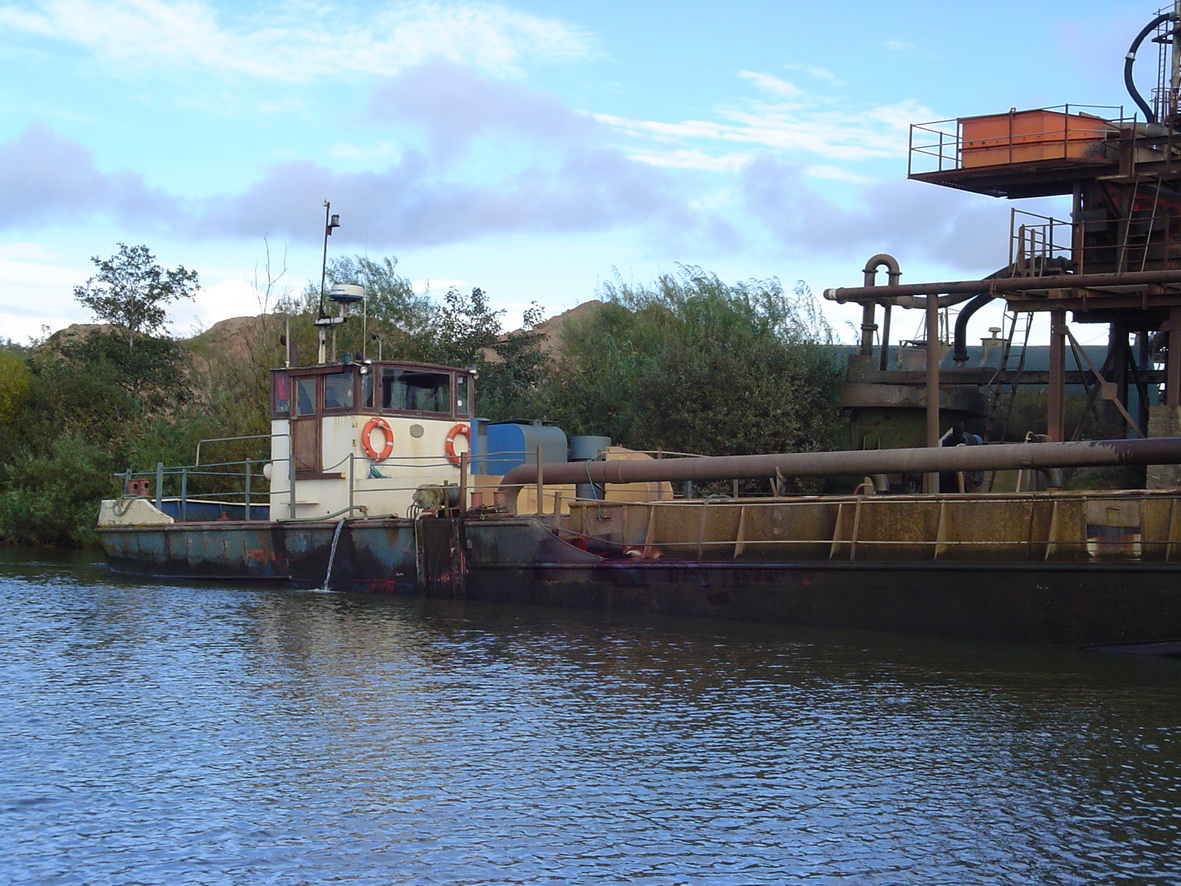
Sand barge William James at Scotts sand quay

I did not realise at the time that the industry was the subject of legal action by Friends of the Earth. Their objections are outlined here; there are several news reports of the progress of their case, eg here and here; this is an account, from June 2017, of the appeal court case; here is the BBC report of the decision and this is FOE’s reaction, which includes this:

Yesterday the Northern Ireland Court of Appeal ruled that the Northern Ireland government acted unlawfully by not stopping dredging for sand at one of Europe’s most important wetlands.

The only legal option now open to the government is to stop the sand dredging.

Dredging has been taking place on a huge scale at Lough Neagh without planning permission and other authorisations.

Friends of the Earth brought the legal challenge over the Northern Ireland government’s failure to stop the extraction.

Up to 2 million tons of sand is suction dredged from the bed of the lough every year. This is the biggest unauthorised development in the history of Northern Ireland. Yet this vitally important wildlife site is supposed to be protected under local and international law. In fact there is no bigger unlawful mine anywhere in Europe in a Special Protection Area.

Lough Neagh is Europe’s biggest wild eel fishery […].

I suspect that the decision will increase the DUP’s enthusiasm for Brexit.


Grand Canal announcements

The Grand Canal Company do hereby give Notice, that they are ready to receive Proposals for supplying Ashler Stones for repairing the Locks upon the Grand Canal; the Stretching Stones to be twelve Inches Bond, and the Heading Stones two Feet Bond. All Persons willing to furnish the same, are desired to apply to Captain Charles Tarrant, No 45, Cuffe street, who will inform them where the same are to be layed down. —

Proposals will be received for Building, by Contract, two Boats on the Canal (the Size and Dimentions to be known upon Application as above), the Contractor finding Timber and every Article requisite.

Also for furnishing Lime per Hogshead, in the Neighbourhood of Ballyfermott Bridge.

June 18, 1777. Signed by Order, R BAGGS, Sec

WHEREAS the Sluice erected upon the Canal in the Barrenrath Level, has been wantonly and feloniously broken down, a Reward of Twenty Guineas shall be paid for discovering and prosecuting to Conviction the Person or Persons who have committed the said Offence.

By Order of the Grand Canal Company, June 7, 1777, R BAGGS, Sec

Saunders’s News-Letter 23 June 1777

The Traveller’s Map of the River Shannon (1830)

The Traveller’s Map of the River Shannon. Arranged as a Guide to its Lakes and the Several Towns, Gentlemens’ Seats, Ancient Castles, Ruins, Mines, Quarries, Trading Stations, and General Scenery on Its Banks, Source in Lough Allen to the Sea, Leitrim, Longford, Roscommon, Westmeath, King’s County, Tipperary, Galway, Limerick, Kerry and Clare, Accurately Taken from the Survey made by J. Grantham, by order of the Irish Government, under the direction of the late J. Rennie. Printed and published for the Irish Inland Steam Navigation Company, 1830.

Oblong folio, 15 numbered maps printed in black with river and water features coloured in light blue. Original quarter calf green cloth boards, russet title to centre of upper boards, stamped in gilt with gilt fillet boarder. Repair to rear of plate 15, otherwise all maps in very good to fine condition.

Contents: 1. Map of Ireland, 2. Index Map. Lough Derg to the sea, 3. Index Map. Lough Derg to Lough Allen., 4. Kilrush to Tarbert and Foynes Island, 5. Foynes Island to Grass Island, 6. Grass Island to Limerick and O’Brien’s Bridge. 7. O’Briens Bridge to Killaloe and Dromineer. 8. Dromineer to Portumna and Redwood Castle. 9. Redwood Castle to Banagher, and Seven [Churches (Clonmacnoise)], 10. Seven Churches to Athlone and Lough Ree, 11. Lough Ree to Lough Forbes. 12 Lough Forbes to near Leitrim. 13. Leitrim to Head of Lough Allen. 14. map of Limerick, 15. Map of Killaloe.

Map 1 shows Ireland and its waterways at scale of 1″ equals 20 miles, Maps 2 and 3 show the key for 4-13, with table of falls of water along the route on former and table of distances on latter; Maps 4-14 each have a short descriptive panel; Map 14 shows Limerick from the north of King’s Island to the New Barrack in the south with key Map 15 from the town at left to Beal Boru at right.

Yours for only €1800 at Ulysses Rare Books in Dublin.

Manby, Napier, Oldham, Williams, Grantham

Here is a piece about the Aaron Manby, the first iron steamer to make a sea voyage, and its links to Irish inland waterways transport.

The piece was first published in the rally magazine of the Inland Waterways Association of Ireland Lough Derg Branch in July 2017.

Handsacrosstheborderism

I see from the blatts that there are

Fears over future of Narrow Water bridge project

and that

Planning permission for development at Carlingford Lough due to expire in October.

This is encouraging: I hope that the planning permission will be allowed to expire, unmourned by anyone, and that the project will be buried at the crossroads with a stake through its heart.

Like the Clones Sheugh, this scheme put symbolism over practicality and usefulness. It would require motorists from the south to drive to the middle of nowhere to cross the Newry River, when what is needed is an eastern bypass of Newry. Those living towards the eastern end of Carlingford Lough would be better served by a ferry, and I see that such a service is now proposed, to run between Greenore and Greencastle.

The only possible justification for the proposed bridge would be to build it without access roads, name it Garvaghy Road and allow — nay, sentence — Orange Order members to march up and down it in perpetuity.