Category Archives: Politics

Competition closed

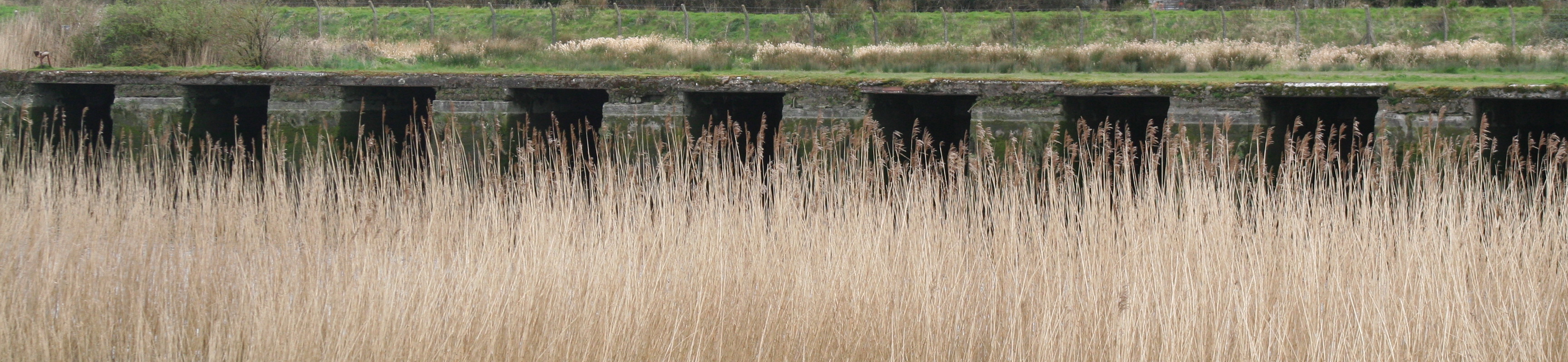
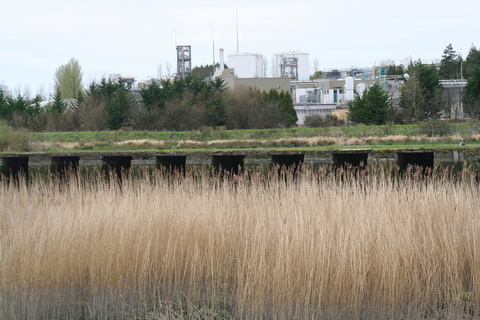
Nobody has attempted to identify this quay, so the competition is now closed and I’ll drink the sherry myself.

It is, of course, the downstream quay at Clarecastle at the head of the Fergus Navigation.

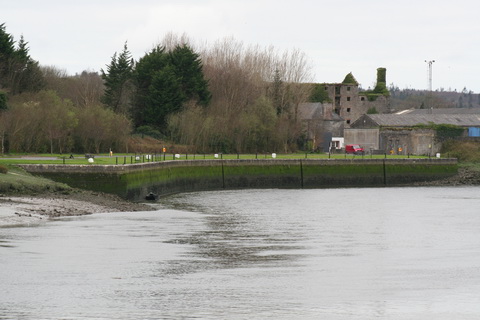
Clarecastle downstream

Here is the upstream quay, just around the corner.

Clarecastle upstream

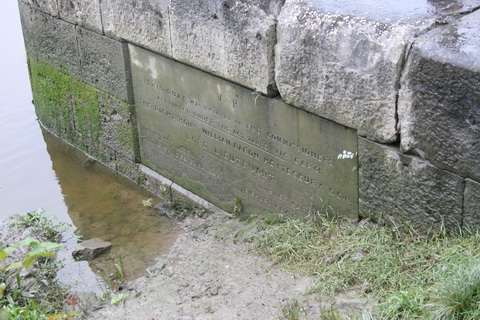
The upstream quay bears the following inscription.

Inscription at Clarecastle

I really must return and get a better photo when it’s less slippy. Note that, although this is on tidal waters, Thomas Rhodes was the engineer.

Did you know that Clarecastle still has its own port authority? Go to this excellent pub and ask John Power about it. His brother (Dr Joe) wrote the definitive history of Clarecastle. John has lots of interesting old photos and maps on display in a really good traditional pub. He’s got a facetweet thingie too.

Lowtown

Dáil Written answers Tuesday 27 March 2012

Department of Arts, Heritage and Gaeltacht Affairs: Harbours and Piers

Clare Daly (Dublin North, Socialist Party):

Question 350: To ask the Minister for Arts, Heritage and the Gaeltacht the steps he will take to prevent the eviction of residents by Waterways Ireland from Lowtown Marina near Naas, County Kildare; and if he will make a statement on the matter. [16675/12]

Jimmy Deenihan (Minister, Department of Arts, Heritage and the Gaeltacht; Kerry North-West Limerick, Fine Gael):

As the Deputy will appreciate, the issue referred to relates to operational day-to-day matters for Waterways Ireland (WI) and is one for which I have no direct responsibility. On foot of the Deputy’s Question, however, I have been informed by WI that for some time it has been endeavouring to regularise the ownership and lease arrangements at Lowtown Marina and that, following lengthy negotiations, it is in the process of recovering the property. WI advises that part of that recovery will be to restore the public right of way over the towpath and to remove any unauthorised developments attaching to the marina, especially those which present health and safety risks. I am advised also that certain remedial works are considered necessary, following inspections by WI’s safety advisor, and that these works require the removal of craft moored at the locations in question.

I understand from WI that affected persons living on board craft moored at Lowtown Marina have already been advised to contact WI’s Inspectorate in regard to alternative locations. I am informed that, ultimately, WI intends to re-develop the area in question and is presently examining possibilities for the site, including the installation of serviced berths for houseboats. Any such plans will, however, be contingent on available resources and planning permission.

Here’s a notable notice.


On the occasion of Her Majesty’s Diamond Jubilee …

… (that is, of course, Her Late Victorian Majesty), F E Prothero suspended his explorations of Irish waterways after he had descended the Nore, from Abbeyleix to New Ross, in May 1897. Here is his account of that trip.

Waterways trees

Nama to Nature has been planting trees at Keshcarrigan on the Shannon–Erne Waterway, along which far too many developers wanted to sell houses that would have fast boats parked outside. I don’t know whether my photo shows the Waterways estate or a different one.

Keshcarrigan September 2011


h/t Ireland after NAMA.

Support the Clones Canal

It was suggested to me today that, because some boating organisations want the Clones Canal, the project must be worthy of support. I find that argument less than convincing. If I offer someone the benefit of a sum of money, without charge, I will not be surprised if that person likes the idea — but that won’t show that it’s a good deal for whoever bears the cost.

In this case, owners of boats are being offered the benefit of €45 million, so it’s not surprising that they like the idea. But I think they should be offered a practical method of demonstrating the depth of their support.

Accordingly, I propose that owners of registered boats on  the Shannon and the Erne be offered the opportunity to pay half the €45 million cost (the other half could be raised from a levy on the publicans of Clones, the other main beneficiaries). If there are 10,000 boats, the charge per owner, spread over three years, would be no more than €750 a year. Willingness to pay would provide more convincing evidence of support and would also make the project better value for the taxpayer.


Polluting the water

Mr Hogan said he had been negotiating with the European Commission in 2011 and 2012 to minimise the impact of new septic tank regulations.

That’s from this article in the Irish Times.

Why does this chap want to minimise the impact of his own department’s regulations? Is he not at all interested in water quality?

Angela, would you mind invading please?


Sunset on the Lower Shannon

A poem by Sir Aubrey de Vere, father of the more famous Aubrey Thomas de Vere. The family estates were at Curraghchase, now a forest park, on the south side of the Shannon estuary and now best known as the home of Caroline Rigney, producer of some of Ireland’s best bacon. Sir Aubrey’s wife was one Mary Rice, of the Mount Trenchard family, one of whose members had a major role in the development of the Shannon in the 1840s.

Sunset on the Lower Shannon

How beautiful the tints of closing even!
The dark blue hills, the crimson glow of heaven,
The shadows purpling o’er the wat’ry scene,
Now streaked with gold — now tinged with tender green;
And yon bright path that burns along the deep,
Ere the sun sinks behind his western steep,
Soft fades the parting glory through the sky,
Commingling with the cool aerial dye;
While every cloud still kindling in the beam,
In mirrored beauty prints the waveless stream,
Light barques, with dusky sails, scarce seen to glide,
Bend their brown shadows o’er the glowing tide;
And hark! at intervals the sound of oars
Comes, faint from distance, to the silent shores,
Blent with the plaintive cadence of the song
Of boatmen, chanting as they drift along.
But see the radiant orb now sinks apace —
Gradual and slow, he stoops his glorious face;
And now — but half his swelling disk appears —
And now, how quickly gone! he scarcely rears
One burning point above the mountain’s head —
And now, the last expiring beam has fled.

Sir Aubrey de Vere in The Dublin Penny Journal Vol 1 No 17
October 20 1832

The “light barques” probably included some turf boats.

There are more poems by Sir Aubrey here.

Waterways salaries

There is a complete list of officers’ salaries here.


Commenting on waterways budgets

DCAL writes:

Following the Executive’s Draft Budget, the Department of Culture, Arts and  Leisure (DCAL) published a consultation paper on its own spending and saving proposals over the period 2011-15 on 31 December 2010. The public consultation period on these ran in tandem with the wider consultation on the Executive’s Draft Budget.

The document records all the representations it received about specific business areas. So which body was the only one to make a representation about the budget for Waterways Ireland?

The Royal Society for the Protection of Birds, which

Supported the continued funding of Inland  Waterways and Inland Fisheries.

DCAL, DAHG and WI

I was interested to see that DCAL has its own research programme [DOC file], but also makes use of other research services including the NI Continuous Household Survey:

To monitor engagement in culture and sport in Northern Ireland

The Continuous Household Survey (CHS) and the Young People Behaviour and Attitudes Survey (YPBAS) will continue to monitor engagement in sport, arts, museums and libraries in Northern Irelandfor adults and children. The CHS will also capture engagement by people in Northern Irelandat fisheries and waterways under DCAL’s control as well as engagement in Irish and Ulster-Scots languages and events. The barriers and benefits to engagement will also be explored.

DCAL and non-navigaBLE Waterways

I don’t know whether “waterways under DCAL’s control” are deemed to include those managed by Waterways Ireland as well as those directly controlled by DCAL:

The Department also has ownership of, and custodial responsibility for, those remaining sections of the Lagan and Coalisland Canals that remain in Government ownership following abandonment of navigation in the 1950s. An ongoing programme is in place for each of these highly popular towpaths to upgrade access for pedestrians, cyclists and disabled access.

I don’t suppose it would make much sense to ask questions about just two derelict waterways while ignoring those that are navigable, but the results are not shown on the CHS web pages: interested folk must ask DCAL direct.

I note that the DCAL Resource Accounts for the year ended 31 March 2011 [PDF] show that DCAL “Estimates provided for expenditure on […] certain inland waterways (including payments to the Rivers Agency), Waterways Ireland, […].” Later, we read:

Inland Waterways

DCAL manages and maintains 11 miles of the Lagan Towpath from Stranmillis to  Sprucefield; 3.5 miles of towpath at Soldierstown, Aghalee; 4.5 miles of towpath on the  Coalisland Canal; 22 water recreation sites; and shooting rights over the foreshore of Lough Erne. Work on the development of a policy on the re-opening of abandoned canals is in the preliminary stages.

Given that DCAL can own and run waterways, I wonder why the supporters of the Newry Canal did not seek to have it taken over by DCAL rather than by Waterways Ireland.

Water recreation

The non-navigable waterways are the second of DCAL’s three main activities. The first is this:

We are committed to developing the recreational potential of inland waterways through our Province-wide Water Recreation Programme.

Applicants, such as Local Authorities, are encouraged to work in partnership with the Department in providing and promoting water recreation facilities such as riverside paths and boat moorings for public use. Wherever practicable, works will incorporate disabled access facilities.

Again, the DCAL Resource Accounts for the year ended 31 March 2011 [PDF] provide more details:

Inland Waterways

[…] The Department continued to administer an annual Water Recreation Programme, amounting to £430k in 2010-11, aimed at developing the recreation and navigational potential of Northern Ireland’s Inland Waterways. Applicant organisations, primarily local authorities, were encouraged to work in partnership with the Department in the provision of water recreation facilities, such as riverside paths and canoe trails, complementing the Department’s continued commitment to upgrading the Lagan and Coalisland Canal towpaths for shared pedestrian and cyclist use. 9 new projects were completed during 2010-11. Funded projects were required to have an identifiable strategic value and where possible, contribute to the Department’s commitment to provide at least 5 kilometres of new or improved access for disabled persons each year.

This too would cover cooperation with the four local authorities who control the Newry Canal.

Oddly enough, inland waterways and fisheries are grouped together on DCAL’s website but they are in two separate divisions: waterways, for some reason, are in Culture whereas inland fisheries come under Sport, Museums and Recreation. DCAL does not, however, put waterways under southnorthery.

DCAL and DAHG

There is a useful contrast here with DAHG, which thinks that waterways exist purely to serve northsouthery: despite what WI thinks it is for

Waterways Ireland has responsibility for the management, maintenance, development and restoration of inland navigable waterways principally for recreational purposes.

… DAHG does not appear to have adopted the view that waterways are for recreation. Perhaps if it gained responsibility for some waterways outside WI’s scope, it would develop a policy on recreational use of waterways. That would mean that, like DCAL

The Department is also the sponsor department in Northern Ireland for Waterways Ireland which is the Cross-Border Body responsible for the management, maintenance, development and restoration of operational waterways throughout the island of Ireland.

… DAHG would be the department responsible for recreation on waterways, one (large) set of which are managed by WI, which in turn is controlled by the two departments.

The difficulty with DAHG’s current arrangements is that there is a division between theory and reality, but DAHG has organised its functions on the basis of theory. In reality, waterways are for recreation (or, if you prefer, leisure), but DAHG insists that they’re for northsouthery. Because that’s now been successfully routinised, waterways receive relatively little attention and are not, as far as I can see, considered as part of state provision for leisure or recreation. There can be no proper policy-making for the sector unless it’s grounded in reality.