Category Archives: Steamers

Fairies, squirrels and steamers

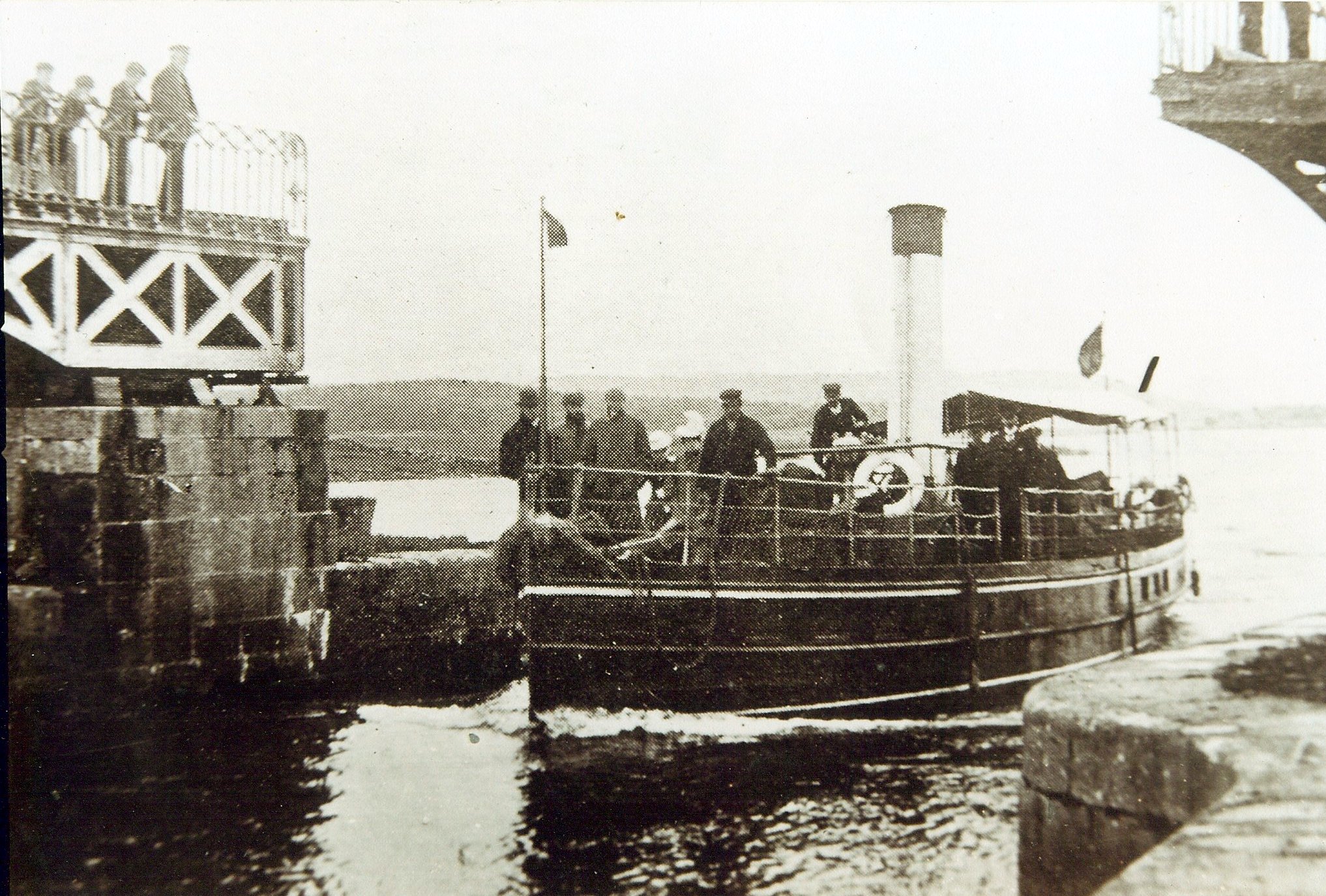
I am grateful to Liam Kelly for sending me this photo of a steamer on the Shannon. He says that the photo is believed to show a steamer belonging to Lord Granard (Bernard Forbes, 8th Earl of Granard) passing through Lanesborough Bridge in 1900.
Here is a map showing Lanesborough and Castle Forbes.
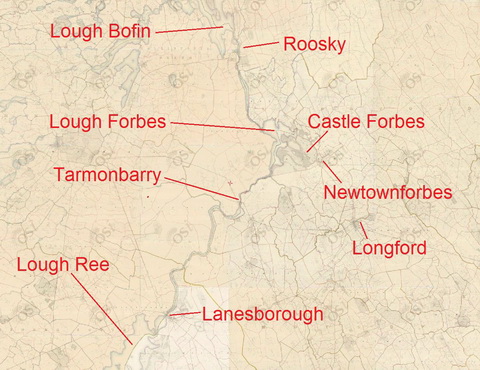
Lanesborough and Lough Forbes (OSI ~1840)

And here is Castle Forbes shown in relation to Lough Forbes.

Castle Forbes and Lough Forbes (OSI ~1900)

According to a programme reproduced on page 200 of Ruth Delany’s The Shannon Navigation (Lilliput Press, Dublin 2008), Lord Granard (Right Hon the Earl of Granard, KP, GCVO) was Commodore of the 1929 Lough Forbes Regatta, held under the auspices of the North Shannon Yacht Club Flag and the Motor Yacht Club of Ireland. Page 197 of the same work has a photo of a North Shannon Yacht Club regatta on Lough Boderg in 1903; it includes a large steam yacht, but with a white rather than a black hull.

The Fairy Queen

Page 181 of the same work has a photo of a passenger steamer, the Fairy Queen, one of the six operated by the Shannon Development Company, which was set up in 1897: the Fairy Queen and the Shannon Queen worked the confined waters of the Shannon above Athlone. The same photo of the Fairy Queen can be seen here.

To my eye, the steamer in the Lanesborough photo looks rather like the Fairy Queen, although I don’t think I could go so far as to suggest that they are one and the same. They’re shown from different angles and, anyway, similarities between steamers of the same era are to be expected. The reason I comment on the matter is that, while looking into the history of the Fairy Queen, I found that the invaluable Clydebuilt Ships Database had a photo of the 1893 Fairy Queen that served on the Shannon (not to be confused with her 1897 replacement). And, again to my eye, the Fairy Queen in the Scottish photo does not seem to be the same as that in the Irish photo. I would welcome other people’s comments on the matter.

The squirrels

The story is here. There is more on the family’s collection of animals here.


The surprising importance of the Shannon steamers in the 1830s

A short, lavishly illustrated talk in Killaloe Cathedral, Co Clare, at 6.00pm on Sunday 29 April 2012, as part of the Waterways Ireland Discover Killaloe and Ballina thingie.


Dry docks

GRAND CANAL

At a Meeting of the Company of Undertakers of the Grand Canal, duly convened by public Advertisement, and held at the Company’s House in Dublin, on Monday, the 6th day of April, 1840,

WILLIAM MURPHY, Esq., in the chair,

The following Resolution, moved by James Pim, jun., Esq., seconded by James Dawson, Esq., passed unanimously in the afformative: —

Resolved — That the Court of Directors of this Company be authorised, if they shall see fit, to call the attention of the Government, of the Chamber of Commerce, of the Ballast Corporation, of the several Steam Companies, and of Capitalists generally, to the important advantages which the Grand Canal Company’s Floating and Graving Docks at Ringsend offer to all parties connected with the Shipping interests of the Port of Dublin, and to apprize them that this Company will at all times be ready to entertain any well considered proposition for increasing the general usefulness of these Docks, on the fairest and most liberal terms as regards the Public. Under the firm persuasion that by whatever well-arranged proceeding this important portion of the Company’s property can be best made available in increasing the Trade and promoting the prosperity of the City of Dublin, it will be rendered the most effectually conducive to the interests of the Company.

By order, JOHN McMULLEN,
Secretary of the Company.

From The Freeman’s Journal 8 April 1840.

Perhaps Waterways Ireland might follow the example of its predecessors and, rather than getting into bed with the DDDA, might consider some “well considered proposition for increasing the general usefulness of these Docks”.


Competition closed

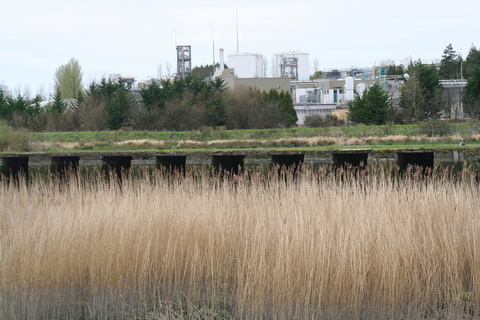
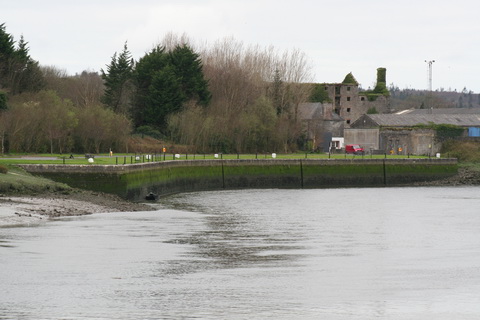
Nobody has attempted to identify this quay, so the competition is now closed and I’ll drink the sherry myself.

It is, of course, the downstream quay at Clarecastle at the head of the Fergus Navigation.

Clarecastle downstream

Here is the upstream quay, just around the corner.

Clarecastle upstream

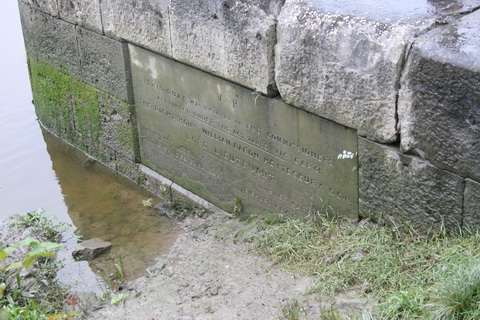
The upstream quay bears the following inscription.

Inscription at Clarecastle

I really must return and get a better photo when it’s less slippy. Note that, although this is on tidal waters, Thomas Rhodes was the engineer.

Did you know that Clarecastle still has its own port authority? Go to this excellent pub and ask John Power about it. His brother (Dr Joe) wrote the definitive history of Clarecastle. John has lots of interesting old photos and maps on display in a really good traditional pub. He’s got a facetweet thingie too.

Weld eggs …

… on the Royal Canal.

Thomas Omer in Athlone

Here is a new page showing the route of the old canal in Athlone, which was used before the Shannon Commissioners built the new lock, weir and bridge in the 1840s. The canal is easily accessible along most of its route, although some explanatory signs might be useful to call attention to notable features.

Date

Killaloe & Ballina are having one of Waterways Ireland’s Discover Days on Sunday 29 April 2012.

Includes “visitor attractions, water activities, arts and crafts, face painting, live music, a historical walking tour, boat trips and other land and water activities”.

More info as it becomes available.

Prothero on the Munster Blackwater

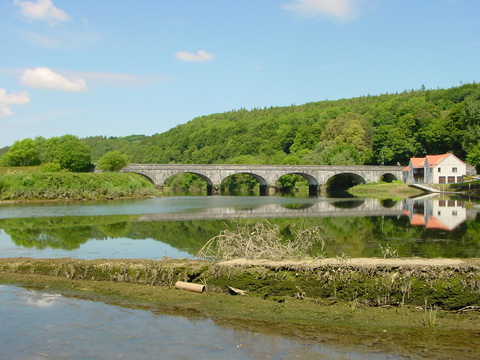
The road bridge in Cappoquin


The redoubtable F E Prothero, Rear-Commodore of the Cruising Club, wrote just over three pages about the Blackwater, from Kanturk down to the sea, in A New Oarsman’s Guide to the Rivers and Canals of Great Britain and Ireland edited by F E Prothero and W A Clark and published by George Philip and Son, London, in 1896, as a Cruising Club Manual.

Here is a PDF of the relevant pages. I have also put a link to the PDF on my page about the Blackwater, Bride and Lismore Canal.

The steamer Firefly at Crom in 1850

Some time ago I posted a query, asking whether anyone could identify the location shown in this drawing on the National Library of Ireland website. Click on the thumbnail to expand it; you may then need to click “PRINTABLE VERSION”. I said:

The black object between the sailing boats and the church looks to me like a paddle steamer, but the image is quite blurred so I’m not certain.

I have now seen the original in the National Library. I have also seen a print of a painting that is, I think, based on the drawing; the painting was done by Henry Brocas junior and is entitled “Lord Clarendon’s visit to Crom Castle, Co Fermanagh, 1850” (tiny thumbnail here).

According to the Erne papers [PDF]:

The earliest known steam boat at Crom was the “Firefly”, which is recorded as having brought the Viceroy, Lord Clarendon, from Crom to Lanesborough Lodge [Belturbet] on his visit of 1850.

It may be that the view is pretty well south from Crom Old Castle with its yew gardens  (Historic 6″), which might explain the odd shapes in the foreground, but it could also be from Crom new castle or even from Inisherk: I don’t know the lie of the land well enough, and would welcome enlightenment. The church on the right-hand side of the picture is Holy Trinity (C of I) church at Derryvore, which originally had a steeple. The drawing shows the island of Innisfendra (Inishfendra) on the left, after which Waterways Ireland’s latest tug has been named.

Another Brocas pic on the NLI site seems to complement the first image: it shows a view to the right of the other, with Gad Island and with Corlatt in the background. I suspect that The regatta  was done (perhaps from a boat) at the same event: the ruins look to me like those of Old Crom Castle.

Of engineers

He did not mean to deny the fitness of the [Shannon] Commissioners to execute the task which had devolved upon them, but he considered that five engineers of such eminence as those named in the Commission were too many to appoint for such a purpose, and the only result to be looked for would be that some plan of great magnificence and grandeur would be suggested, which the House of Commons would never feel itself authorised to grant money to execute, and then the projected improvement of the river would be altogether dropped and lost sight of.

Lord Clements, House of Commons 17 February 1836