
Mr O’Connell and a very numerous deputation had an interview yesterday with the Chancellor of the Exchequer in Downing-street, respecting a lottery for the improvement of the Shannon.
London Courier and Evening Gazette
10 July 1835

Mr O’Connell and a very numerous deputation had an interview yesterday with the Chancellor of the Exchequer in Downing-street, respecting a lottery for the improvement of the Shannon.
London Courier and Evening Gazette
10 July 1835
Posted in Engineering and construction, Extant waterways, Shannon
Tagged Daniel O'Connell, lottery, Shannon
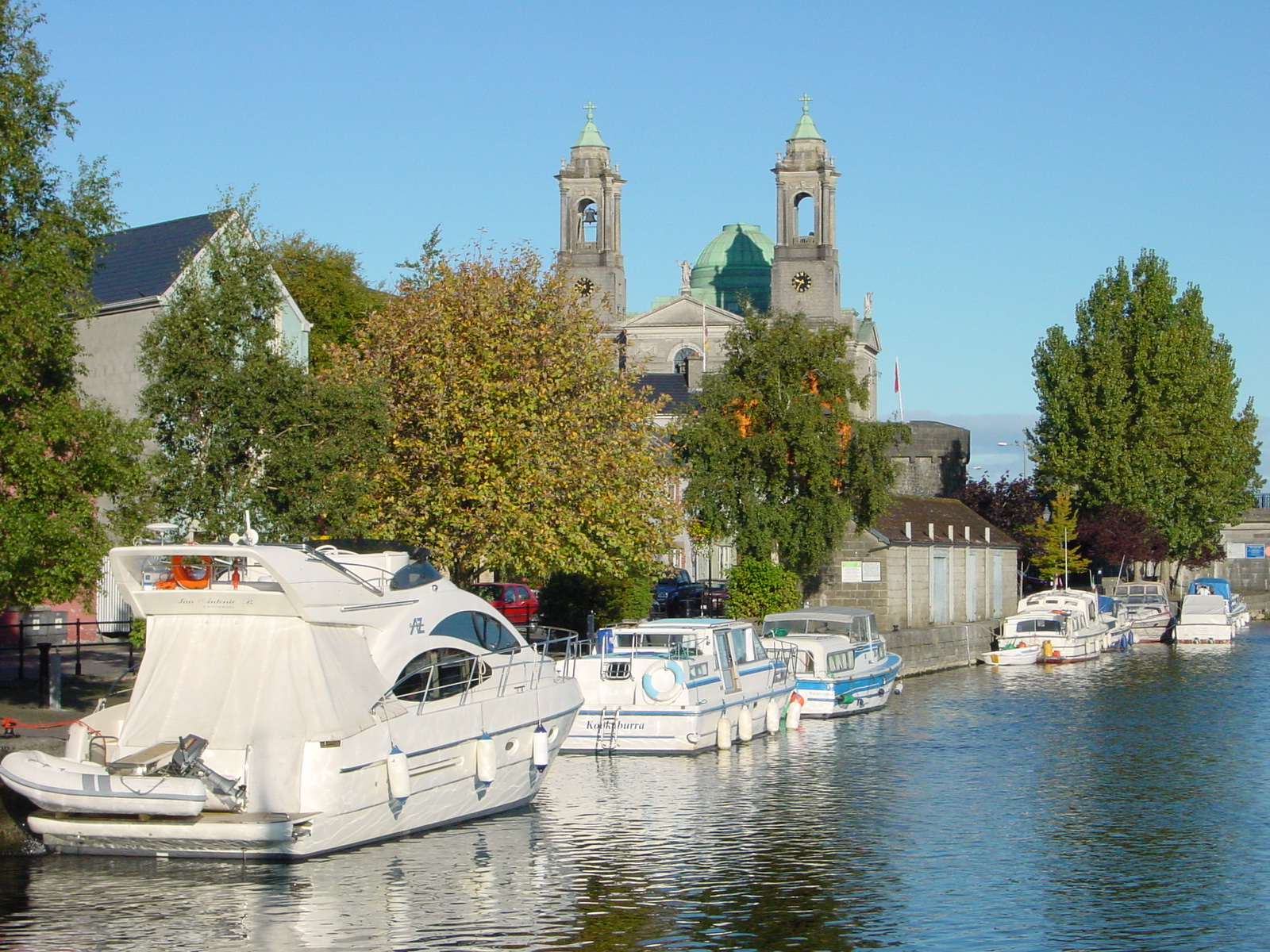
Athlone (2003)
September 17, 1846 — The Amateur Band of St Peter’s, who deserve so much from the inhabitants of Athlone for the many opportunities they seize upon, to amuse them, having provided — on a large scale — for themselves and guests a sumptuous and plentiful feast, with the necessary teetotal drinks, sailed up the lake on last Sunday in the Cupid Steamer. The day was beautiful and inviting and the placid stream of the noble Shannon — as if in harmony with the circumstance — opening wide its expansive bosom to receive them, displayed in gorgeous grandeur, the verdant beauties of its multitudinous islands and grove-covered promontories of its indented coasts.
I never saw the lake to such advantage as on that occasion. We had about eighty persons on board, amongst whom were the Rev Mr Philips CC and RW, Mr Keating and family, and other pic-nic parties, with viands and refreshments in abundance. As the steamer made the lake and swept through an Archipelago of islands — namely, Carbery, Kid, the Wren, and Crow Islands, &c, having the wood-embosomed Hare Island, the present insulated residence of my Lord Castlemaine, on the right and the grove-crested cape of the Yeu or, as some call it, the Loo Point on the left — then it was that she breasted the serene bosom of this inland ocean not as Byron says, “walking the waters like a thing of life”, but bounding over its mirrored surface like an impetuous courser she seemed to devour the distance, while she tossed a road of foaming surges from her heels.
On each side appeared emerging from wood and grove beautiful villas and noble ruins, towers and antiquated telegraphs, with their declivous lawns sweeping to the water’s edge. As we passed between Inchmore, Innisbofin, the Nun’s Island, the cultivated and rich callows of the Longford coasts, and Warren’s Point, St John’s and Mount Plunket on the Roscommon side, hill and dale land and water reverbrated with the dulcet tones of our excellent band under their inimitable instructor, Mr Keating, while at intervals the gay and cheerful dance on deck, to the music of the violin, enlivened the enjoyment of the exhilirating prospects that accumulated around us.
One or two objects which I observed, struck me very forcibly, and reminded me of the left-handed, nay, monopolising policy of former days, and the state of vassalage under which we yet groan and which “Ireland for the Irish” would never tolerate. In a beautiful valley, and modestly peeping from the clustering foliage of circumnambient trees and in accommodating contiguity to the “big house” stood the snug and aristocratic church of the minority, styled in legal parlance “the Established”, while at a distance on the bleak hill of Newtown, exposed to wind and weather, a chapel dedicated to the worship of the millions, displayed all the frigid isolation of a step-mother’s care.
We now arrived at Quaker’s Island, and having tacked about, we made for Warren’s Point, on our way home, and went on shore at St John’s Castle. With feelings of deep melancholy mingled with admiration, we viewed the venerable ruins of this once majestic pile (huge masses of which lay scattered here and there), its dismantled bastions, deep fosse, and the roofless walls of its antiquated chapel, while on a neighbouring hill stands the shell of its watch-tower to give timely warning of the approach of the feudal rival who would dare contest sovereignity with its lord. We then warmly and eagerly discussed the viands abundantly spread on the verdant sward at the base of
These ivy crowned turrets, the pride of past ages,
Tho’ mould’ring in ruins still grandeur impart.
After which the merry dance commenced, unconstrained laughter and encouraging shouts accompanying the performers, bringing the memory back to the times of rural felicity; when under the fostering tutelage of a domestic legislature, every family had its own quern to grind its own grain, every peasant could drink his own beer and the daily toil of virtuous industry being over, the children of simplicity, to the sounds of the oaten reed or the violin, or the more national bag-pipes, tripped it gaily on the “light fantastic toe”. And this was the happy and tranquil state of “Old Ireland” before the importation into it of such exotic materials as Sir Walter Raleigh and his rotten potatoes. To return to the ruins. I wish Lever, Carlton, or some one of those compilers of Irish legendary lore, had visited Lough Ree, he would find there more traditionary facts connected with the pristine magnificence of the different localities, than very many of those which have been already noticed in Magazines.
Having embarked once more we soon arrived home, and thus ended to the satisfaction of all parties, one of the most amusing days I, at least, ever spent in my life. To Bernard Mullins Esq, the young men composing the band return their sincere acknowledgements, for his kindness in accommodating them with the Cupid for this very pleasant excursion.
O’B
Athlone Sentinel 18 September 1846
Posted in Built heritage, Engineering and construction, Extant waterways, Historical matters, Industrial heritage, Ireland, Irish inland waterways vessels, Passenger traffic, Scenery, Shannon, Sources, Steamers, Tourism, Water sports activities, waterways, Weather
Tagged Athlone, band, Bernard Mullins, Cupid, dance, Lough Ree, St Peter's, steamer, viands
Exciting news from the Minister for Fairytales about the Clones Paddling Pool, which is now called the Terminus Project. I see they’re worried about the water supply: not a new problem for water-using structures in that area.
Lord Bonkers reminds us today of the evils of piracy.
Which is appropriate, as it’s ITLAP day.
The word “slob” is a provincial term, and applied to banks of mud in the same way that the word “warp” is used to signify similar formations in the River Humber.
Second Report of the Commissioners appointed pursuant to the Act 5 & 6 William IV cap 67 for the improvement of the navigation of the River Shannon; with maps, plans, and estimates HMSO, Dublin 1837
According to the eleventh and final report of the Shannon Commissioners, published in 1850 but covering the year 1849, each of the quays built by the commissioners on the Shannon Estuary had an officer stationed at it to collect tolls and other charges. Five of the six — Querrin, Saleen, Kilteery, Kildysart [aka Cahircon] and Clare [now Clarecastle] — had Second Class Collectors; Kilrush, being busier, had a First Class Collector.
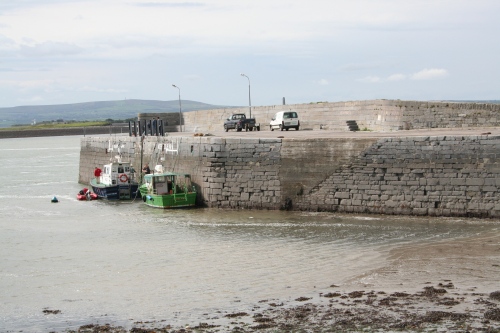
Cappa [Kilrush] pier
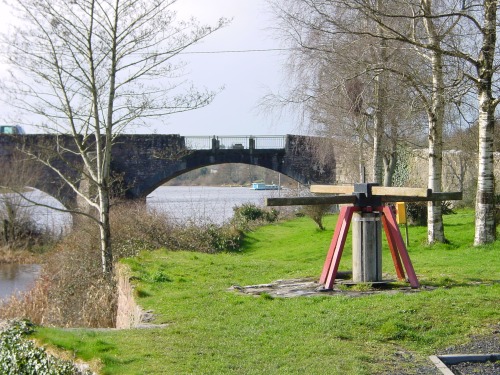
O’Briensbridge modern [ie 1830s] navigation arch
On Lough Derg, Scarriff and Portumna each had a Second Class Collector. Portumna, like several places upstream, had an opening bridge, but the Shannon Commissioners did not employ a bridge-keeper: the bridge was not built, owned or operated by the Shannon Commissioners.
Back on the river, on what used to be called the Middle Shannon, the commissioners employed both a Second Class Collector and a lock-keeper at Victoria Lock (Meelick). There was another Second Class Collector, and a bridge-keeper, at Banagher. At Wooden Bridge, the crossing of the Shannon from the Grand Canal’s main line to its Ballinasloe line, the commissioners employed two ferry boatmen: by that stage the bridge no longer existed and the commissioners had installed a ferry to carry horses and tow boats between the canals.
Shannon Bridge had a Second Class Collector and a bridge-keeper; Athlone had a bridge-keeper but earned itself a First Class Collector. On Lough Ree, Lecarrow and Lanesborough each had a Second Class Collector but Tarmonbarry had nobody: a First Class Collector was assigned to Cloondragh [so spelt] but presumably had to look after Clondra and Tarmonbarry locks, the weir, Tarmonbarry bridge and the collection of tolls. Mighty men they had back then.
The second Inspector was based at Rooskey, along with a lock-keeper who presumably also operated the bridge and did anything that needed doing on the weir. Albert Lock on the Jamestown Canal had a lock-keeper but Kilbride, the quay at the upper end of the canal, had a wharfinger, the only one on the Shannon.
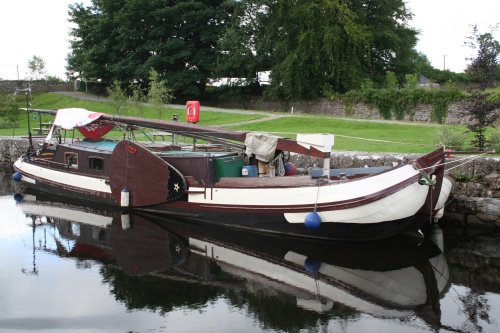
Fermate at Kilbride Quay
The collection of tolls (presumably by the wharfinger) did not begin at Kilbride until March 1849 but in that year it took in £6 in tolls and £1 in wharfage, compared with £1 + £2 at Drumsna and £0 + £0 at Jamestown. Perhaps the road beside the quay made it a suitable place for cargoes from Roscommon to transfer from road to water transport.
Carrick-on-Shannon, not an important station on the Shannon, had just a Second Class Collector; there was a lock-keeper at Knockvicar for the Boyle Water and another at Battle Bridge who presumably looked after all the locks on the Lough Allen Canal.
Cranes were provided at several places but there is no mention of designated crane-operators.
Source: Eleventh and Final Report of the Commissioners under the Act 2 & 3 Vict c61 for the improvement of the Navigation of the River Shannon, Ireland; with an appendix Ordered, by The House of Commons, to be Printed, 3 June 1850 [407]
Posted in Ashore, Built heritage, Canals, Charles Wye Williams, Drainage, Economic activities, Engineering and construction, Extant waterways, Historical matters, Industrial heritage, Ireland, Operations, Shannon, shannon estuary, Sources, Steamers, The cattle trade, The grain trade, Waterways management
Tagged bridge, collector, cranage, lock, pier, quay, quayage, Shannon, toll, wharf, wharfage, wharfinger
Mr Trump, the chap they have in the Americas nowadays, has dispensed with the services of his national security adviser, Mr Pastry.
I can’t remember who first pointed out the resemblance; apologies. More on Mr Pastry here.
And if you liked that, you might like Wilson, Keppel and Betty. Who needs breakdancers?
… what this ramp is, or at least what it was originally intended as.
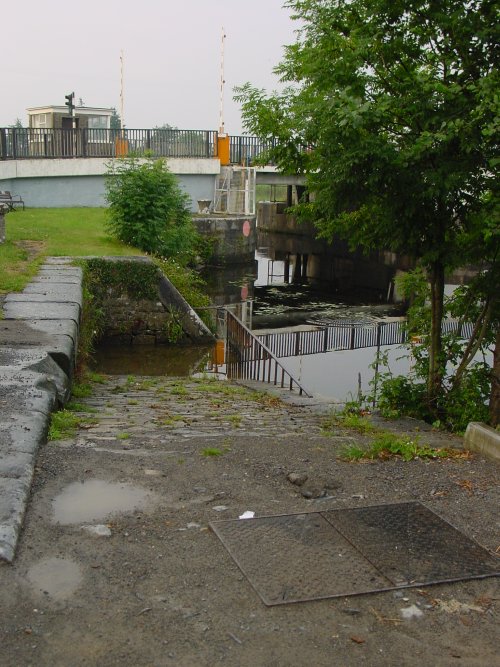
Curious object [2006]

 Irish waterways history