Tag Archives: barge

The Corrib dredger

Drainage and Navigation Works: Construction of dredging machinery

The Commissioners having authorized the purchase of one of the iron dredgers used in the execution of the Shannon works, and then on that river at Athlone, the operation of removing her to Galway was commenced on 1st of March.

This was effected by first clearing her of all machinery, and then cutting up the hull or shell into pieces suited for carriage by land, in which manner every portion of her was removed to Galway.

In reconstructing this boat, considerable improvement and thorough repairs have been effected. A flat iron plate, three-fourths of an inch thick, has been substituted for the hollow iron keel, which lightens her draft of water five inches without any diminution of her steadiness, and an alteration of the position of the steam-pipes has been judiciously arranged. The keelsons were pieced, and whenever any materials were unsound they have been replaced.

The time occupied in the breaking up, transfer, and reconstruction of this dreder, weighing 200 tons, was five months and eleven days, and the whole work was executed at a cost of £803/8/11.

Four scows or decked barges have been constructed for the conveyance of the material raised by the dredger to spoil. Two of these boats are capable of carrying 30 tons, and the other two 45 tons.

Extract from the Annual Report of Mr S U Roberts CE, District Engineer for the year 1851 in Twentieth Report of the Commissioners of Public Works 1852
The Deel navigation

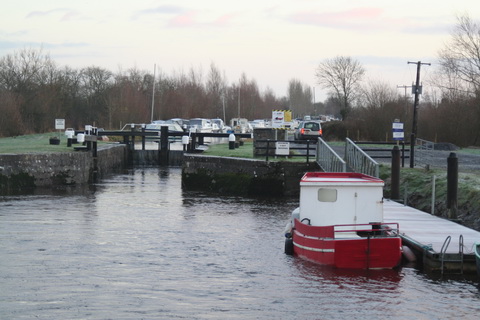
The Deel linked the Co Limerick town of Askeaton to the south side of the Shannon Estuary. Here is a page about the navigation and some of its quays. Note that it is a long page with many maps and photos, although they’re all reduced in size to minimise the strain on tinterweb.

Boat Trade on the Barrow

BOAT TRADE

Dublin to and from Waterford
CALLING AT ROSS AND GRAIGUE

The Public are respectfully informed that the Boats of the BARROW NAVIGATION COMPANY call regularly each week to and from the above-mentioned Towns, say on the Mornings of MONDAY and THURSDAY, at Three o’Clock, making TWO deliveries weekly at each end.

The Company having selected Men of the besst characters as Masters of their Boats, they engage the safe delivery of all Goods forwarded, and hope by moderate charges and dispatch to give satisfaction.

GOODS FOR ENGLAND AND SCOTLAND to be forwarded by these Boats, should be directed to the Agents of the Company.

Goods can be forwarded by careful carriers to the following towns, viz:

FROM FROM FROM Waterford
Graigue To
To Ross Carrick-on-Suir
Borris Clonmel
Innistiogue To Dungarvan
Thomastown Dunmore
Enniscorthy Ballyhack
Wexford Tramore

For further particulars, apply to the Company’s Agents

Mr JOHN KELLY, Grand Canal Harbour, Dublin

Mr JOHN M’DONNELL, Custom-House Quay and Lower Thomas-street, Waterford

Mr M W CARR, New Ross

Mr M RYAN, Graigue

Or to the Secretary of the Company, P D LaTOUCHE, Esq, Castle-street, Dublin

Waterford Chronicle 4 November 1854

Tullamore drowning

A respectable boat owner, named Stapleton, when passing through Tullamore, on Saturday morning, and while putting his boat through lock No 27, lost his balance and was precipitated into the chamber, the water in which was then so low as to prevent those on the bank from rendering immediate assistance; he was sucked through one of the sluice gates, and completely removed from human exertion. His body was ultimately got out of the water, and medical assistance promptly, but fruitlessly, afforded.

Statesman and Dublin Christian Record 5 June 1846 quoting the King’s County Chronicle

Rail, road and river: steam in 1829

Four news items, all in the Varieties section of the Hampshire Chronicle on 19 October 1829.

Rail

The trial of the locomotive carriages near Liverpool was continued on Saturday, when Mr Stephenson’s engine, the Rocket, disencumbered of every weight, shot along the road at the almost incredible rate of 32 miles in the hour! So astonishing was the celerity with which the engine, without its apparatus, darted past the spectators, that it could be compared to nothing but the rapidity with which the swallow darts through the air.

Road 1

Mr Gurney’s steam carriage can be stopped dead within the space of two yards, though going at the rate of from 18 to 20 miles an hour, and this without any inconvenient shock to the machinery or passengers. It is capable of dragging a carriage, weighing three tons and containing 100 passengers, over a level road, at the rate of eight, nine, or ten miles an hour: will drag the same carriage, containing 25 passengers, up the steepest road in England, at the same rate. On ascending hills, for every cwt that is shifted from the front to the hind wheels, the carriage requires an additional drawing power of 4 cwt and on level ground an additional power of half a ton. The contrivance by which the carriage may be retarded at pleasure on descending hills, acts independently of the wheels, so that the sliding and cutting effect of the ordinary drags is entirely avoided.

Road 2

Sir James Anderson has entered into a contract with the Irish Post Office, by which he undertakes to convey the mails throughout Ireland at the rate of 12 miles an hour, in coaches impelled by steam, calculated to carry two or three passengers, in addition to the coachman and guard. This invention of Sir James Anderson, for which he has obtained a patent, has seldom been exhibited out of the yard in which it was constructed; but it is said to bear very little resemblance to the drag-coach of Mr Gurney. The contract is understood to be for 14 years, and the only pecuniary stipulation made by Sir James is, that he shall receive half the money which the Government shall save by adopting his system. He will shortly commence carrying the mails between Howth and Dublin. The road is level and good, and the distance not more than nine or ten miles.

[Note: an 1841 proposal by Sir James Anderson is covered here. And here is a longer piece about Sir James and the Steam Carriage and Waggon Company of Ireland.]

River

An iron steam boat of a peculiar construction, and having the paddles in the centre, has been built at Liverpool, by Messrs Fawcell and Co for the Irish Inland Steam Navigation Company. This vessel was tried in the Mersey on Monday, and the result was highly satisfactory. Another iron vessel, of 60 tons burden, was launched on Tuesday from Messrs Wm Laird and Son’s yard, on the banks of Wallasey Pool.

[Note: the Fawcett steamer and the 60-ton barge were destined for the Shannon. The barge was the first iron vessel built by Lairds.]

Taking the pills

St John’s and other pills are discussed on this page, where I said

The term is associated with south-western England and Wales but it is also found in south-eastern Ireland.

Reading Hugh Conway-Jones’s excellent Working Life on Severn & Canal: reminiscences of working boatmen (Alan Sutton, 1990), I noted this:

By the time you got to Avonmouth, the tide was more than half-ebbed out and the dock gates were closed. So the tug took you round into the Old Entrance (what we called the Old Way), and you tied up there alongside the pier. As the tide ebbed, the barges lay on the bottom and then you could get your head down for a nice sleep while the tug went off to Portishead to anchor in the pill there.

I’m not sure whether this Pill is the one the boatman had in mind: although the two places, Portishead and Pill, are often mentioned together, it seems a bit far away to be regarded as Portishead’s pill. Further information welcome — and sightings of any other pills from either side of the Severn.

Incidentally, the sort of traffic and conditions Conway-Jones wrote about seem to be similar to those on the Barrow and Suir estuaries (allowing for their smaller scale).


The Shannon in winter

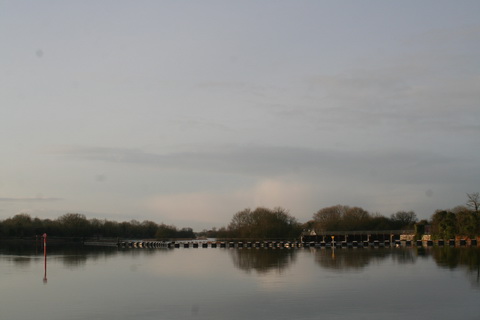
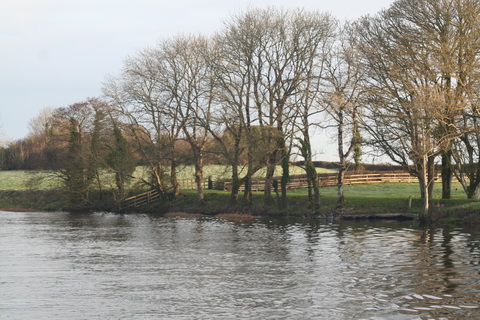
Downriver from Shannon Harbour to Dromineer in December 2014. It began as a bright, cold morning.

Shannon Harbour to Dromineer December 2014 01_resize

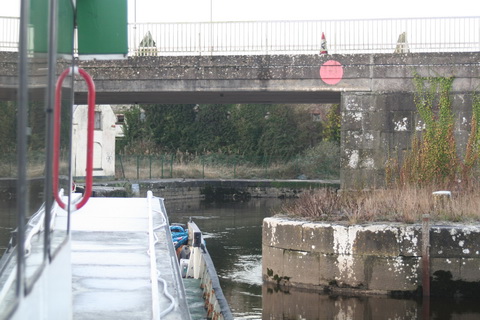
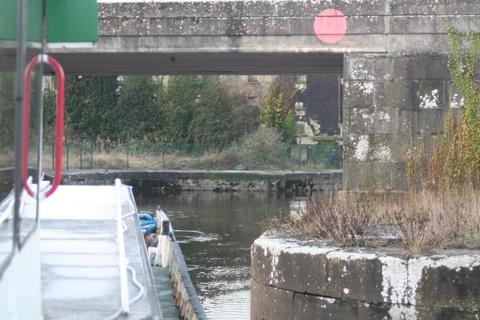
Leaving Shannon Harbour after icebreaking between the locks

Shannon Harbour to Dromineer December 2014 02_resize

Flooding to the south-east

Shannon Harbour to Dromineer December 2014 03_resize

But southward, look …

Shannon Harbour to Dromineer December 2014 06_resize

The Brosna

Shannon Harbour to Dromineer December 2014 73_resize

Heading for Banagher Bridge 1

Shannon Harbour to Dromineer December 2014 75_resize

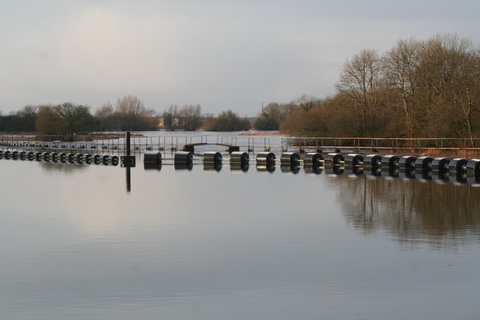
Keeping close to the pontoons

Shannon Harbour to Dromineer December 2014 98_resize

Heading for Banagher Bridge 2

Shannon Harbour to Dromineer December 2014 103_resize

Heading for Banagher Bridge 3

There is a YouTube video of the shooting of the bridge here. It seems to start automatically, including sound; I don’t know how to avoid that.

Shannon Harbour to Dromineer December 2014 107_resize

Looking back at Banagher

Shannon Harbour to Dromineer December 2014 116_resize

Colours

Shannon Harbour to Dromineer December 2014 124_resize

Invernisk

Shannon Harbour to Dromineer December 2014 129_resize

Shannon Grove

Shannon Harbour to Dromineer December 2014 134_resize

Current

Shannon Harbour to Dromineer December 2014 140_resize

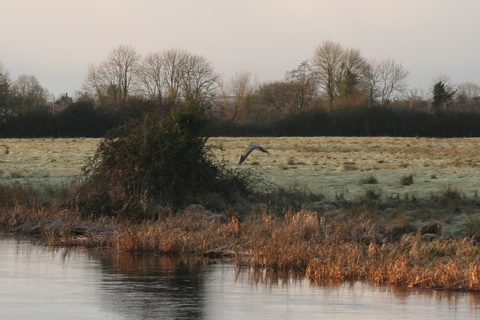
Scarpering heron

Shannon Harbour to Dromineer December 2014 146_resize

Colours

Shannon Harbour to Dromineer December 2014 149_resize

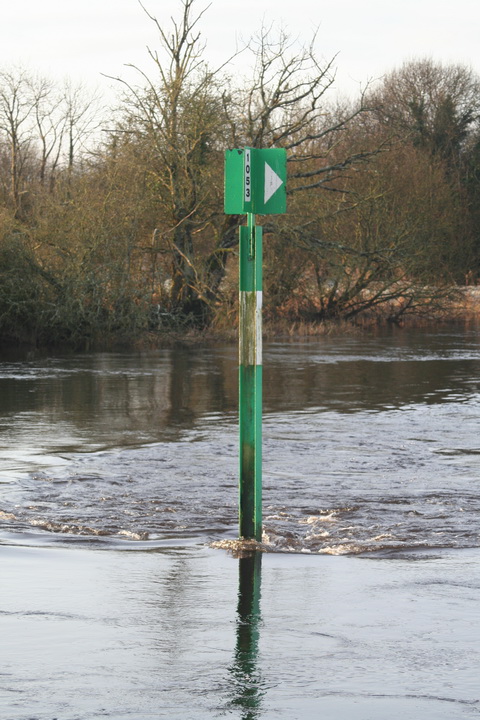
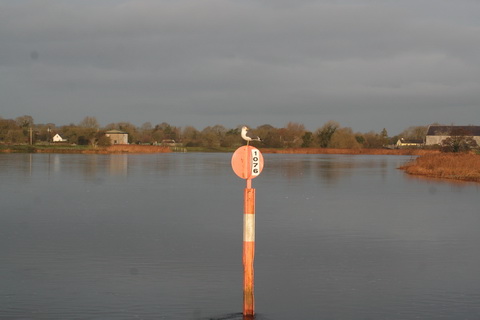
Marker and gauge

Shannon Harbour to Dromineer December 2014 151_resize

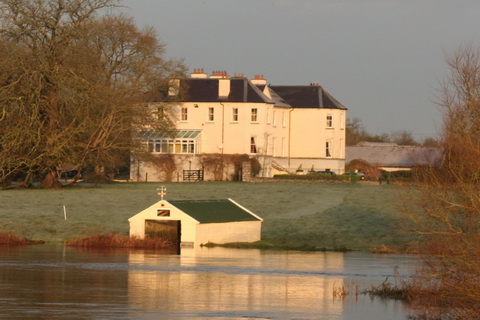
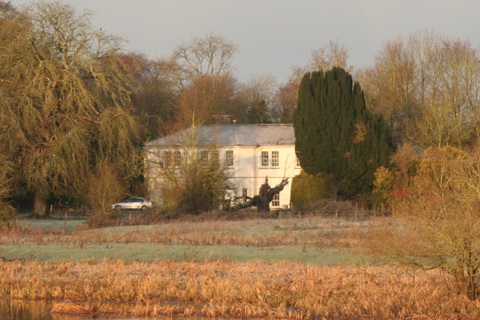
House

Shannon Harbour to Dromineer December 2014 169_resize

Boats at Meelick

Shannon Harbour to Dromineer December 2014 170_resize

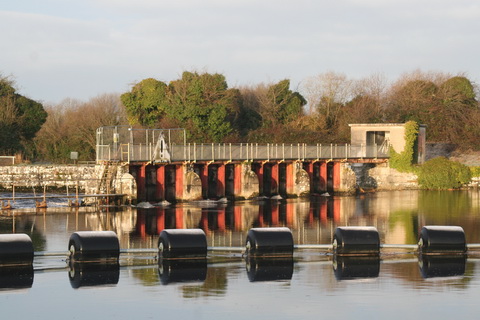
Meelick weir

Shannon Harbour to Dromineer December 2014 174_resize

East bank

Shannon Harbour to Dromineer December 2014 176_resize

Protective boom

Shannon Harbour to Dromineer December 2014 181_resize

Sluices

Shannon Harbour to Dromineer December 2014 198_resize

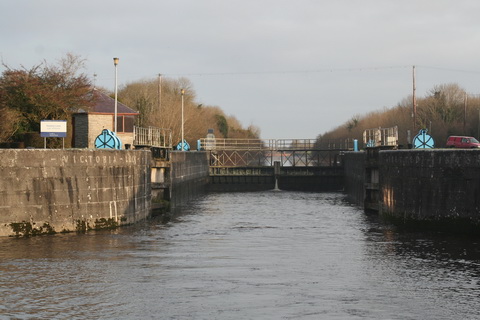
Through Meelick Lock

Shannon Harbour to Dromineer December 2014 205_resize

One bird

Shannon Harbour to Dromineer December 2014 213_resize

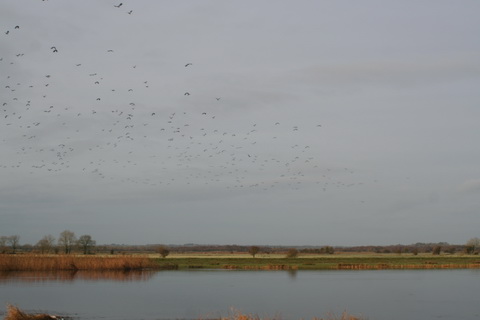
Many birds

Shannon Harbour to Dromineer December 2014 221_resize

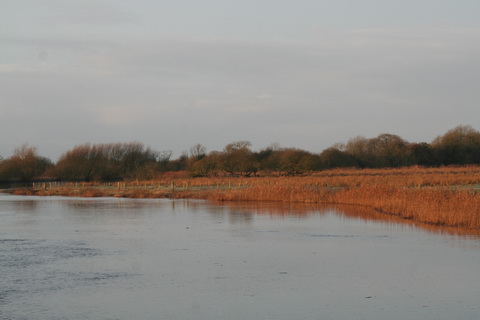
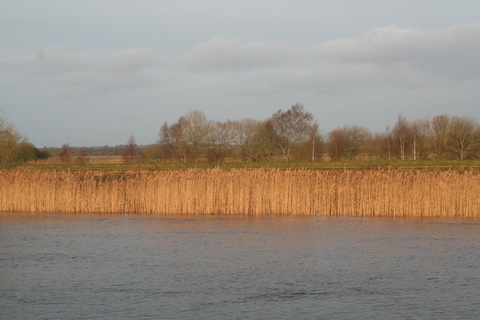
Reeds

Shannon Harbour to Dromineer December 2014 226_resize

Architecture

Shannon Harbour to Dromineer December 2014 228_resize

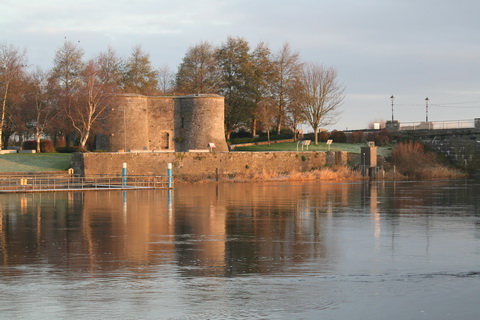
Munster Harbour

Shannon Harbour to Dromineer December 2014 233_resize

Delaying Eamon Egan

Shannon Harbour to Dromineer December 2014 235_resize

Gateway to civilisation

Shannon Harbour to Dromineer December 2014 237_resize

Connacht Harbour

Shannon Harbour to Dromineer December 2014 239_resize

Lough Derg: weather has changed

Shannon Harbour to Dromineer December 2014 243_resize

Journey’s end, Dromineer


Opera

On a barge.

Uninformative press release aboot thon sheugh

Plans to restore the Upper Lough Erne to Clones section of the Ulster Canal are being pursued by the Department of Culture, Arts and Leisure and the Department of Arts, Heritage and the Gaeltacht

it says here. The official NSMC version is here. No mention of the inter-agency treasure-seekers; perhaps the swag is in here:

Progress on the development of the new INTERREG V and PEACE IV Programmes for the period 2014 – 2020 was discussed. The Council noted that the draft Programmes had been submitted to the EU commission by the deadline of 22 September 2014.

I see that WI employee payments for pensions are going up:

16. Ministers also acknowledged the ongoing work in relation to reform of the North South Bodies Pension Scheme, including recently approved amendments to ensure the Scheme complies with employment legislation and best practice in both jurisdictions and to increase employee contributions.

Someone with a tin ear (perhaps someone who doesn’t do crosswords) wrote this:

driving a shift to public and more sustainable modes of transport and the potential for shared cross border public transport services in border areas.

Driving would be right, especially in Donegal. But what about parity of esteem?

development of cross border Greenways

Why no Orangeways?


Murder on a Grand Canal Company boat

At the inquest on the body of Myles Crofton, who was, as alleged, murdered on board one of the Grand Canal Company’s boats on the Limerick Canal, the jury returned the following verdict:— “That the deceased, Myles Crofton, aged 45 years, dies at Killaloe on Sunday, the 29th November, 1891, from certain wounds inflicted on him in boat No 17, plying on the canal, but we find there is not sufficient evidence before us to enable us to say who the guilty person or persons are that inflicted said wounds. We unanimously wish to put before the Grand Canal Company the unhappy position of the wife and large family of the deceased, and to pray the merciful consideration of the company on their behalf.”

Freeman’s Journal 5 December 1891

From the issue of 1 December 1891 we learnt hat, on 30 November 1891, two Grand Canal Company boatmen, and a third man, were charged with the murder. The boat had left Limerick for Killaloe on Saturday 28 November with Crofton, two other crewmen and a fourth person, not a boatman, on board. When it reached Killaloe, Crofton was found to be unconscious “with seven wounds about the head and over both eyes”. The police were called and the dispensary doctor attended but Crofton died next morning “in great agony”. The other three were remanded to Limerick Jail for a week. Crofton left eight children.

On Tuesday 29 December [FJ 30 December 1891] the three men were brought before the magistrates. They were defended by P S Connolly, solicitor. District Inspector M’Donald said that one of the accused had made an important statement but, as he had not yet received instructions from Dublin Castle, he requested an adjournment which, despite Mr Connolly’s opposition, was granted. On the following day [reported in FJ 31 December 1891] the DI said that one of the men, George Farrell, had been released from prison and was prepared to give evidence against Frank Egan.

On being sworn, Farrell deposed he had heard a row in the cabin of the boat between Frank Egan and the deceased, Myles Crofton, and afterwards saw them fighting with their fists. Subsequently he saw Egan strike the deceased with his boot.

Dr John Keogh, who had attended Crofton before he died [was he the dispensary doctor?], said that the wounds were caused by violence, not by accident.

The Belfast News-Letter [1 January 1892] had a slightly different account:

[…] one of the men turned Queen’s Evidence, and confessed that while going down [sic] the Shannon a comrade named Miles [sic] Crofton was repeatedly assaulted while all the party were drinking.

Egan was committed for trial; Farrell had already been released and now the third, Nutterfield [Yorkshire Post and Leeds Intelligencer 1 January 1892] or Netherfield [Hampshire Telegraph and Oxford Journal, both 2 January 1892], was also released.

I have not been able to find anything about Egan’s trial, if there was one, or subsequent fate.