Tag Archives: boats

From the Corrib

Padhraic Conneally left a comment on my third page about the Rockville Navigation. He made an interesting suggestion that caused me to look at the OSI maps around the Corrib. It seems that there might be another small navigation to the west of Lough Corrib and, because further information would be welcome, I reproduce Padhraic’s comment and my response here.

There is supposed a similar [ie similar to the Rockville] navigation on the Corrib from the old river to Ross lake via Moycullen lake.

I have been up a channel from the old river in a cruiser almost up to the realigned main road but never further. Fr O’Reilly SJ who was a companion of Maurice Semple author of the series of books on the Corrib was reputed to [have] made the trip in a canoe cutting lots of farmers’ barbed wire on the way!

My response:

Looking at it on the OSI maps, the ~1840 (or thereabouts) Historic 6″ map has a quay at the south end of Ross Lake. From there it seems to be possible to get as far as Lough Down, north of Cloghaun. A lot of the channels are straight, suggesting that they’re artificial.

The later ~1900 Historic 25″ then shows another straight channel from Lough Down, through Cloghaun to Moycullen (Ballycuirke) Lough. From the far side of the lake, an artificial-looking channel curves to the Corrib, joining it at this point. So it might be that the system was developed in the early nineteenth century but linked to the Corrib only in the later part of the century. It might have been constructed for drainage, but that wouldn’t stop it being used for navigation as well.

I hadn’t heard of Fr O’Reilly but I do have two of Maurice Semple’s books. I must have a look in them. If anyone else has information about this, it would be very welcome.

If you know anything about this, please leave a Comment below.


The Box in the Docks

From the website of the Dublin City Business Association:

Dublin City Business Association commissioned Jerome Casey and Felim O’Rourke to undertake a study of tourism in Dublin and to make least-cost recommendations for its rejuvenation. The World Tourism Organisation concluded (in relation to Ireland) that “there appears to be very little correlation between marketing spending by National Tourism Organisations and international arrivals”.

Within Ireland, there is a mismatch between the Irish tourism market and the public resources devoted to it.

33 existing tourist attractions in Dublin were reviewed, and low-cost initiatives suggested for their improvement.

From 2000 – 2010 Ireland’s share of world tourism visitors has fallen sharply. In 2004, Ireland changed from being a destination country for incoming tourists to an origin country for Irish, outgoing tourists.

Dublin must move from passive approval of tourist activities to an active development of tourism as a priority industry in regenerating the city’s economy.

As my piece on the Park Canal in Limerick shows, I’m all in favour of low-cost improvements, so I downloaded the full report (PDF: 949.7 kb). Folk interested in waterways might like to proceed directly to page 46, which reviews the Box in the Docks, the Waterways Ireland visitor centre in the Grand Canal Basin at Ringsend.

Some other water-based attractions get much better reviews.


Skew arch canal bridges in Co Kildare

See the Helpful Engineer’s site here (and h/t Industrial Heritage Ireland).

Russells of Portarlington, timber merchants

I am indebted to Eleanor Russell for permission to reproduce four photos of the canal operations of Messrs Russells of Portarlington, timber merchants and sawmills operators. They used the Royal and Grand Canals (and the Barrow Line and Mountmellick Branch) to carry timber cut on large estates to their sawmills. One of the estates on which they cut timber was Rockville, and Eleanor Russell has also given me permission to use a photo of Rockville House, taken in 1913, on my page about the Rockville Navigations.

Pollardstown Fen

Pollardstown Fen is the source (via the Milltown Feeder) of much of the Grand Canal’s water supply. Here is a BBC programme about the sounds of the Fen (h/t John McCormack) and other aspects of the magical area close to Robertstown, Lowtown and the Hill of Allen.

Lock your door, turn off your telephone and spend half an hour listening. Shoot anyone who interrupts.

Since the programme was made, the sound recordist Tom Lawrence has died. His website is still up here.

Life beside the Grand Canal

Brigid Maguire’s Tales on the Co Kildare Online Electronic History Journal.

Annoying the neighbours

It would be unfair to condemn the proposed opening of a canal to Clones without also condemning the proposed reopening of the Park Canal in Limerick (and the Newry, when I get around to it). The link is to a top-level page; the first substantive page has a lead to the second, the second to the third and so on up to the fifth.

Turning a white elephant into a beagle

That dreadful white elephant the Jeanie Johnston, currently owned by the Dublin Docklands Development Authority (whose purchase of the wretched thing was almost as big a mistake as their involvement in the Irish Glass Bottle site), is sitting in the Liffey acting as a famine museum.

Now the Grauniad tells us of a project to rebuild a replica of HMS Beagle in order to do science. It is not clear why a replica of a small, wooden, early nineteenth century sailing vessel — presumably with high maintenance costs — would provide a better platform for doing science than a modern steel motor vessel, but the promoters have their hearts set (again) on using a barque.

And, as it happens, the Jeanie Johnston is a barque, as was HMS Beagle while Darwin was aboard. Admittedly, the Jeanie Johnston is rather larger, but it might also cost a lot less than building a new Beagle from scratch. In fact, we could perhaps pay the Beagle folk to take it away.

Brokers

Did you know that you can pawn a boat? (h/t FT Alphaville)

Fracking Leitrim

This morning, on the wireless, I heard two people opposing the use of fracking to find gas around Lough Allen in Co Leitrim. Neither of them was convincing. One started by objecting to big multinationals being given licences to investigate the resources available; it is not clear that there was any ban on small native companies or workers’ cooperatives (or soviets of workers, peasants and soldiers) applying for licences, and presumably they could use traditional Irish implements like sleans if they wanted to.

The general line of argument adopted by the objectors was that anything that could go wrong would go wrong, probably all at the same time, wiping out the whole of Irish agriculture (some of which is not in Leitrim) and, er, eco-tourism. There would, the objectors seemed to suggest, be no preventive or mitigating measures and no insurance and the full cost of every accident would be borne by the residents of the area.

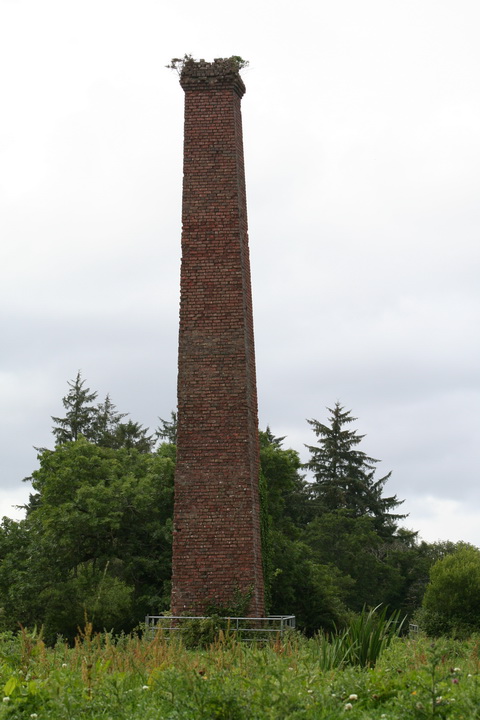
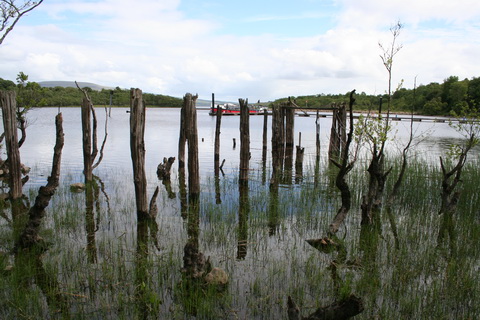
Remains of a pier at the brickworks, Spencer Harbour, Lough Allen


But the bit that really annoyed me was the depiction of the area as one of rural seclusion. Yet Lough Allen had canals, railways, coal mines, dams, iron works and brick works.

Spencer Harbour on Lough Allen


The very canal linking Lough Allen to the
rest of the Shannon Navigation owes its very existence to the desire
to carry coal from around Lough Allen to Dublin. And one of the most best tourism initiatives in the area, the Arigna Mining Experience, recognises that heritage.

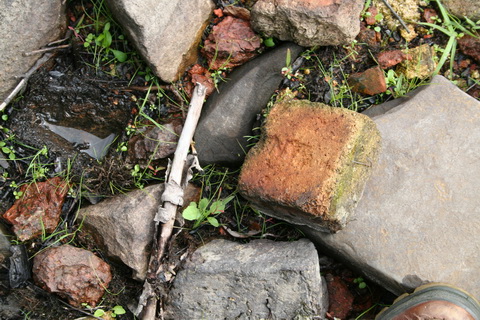
Part of a brick


Insist on proper assessment and management of risk by all means, but don’t exaggerate it — and don’t ignore Leitrim’s industrial heritage.