Tag Archives: boats

Tullamore drowning

A respectable boat owner, named Stapleton, when passing through Tullamore, on Saturday morning, and while putting his boat through lock No 27, lost his balance and was precipitated into the chamber, the water in which was then so low as to prevent those on the bank from rendering immediate assistance; he was sucked through one of the sluice gates, and completely removed from human exertion. His body was ultimately got out of the water, and medical assistance promptly, but fruitlessly, afforded.

Statesman and Dublin Christian Record 5 June 1846 quoting the King’s County Chronicle

Overloaded boat

A Railway Wanted. — On Thursday week the fly-boat on the Grand Canal was so crowded with passengers returning from Ballinasloe fair, that between Tullamore and Philipstown they sat nearly up to their knees in water. Not liking the comfort afforded by such a mode of conveyance, many of the passengers left at the latter place and took cars, and the boat proceeded to Dublin without accident.

London Standard 28 October 1845 quoting the Longford Journal

Scottish canal developments

Application of locomotive steam power to the navigation of canals

On Monday and Tuesday the following novel experiment of locomotive steam-power was tried on the Forth and Clyde Canal. Mr John M’Neil, the civil engineer of the Clyde navigation, has had constructed on the banks of the canal a railway upon blocks, on which a locomotive engine has been put, which was used on the above named days instead of horses, to draw the canal passage-boats, and succeeded in taking them the whole distance of the line at the rate of eight miles an hour. The company having ascertained the full success of the experiment, will construct a tramway along the canal bank, and will be able to take their passage-boats in future at the rate of 18 miles an hour.

Bradford Observer quoting the Stirling Journal 5 September 1839

Rail, road and river: steam in 1829

Four news items, all in the Varieties section of the Hampshire Chronicle on 19 October 1829.

Rail

The trial of the locomotive carriages near Liverpool was continued on Saturday, when Mr Stephenson’s engine, the Rocket, disencumbered of every weight, shot along the road at the almost incredible rate of 32 miles in the hour! So astonishing was the celerity with which the engine, without its apparatus, darted past the spectators, that it could be compared to nothing but the rapidity with which the swallow darts through the air.

Road 1

Mr Gurney’s steam carriage can be stopped dead within the space of two yards, though going at the rate of from 18 to 20 miles an hour, and this without any inconvenient shock to the machinery or passengers. It is capable of dragging a carriage, weighing three tons and containing 100 passengers, over a level road, at the rate of eight, nine, or ten miles an hour: will drag the same carriage, containing 25 passengers, up the steepest road in England, at the same rate. On ascending hills, for every cwt that is shifted from the front to the hind wheels, the carriage requires an additional drawing power of 4 cwt and on level ground an additional power of half a ton. The contrivance by which the carriage may be retarded at pleasure on descending hills, acts independently of the wheels, so that the sliding and cutting effect of the ordinary drags is entirely avoided.

Road 2

Sir James Anderson has entered into a contract with the Irish Post Office, by which he undertakes to convey the mails throughout Ireland at the rate of 12 miles an hour, in coaches impelled by steam, calculated to carry two or three passengers, in addition to the coachman and guard. This invention of Sir James Anderson, for which he has obtained a patent, has seldom been exhibited out of the yard in which it was constructed; but it is said to bear very little resemblance to the drag-coach of Mr Gurney. The contract is understood to be for 14 years, and the only pecuniary stipulation made by Sir James is, that he shall receive half the money which the Government shall save by adopting his system. He will shortly commence carrying the mails between Howth and Dublin. The road is level and good, and the distance not more than nine or ten miles.

[Note: an 1841 proposal by Sir James Anderson is covered here. And here is a longer piece about Sir James and the Steam Carriage and Waggon Company of Ireland.]

River

An iron steam boat of a peculiar construction, and having the paddles in the centre, has been built at Liverpool, by Messrs Fawcell and Co for the Irish Inland Steam Navigation Company. This vessel was tried in the Mersey on Monday, and the result was highly satisfactory. Another iron vessel, of 60 tons burden, was launched on Tuesday from Messrs Wm Laird and Son’s yard, on the banks of Wallasey Pool.

[Note: the Fawcett steamer and the 60-ton barge were destined for the Shannon. The barge was the first iron vessel built by Lairds.]

Taking the pills

St John’s and other pills are discussed on this page, where I said

The term is associated with south-western England and Wales but it is also found in south-eastern Ireland.

Reading Hugh Conway-Jones’s excellent Working Life on Severn & Canal: reminiscences of working boatmen (Alan Sutton, 1990), I noted this:

By the time you got to Avonmouth, the tide was more than half-ebbed out and the dock gates were closed. So the tug took you round into the Old Entrance (what we called the Old Way), and you tied up there alongside the pier. As the tide ebbed, the barges lay on the bottom and then you could get your head down for a nice sleep while the tug went off to Portishead to anchor in the pill there.

I’m not sure whether this Pill is the one the boatman had in mind: although the two places, Portishead and Pill, are often mentioned together, it seems a bit far away to be regarded as Portishead’s pill. Further information welcome — and sightings of any other pills from either side of the Severn.

Incidentally, the sort of traffic and conditions Conway-Jones wrote about seem to be similar to those on the Barrow and Suir estuaries (allowing for their smaller scale).


The Shannon in winter

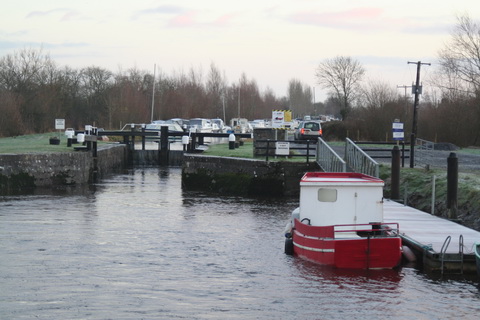
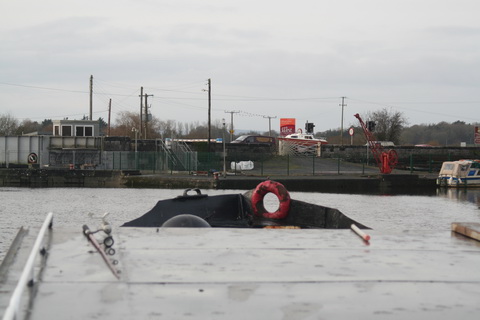
Downriver from Shannon Harbour to Dromineer in December 2014. It began as a bright, cold morning.

Shannon Harbour to Dromineer December 2014 01_resize

Leaving Shannon Harbour after icebreaking between the locks

Shannon Harbour to Dromineer December 2014 02_resize

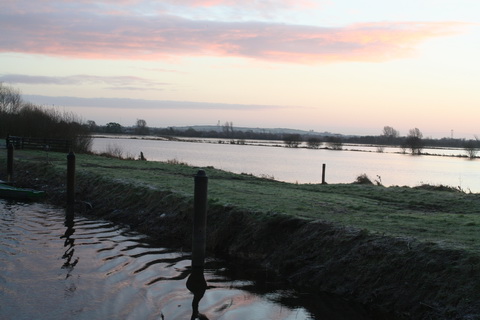
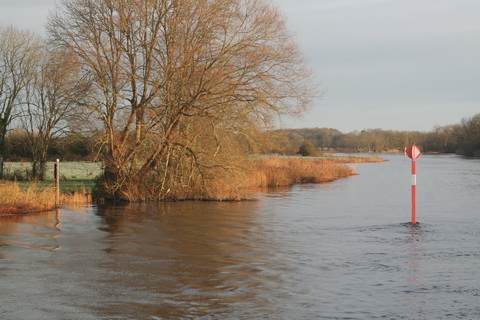
Flooding to the south-east

Shannon Harbour to Dromineer December 2014 03_resize

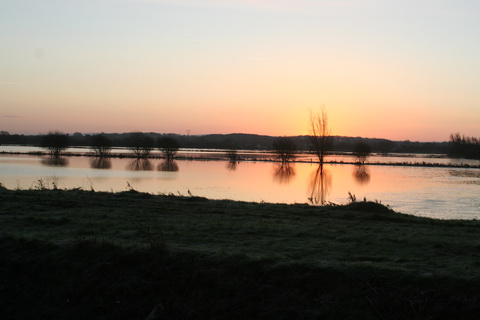
But southward, look …

Shannon Harbour to Dromineer December 2014 06_resize

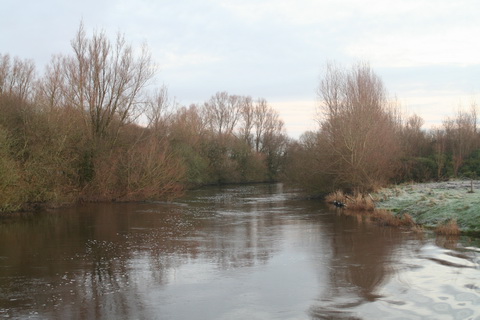
The Brosna

Shannon Harbour to Dromineer December 2014 73_resize

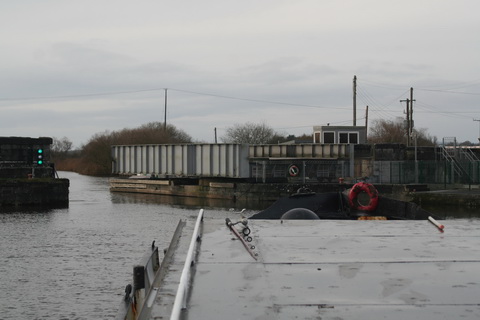
Heading for Banagher Bridge 1

Shannon Harbour to Dromineer December 2014 75_resize

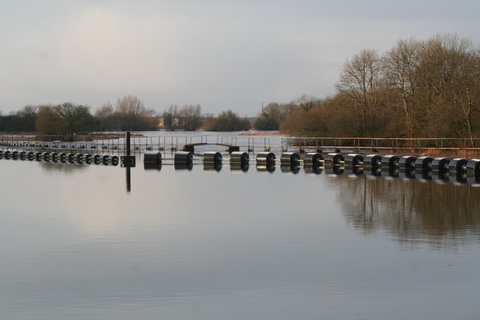
Keeping close to the pontoons

Shannon Harbour to Dromineer December 2014 98_resize

Heading for Banagher Bridge 2

Shannon Harbour to Dromineer December 2014 103_resize

Heading for Banagher Bridge 3

There is a YouTube video of the shooting of the bridge here. It seems to start automatically, including sound; I don’t know how to avoid that.

Shannon Harbour to Dromineer December 2014 107_resize

Looking back at Banagher

Shannon Harbour to Dromineer December 2014 116_resize

Colours

Shannon Harbour to Dromineer December 2014 124_resize

Invernisk

Shannon Harbour to Dromineer December 2014 129_resize

Shannon Grove

Shannon Harbour to Dromineer December 2014 134_resize

Current

Shannon Harbour to Dromineer December 2014 140_resize

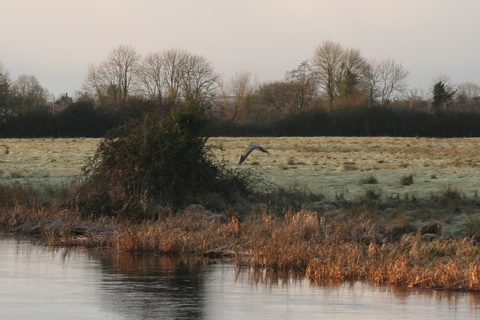
Scarpering heron

Shannon Harbour to Dromineer December 2014 146_resize

Colours

Shannon Harbour to Dromineer December 2014 149_resize

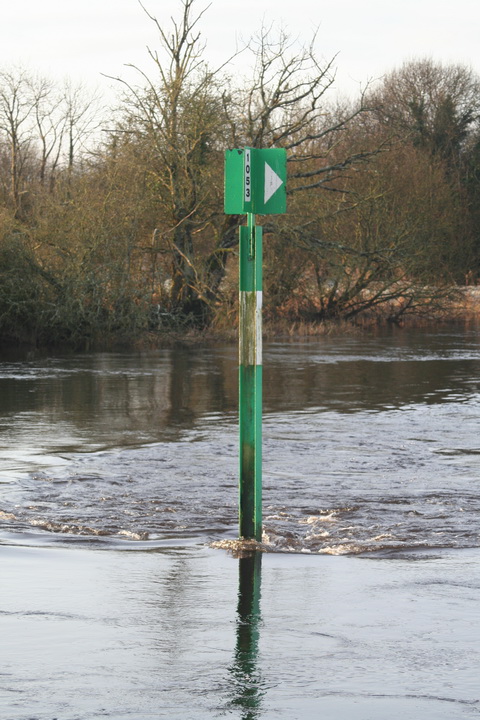
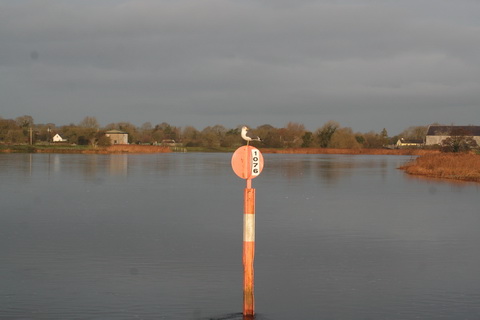
Marker and gauge

Shannon Harbour to Dromineer December 2014 151_resize

House

Shannon Harbour to Dromineer December 2014 169_resize

Boats at Meelick

Shannon Harbour to Dromineer December 2014 170_resize

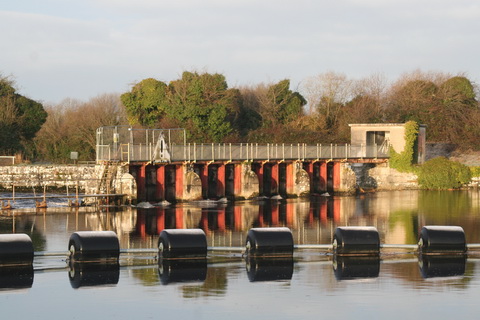
Meelick weir

Shannon Harbour to Dromineer December 2014 174_resize

East bank

Shannon Harbour to Dromineer December 2014 176_resize

Protective boom

Shannon Harbour to Dromineer December 2014 181_resize

Sluices

Shannon Harbour to Dromineer December 2014 198_resize

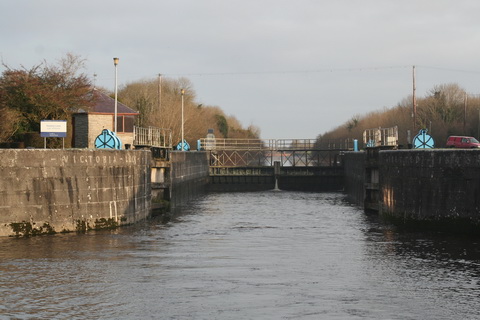
Through Meelick Lock

Shannon Harbour to Dromineer December 2014 205_resize

One bird

Shannon Harbour to Dromineer December 2014 213_resize

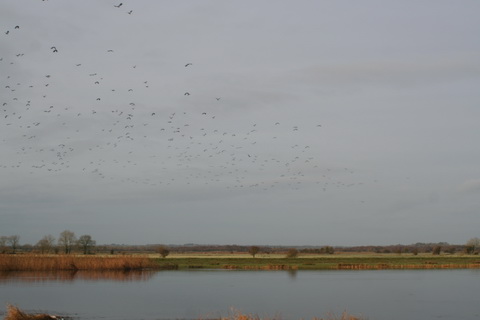
Many birds

Shannon Harbour to Dromineer December 2014 221_resize

Reeds

Shannon Harbour to Dromineer December 2014 226_resize

Architecture

Shannon Harbour to Dromineer December 2014 228_resize

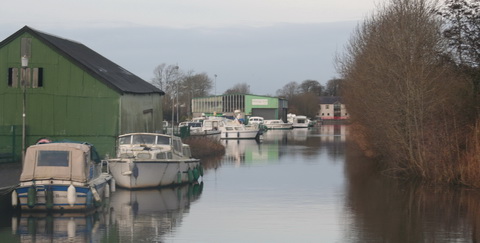
Munster Harbour

Shannon Harbour to Dromineer December 2014 233_resize

Delaying Eamon Egan

Shannon Harbour to Dromineer December 2014 235_resize

Gateway to civilisation

Shannon Harbour to Dromineer December 2014 237_resize

Connacht Harbour

Shannon Harbour to Dromineer December 2014 239_resize

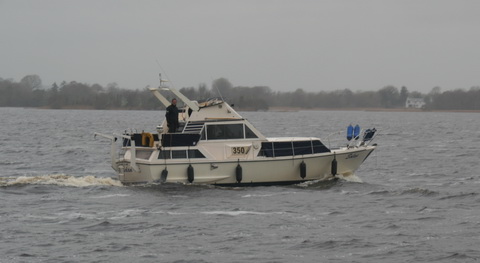
Lough Derg: weather has changed

Shannon Harbour to Dromineer December 2014 243_resize

Journey’s end, Dromineer


Saunderson’s Sheugh

The Minister for  Arts, Heritage and the Gaeltacht [who is also a Fine Gael TD for Cavan–Monaghan] spoke at the meeeting of the Joint Oireachtas Committee on Environment, Culture and the Gaeltacht on 25 November 2014. She said:

In addition to progressing North-South co-operation, my key priority is progressing the first stage of the Ulster Canal project from upper Lough Erne to Castle Saunderson, near Belturbet, County Cavan. I am working on this with the Government and other key partners, including the North-South Ministerial Council and Waterways Ireland. […]

It sounds, then, as if the minister intends to get work started on the Clones Sheugh, but only as far as Castle Saunderson, where there is a scouting establishment. The route from Quivvy Lough (location of the Quivvy Marina) is along the Finn River; the first 5.5 km of the route would be in the river and the last 8.5 km to Clones in a canal. The route to Castle Saunderson would, I imagine, require dredging and the removal of rocks as well as work on [or replacement of] Derrykerrib Bridge [I have not read all the details].

It would, of course, be faster to get there by road, but no doubt lots of people will travel from Foreign Parts for the excitement of seeing Castle Saunderson from the water and paying tribute to the memory of a stout Orangeman and founder of the Irish Unionist Alliance.

No mention of the treasure-hunting group who are to find the money, but there’s an election in the offing so money won’t be a problem. Until afterwards.

Quivvy to Castle Saunderson [OSI ~1840]

Quivvy to Castle Saunderson [OSI ~1840]

The minister also said:

Regarding the Ulster Canal, which stretches from upper Lough Erne to Castle Saunderson, we hope to get the project started on that section because that is the one part of the inland waterway system that has not been developed. If we get that done, the Ulster Canal will connect into Lough Neagh. That means we will have a complete network of waterways in Ireland, which is very important. It is also a cross-Border project, and there is a peace dividend in terms of that project. It is very important in terms of cross-Border relationships. It is one shovel-ready project that can be progressed.

The minister said that “a complete network of waterways in Ireland […] is very important”. She did not say why and I can think of no possible economic justification for the creation of such a “network”. Nor is it clear what the “peace dividend” is. But the phrase that evoked most terror is “shovel-ready project”, which I take to mean something that might buy votes in the next election.

The minister’s predecessor, Éamon Ó Cuív, a Fianna Fáil TD for Galway West, said:

I welcome the Minister’s continuation of the work on the Ulster canals. There was quite a bit of work done on that in my time and I was very anxious to see it progress on a step-by-step basis. I was going to bring it to Clones, I am not sure whether the place the Minister mentioned is further or nearer than that.

The minister interjected:

It is not as far as Clones. We will start it anyway and we will get it there.

And Mr Ó Cuív continued:

I take the view that even if she were to get it half a mile, we should just nibble away at it until we get it finished. It is of strategic national importance and if we could connect Coleraine, where I was the other day and where my poor car is getting mended, all the way down the coast through Lough Neagh down to Shannon and back up the canals, it would be a fantastic facility for the island. I will not be heard complaining in any way that it is in the Minister’s constituency – that just happens to be a happy coincidence in this case.

Actually, although both Quivvy Marina and Castle Saunderson are in the Free State, most of the River Finn route is in the United Kingdom of Great Britain and Northern Ireland.

It seems that I must cease to speak of the Clones Sheugh: it’s Saunderson’s Sheugh. I suppose that, if reaching Castle Saunderson were enough to shut up the Shinners, who seem to be madly keen on Sheughery for some reason that is hidden from me, that might be a bargain: it would certainly be better than going all the way to Clones.

My OSI logo and permit number for website


Recent developments in boat design

Mr Busk’s elastic paddle

A small Steam Boat (apparently about fifty feet long, and six or seven feet wide), belonging to Mr Wm Busk, of Pall-mall, was exhibited on Friday on the Thames. The boat was propelled easily and rapidly through the water, both with and against the tide, by a very small steam power, without the use of any paddle-wheel, by means of an elastic paddle, or fin, recently invented by Mr Busk, which was subject to a reciprocating motion wholly under water, and acting equally both ways.

When the action is not brought too near the surface, no motion seems to be occasioned in the water which could at all prejudice canal banks; and as the range of the fins, by their being placed in the narrow after-part of a boat, admits of being confined completely within the depth and breadth of the boat, no impediment need be presented to the passing of locks or bridges. The invention appears to be extremely simple and efficacious, and of very ready application to vessels of all classes and dimensions.

Bath Chronicle and Weekly Gazette 5 May 1825

Canal steam navigation

Experiments of rather a novel character have for some weeks been in progress on the Forth and Clyde Canal, to ascertain the merits of an invention for propelling boats on canals at greater velocities than have hitherto been attained either by steam or horses. The principle on which the experiments are founded may be thus described.

A light chain is laid in the canal, from one extremity to the other, and firmly fixed at each end. To effect motion by this means, a twin boat is used, in the trough of which a grooved wheel (receiving the chain) is made to revolve by a steam engine placed in the boat. From this description it will be evident that, as the wheel revolves, the boat is drawn forward at a speed equivalent to the power, or at precisely the same velocity as the periphery of the grooved wheel.

At first sight there appear to be several objections to the plan, not the least of which are turning the bends, and meeting and passing general craft on the canal. The experiments made on Friday the 29th ult, however, fully prove the facility with which the vessel can be steered from side to side of the canal; describing, at the same time, quicker curves than any to be met with on the Forth and Clyde navigation.

On the whole the experiments, though conducted under great disadvantages, were highly satisfactory, and such as to induce further trials. A speed of 8¼ miles per hour was attained, and there was little doubt in the minds of those who witnessed the trials, that, with a lighter engine, and a boat drawing less water, a higher velocity might be acquired at a cheaper rate than is now produced by horses.

It will be proper here to observe that it is not intended to carry passengers in the same boat that contains the engine and propelling apparatus.

Chester Chronicle 12 September 1834

India Rubber Boat

An American journal says that a Mr Caleb Williams, of New York, has just constructed a boat of this material, and that he has applied for a patent for his invention.

Huntingdon, Bedford & Peterborough Gazette 4 July 1835



Three drowned on Lough Neagh

Most distressing accident on Lough Neagh — three young gentlemen drowned

It is with painful regret we have to announce a very afflicting calamity that occurred on Lough Neagh, on Friday, by which Mr Alexander Charters, son of our esteemed townsman, Mr John Charters, Mr Henry Nelson, son of Mr James Nelson, Ballinderry, and Mr Allen Bell, Glenavy-water-foot, have been consigned to an early grave.

They had that day gone on the lake on a pleasure excursion; and between three and four o’clock in the afternoon, when rounding Ram’s Island, the yacht in which they were capsized in a sudden and violent squall and sunk, when the three young men perished. Several persons on the shore witnessed the occurrence, but at the distance, and the wind blowing an unusually stiff gale from the north, no assistance could be afforded.

All the bodies have been recovered. Mr Alexander Charters, whose untimely death it is thus our melancholy duty to record, had been on a visit to his uncle, who resides near the shore of the lake.

The Dublin Monitor 3 May 1844, quoting the Northern Whig

Two men drowned on Lough Derg

A melancholy loss of life took place on the river Shannon, within five miles of Nenagh. Master Edmond Bourke (eldest son of John Bourke, of Tintrim, Esq, JP) in company with two men named Fahy and Conway, was on an excursion of pleasure in his father’s yacht. On entering Lough Derg with swelling sails a sudden squall bowed the vessel on her side and dipped the sails beneatht he surface of the water. The yacht recovered her upright posture, but being so full of water she went down gradually until completely hidden from view. The two boatmen perished, but Master Bourke clung to an oar and struggled with his fate. He was picked up in the last stage of exhaustion by some persons who had witnessed the melancholy scene from the shore, and had put out a boat to his assistance.

The Dublin Monitor 8 July 1841 quoting the Limerick Chronicle