Tag Archives: bridge

Some updates

Very often, when I’m visiting a waterway site, I take as many photographs as possible of anything that catches my eye, without worrying [at the time] about what an artefact is or what it does. Then, when I get back to my computer, I try to work out what everything was. Sometimes I find that the camera has recorded something I didn’t notice; sometimes I find there are aspects I just don’t understand (not being at all a technical person). In such cases, I put photos on this site and make it clear that I don’t understand them.

My hope is, of course, that a knowledgeable person will explain them, and that very thing has just happened with some pages on waterways of Ulster and thereabouts. John Ditchfield has very kindly explained several aspects of the machinery shown; I have inserted his explanations into the text on these pages:

I am very grateful to John for taking so much trouble and for sharing his expertise with me and with all who read these pages.

Newcomen Bridge

Mick Farrell of the HBA has pointed out that, on the Historic 6″ Ordnance Survey map (~1840), the first lock on the Royal Canal is downstream of Newcomen Bridge whereas on the Historic 25″ (~1900) the lock is upstream of the bridge.

Industrial Heritage Ireland has created a page giving the history of the railway crossing at Newcomen Bridge. However, it would be nice to have some documentary evidence about the resiting of the lock — and about the headroom under the bridge before the lock was moved.

Waterways Ireland asset disposals

I was interested in Waterways Ireland’s programme for disposal of assets. I wrote asking for:

  • a list and details of the assets disposed of since 1 January 2010, including the amounts realised. I said that I was particularly interested in disposals of land and built assets (as opposed, say, to old machinery)
  • a list and details of the assets planned to be disposed of between the date of my enquiry and 31 December 2012
  • an account of the uses to which the funds realised have been, are being or will be put
  • a list of land and built assets being leased or rented out by Waterways Ireland.

I had mentioned some of these disposals here when the North/South Ministerial Council [NSMC] approved them, but I had no information on their value.

WI very kindly provided the information; it’s easier to deal with it in reverse order.

Land and built assets being leased or rented out

WI said:

Waterways Ireland currently leases a total of 233 properties, comprising (1) land, (2) buildings and (3) land and buildings. Of these properties, 121 are on the Grand Canal, 50 on the Royal Canal, 3 on the Barrow Navigation, 2 on the Lower Bann Navigation, 2 on the Shannon Erne Waterway and 55 on the Shannon Navigation. The compilation of the full list will take some time due to pressure of work coming up to the end of year. However, if there are specific areas, navigations or regions of particular interest, every effort will be made to provide the information as quickly as possible.

That’s quite a lot of leases, so I said that I was happy to wait.

The application of funds

WI said:

The funds raised are principally used for capital works in the relevant jurisdiction.

So if something is sold in NI, the money is used there. That is consonant with WI’s funding arrangements for capital projects (other than the Clones Sheugh). As far as I can see, all the property disposed of was in the republic.

Note that the disposals (rightly) do not go to supplement grant income for current expenditure.

Disposals 1 January 2010 to 31 December 2012

WI very kindly sent me an Excel file listing the disposals, only one of which fell into the category covered by my second question (planned to be disposed of between the date of my enquiry and 31 December 2012), so I’m dealing with both questions under one heading. WI said:

The 2010 & 2011 figures have been extracted from Waterways Ireland’s Audited Accounts and represent the Gross amount received i.e. before costs. The 2012 figures have not yet been audited.

The first point to be made is that the total value of property disposals over three years was only €529,557.19: a little over half a million euro in the context of capital expenditure for the three years of about €30,000,000: €21m in 2010 and €5m in 2011, according to WI’s annual accounts, and an amount slightly smaller than 2011’s budgeted for in 2012. So the asset disposals are not very important in WI’s overall capital spending.

disposals to public bodies

Several of the disposals were to other public bodies, allowing them (I imagine) to build bridges, lay pipes and so on. There may also (I imagine) have been disposals of small parcels of land that WI didn’t need but the other body could use. Here are the disposals that seem to fall into that category:

  • Long Lease of Property at Ballyconnell to Cavan County Council: €18,100.00
  • Long Lease of Property at Reilly’s Bridge, Dublin to Iarnrod Eireann: €23,000. This was, I think, what the NSMC called “granting of a 99 year lease to Córas Iompair Éireann for the proposed construction of a road bridge, crossing the Royal Canal at Ratoath Road, Dublin”
  • Long Lease of Property at Lesson Street, Dublin to Dublin City Council: €5,100.00. This may have been what allowed the Council to bury utility ducts under the towpath
  • Long Lease of Lands at Tullamore re: N52: €25,000.00
  • Grant of Easement at Ballygoran to Kildare County Council: €7,500. This may have been to allow Kildare County Council to run water pipes across the Royal Canal near Pike Bridge
  • Long Lease of Lands at Kilkenny re: N9/N10: €41,791.50
  • Long Lease of Lands at Fingal re: M50/N3: €48,582.62.

There was also a Grant of Right of Way at Ballyleague, Co. Roscommon (presumably at WI’s harbour on the west of the Shannon, opposite Lanesborough) for €5,000. No further information is provided but this looks like another pro forma grant of access, perhaps to the local authority. If you know more, please leave a Comment below.

Delwood

Delwood Park is in Castleknock, Dublin 15, and part of it backs on to the Royal Canal. Delwood Close is east of Delwood Park and runs towards the canal.

In 2010/11 WI sold “two parcels of land at Delwood Close, Castleknock” for €60,000 and in 2012 it sold “9 Plots to rear of Delwood Park, Castleknock” for €36,000. I don’t know who bought them so I don’t know whether the residents were extending their gardens or Iarnród Éireann wanted to build a new platform or provide a bridge over the canal from Delwood to the railway …. Local info welcome.

In the bogs

In 2010/11 WI sold property at Ferbane, Co Offaly, on the Grand Canal, for €100.00. In 2012 it sold three properties at Derrycooley, south of Pollagh, which is also on the Grand Canal, for €587.00, 750.00 and €750.00 respectively, and it expects to sell property at Pollagh for €6,750.00 before the end of 2012. That’s a total of less than €9,000.00. I don’t know what land this is, or why WI owns it, but at the prices I suspect it’s bog. Could it have been associated with Turraun?

The rest

The lowest price achieved was for “Long Lease of Property at Lough Ree”, which earned “No Premium”, which I take it means that there was no charge. I don’t know what property that was for; did WI support any charitable or similarly worthy endeavour on Lough Ree in 2012?

The highest price was €150,000.00 for “Sale of Freehold Interest of Property in Salins, Co. Kildare”. Again, I would welcome information on the property. In fact, that applies to all of these, so I won’t repeat it.

The second highest price was €87,500.00 for “Sale of Lots at Derrymullen, Robertstown, Co. Kildare”, which is where Lowtown is. And the final two were €19,046.07 for “Sale of Lands at Albert Lough [presumably that should be Lock], Drumsna” and €19,000 for “Sale of Freehold Interest in Properties at Dolphins Barn, Dublin”, which may have been land underlying the two harbours formerly to be found there.
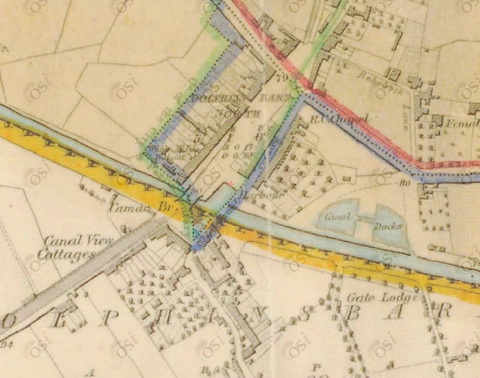
Dolphin's Barn

Dolphin’s Barn

My OSI logo and permit number for websiteWasn’t that fun?


Errina Bridge

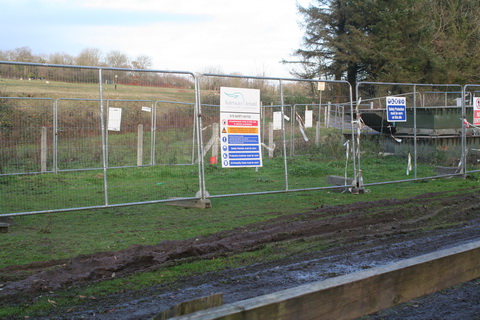
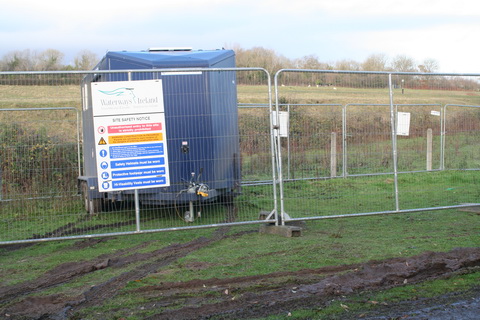
I remarked in November 2012 that Waterways Ireland had parked a canteen trailer and some pontoons at Errina Bridge, the uppermost bridge on the Plassey–Errina Canal, which is part of the old Limerick Navigation.

WI pontoons

WI pontoons

WI canteen

WI canteen

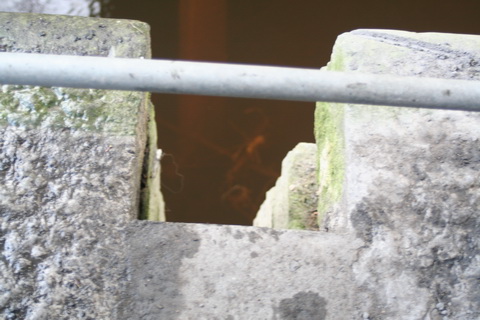
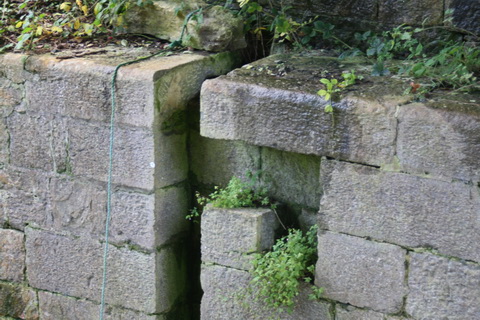
I wondered what was to be done; I noted that a stone at the top of one of the stop-plank grooves under the bridge had been removed (the stone on the far side was removed some time ago).

So I asked Waterways Ireland what was happening. They said:

The works in Clonlara are Flood relief works to protect Errina Lock from catastrophic failure. After the flooding in 2009, during which the dam in Errina Lock was overtopped by approximately 0.5 metres, it was decided to protect it from this happening again.

It has happened before too: in February 1809 the lock was destroyed by floods when heavy snows melted.

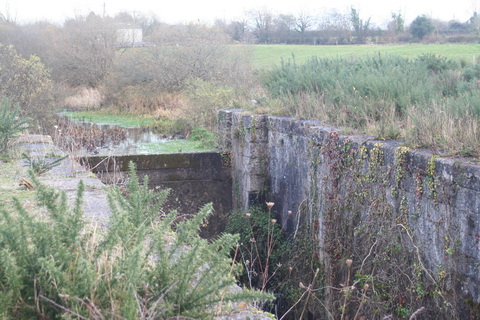
Errina Lock (looking upstream)

Errina Lock (looking upstream)

I asked WI about the nature of the works. They said:

Stop logs are to be put into the grooves under the bridge forming a dam with the same size opening as that in the concrete dam in Errina Lock. As for the stone which is removed to facilitate the installation of the timbers, this will be replaced once the timbers are in place.

That is good to know.

Errina Bridge stop-plank grooves (towing-path side, with uppermost stone removed)

Errina Bridge stop-plank grooves (towing-path side, with uppermost stone removed)

Errina Bridge stop-plank grooves (off side)

Errina Bridge stop-plank grooves (off side)

An authority on waterways has suggested that the curious shape of the grooves was designed to allow planks to be inserted from boats rather than from land.


Irish galleries please copy

I have often lamented the poor classification methods used by those who look after collections of paintings. They focus on the name of the painter, the date and the school to which he or she belonged, rather than on the really important facts: whether or not a painting shows a steamer, barge, canal or other object of industrial heritage interest. Thus, as I pointed out here, you get titles like “View looking down on a jetty and boats on a lake with a church in the distance” that ignore the most important aspect: that the pic shows a steamer on Lough Erne.

The other problem is that the paintings are in galleries scattered hither and yon, which means that a serious search for steamers, barges and canals would require hours of driving followed by hours of rummaging through archives, even though each pic would require only a few seconds’ attention to determine whether or not it is worthy of notice. The cost-benefit ratio is all wrong, but the use of technology can solve the problem.

I was delighted therefore to learn that, in HM Realm, the BBC and the Public Catalogue Foundation have put online tagged images of [almost] all the 200,000+ oil paintings in public ownership in the UK at the Your Paintings site. The collection is searchable: the search will return artists, painting titles and tags. And you can help by adding tags, if you have more information about a painting.

There is not much of Irish waterways interest, which is scarcely surprising, but there is an interesting illustration of the use of a pole on the Lagan [I’d welcome comment on what’s happening in that pic] and the barge at Edenderry. There is also some material for steam men.

It would be nice if Irish galleries would now do the same. The cost could be met by selling off the originals, which would no longer be necessary, and closing the galleries, at a saving to the public purse.

WI programme costs

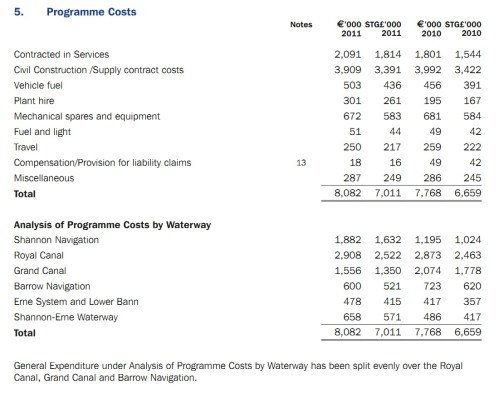
From WI's annual report for 2011

From WI’s annual report for 2011

Note that programme costs do not include staff costs, as the income and expenditure account for y/e 31 December 2011 makes clear.

From WI's annual report for 2011

From WI’s annual report for 2011

The most startling thing in the programme costs is that Shannon costs have increased 57% while Grand Canal costs have decreased by 25%. I presume that the change is in the Civil Construction/Supply contract costs, as the other items don’t seem to have enough scope for such large changes. It would be interesting to know what the contracts were. The accounts of Grand Canal improvements on pages 12 and 16 don’t suggest any diminution in activity, although they are not specific enough to be definitive; the account for the Shannon on page 17 mention some new undertakings, of which the most significant was perhaps the new mooring at Killaloe, whereof the Chief Executive said in the Foreword:

From WI's annual report for 2011

From WI’s annual report for 2011

And so, I’m sure, say all of us.

But wouldn’t that be a capital cost? I can’t work out how the income and expenditure figures link to the activities covered in the descriptions of achievements.

Contrasting patterns

Recorded lock and bridge passages for the first ten months of the year for both private and hired boats.

Hired down, private flat

Hired down, private flat

Because these figures take no account of boat movements that do not use locks, they do not record much private boat usage: sailing, fishing, powerboating, waterskiing and other activities on the lakes.

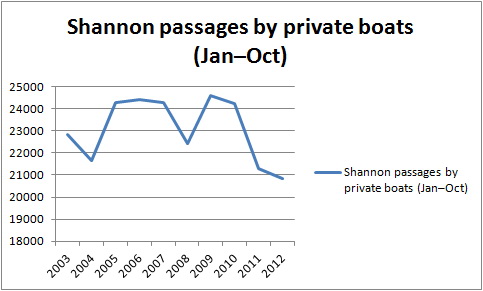
Shannon private boats

Recorded lock and bridge passages for the first ten months of the year.

Shannon private boats 2003–2012

Shannon private boats 2003–2012

In almost every year, the last two months, November and December, saw far more private boats than hired boats moving.

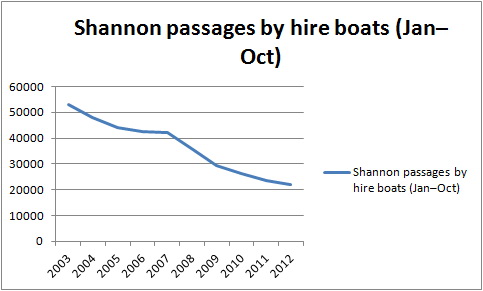
Shannon hire business

Recorded lock and bridge passages for the first ten months of the year.

Shannon hire trade 2003–2012

Shannon hire trade 2003–2012

I’ve used the first ten months because so far I have 2012 figures for only the first ten months. In previous years, only once did the number of hire passages in November and December exceed 100, so the total for any year is not very different from that for ten months.

I would like to know why there has been such a long decline.

Waterman, spare that tree!

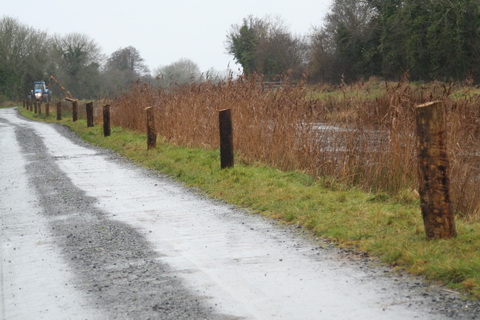
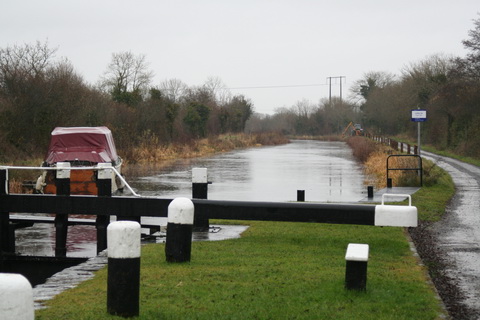
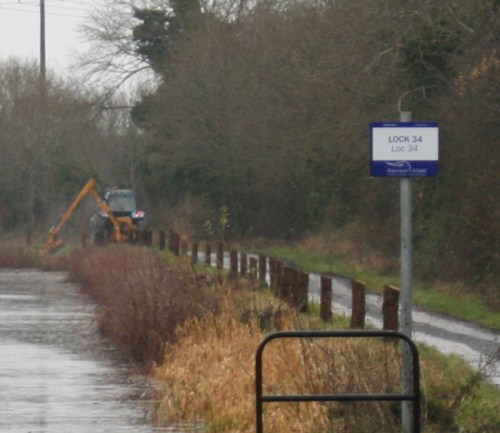
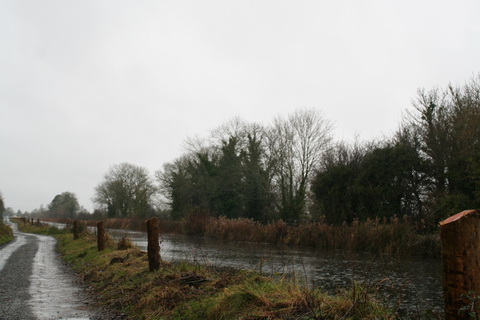
I and others have commented on WI’s cutting of trees along the banks of the Grand Canal. One aspect that didn’t strike me until today is that, if you didn’t remove waterside trees, you wouldn’t be able to insert new mooring posts.

Above Lock 34

Above Lock 34

Looking back up from the lock

Looking back up from the lock


Close-up of reed-cutting tractor

Close-up of reed-cutting tractor


Below Lock 34

Below Lock 34

Compared with the old black and white bollards, the new lack a certain je ne sais quoi, but I suppose they could be painted if people paid up.