Category Archives: Ashore

Stamping out cancer

ADHESIVE LABELS. — It cannot be too generally known that the very numerous cases of cancer which have lately prevailed are attributed by the faculty and scientific men to moistening the adhesive postage stamps with the tongue and lips. A little new milk is much preferable, and also causes them to stick faster particularly on glazed and smooth letter paper.

Waterford Chronicle 19 December 1840

From the BNA

Not a lot of people know that.

Portumna drawbridge

BORRISOKEEN, July 14. — The Solicitor-General, Mr Doherty, will arrive here to-morrow for the purpose of investigating the late unfortunate occurrences of this town on the 26th and 28th ultimo. This measure of the Government seems to restore some confidence to the minds of the people. Had this investigation not been granted, no person could calculate on the consequences of the expressed resolution of the peasantry to come into Borrisokeen, in a body of 50,000 or 60,000, to have vengeance for the loss of their relatives and neighbours.

On Saturday last a person named Dagg, a Protestant, residing in Borrisokeen, but who left it on account of the late occurrences, was apprehended at the mountains of Thoreebrien, when the country people held a consultation on the most effectual mode of putting him to death. Disregarding his entreaties and professions of innocence, he was dragged along by about 500 persons, and, on coming to Portumna, they determined to tie his legs to one part and his arms to the other part of the drawbridge across the Shannon, and then open it, that he might be drawn asunder. Fortunately at the time a gentleman from Borrisokeen passed by, and by his interference, with that of the parish priest, the life of the unfortunate man was spared.

Salisbury and Wiltshire Journal 27 July 1829

From the BNA

Newspaper accounts at the time suggest that there was an affray in Borrisokane at the end of the fair. Five mounted police either attacked or attempted to disperse the crowd; stones were thrown; Captain Dobbyn, a Stipendiary Magistrate, read the Riot Act and ordered the police to fire, which they did, killing two people. Two days later, during the funeral of one of those shot, one John L—, an Orangeman, and four companions, fired on the mourners from behind portholes on his house, or sallied forth to fire, killing four immediately and mortally wounding another. There is nothing to suggest that the unfortunate Mr Dagg was in any way involved.

Hamilton Lock

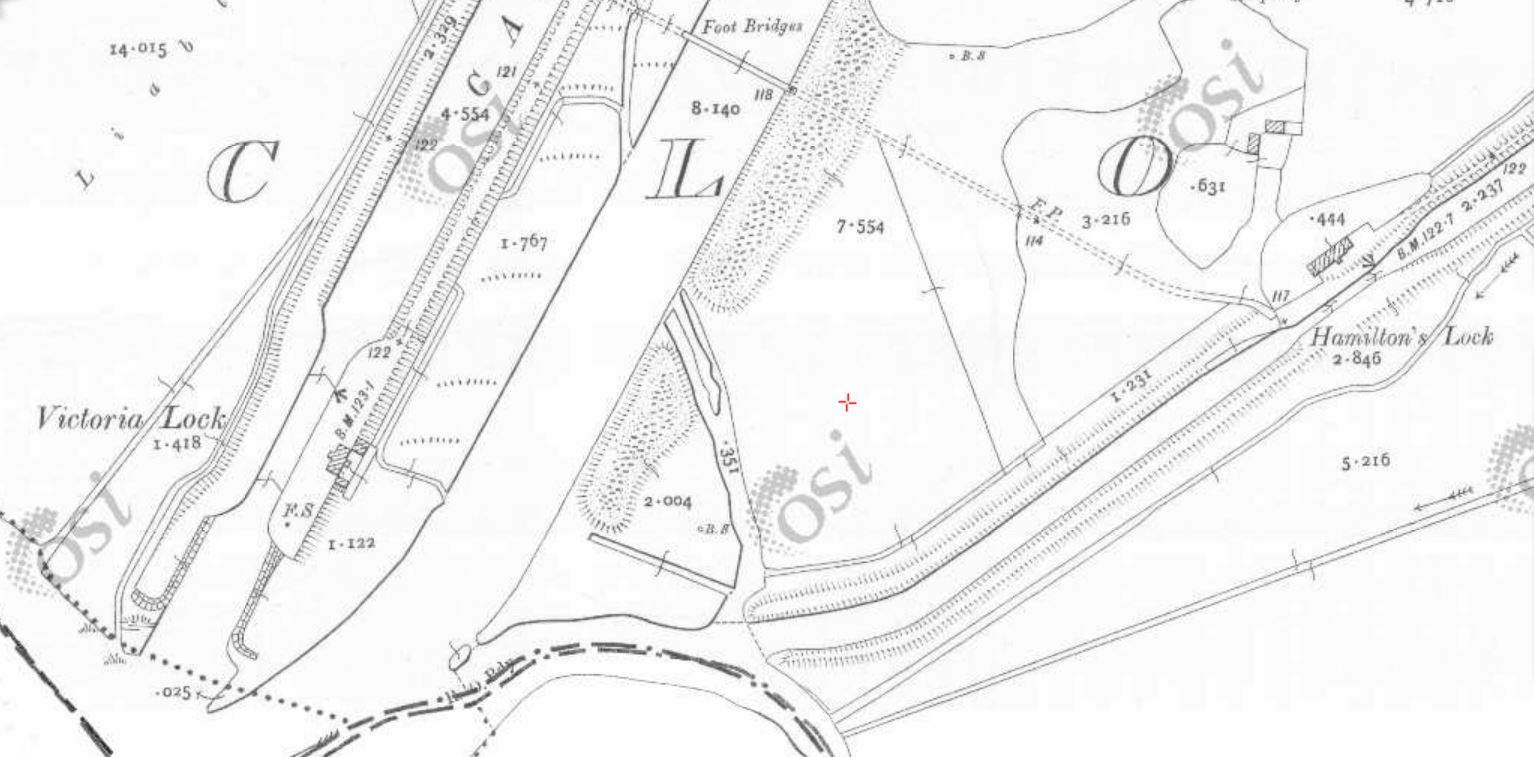
Victoria (Meelick) and Hamilton Locks (OSI ~1900)

Victoria (Meelick) and Hamilton Locks (OSI ~1900)

Lord Dunkellin: Do you know the Victoria lock at Meelick?

Sir Richard Griffith: I do.

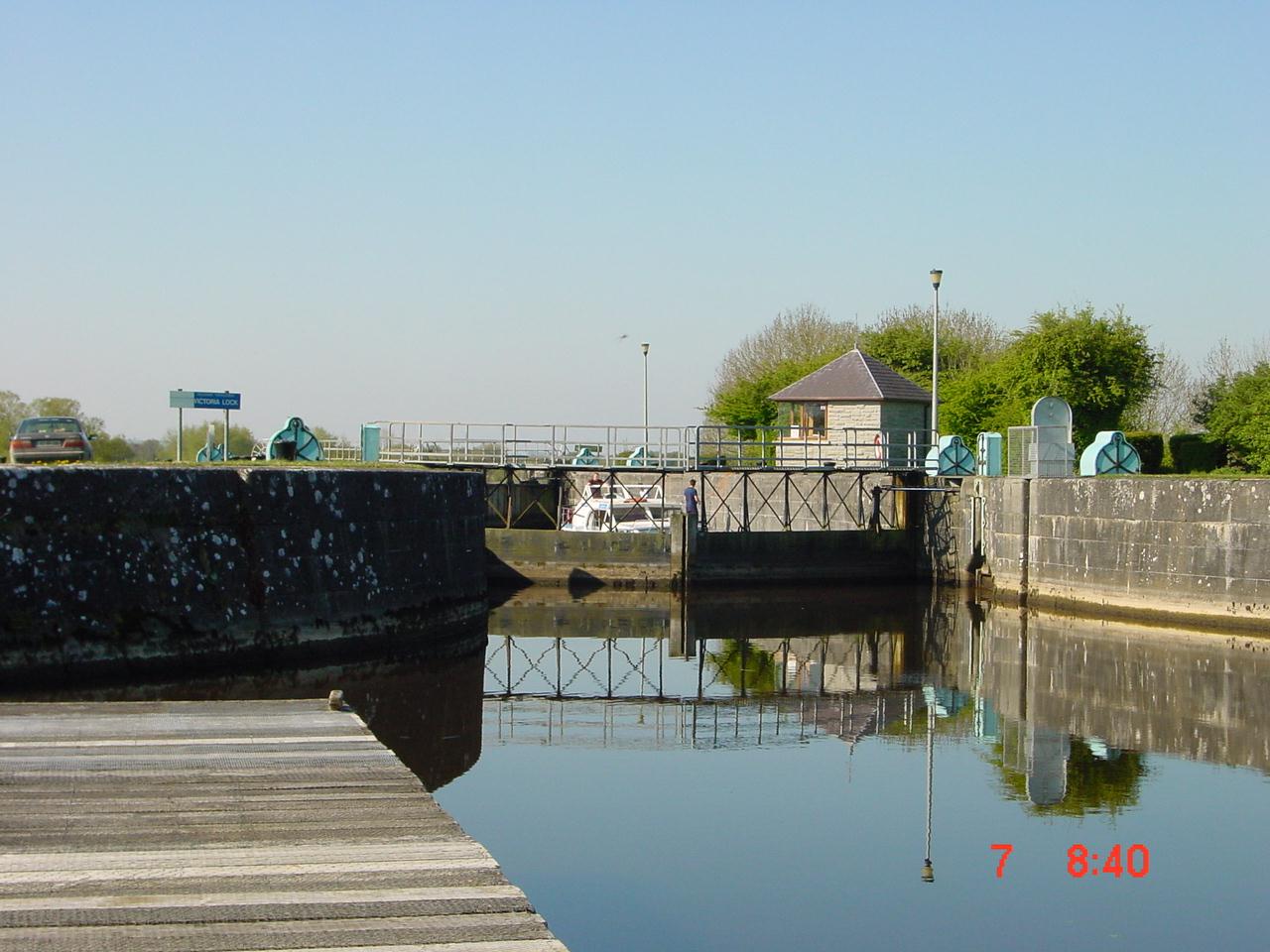
Victoria Lock, Meelick

Victoria Lock, Meelick

Dunkellin: Do you know what is called the Old Cut, the old canal?

Griffith: Yes.

Dunkellin: The Victoria lock is a new work, is it not?

Griffith: It is.

Dunkellin: Should you be surprised to hear that vessels do not use that frequently, but go by the old cut?

Griffith: In times of very high flood I am aware that the canal boats find it advisable and beneficial to go by the Hamilton lock, on the old cut, in preference to the other.

Dunkellin: Prima facie, one would have thought that a new work like the Victoria lock would have the effect of regulating the state of things?

Griffith: It arises from the Counsellers’ Ford, as it is called, above Meelick; it has not been sufficiently excavated, and there is a strong current, and the boats are not able to get up to it in times of high flood.

Dunkellin: Then the boats made use of the old canal instead of the new lock?

Griffith: Under those peculiar circumstances they did.

Evidence of Sir Richard Griffith to the Select Committee on the Shannon River 12 June 1865

My OSI logo and permit number for website

ESB and the Shannon

I wrote here that I had written to the ESB, on 27 May 2015, to ask about navigation on the Shannon from Castleconnell downstream. One month later, I have not yet received a reply.

I did hear this weekend that ESB had contacted certain boat-owners to inform them that they were not to moor to the ESB embankments between Portumna and Meelick. As a riparian landowner, ESB is no doubt within its rights, but it would be interesting to know how much of the bed of the Shannon it claims to own in that area.

I have still not been able to find out, from the ESB, the clearance under its high-voltage lines crossing the Shannon (and other navigations). I gather that the ESB works on the principle that, if it provides no information, it can’t be blamed if owners of masted vessels electrocute themselves, whereas if it did provide information it might be sued. Strange that a public sector body should have such a blasé attitude to the prospect of the electrocution of the citizenry.

Perhaps if I asked questions under the Access to Information on the Environment Regulations 2007/2011 I might get replies.


Mijn platte land

Saturday. Leave London 0730; on the Eurotunnel shuttle at 0950. In Calais, roll round to Majestic Wine, who pay for your Eurotunnel ticket if you have ordered £300 worth of wines.

Then east on the E40 towards Dunkirk, then south on the E42 towards Steenvoorde. On to the minor roads east and north-east. Surrounded by hop fields, you can see what Jacques Brel meant about “Mijn platte land, mijn Vlaanderland” [“My flat country, my Flanders“] in Marieke and “Mijn vlakke land/Le Plat Pays“. Good country for these things, though, and for more conventional pedal-powered vehicles.

On to the lovely little town of Poperinge for a splendid lunch at the outdoor tables of the Hotel Amfora. Hops with several of the dishes, including the eel, and a chance to try the grey shrimps, perhaps caught by mounted shrimp fishermen. An excellent range of beers for lunch, including the very refreshing Poperings Hommel Bier.

A short distance to the north is the Trappist Abbey of Saint Sixtus, home of the Westvleteren Brewery. If you’ve been lucky enough to be allowed to order some of their beer, you turn up at the appointed time and get your two crates, while looking disapprovingly at those who have not booked and are begging to be allowed to buy. They are turned away empty-handed but they — and you — can enjoy a glass of the beer at the café across the road.

Then back through Poperinge and, en route to the E42, a stop at Noel Cuvelier’s beer shop, which is just as it is described here. A phenomenal range, amazing value and lots of glasses. Fill any remaining space in your car, then head for Calais; back in London in less than twelve hours.

Waterways? The road crosses some ….

Photographing the invisible

Waterways Ireland is having a photographic competition for which it is

seeking contributions from the public on what they think best fulfils the theme “Waterways Heritage”.

Details here. You can win an iPad Air, which I think is a sort of pocket calculator for chaps with ponytails.

I was in two minds about whether to publicise this competition. You see, many of the bits of “heritage” I’m interested in are invisible, having vanished since the late nineteenth century. So maybe they’re not heritage at all?

But I decided that it would probably be difficult for Waterways Ireland to judge a competition in which all the photographs were of invisible objects, so I should encourage the photographing of the visible.

I was asked recently by another respectable public sector body to say, for publication, why industrial heritage was important to me. Unfortunately my response was deemed to be unusable, because it was too controversial. I’ll write more about that soon.

Hard sums on Lough Derg

According to the Clare Champion, a Clare county councillor called Pat Hayes, who is a member of Fianna Fáil [an excitable lot, Fianna Fáil], is boycotting something or other for some reason that is not clear to me [and, to be honest, is probably entirely unimportant]. Mr Hayes thinks that water from Lough Derg should be sent to the Atlantic, where it is wasted, rather than to Dublin, where it might be used, and the newspaper cites the River Shannon Protection Alliance as estimating that

… up to 350 million litres of water could be taken from Lough Derg by 2030.

The River Shannon Protection Alliance itself doesn’t agree with those figures. It says:

The central principal and immediate purpose of the organisation is to prevent the proposal of Dublin City Council to abstract in excess of 350 million litres of water on a daily basis from Lough Ree on the river Shannon, and to oppose any action that may be harmful to the well being of the river Shannon system. Since then, the abstraction options have been considered and the current recommended proposal is to abstract upwards 500 million litres of water from Lough Derg and store it in a depleted bog hole to be developed by Bord na Móna at Garryhinch bog, (near Portarlington) where the water will then be treated and pumped on to Dublin.

Eek. That’s a bignum: a lot of litres. Let’s all panic.

On the other hand, 500 000 000 litres is 500 000 cubic metres. Each of Ardnacrusha’s four turbines uses 100 cubic metres per second. So the amount of water to be sent to Dublin every day is less than Ardnacrusha uses in 21 minutes.

If the Alliance wants to save the Shannon, shouldn’t it be trying to get Ardnacrusha closed down first?

Piscator, Navita and Shannon navigation rights

I was never any good at fishing. The only time I ever caught anything was when fishing for mackerel with feathers from a boat, which is [I gather] the equivalent of shooting fish in a barrel [surely a pointless exercise: if you wanted to catch or kill them you could just let the water out of the barrel].

My knowledge of angling comes, therefore, almost entirely from two sources. The first is observation: from the comfort of a boat, I’ve seen anglers along riverbanks, huddled under umbrellas in the rain, miles from any amenities. They don’t seem to be having a lot of fun, but that is no doubt because they “affect a holy melancholy”, as explained in my second source.

Izaak Walton begins his The Compleat Angler or the Contemplative Man’s Recreation, being a Discourse of Rivers, Fishponds, Fish, and Fishing [a 1904 edition available here] with a friendly argument between Piscator, Venator and Auceps, each lauding his own pastime. They cite learned authorities, refer to scripture and quote poets at length before refreshing themselves at the Thatched House.

Then Venator, having become an apprentice angler, learns “How to Fish for, and to Dress, the Chavender or Chub” and many another fish, pausing to hear Maudlin, the milkmaid, sing her song and her mother sing a response. After a supper of barley-wine and trout, Piscator, Venator and two more anglers, Peter and Coridon, sing more songs, including The Angler’s Song, which includes this stanza:

Of recreation there is none
So free as fishing is alone;
All other pastimes do no less
Than mind and body both possess;
My hand alone my work can do,
So I can fish and study too.

Towards the end of the book’s first part [the second being written by Charles Cotton], Piscator recites a poem attributed to Sir Harry Wotton, this being the last stanza:

Welcome, pure thoughts, welcome, ye silent groves,
These guests, these courts, my soul most dearly loves;
Now the wing’d people of the sky shall sing
My cheerful anthems to the gladsome spring;
A prayer-book, now, shall be my looking-glass,
In which I shall adore sweet virtue’s face,
Here dwell no hateful looks, no palace cares,
No broken vows dwell here, nor pale-faced fears; Then here I’ll sit, and sigh my hot love’s folly,
And learn t’affect a holy melancholy;
And if contentment be a stranger, then
I’ll ne’er look for it, but in heaven, again.

They don’t write ’em like that any more.

Piscator iratus

I had assumed that this blend of contentment and holy melancholy characterised the anglers of today. But when, having visited the excellent website of the Limerick and District Anglers Association, I moved instead to their FaceTweet page, I found that the modern angler’s lot is not a happy one. The angler has to contend with the iniquities of the Electricity Supply Board [which owns fishing rights on the Shannon], Inland Fisheries Ireland  [whose role on the Shannon I know not] and, now, kayakers.

In discussion of another post on the subject, the Association said:

Therefore canoeists who enter this section of river without permission are trespassing.

That interested me, and I thought I should look further into navigation rights on the Shannon. [Update 10 June 2015] I have posted my interim conclusions here.

There is a second point. The Old River Shannon Research Group repeated the kayaking topic on its FaceTweet page with this comment:

This is a commercial company trying to turn the Castleconnell beats into something like Lahinch has become with surfers. See their website here. This type of “development” requires Appropriate Assessment.

I am most reluctant to disagree with the learned Dr William O’Connor on anything, as he knows far more than I do about environmental matters, but his comment raised a second topic of interest and I thought I might look into that too. Again, I’ll post separately on that.

Please don’t look at these photos

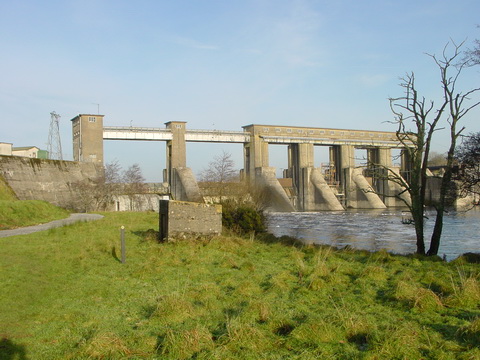
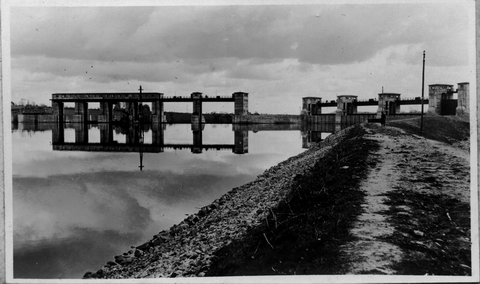
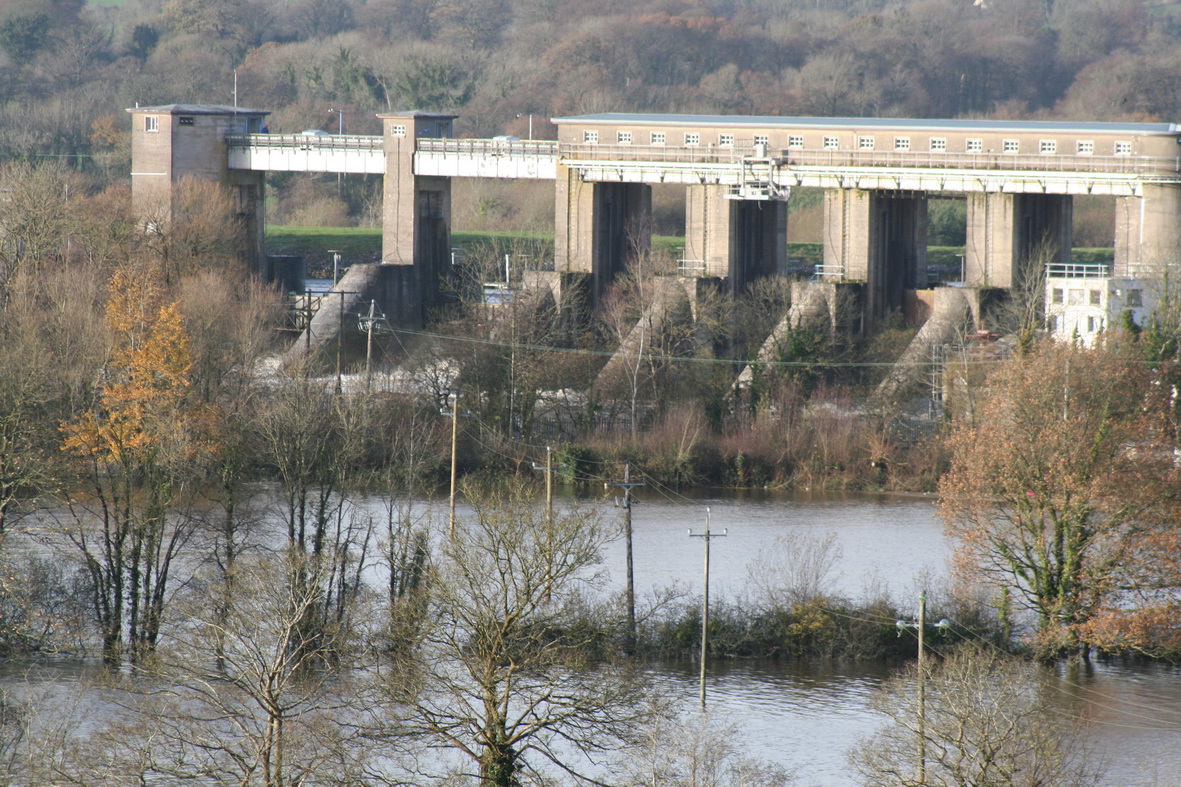
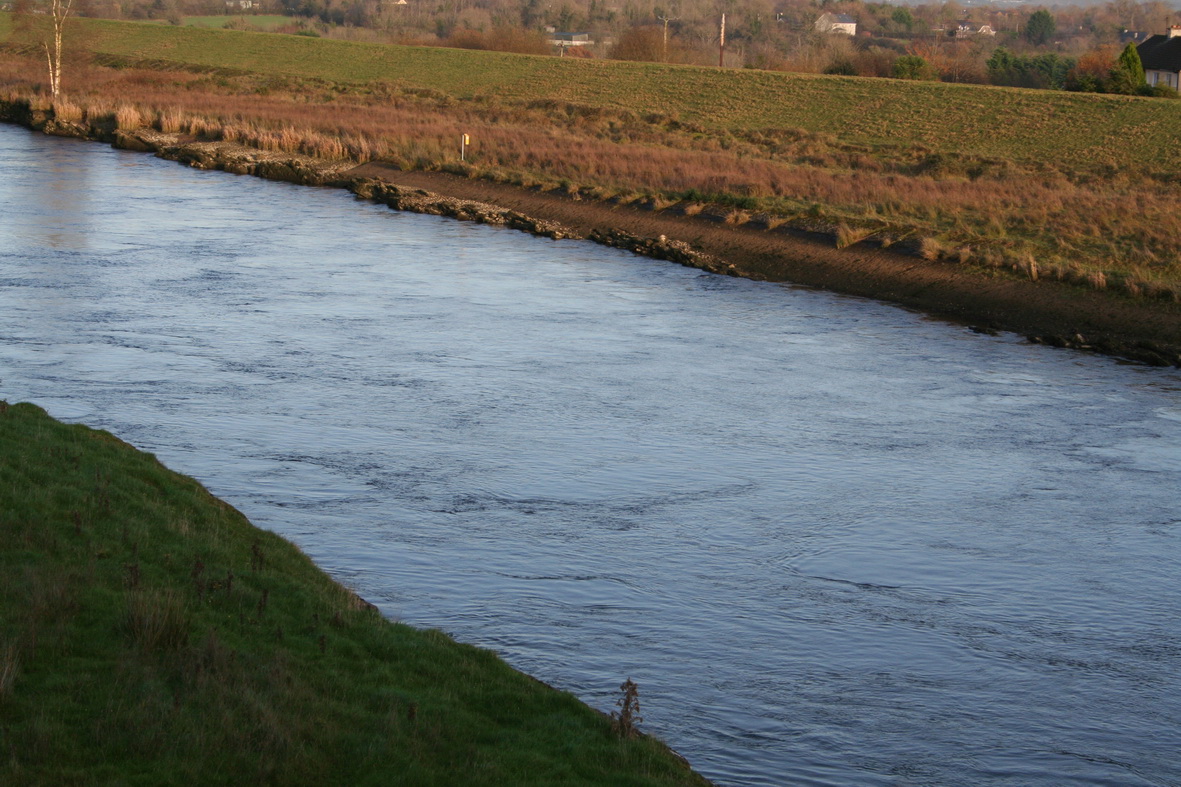
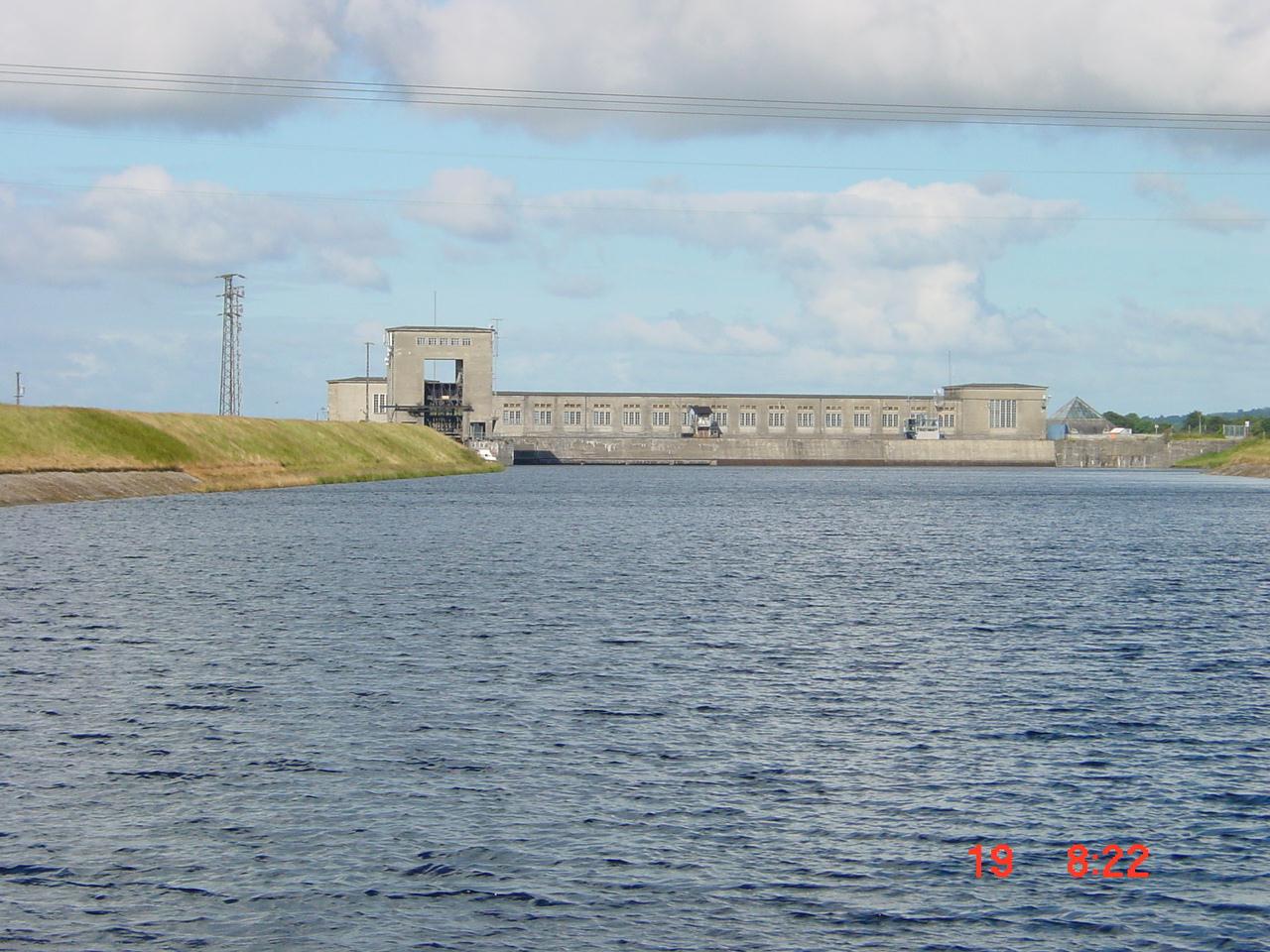
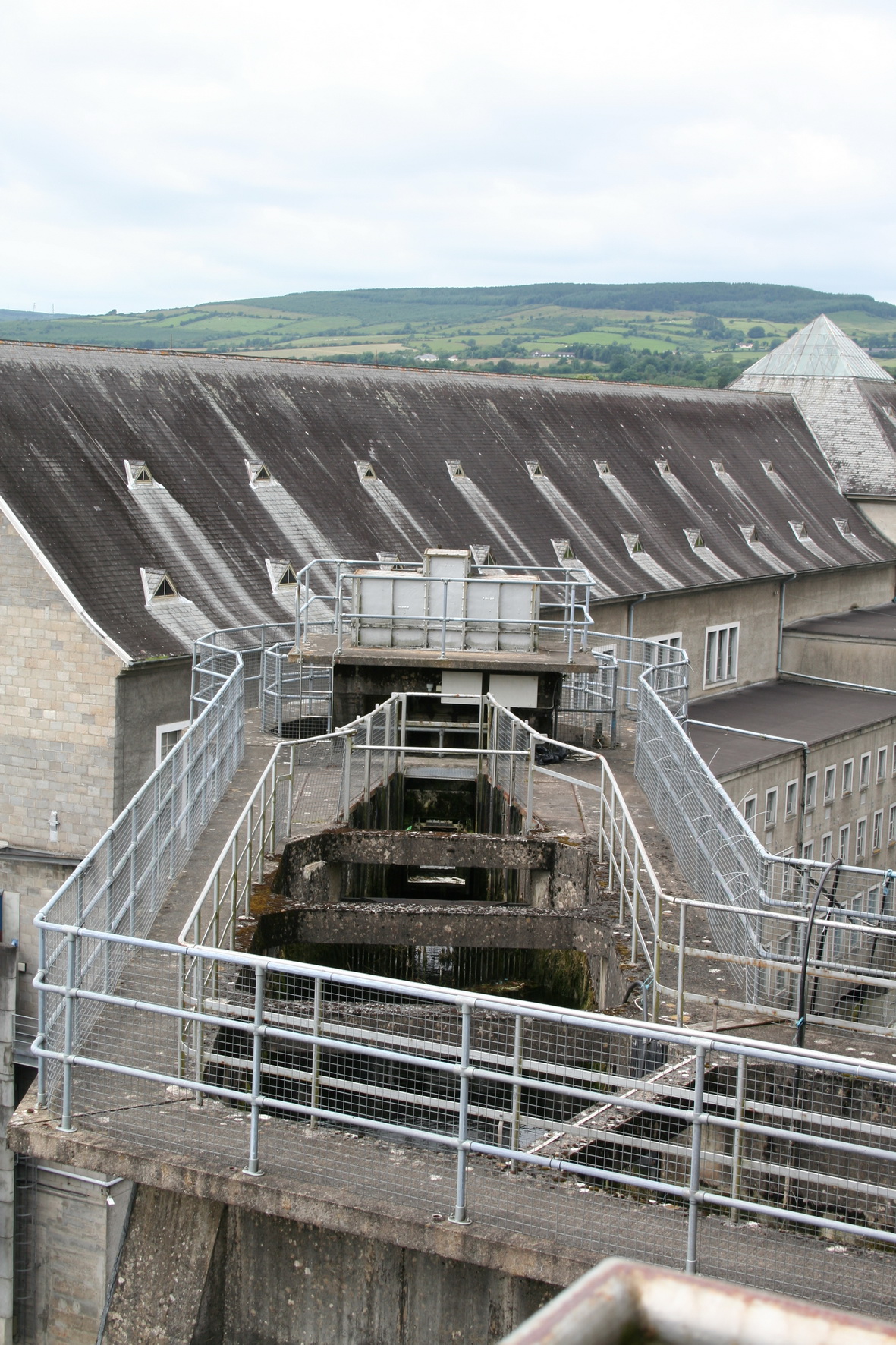
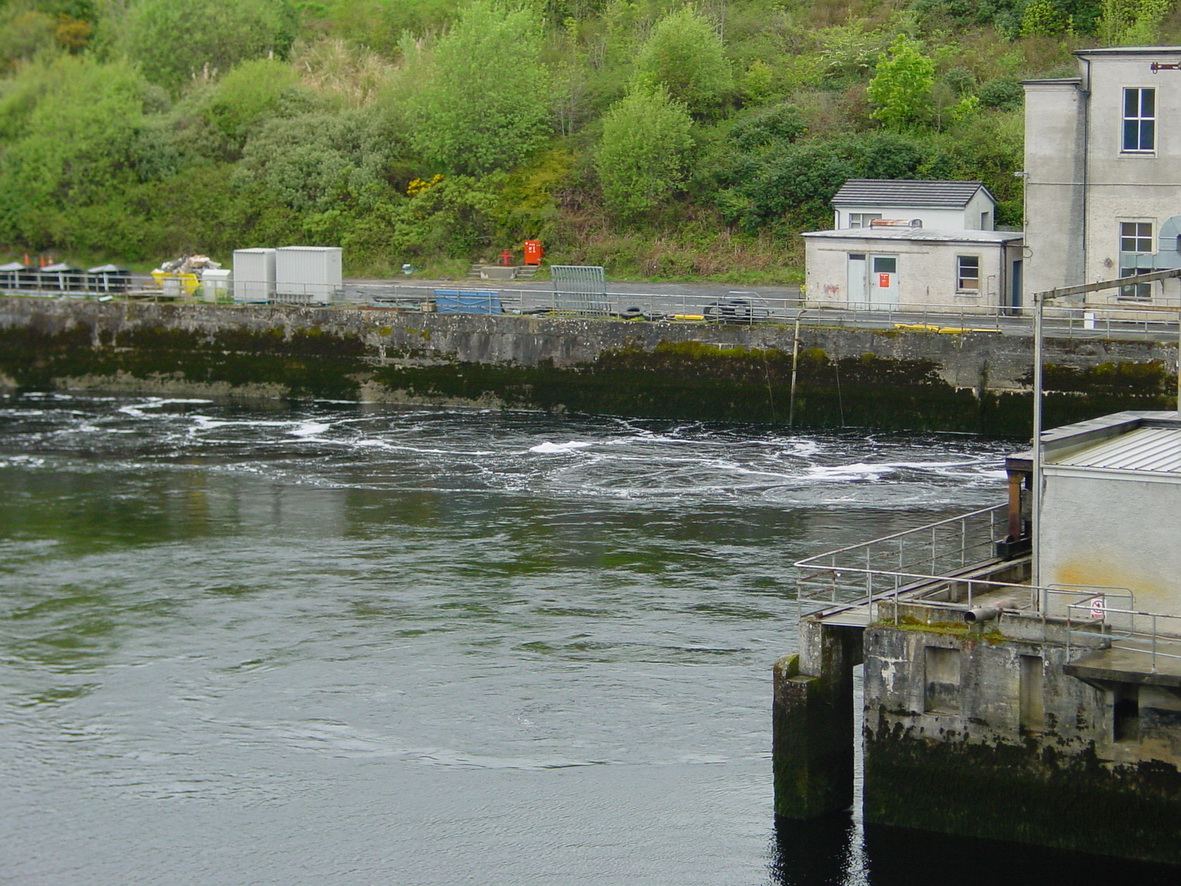
I regret to say that I have published, on these pages, several photos of the Shannon, Parteen Villa Weir, Ardnacrusha hydroelectric power station and its headrace and tailrace canals.

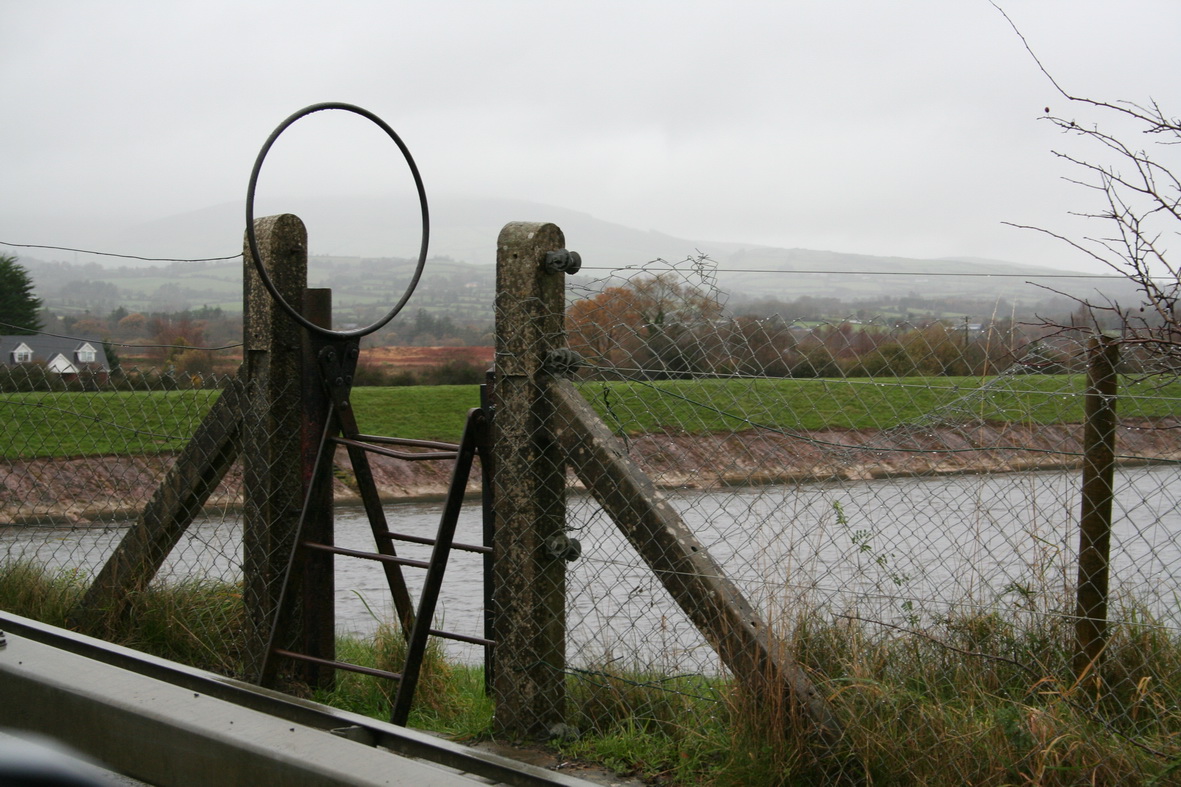
The storage basin between the road bridge over the River Shannon at Killaloe and the weir and canal intake at Parteen, including the right and left embankments constructed to form the said storage basin, together with the land outside and along the said right embankment delimited and separated from the adjoining land by post and wire fencing and also the land outside and, along the said left embankment delimited by the left bank of the Kilmastulla River Diversion.

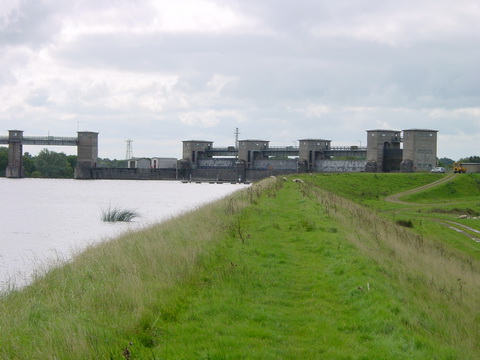
Parteen Villa Weir from the embankment upstream (2008)

Parteen Villa Weir from the embankment upstream (2008)

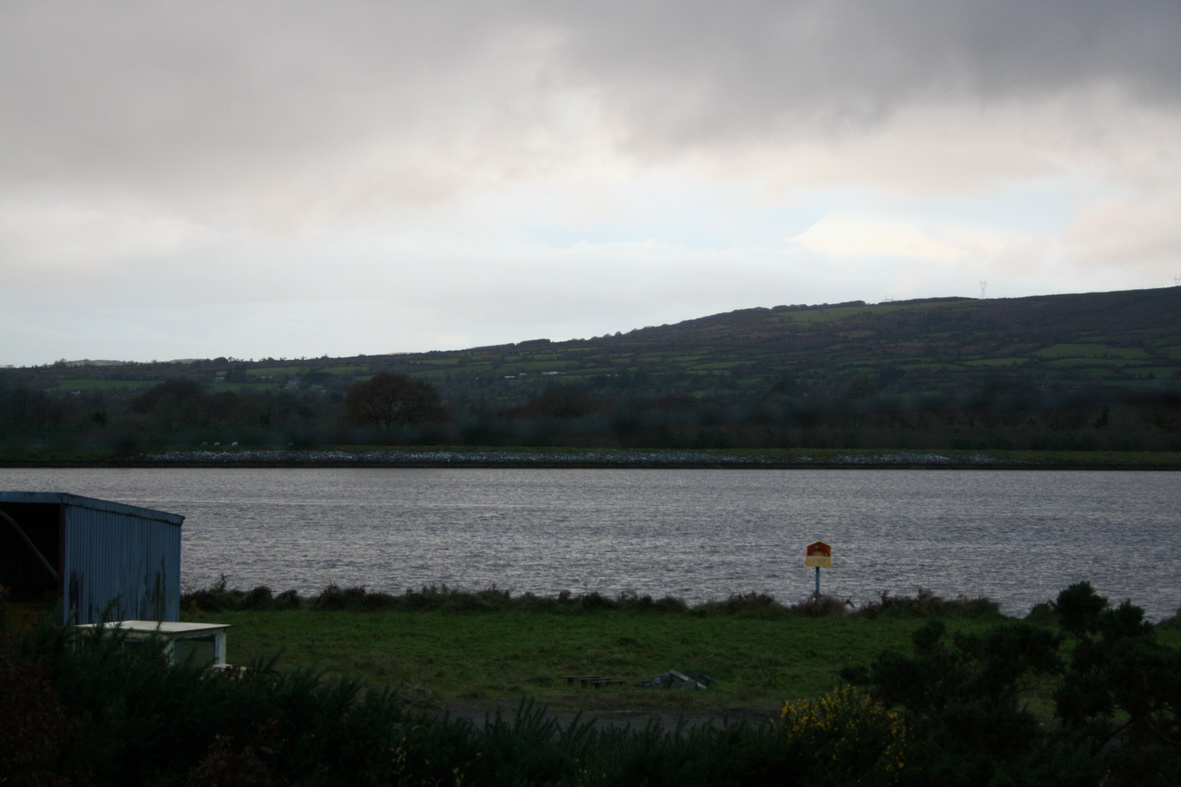
The flooded area above Parteen Villa Weir

The flooded area above Parteen Villa Weir

The weir and canal intake, the embankments constructed to form abutments to the said intakes, the syphon under the said canal intake, and adjoining lands inside and bounded by post and wire fencing.

Parteen Villa Weir

Parteen Villa Weir

Parteen Villa Weir from upstream

Parteen Villa Weir from upstream

The six sluices controlling discharges down the old course of the river

The six sluices controlling discharges down the old course of the river

The head race between the canal intake and the power station including the right and left embankments constructed to form the said head race, together with the land outside and along the said embankments delimited and separated from the adjoining land by post and wire fencing, and also the road bridges over and the syphons and culverts under the said race.

The headrace from the bridge at Clonlara 20 November 2009

The headrace from the bridge at Clonlara 20 November 2009

The headrace from the bridge at O'Briensbridge 22 November 2009

The headrace from the bridge at O’Briensbridge 22 November 2009

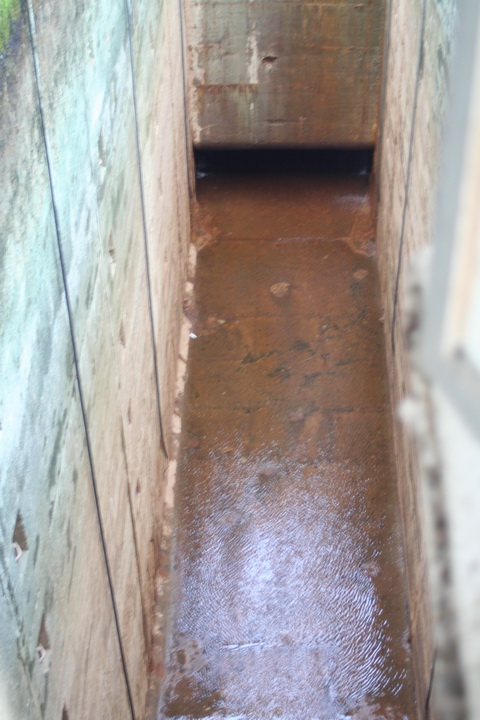
The power station, the intake to the said power station, the locks and all adjoining buildings and land within the area around the said power station, all of which are delimited and separated from the adjoining land by post and wire fencing.

The upper chamber at Ardnacrusha lock

The upper chamber at Ardnacrusha lock

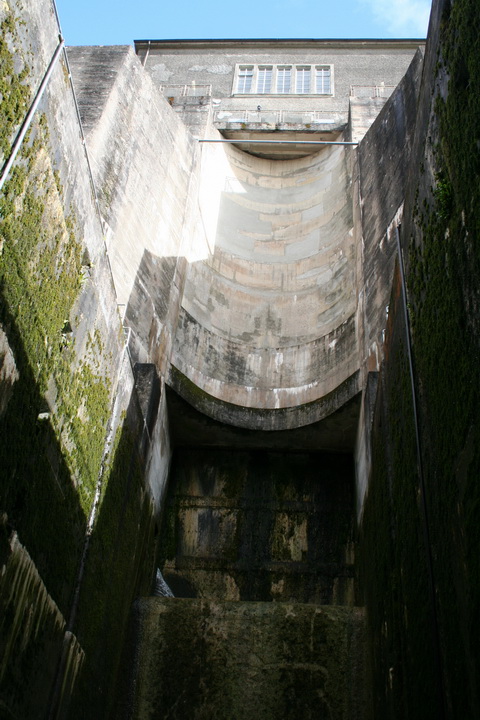
Ardnacrusha: looking up at the top chamber from the bottom

Ardnacrusha: looking up at the top chamber from the bottom

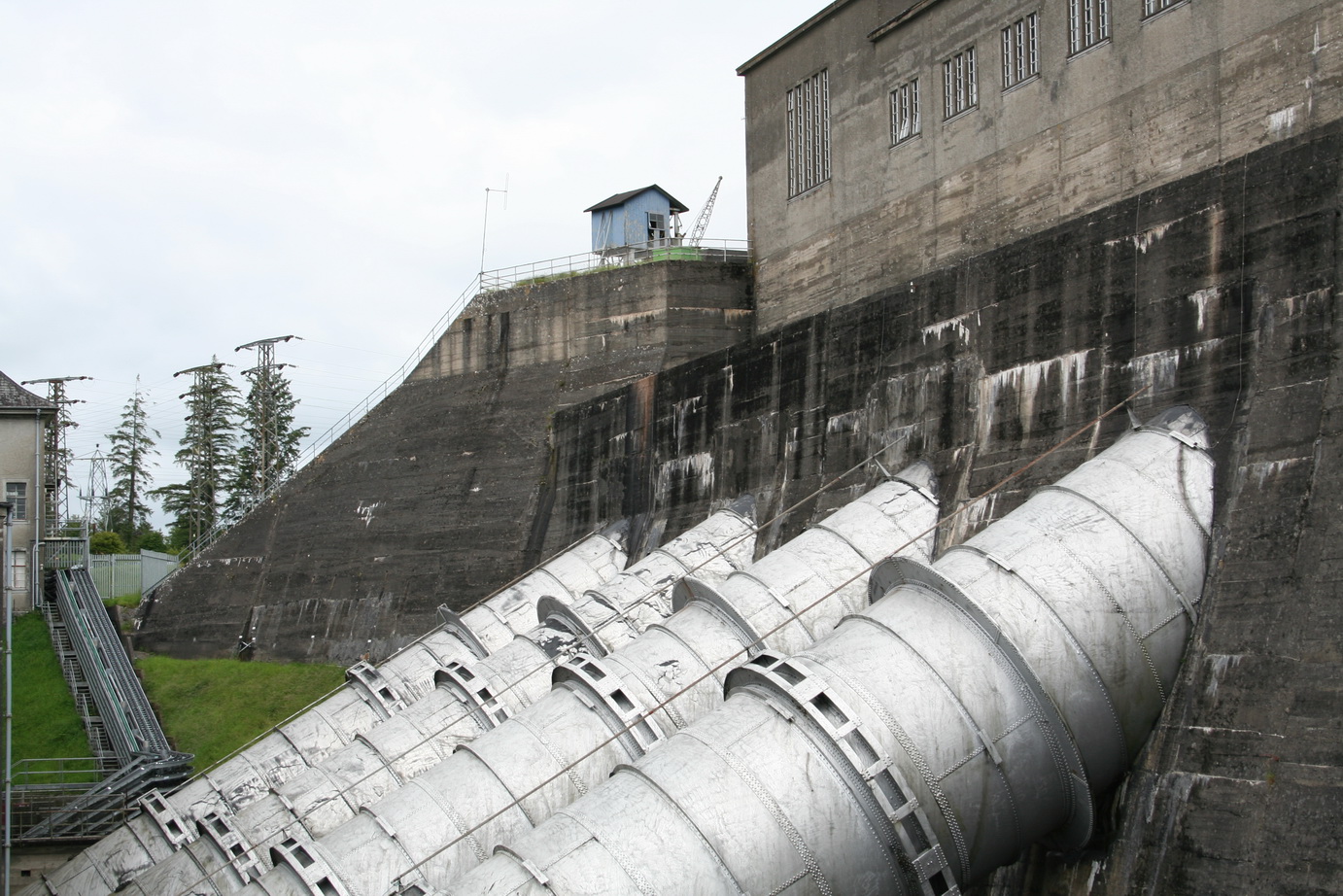
The penstocks that feed the turbines at Ardnacrusha

The penstocks that feed the turbines at Ardnacrusha

Ardnacrusha power station from the headrace

Ardnacrusha power station from the headrace

The fishpass

The fishpass

The tail race from the power station to the River Shannon, the branch railway running along the said tail race, and the land on either side of the said tail race, all of which are delimited and separated from the adjoining land by post and wire fencing.

Outflow

Outflow

And I have lots more photos … here and here and here, which I ask readers not to look at either.

You see the thing is, Your Honour, Sir, I didn’t know. I didn’t realise that, under Statutory Instrument 73 of 1935 Shannon Electricity Works (Declaration of Prohibited Place) Order 1935, the places as described are prohibited places under paragraph (d) of Section 3 of the Official Secrets Act 1911, as amended by the Official Secrets Act 1920, and as adapted by or under the Adaptation of Enactments Act 1922 (No 2 of 1922). That’s because

information with respect thereto, or the destruction or obstruction thereof, or interference therewith, would be useful to an enemy.

Apparently, under those acts, giving anyone information about a prohibited place is a felony, punishable by imprisonment for up to fourteen years.

Wikipedia says that, in Ireland, those acts were repealed by the Official Secrets Act 1963, but was the statutory instrument repealed? I don’t know, but I’ve written to the Department of Justice to ask.

In the meantime, please don’t look at the photos, especially if you’re a Foreign Agent: a term that, under the 1963 act,

includes any person who is or has been or is reasonably suspected of being or having been employed by a foreign power either directly or indirectly for the purpose of committing an act (whether within or outside the State) prejudicial to the safety or preservation of the State, or who has or is reasonably suspected of having (whether within or outside the State) committed or attempted to commit any such act.

I wonder whether that includes the European Central Bank.

Interesting info from Waterways Ireland

Two interesting PDF documents available on this page:

No mention of Saunderson’s Sheugh, but I suppose dredging of the River Finn is proceeding.