
Category Archives: Canals

The Traveller’s Map of the River Shannon (1830)

The Traveller’s Map of the River Shannon. Arranged as a Guide to its Lakes and the Several Towns, Gentlemens’ Seats, Ancient Castles, Ruins, Mines, Quarries, Trading Stations, and General Scenery on Its Banks, Source in Lough Allen to the Sea, Leitrim, Longford, Roscommon, Westmeath, King’s County, Tipperary, Galway, Limerick, Kerry and Clare, Accurately Taken from the Survey made by J. Grantham, by order of the Irish Government, under the direction of the late J. Rennie. Printed and published for the Irish Inland Steam Navigation Company, 1830.

Oblong folio, 15 numbered maps printed in black with river and water features coloured in light blue. Original quarter calf green cloth boards, russet title to centre of upper boards, stamped in gilt with gilt fillet boarder. Repair to rear of plate 15, otherwise all maps in very good to fine condition.

Contents: 1. Map of Ireland, 2. Index Map. Lough Derg to the sea, 3. Index Map. Lough Derg to Lough Allen., 4. Kilrush to Tarbert and Foynes Island, 5. Foynes Island to Grass Island, 6. Grass Island to Limerick and O’Brien’s Bridge. 7. O’Briens Bridge to Killaloe and Dromineer. 8. Dromineer to Portumna and Redwood Castle. 9. Redwood Castle to Banagher, and Seven [Churches (Clonmacnoise)], 10. Seven Churches to Athlone and Lough Ree, 11. Lough Ree to Lough Forbes. 12 Lough Forbes to near Leitrim. 13. Leitrim to Head of Lough Allen. 14. map of Limerick, 15. Map of Killaloe.

Map 1 shows Ireland and its waterways at scale of 1″ equals 20 miles, Maps 2 and 3 show the key for 4-13, with table of falls of water along the route on former and table of distances on latter; Maps 4-14 each have a short descriptive panel; Map 14 shows Limerick from the north of King’s Island to the New Barrack in the south with key Map 15 from the town at left to Beal Boru at right.

Yours for only €1800 at Ulysses Rare Books in Dublin.
R&CHS Longford

The current issue of the Railway & Canal Historical Society‘s Journal contains an article on the sinking of the passage boat Longford on the Royal Canal in 1845 and the fifteen deaths that resulted. The story has also been told here, starting from this page.

Ardnacrusha tours

From 26 June through 1 September 2017, ESB will be providing guided tours of Ardnacrusha hydroelectric power station. It’s not usually open to the public and, if you haven’t seen it, it’s well worth a visit. Go here to book.

I have some information about the site here, here and here, but you should try to see it for yourself.

Update July 2018: tours available again this year.

The Cong Canal and the Ballinrobe navigation

I have extended my page on the Cong Canal by adding some photos of the sluices and the embankments on the Cong Canal and by improving some maps. I have also added some photos of Ballinrobe, including the quay from which it was hoped that boats would depart for Lough Mask and, via the Cong Canal, Galway. When the Cong Canal was abandoned, so too was the Ballinrobe navigation.

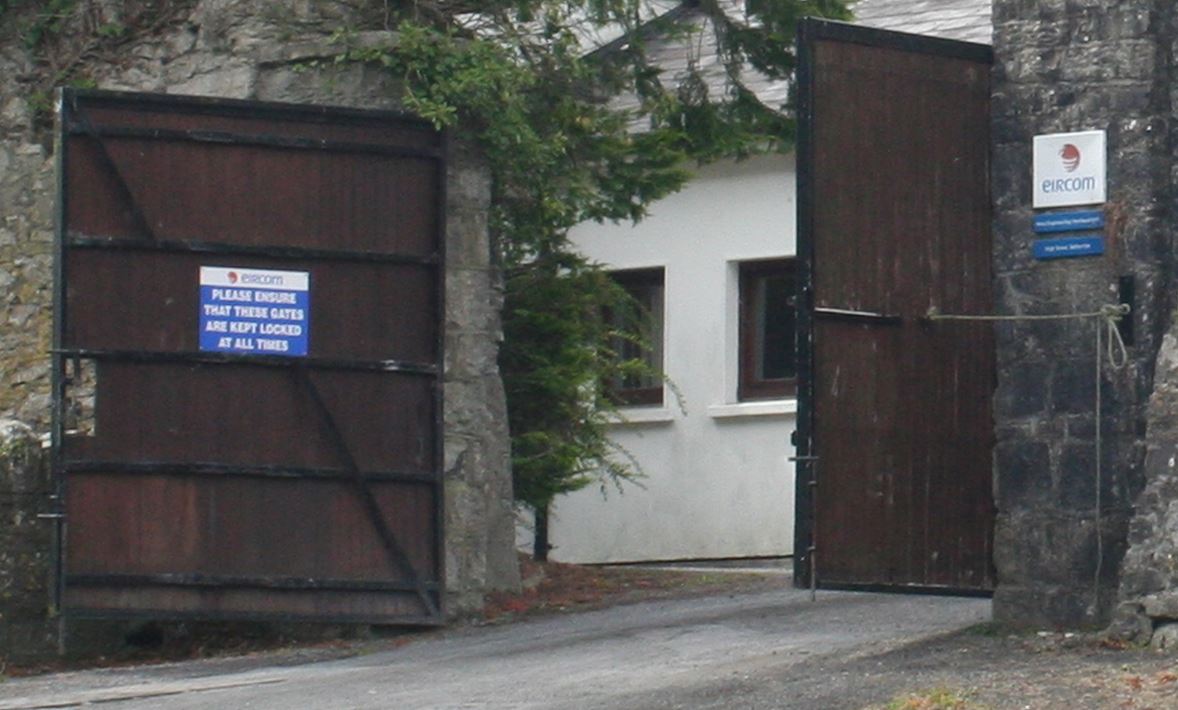
Notices signed rabbit

Seen near a waterway

The usefulness of the Oireachtas …

… lies in its library, which has been collecting, digitising and publishing interesting stuff. A quick search found material about the Ballinamore and Ballyconnell drainage district, the drainage of the Shannon and of the Maigue, the dissolution of the Lough and River Erne Drainage and Navigation Board (which I’d never heard of), railways in Donegal and an extraordinarily long poem about a steam boat (page 61, after some other stuff about Cork or Cobh).

Big it up for the Oireachtas librarians.

Inland Navigations 1858

The Shannon, Tyrone, Boyne, and Maigue Navigations are maintained in good working order by ordinary repair.

Twenty-seventh Report from the Board of Public Works, Ireland: with the Appendices 1858 HMSO, Dublin 1859

That was all the Board had to say about its inland navigations.

Who stole the technology?

I was thinking of buying a (secondhand) copy of Juliana Adelman and Éadaoin Agnew eds Science and technology in nineteenth-century Ireland Four Courts Press, Dublin 2011. But, even though the secondhand copy was much, much cheaper even than the publishers’ reduced price, I thought I should check what I’d be getting for my money. I therefore had a look at the contents list, which I reproduce here having nicked it from the publishers’ web page:

The list of contents


Is it just me, or is there a big gap there? How can you discuss nineteenth-century technology without an extended discussion of steam power, whether in ships, on railways, for drainage or in mills and other manufactories?


The origins of the Royal Canal

The Royal Canal’s origins have never been satisfactorily explained: a later legend even seeks to explain its origins in an obscure dispute between a retired shoemaker and other members of the Grand Canal Company. But in fact its origins were political. As the Grand Canal Company was taken over by the conservative La Touche clique, the opposition launched a new venture: its patron was the duke of Leinster; businessmen and opposition politicians rallied to it; and Gleadowes, rivals of the La Touches, were bankers to the company. In other words, there was to be a left-wing as well as a right-wing way to reach the Shannon. Almost symbolically on its more northerly route to the Shannon, it passed through the duke of Leinster’s land.

L M Cullen “Politics and Institutions, 1731–1835” in Economy, Trade and Irish Merchants at home and abroad, 1600–1988 Four Courts Press, Dublin 2012

Up the Inny

The navigation of the River Inny from Ballynacarrow upriver to Lough Sheelin.