Category Archives: Canals

WI and oral history

I learn from the Heritage Council that Waterways Ireland is seeking tenders for a pilot oral history project. The winner is to

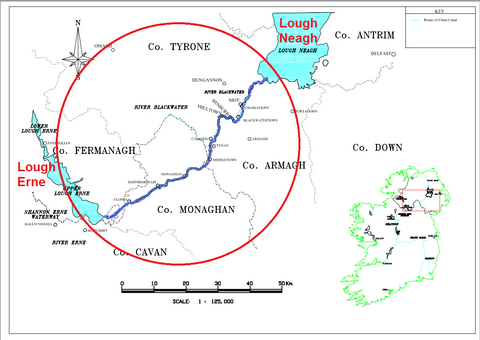
  • Undertake a minimum of 3 interviews per waterway under our jurisdiction (see list above in Introduction). Any interviews relating to the Ulster Canal will be included as part of the Lough Erne Collection for the purposes of this pilot project. […] The interview questionnaire (to be agreed with Waterways Ireland) should endeavour to elicit material that adds to our existing archive, would be beneficial in our schools education programme and used in a broader promotion capacity.

  • Devise an oral history handbook for Waterways Ireland so staff members and community groups can advance this project in years to come.

  • Deliver training on best practices and guidelines in oral history interview skills and techniques. All training to be delivered in Waterways Ireland offices.

This is very interesting for several reasons. Let me get two quibbles out of the way first:

  • Why is the Clones Sheugh treated as part of the Erne? And why mention that specifically? What sensitivity is being addressed here?
  • Why is this tender not mentioned on WI’s Tenders page or the Current tenders page to which it links or anywhere else that the WI search engine can find?

I think there are four important points about this.

First, it is good that WI is devoting resources to the collection of oral history.

Second, it is good that it has applications in mind for the material: it may be used both in WI educational programmes and in marketing.

Third, the requirement for a training programme and a handbook is yet more evidence [on top of Éanna Rowe’s appointment to manage the Shannon] that the balance of skills required within Waterways Ireland nowadays is different from that of the past. While engineering will always be important, given the extent of the waterways infrastructure that has to be maintained, WI needs a higher proportion of people engaging with users, potential users and communities or devising product variants to attract such users. The marketing department can’t do all the work by itself.

Fourth, it is good that “community groups” as well as “staff members” will be able to use the oral history handbook. I hope that the term “community groups” won’t be interpreted too strictly — that individual amateur historians, for example, will be able to use the handbook — so that all waterways oral history can follow a common format, that the records are conserved properly and that the appropriate consents to the use of the material are collected at the time of the interview.

I should perhaps make a declaration of non-interest: I am much occupied with the waterways of the early nineteenth century but have not, so far, found any survivors from that time whom I could interview. But I might, perhaps, be allowed to express the hope that WI won’t altogether neglect such earlier history, about which there is much yet to be learned.


Shannon traffic figures to May 2015

I am grateful to Waterways Ireland for letting me have the Shannon traffic figures for the first five months of 2015. All the usual caveats apply:

  • the underlying figures do not record total waterways usage (even for the Shannon) as, for instance, sailing, fishing or waterskiing on lakes or river stretches, which did not involve a passage through a lock or Portumna Bridge, would not be recorded
  • the passage records would not show, for instance, a change in the balance of types of activities from those in larger cruising boats to those in smaller (sailing, fishing, waterskiing) boats
  • figures like these will not necessarily be representative of those for the year as a whole. The winter months, January to March, see little traffic in any year; for April, May and June, the weather can have a large influence on the amount of activity especially, I suspect, in private boats.

On the other hand, the figures do include the Shannon’s most significant tourism activity, the cruiser hire business. And they are our only consistent long-term indicator of usage of the inland waterways.

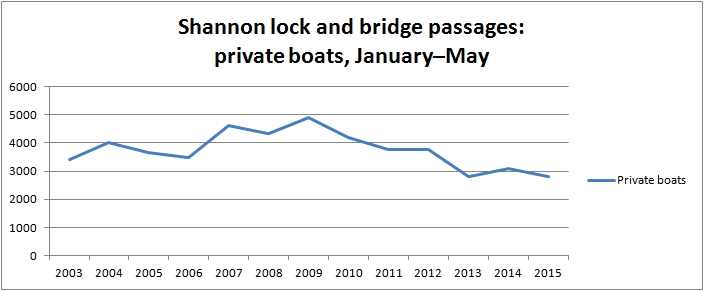
The big news is that there is an increase in the amount of hire-boat traffic and a decrease in the amount of private traffic. [Personal observation suggests very little activity on Lough Derg, apart from the sailing bods.]

Shannon traffic Jan to May 2015 all boats

All boats. Note the slight increase in total traffic — or is it a dead-cat bounce?

Shannon traffic Jan to May 2015 hire boats

The increase comes from hire-boat traffic …

Shannon traffic Jan to May 2015 private boats

… as private-boat traffic is down on last year

Shannon traffic Jan to May 2015 compared with 2003

Nonetheless, hire-boat traffic is still close to 40% of what it was in 2003, with no sign of a major recovery

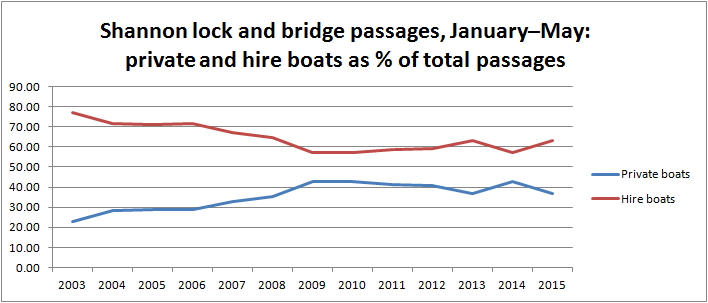
Shannon traffic Jan to May 2015 private -v- hire

But, at least for April and May, hire boats are the major users of the Shannon

In January, 18 boat passages were recorded, 9 of them at Portumna Bridge. There were 20 passages in February and 362 in March. Is there any point in keeping the Shannon open throughout the winter?

In the first five months, 11 boats used Sarsfield Lock, the sea-lock in Limerick. There were 88 passages through Pollboy Lock on the River Suck. On the Lough Allen Canal, 96 boats went through Battlebridge Lock, 95 through Drumleague and only 38 through Drumshanbo. These branches can’t be paying their way.


On the Pill

Brian Simpson has kindly sent me photos of the small-boat rally on St John’s Pill (River) in Waterford at the end of May; I’ve put them on this page.

Photographing the invisible

Waterways Ireland is having a photographic competition for which it is

seeking contributions from the public on what they think best fulfils the theme “Waterways Heritage”.

Details here. You can win an iPad Air, which I think is a sort of pocket calculator for chaps with ponytails.

I was in two minds about whether to publicise this competition. You see, many of the bits of “heritage” I’m interested in are invisible, having vanished since the late nineteenth century. So maybe they’re not heritage at all?

But I decided that it would probably be difficult for Waterways Ireland to judge a competition in which all the photographs were of invisible objects, so I should encourage the photographing of the visible.

I was asked recently by another respectable public sector body to say, for publication, why industrial heritage was important to me. Unfortunately my response was deemed to be unusable, because it was too controversial. I’ll write more about that soon.

Hard sums on Lough Derg

According to the Clare Champion, a Clare county councillor called Pat Hayes, who is a member of Fianna Fáil [an excitable lot, Fianna Fáil], is boycotting something or other for some reason that is not clear to me [and, to be honest, is probably entirely unimportant]. Mr Hayes thinks that water from Lough Derg should be sent to the Atlantic, where it is wasted, rather than to Dublin, where it might be used, and the newspaper cites the River Shannon Protection Alliance as estimating that

… up to 350 million litres of water could be taken from Lough Derg by 2030.

The River Shannon Protection Alliance itself doesn’t agree with those figures. It says:

The central principal and immediate purpose of the organisation is to prevent the proposal of Dublin City Council to abstract in excess of 350 million litres of water on a daily basis from Lough Ree on the river Shannon, and to oppose any action that may be harmful to the well being of the river Shannon system. Since then, the abstraction options have been considered and the current recommended proposal is to abstract upwards 500 million litres of water from Lough Derg and store it in a depleted bog hole to be developed by Bord na Móna at Garryhinch bog, (near Portarlington) where the water will then be treated and pumped on to Dublin.

Eek. That’s a bignum: a lot of litres. Let’s all panic.

On the other hand, 500 000 000 litres is 500 000 cubic metres. Each of Ardnacrusha’s four turbines uses 100 cubic metres per second. So the amount of water to be sent to Dublin every day is less than Ardnacrusha uses in 21 minutes.

If the Alliance wants to save the Shannon, shouldn’t it be trying to get Ardnacrusha closed down first?

Please don’t look at these photos

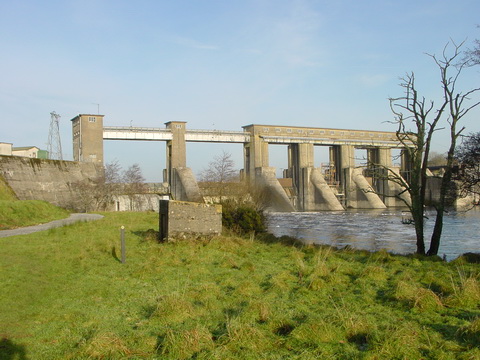
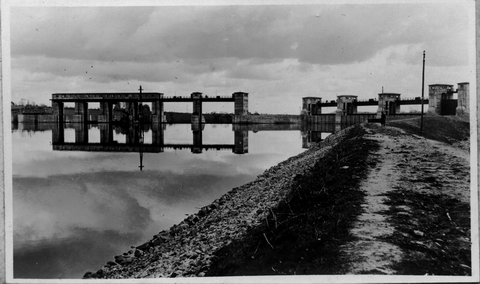
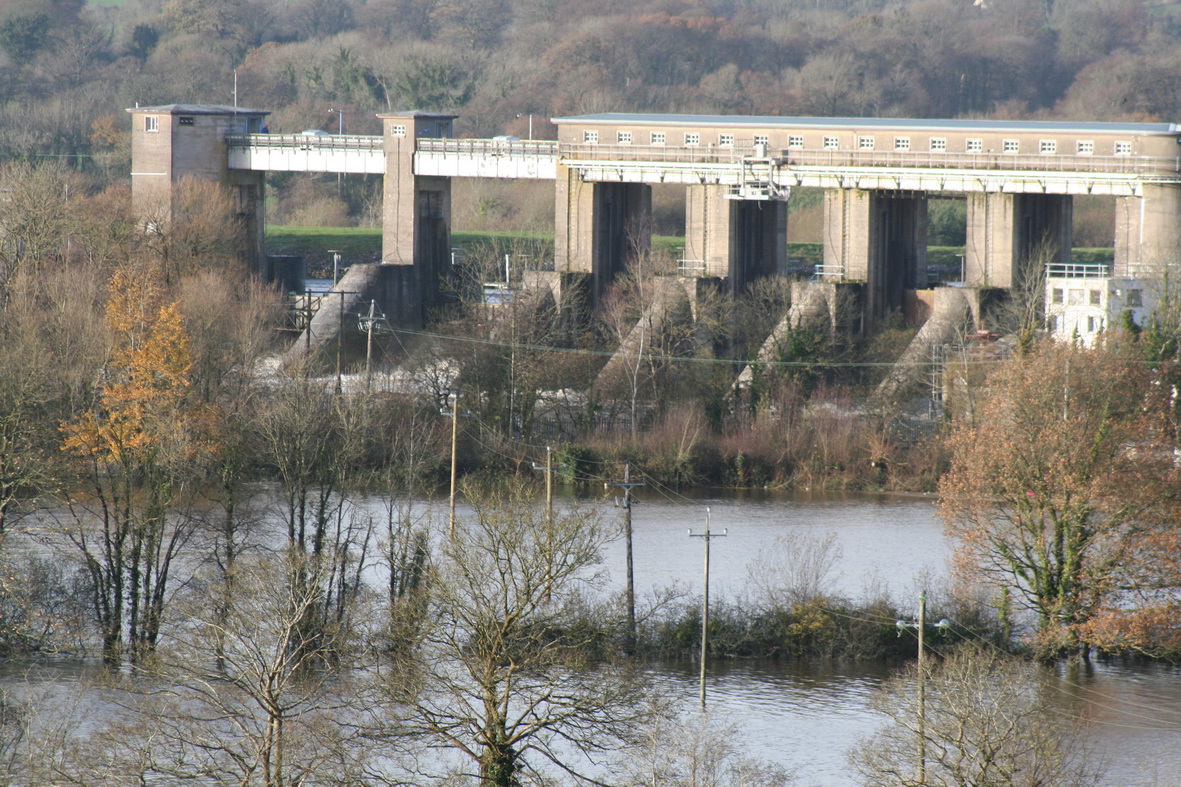
I regret to say that I have published, on these pages, several photos of the Shannon, Parteen Villa Weir, Ardnacrusha hydroelectric power station and its headrace and tailrace canals.

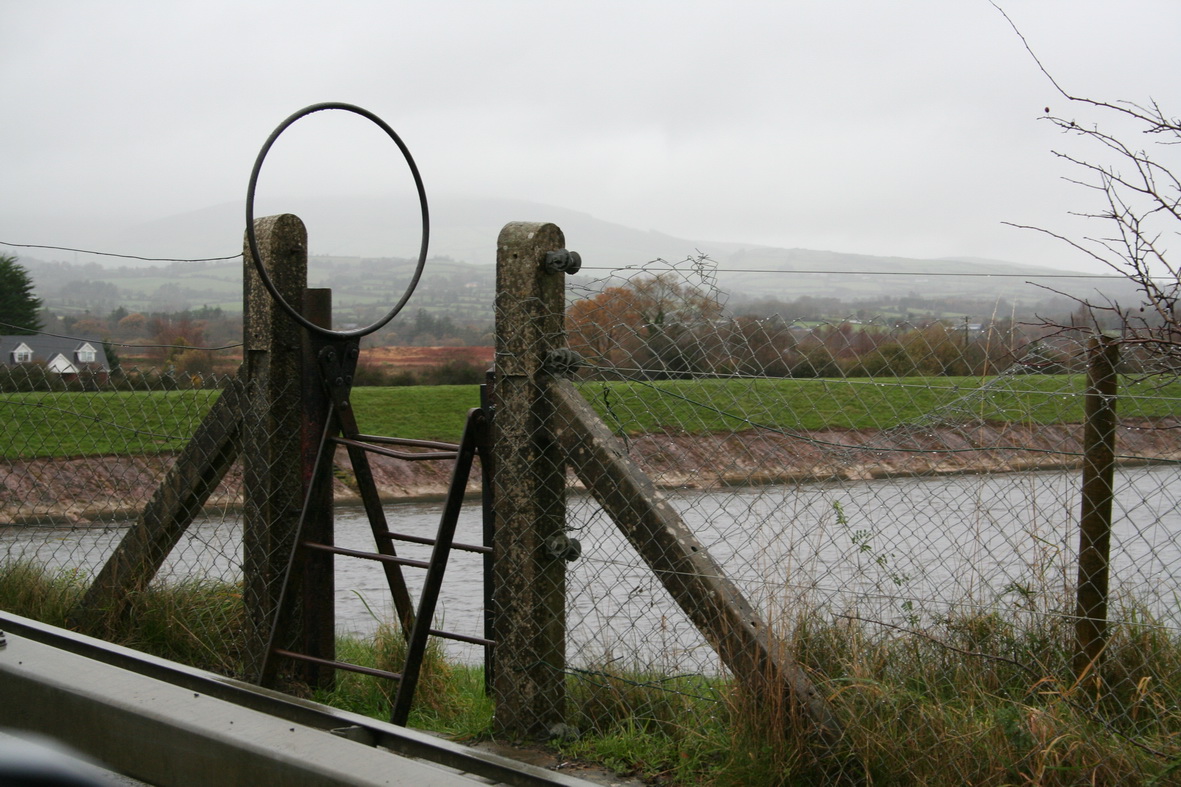
The storage basin between the road bridge over the River Shannon at Killaloe and the weir and canal intake at Parteen, including the right and left embankments constructed to form the said storage basin, together with the land outside and along the said right embankment delimited and separated from the adjoining land by post and wire fencing and also the land outside and, along the said left embankment delimited by the left bank of the Kilmastulla River Diversion.

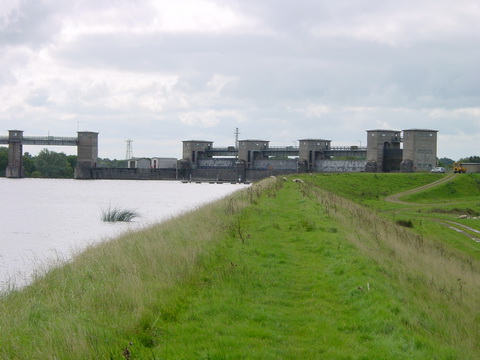
Parteen Villa Weir from the embankment upstream (2008)

Parteen Villa Weir from the embankment upstream (2008)

The flooded area above Parteen Villa Weir

The flooded area above Parteen Villa Weir

The weir and canal intake, the embankments constructed to form abutments to the said intakes, the syphon under the said canal intake, and adjoining lands inside and bounded by post and wire fencing.

Parteen Villa Weir

Parteen Villa Weir

Parteen Villa Weir from upstream

Parteen Villa Weir from upstream

The six sluices controlling discharges down the old course of the river

The six sluices controlling discharges down the old course of the river

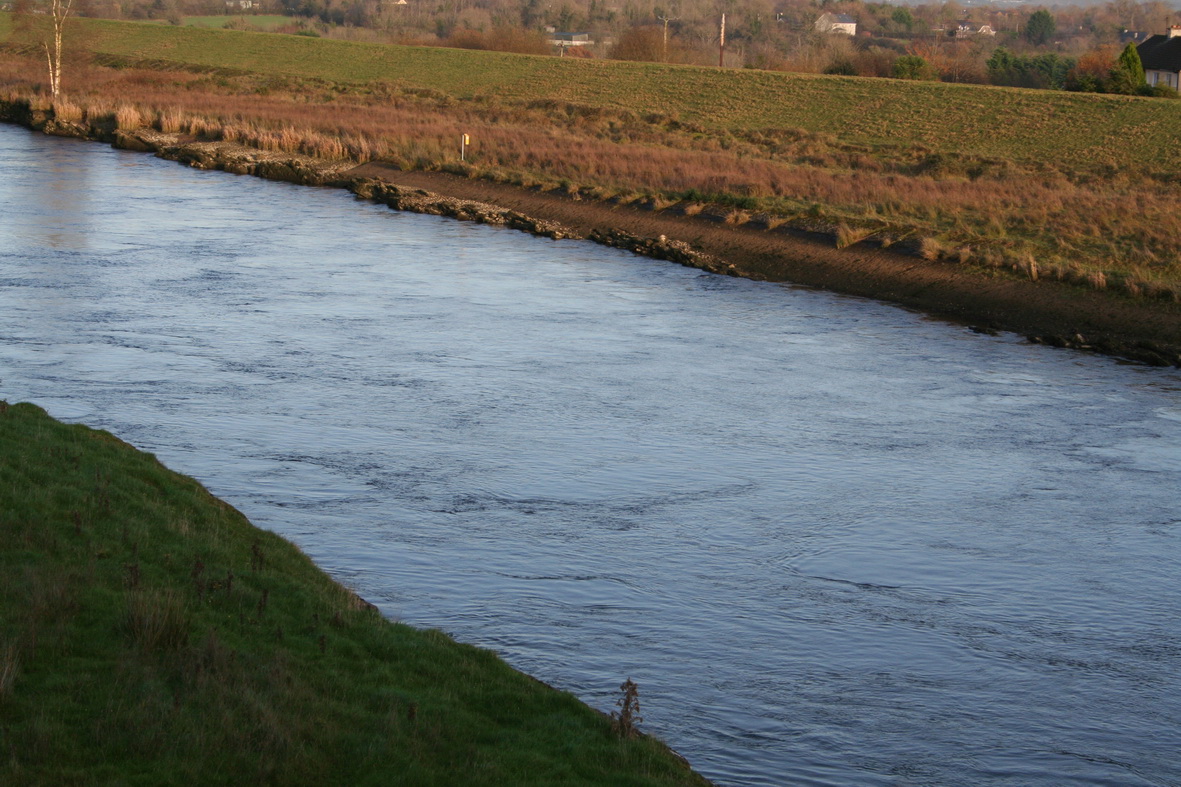
The head race between the canal intake and the power station including the right and left embankments constructed to form the said head race, together with the land outside and along the said embankments delimited and separated from the adjoining land by post and wire fencing, and also the road bridges over and the syphons and culverts under the said race.

The headrace from the bridge at Clonlara 20 November 2009

The headrace from the bridge at Clonlara 20 November 2009

The headrace from the bridge at O'Briensbridge 22 November 2009

The headrace from the bridge at O’Briensbridge 22 November 2009

The power station, the intake to the said power station, the locks and all adjoining buildings and land within the area around the said power station, all of which are delimited and separated from the adjoining land by post and wire fencing.

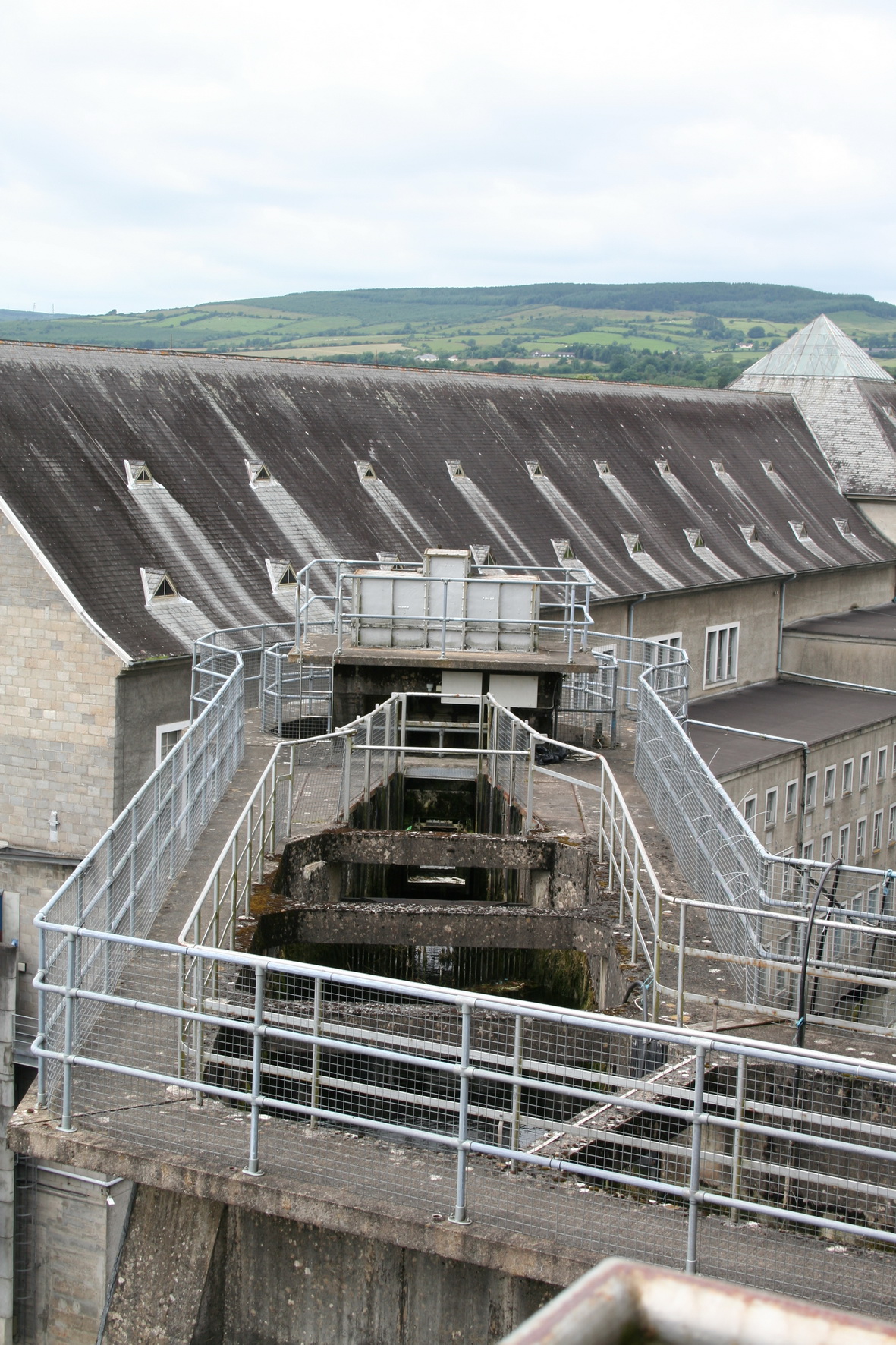
The upper chamber at Ardnacrusha lock

The upper chamber at Ardnacrusha lock

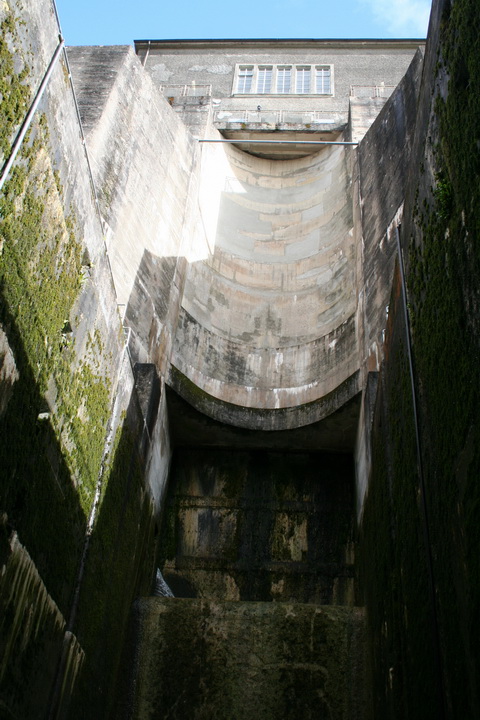
Ardnacrusha: looking up at the top chamber from the bottom

Ardnacrusha: looking up at the top chamber from the bottom

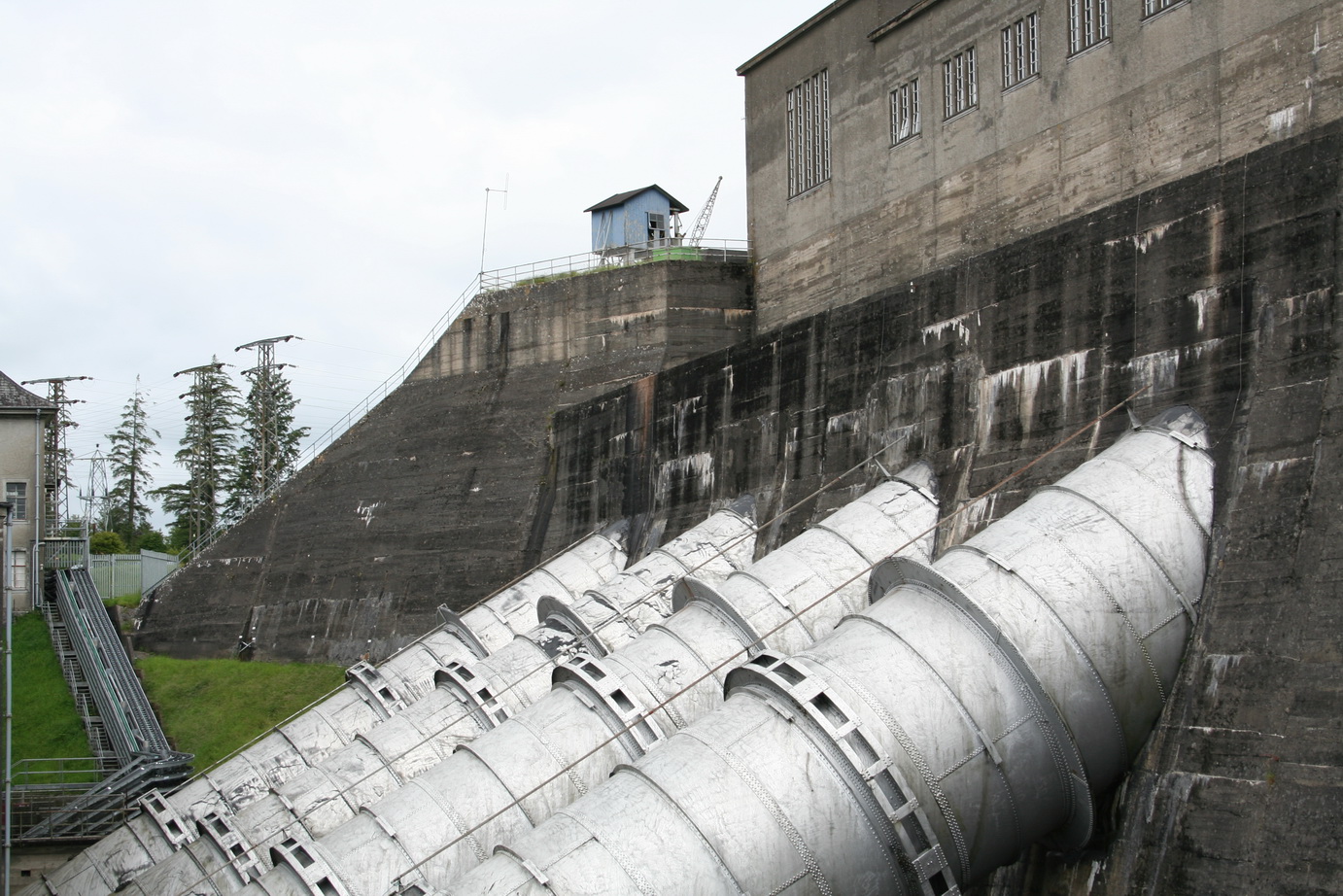
The penstocks that feed the turbines at Ardnacrusha

The penstocks that feed the turbines at Ardnacrusha

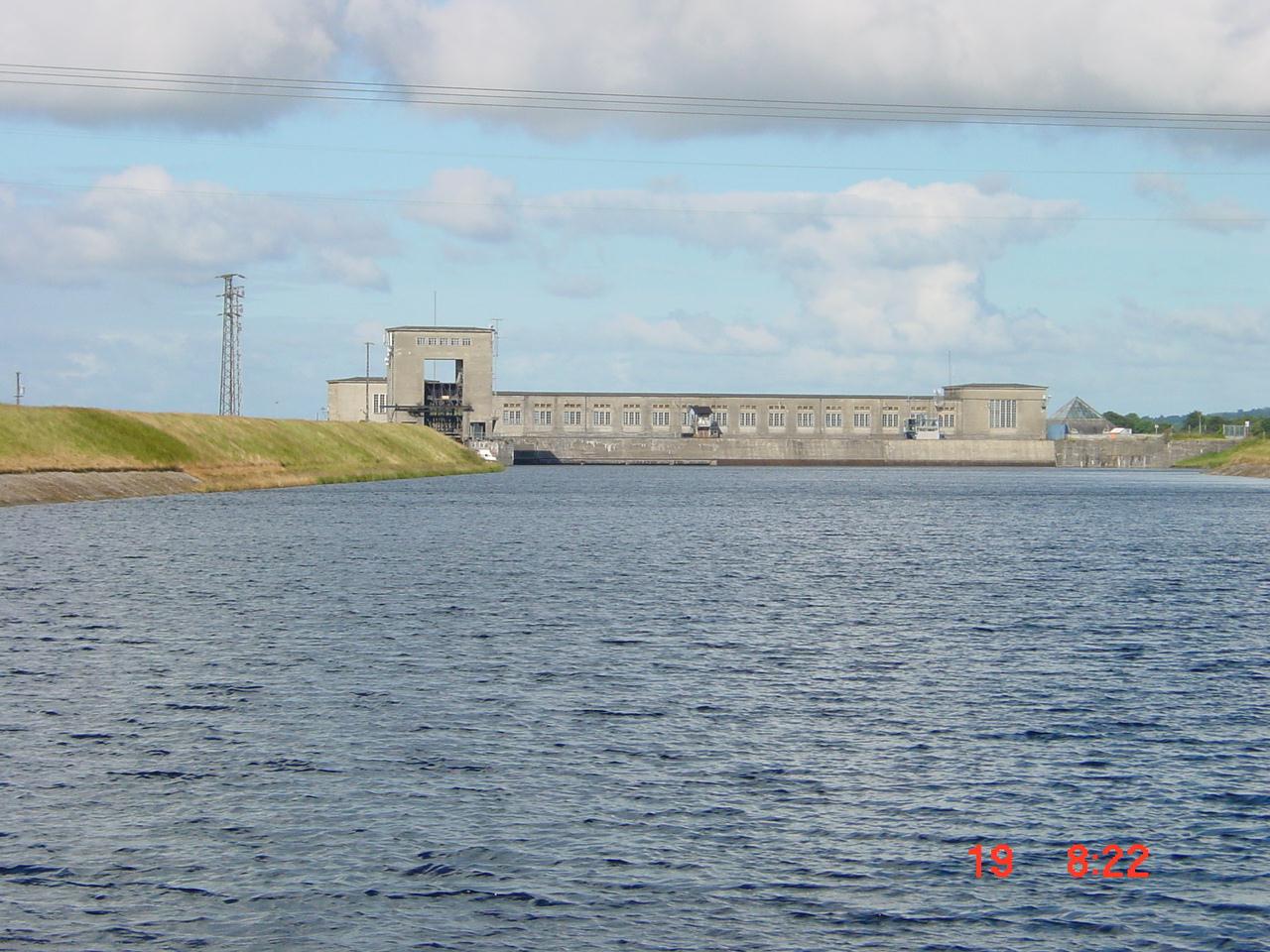
Ardnacrusha power station from the headrace

Ardnacrusha power station from the headrace

The fishpass

The fishpass

The tail race from the power station to the River Shannon, the branch railway running along the said tail race, and the land on either side of the said tail race, all of which are delimited and separated from the adjoining land by post and wire fencing.

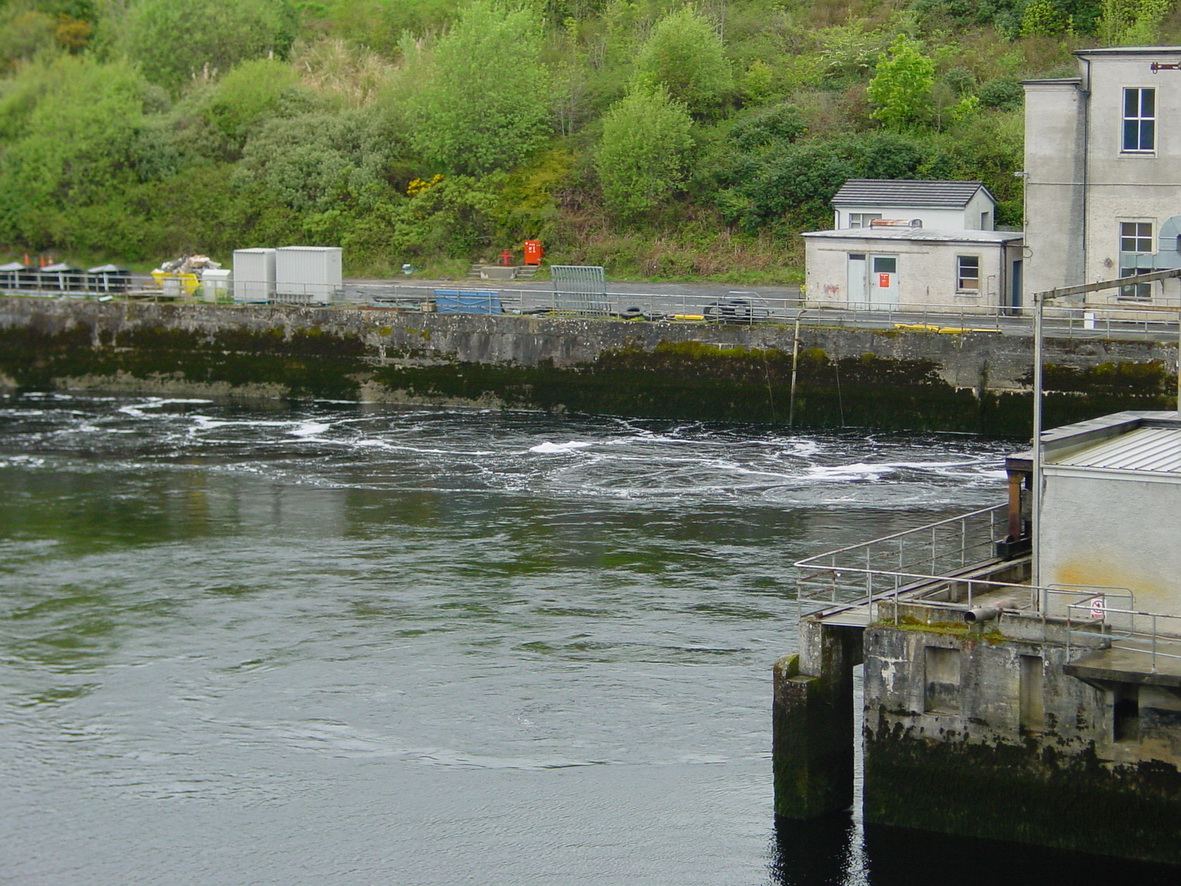
Outflow

Outflow

And I have lots more photos … here and here and here, which I ask readers not to look at either.

You see the thing is, Your Honour, Sir, I didn’t know. I didn’t realise that, under Statutory Instrument 73 of 1935 Shannon Electricity Works (Declaration of Prohibited Place) Order 1935, the places as described are prohibited places under paragraph (d) of Section 3 of the Official Secrets Act 1911, as amended by the Official Secrets Act 1920, and as adapted by or under the Adaptation of Enactments Act 1922 (No 2 of 1922). That’s because

information with respect thereto, or the destruction or obstruction thereof, or interference therewith, would be useful to an enemy.

Apparently, under those acts, giving anyone information about a prohibited place is a felony, punishable by imprisonment for up to fourteen years.

Wikipedia says that, in Ireland, those acts were repealed by the Official Secrets Act 1963, but was the statutory instrument repealed? I don’t know, but I’ve written to the Department of Justice to ask.

In the meantime, please don’t look at the photos, especially if you’re a Foreign Agent: a term that, under the 1963 act,

includes any person who is or has been or is reasonably suspected of being or having been employed by a foreign power either directly or indirectly for the purpose of committing an act (whether within or outside the State) prejudicial to the safety or preservation of the State, or who has or is reasonably suspected of having (whether within or outside the State) committed or attempted to commit any such act.

I wonder whether that includes the European Central Bank.

Bloody Fianna Fáil …

… obviously didn’t get the memo. [They didn’t get the marriage equality memo either, thus losing one of their better people — who needs to update the banner under her photos.] But a nos moutons ….

According to Northern Sound, Monaghan County Council wants the Monaghan Minister for Fairytales, Heather Humphreys, to meet her Northern Ireland counterpart, the Minister for Marching Bands [and boxing clubs, football stadiums and various other things about which MLAs ask questions: they’re as bad as TDs], to do something about the Clones Sheugh.

I suspect this means that FF, and perhaps the citizens of Monaghan, have realised that, despite the Momentous Day on the Ulster Canal [oops: sorry; not that one, this one], the Clones Sheugh has been hijacked by Co Cavan and is not actually going to reach Co Monaghan in the foreseeable future [which means until the next round of election promises].

As far as I can see, the deal was that Sinn Féin would shut up about the Sheugh provided that they got photos of activity before the UKoGB&NI general election. By nicking the money from other navigations in WI’s budget, the Minister for Fairytales was able to deliver the photos. And, as far as Google Alerts can tell, there hasn’t been a word about the Sheugh from the Shinners, north or south, since then. Of course I could be wrong about the deal and, if both departments will send me their full files on the subject, I’ll be happy to use that evidence to correct the story.

Now, though, a Fianna Fáil councillor in Monaghan has

… put forward the motion requesting the Ministers to meet to advance the project and asking Sinn Féin and Fine Gael members of the council to arrange the meeting urgently.

I don’t suppose he’d be trying to embarrass the parties that made the deal, would he? [If they did make a deal, of course, which they may not have, but we won’t know until the departments send on their files.]

SF has 7 members on Monaghan County Council, FG 5, FF 4 and there are two non-party members.

Speaking of parties, or their aftermath, a thought struck me:

Ulster Canal 01 whole_resize

Fianna Fáil’s original conception for the Sheugh: bold, upstanding, thrusting …

Ulster Canal 04 whole_resize

The current plan: brewer’s droop


Interesting info from Waterways Ireland

Two interesting PDF documents available on this page:

No mention of Saunderson’s Sheugh, but I suppose dredging of the River Finn is proceeding.

Big it up for the OSI

I don’t know whether there is any official award scheme for contributions to historical research but, if there is, I reckon Ordnance Survey Ireland should get one. By making available, free, online versions of the OSI 6″ [~1840s] and 25″ [~1900] maps, they have provided amateur historians with an invaluable resource.

Using their public viewer, you can go to somewhere like Lecarrow, on Lough Ree, and look at what it was like before the Famine, around the start of the twentieth century or, using the Ortho options, in 1995, 2000 and 2005. As well, of course, as a bang-up-to-date map of Lecarrow today.

The most recent map was updated recently and the site fell over altogether for a while, then operated without the historical maps for another while. I suspect that I wasn’t the only person to realise, while it was down, how valuable the site was (and how far superior, at least for historical study, to the godawful Ordnance Survey of Northern Ireland version).

So big it up for Ordnance Survey Ireland: delighted it’s back up again.

Non-recreation

A new workboat in Grand Canal Docks.