The North South Ministerial Council secretariat has been remarkably quick to publish the joint communiqué from today’s plenary meeting. They must have adopted the Quaker practice of agreeing the minutes before the meeting ends (as opposed to the diplomatic practice of agreeing them before the meeting starts). The short version is that nothing happened; the only excitement was another brainfart from Our Glorious Leader, which occurred before the NSMC meeting.
Cavan-Monaghan FF TD Brendan Smith has been wasting civil service time again, asking about the Clones Sheugh:
Brendan Smith [FF Cavan-Monaghan]: To ask the Minister for Arts, Heritage and the Gaeltacht if he will indicate the current stage of the proposed restoration of the Ulster Canal; and if he will make a statement on the matter.
Jimmy Deenihan [FG Kerry North/West Limerick]: As the Deputy will be aware, in July 2007 the North/South Ministerial Council (NSMC) agreed to proceed with the restoration of the section of the Ulster Canal between Clones and Upper Lough Erne. The then Government agreed to cover the full capital costs of the project, which were estimated at that time to be of the order of €35m.
It was always the intention that the Ulster Canal project would be funded from the Waterways Ireland annual allocations, as agreed through the annual estimates processes in this jurisdiction, as well as the deliberations of NSMC in relation to annual budgets. It was a key consideration throughout the process that the Ulster Canal project would be supported by a significant level of projected income from the commercialisation of certain Waterways Ireland assets. However, the economic downturn has had a negative impact on those plans.
In the meantime, the Ulster Canal project is progressing on an incremental basis. Planning approvals have now been secured for the project in both jurisdictions. I welcome these developments, which, I am sure the Deputy will agree, are a significant milestone for the project.
I am continuing to explore all possible options to advance this project within the current fiscal constraints. In this regard, an Inter-Agency Group on the Ulster Canal has been established to explore and examine ways to advance the project and to examine possible funding options for it, including existing funding streams and the leveraging of funding from other sources, including EU funding options.
What news of the Inter-Agency Group? Has it found a rainbow with a pot of gold buried beneath it?
I do not find the minister’s statement that …
It was always the intention that the Ulster Canal project would be funded from the Waterways Ireland annual allocations, as agreed through the annual estimates processes in this jurisdiction […].
… to be entirely consistent with the historical record or even with his further statement that …
It was a key consideration throughout the process that the Ulster Canal project would be supported by a significant level of projected income from the commercialisation of certain Waterways Ireland assets. However, the economic downturn has had a negative impact on those plans.
The plan seemed to be to sell the WI assets, thus using capital to fund what might laughingly be described as a capital asset (as opposed to a millstone around WI’s neck), rather than to rely on income from the use of its surplus assets. Maybe allowing the Corpo to run the Dublin “docklands” [Irish Times report, which will disappear behind a paywall at some stage; the Corpo’s website doesn’t yet cover this] will restore the overvaluations of the recent bubble and allow WI to flog off its three sites and splurge on the Clones Sheugh.
That seems to be what ThemUns in the Northern Ireland Assembly are expecting, if we are to judge by the discussion held on 21 October 2013, when several shinners, and a few others too, enthused about the “potential” of canals:
Phil Flanagan [SF] asked the Minister of Culture, Arts and Leisure [SF] for an update on the current funding position on the re-opening of the Ulster canal.
Carál Ní Chuilín [SF]: I thank the Member for his question. Work by Waterways Ireland on the restoration of the Ulster Canal has been solely focused on the section from Upper Lough Erne to Clones. The project will be advanced in line with available resources. The Ulster canal interagency group has been tasked to examine all possible options for financing the project. DCAL economists are reviewing the business case to update the estimated costs and identify social as well as economic benefits for the first section of the canal. The Ulster canal interagency group is exploring funding options with the Special EU Programmes Body.
Phil Flanagan [SF]: Go raibh maith agat, a LeasCheann Comhairle. Gabhaim buíochas leis an Aire as ucht a fhreagra. I thank the Minister for her answer. I welcome the Minister’s continuing commitment to the Ulster canal, particularly the section from Upper Lough Erne to Clones. However, one of the difficulties that it faces is an absence of funding. Will the Minister provide more information on potential funding options for completing the work on that section of the canal?
Carál Ní Chuilín [SF]: The work of the interagency group is focused not just on funding options but on what we can do with current available funding. It is really important that we look at the Ulster canal with a view to how we can open up waterways to improve tourism and the local economy. It is important that we get started on the restoration of the Ulster canal in that area because it has experienced a lack of investment for decades.
We are looking not just towards the Irish Government, within DCAL and towards Europe but at other opportunities, possibly through the Lottery Heritage Fund and many others to see whether we can get this started by looking at options to bring the work forward, rather than waiting until all the money is in. We can do that only on the basis of secured funding. Once that happens, I will be happy to make a statement to the House that will be a bit of good news that the Member and other Members for that area have been waiting to hear for a long time.
I suspect that “what we can do with current available funding” is “buy a shovel”, there being no large amounts available from the Free State. But perhaps the reason that the Clones area “has experienced a lack of investment for decades” is that it is not possible to make any adequate (legal) return on investment there; a policy of assisted emigration might be best. But it is gratifying to learn that SF is trying to get the Free State government off the hook of its rash promise to pay for the sheugh and is hoping to raise the money from within HM Realm.
There was a hint of a sensible question from the UUP.
Tom Elliott [UUP]: I thank the Minister for that update. Will she tell us how much the overall project was estimated to cost, based on the business case, and what income it projected?
Carál Ní Chuilín [SF]: Overall, it goes into tens of millions of pounds. I believe that the business case needs to be updated, and that will be part of discussions involving me, Minister Deenihan, and Minister McGinley. Some of the work that is being done by DCAL economists is bringing a fresh approach to the economic appraisal. We are sharing that with our Irish Government colleagues and the interagency group. That is because I believe that, rather than waiting for all the money to be secured at once, we need to look at the potential for phased approaches. It is good news that we now have full planning permission across all the councils and from our Planning Service here.
We now need to look at what capital moneys are available, what we can do and our plan to secure additional funds for that area. As I said to Phil Flanagan, it is really important — I am sure that the Member is more aware of this than I am — that we get parts of that canal opened and try to get some construction work done on it.
Unfortunately Mr Elliott did not insist on getting an answer to his question about the projected income, which I expect to be nil.
Joe Byrne [SDLP]: Can this issue be raised at the next meeting of the North/South Ministerial Council? What potential does she expect could accrue to the areas of Fermanagh and Tyrone in future tourism?
Carál Ní Chuilín [SF]: The Member should take comfort in knowing that this is always raised at the North/South Ministerial Council. Certainly, within the waterways sectoral aspect of DCAL’s North/South arrangements, it is constantly brought up. The key here is to look at what we can do now for rural communities and what moneys are available. I appreciate that, when the Irish Government said that they would fully fund the project, they were in different economic circumstances. However, they still remain committed to doing something.
In DCAL, I am looking at a new economic appraisal to see what the real costs are and what parts of the work I could try to start, possibly in conjunction with Ministers Deenihan and McGinley. There is a lot of expectation around the project, and rightly so, no more so than among the people who live and work in the surrounding area and those who are waiting for work on the restoration of the canal.
Anna Lo [Alliance]: Parts of the UK and many other countries have reinvented canals as tourist facilities and attractions. What lessons does the Minister intend to adopt from other people’s experiences?
Carál Ní Chuilín [SF]: Certainly, we regularly receive reports from Waterways Ireland about tourist potential. The royal canal has brought great potential. There are festivals across all the canals and waterways the length and breadth of this island. Unfortunately, those are some of the very few opportunities that people who live in rural communities near waterways have of generating a local economy. So the tourist potential is absolutely huge. Not only is it huge for people who live on this island; it is huge for those who want to visit here and travel. There is big interest, particularly in Europe, in canals and waterways. It is incumbent on us to do what we can to get the project financed. We need to make a start on it. We do not have all the funds yet, but it is time to make a start on it rather than sit and wait on free money coming. People who are looking for tourists and have a tourist product to offer and people who are willing and able to work look to us for opportunities to get this moving. I think that is what it could do.
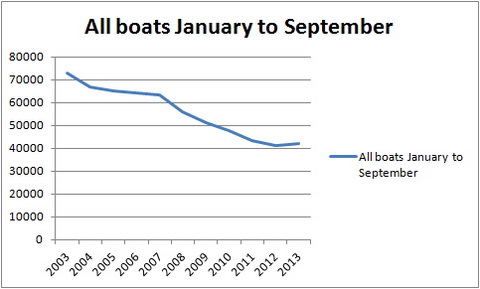
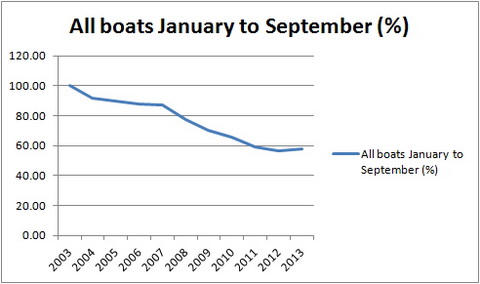
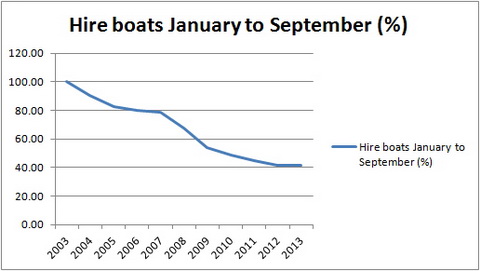
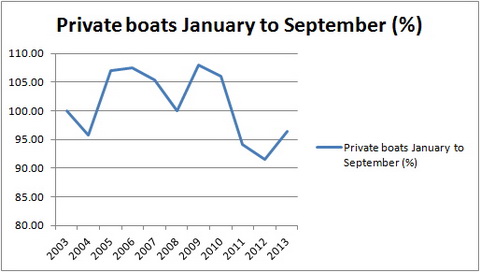
Ms Lo’s question should be enough to deter people from voting Alliance. Note that Ms Ní Chuilín’s answer was all about potential: we have no cost-benefit analysis of the restoration of the Royal Canal and indeed no idea what the restoration cost, but I do not believe that the economic benefits will be significant. And while it may be that …
There is big interest, particularly in Europe, in canals and waterways.
… the prospect of travelling to Clones by water is not significantly more enticing than that of travelling there by road.


 Irish waterways history